


- Politics
The big healthcare fight Democrats keep dodging
The real lesson of Abdul El-Sayed’s latest pseudo-scandal
byEric Levitz
Jul 24, 2026, 10:00 AM UTC
Eric Levitzis a senior correspondent at Vox. He covers a wide range of political and policy issues with a special focus on questions that internally divide the American left and right. Before coming to Vox in 2024, he wrote a column on politics and economics for New York Magazine.
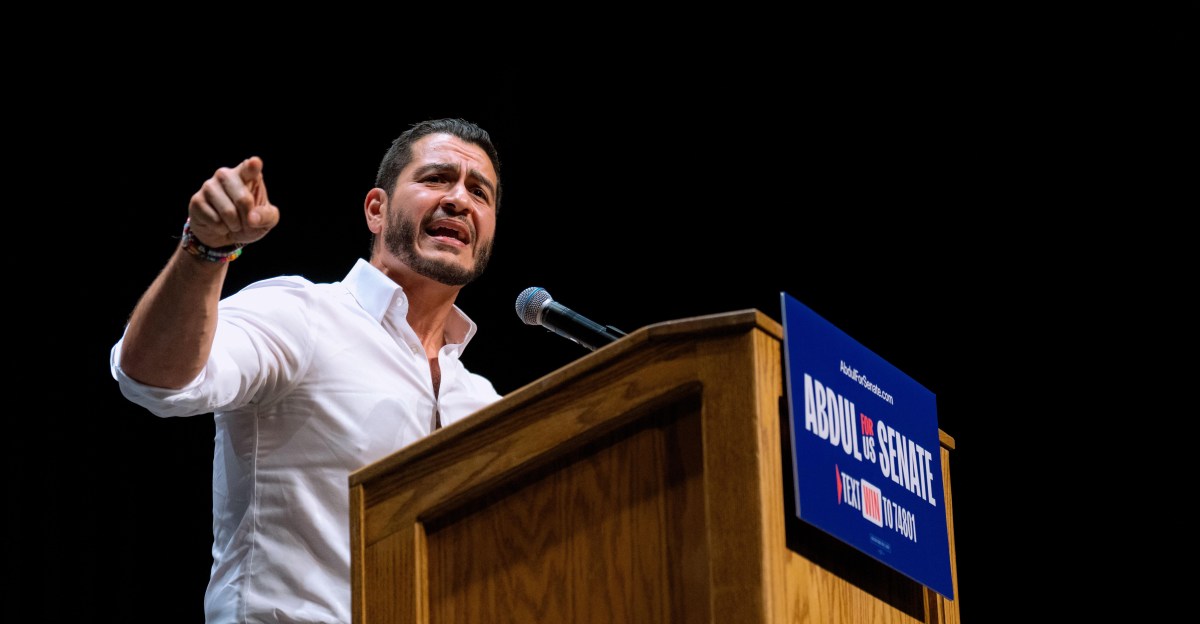
Abdul El-Sayed is among America’s most prominent proponents of Medicare-for-all
The frontrunner in Michigan’s Democratic Senate primary literally wrote the bookon that policy (or at least, a book on it). In El-Sayed’s view, Medicare should cover “all necessary healthcare” for every American — without co-pays, premiums, or deductibles — and be “accepted everywhere.”
Key takeaways
• American healthcare is expensive largely because our hospitals, doctors, and drugmakers charge unusually high prices.• American physicians earn about twice as much as Canadian doctors and four times as much as Swedish ones.• To make Medicare-for-all affordable, we need to push down many doctors’ salaries, which is politically difficult.• Expanding the supply of doctors — by funding more residencies and easing barriers for foreign-trained physicians — would lower costs and make universal coverage more feasible.
Alas, despite his many years of advocacy, El-Sayed has seemingly failed to persuade his wife of that last point: According to a recent report from the Washington Free Beacon, El-Sayed’s partner, the psychiatrist Sarah Jukaku, does not accept Medicare as a form of payment at her private practice
This bit of gossip is of little importance, in and of itself. The Free Beacon’s story does nothing to refute the case for El-Sayed’s candidacy or his healthcare plan (his wife’s business is, well, her business). As hit pieces go, it’s weak tea
Nevertheless, the tension between El-Sayed’s healthcare proposals and his wife’s business practices is real. And it is illustrative of a major challenge facinganyonewho wishes to reform our nation’s misbegotten healthcare system: To meet the medical needs of all Americans, reformers will need to defy the interests of most doctors — and in many cases reduce their compensation
And that won’t be easy. Few people feel a deep fondness for insurance companies. But El-Sayed is far from the only American who loves a physician
The biggest obstacle to Medicare-for-all
To understand why Medicare-for-all would be bad news for many doctors — and how the Free Beacon’s story illustrates that point — we must first dwell on one fundamental fact about America’s healthcare system: It’s a rip-off
The US spends about twice as much per person on medical goods and services as other wealthy countries. And yet, all that money does not actually buy us much more care. Compared to our peers abroad, Americans are less likely to see a doctor, secure a long hospital stay, or access a timely appointment for medical treatment. On the other hand, we do have the privilege of paying radically higher healthcare prices
To take just one telling example: In the United States, a coronary bypass surgery will typically cost more than $89,000; in Australia, it costs just $17,741
Such exorbitant prices are the chief obstacle to anyversion of universal healthcare. Even with one-third of working-age Americans uninsured or underinsured — and thus, consuming too little medical care — the bill for America’s health sector ran to $5.7 trillion in 2025
In El-Sayed’s vision, Americans would consume vastly more medical services than they do today: The uninsured would suddenly have access to every doctor in the country, while everyone else would see their co-pays and deductibles drop to zero, encouraging them to schedule far more doctors’ visits
This would be a costly proposition in any country. At America’s current healthcare prices, it would be prohibitively expensive. There is simply no way to realize anything approaching the left’s healthcare ambitions without slashing the amount of money that Americans pay per medical service
Doctors will pay a price for universal healthcare
Medicare-for-all advocates are aware of this fact. And they’re typically eager to talk about oneur private health insurance model
In America’s byzantine system, each insurer needs its own teams of auditors, claims reviewers, and myriad other specialists, while every major healthcare provider needs a horde of administrators to navigate the idiosyncratic rules of all these different insurance companies. Americans pay dearly for this bureaucratic bloat. By one estimate, our system’s administrative costs are $500 billion higher than they would be if the insurance industry was consolidated into a single public insurer
And yet, as large as that figure may seem, it still represents a fraction of America’s excess healthcare costs. The primary cause of our nation’s exorbitant medical prices is simpler than administrative redundancies: our healthcare providers charge exceptionally high rates
Hospitals are the biggest culprits on this front. But physicians are also part of the problem
According to a 2026 study from economists at the University of Chicago, Stanford, and the US Census Bureau, American physicians earn about twice as much as Canadian ones — and four times as much as Swedish doctors
Critically, this does not merely reflect America’s greater wealth or wage inequality. It is true that educated professionals of all kinds — financial analysts, lawyers, software engineers, etc. — earn more in the US than they do in other rich countries. But American doctors don’t just earn unusually high absolute incomes — they also occupy an atypically rarified place within their own country’s class hierarchy. About 42 percent of American specialty physicians are in the top 1 percent of their nation’s income earners. Among Canadian specialists, that figure is just 27 percent; for Swedish ones, it is 7 percent.
The main driver of these disparities is straightforward: America imposes fewer price controls on its healthcare sector than other nations do
And this is where Jukaku’s practice reenters the picture
The public parts of America’s insurance system — Medicare and Medicaid — pay rates that are only modestly above international norms. It is when American doctors bill private insurers — or the rich consumers of boutique medicine — that they really make bank
As a result, top clinicians like Jukaku often decline to take Medicare. If you’ve got affluent patients beating down your door, accepting Uncle Sam’s rates just doesn’t pay
Unless the government forces doctors and hospitals to swallow steep pay cuts, however, Medicare-for-all won’t pencil out. According to a widely cited 2018 analysis by the economist Charles Blahous, if a single-payer system kept provider payments constant, national health spending would rise by $3.25 trillion over a decade, even with administrative savings taken into account. By contrast, if all providers were forced to accept Medicare’s rates, health spending would actually fall by $2.05 trillion over the same period.
Soaking physicians is tough politics
Thus, there is a clear conflict between progressives’ healthcare ambitions and medical providers’ material interests
Yet the left is often reluctant to acknowledge this reality. El-Sayed tends to portray insurers as the sole economic beneficiaries — and political defenders — of America’s inequitable healthcare system. The fact that hospitals and doctors also profit off the status quo’s dysfunctions does not feature prominently in his rhetoric. To the contrary, El-Sayed suggested in 2020 that doctors like his wife are actually underpaid, even though American psychiatrists earn far higher salaries than their counterparts abroad.
To be fair, progressives aren’t alone in eliding providers’ culpability. Virtually all Democratic politicians do the same. And not without reason. Politically speaking, it is one thing to denounce the greed of private insurers — the faceless bureaucracies standing between Americans and their desired treatments. It’s quite another to call for reducing the wages of doctors, men and women who perform laudatory work and enjoy widespread admiration
Precisely for this reason, however, reformers must grapple with healthcare providers’ investment in the current system. The American Medical Association (AMA), the lobby representing our nation’s physicians, was instrumental in killing past attempts to move toward single-payer. And at least some segments of the medical profession would surely mobilize against any contemporary Medicare-for-all bill that imposed substantial cost controls on the healthcare sector. What’s more, in doing so, they would be able to draw on a resource the private insurance industry lacks — the public’s trust.
How to make healthcare less expensive right now
There is no easy answer to the problems all this presents. But part of the solution is to chip away at providers’ payment rates where progressives already have the power to do so. This would not only help drive down costs for existing healthcare in the short term, an urgent priority all its own, but also would smooth the path to universal coverage in the long run
That project can take many forms. One would be state-level payment regulations. In Maryland, hospitals receive the same rates, no matter whether their patients pay with Medicare, private insurance, or cash. And their budgets are also fixed, so that they aren’t able to milk fees out of unnecessary care. Rhode Island, meanwhile, caps the growth of its hospital reimbursement rates at the pace of overall inflation. Other states could follow their lead
But policymakers should also address the supply constraints that undergird American doctors’ high salaries. US physicians’ ability to command high pay doesn’t just reflect America’s weak cost controls but also a persistent shortage of working doctors. The US has roughly 2.7 physicians for every 1,000 of its residents; the average among comparable countries is 3.9, according to a Kaiser Family Foundation analysis
In this context, forcing down doctors’ pay might seem perilous. After all, doing so would reduce young people’s incentive to pursue a medical career, potentially deepening the shortage
In reality, however, there is no dearth of qualified people who want to practice medicine in the US. We just don’t let many of them do so
This is partly because American policymakers consciously sought to restrict the number of doctors in the country, beginning in the 1980s. As Robert Orr of the Niskanen Center explains, the US government issued a report in 1981 warning of an imminent “physician surplus” and recommending “immediate action to curtail both the domestic training of physicians as well as the admittance of those trained outside of the country.”
The report’s argument rested on false premises; it failed to anticipate that Americans’ demand for healthcare would rise sharply as they grew wealthier. Nonetheless, its recommendations were largely implemented: Federal support for medical-school scholarships was pared back while funding for residencies has been capped since 1997
At the same time, policymakers maintained high barriers to the immigration of fully-trained foreign doctors: Even physicians with years of experience, and credentials in nations with high medical standards, are typically required to complete a multi-year residency before being able to practice in the US
Ending the federal freeze on residency funding will require congressional action. But states can immediately make it easier for foreign doctors to practice within their borders. In fact, Tennessee established a pathway for such physicians to ply their trade in the state, without having to repeat a residency, in 2023. And many statessubsequently enacted similar reforms
Removing the bottlenecks on America’s doctor supply won’t eliminate the political hurdles to Medicare-for-all. But it would put downward pressure on doctors’ salaries, reduce the risks of capping physician pay, and make the left’s vision of healthcare abundance more feasible. After all, you can’t actually eliminate the care rationing that so many Americans resent by extending insurance coverage or enacting price controls alone. No matter how we pay for our medical services, we can only deliver as much care as our health sector’s resources allow.
Don’t hate the doctor, love the sick
In saying all this, I don’t mean to convey disdain for the medical profession. Like El-Sayed, some of my best friends are doctors! In fact, my mother, father, brother, and sister-in-law are all physicians. And they all have contributed far more to American society than I ever will. My brother spends his workdays providing lifesaving treatments to cancer patients; I often spend mine sitting at a desk in my pajamas, arguing about politics on the internet
Physicians deserve to be well-paid for their strenuous labor. But if we want healthcare in America to be universally affordable and widely accessible, we will need to pay many of them a bit less
See More:
- Health Care
- Policy
- Politics
