


Mary Comber
Sat, August 1, 2026 at 7:00 AM UTC
Staying agile and reversing age-related muscle loss might sound unachievable without dedication and a lengthy, well-honed gym routine. But, according to new research, just four minutes of strength exercises a day could help keep you strong and independent in later life, and turn the clock back decades
Researchers at Penn State University asked over-65s to complete a daily, four-minute routine of chair stands, step-ups, double-arm rows and press-ups. After just 12 weeks, their strength, mobility and balance had significantly improved
The exercises may sound simple, but the gains were striking. “Improving by just two sit-to-stands in 30 seconds is equivalent to turning back the clock between 10 and 20 years,” says Dr Chris Sciamanna, lead study author and professor of medicine and public health at Penn State College of Medicine
Small effort, big gains
Experts have long maintained that being active is vital for preserving strength and independence as we age. Yet, only 19 per cent of adults aged 65 to 74 meet the recommended exercise guidelines, with many deterred by the idea of a traditional, 45-minute workout
“We set out to find something that was short enough to be palatable but still be effective,” says Sciamanna. “Exercise doesn’t have to be lengthy to make a difference. There’s a much more time-efficient way to exercise.”
So what makes these four moves so effective? “These exercises give huge bang for your buck,” says Gideon Remfry, personal trainer and director of wellness at Auriens Chelsea, a luxury later living development for the over-65s. “They target the ankles, knees and hips, improving the movement patterns we rely on every day, like standing up from a chair or getting out of the car. That translates into better muscle strength, improved mobility and a lower risk of falls.”

Remfry is so impressed by the findings he plans to introduce the routine to some of his clients. “It’s incredibly simple, quick and easy to follow,” he says. “It removes many of the barriers that stop people exercising in the first place.”
The advantages aren’t limited to over-65s, either. “Anybody who’s started to lose some function would benefit from doing these exercises to regain their strength,” says Sciamanna. “In your early 60s, you could establish a baseline, then repeat them regularly to ensure you’re not declining.”
Here’s how to try the routine yourself
The four-minute routine
These four exercises provide a whole-body workout, says Remfry. “They involve compound movements that recruit multiple muscles at once,” he explains. “You don’t need a gym, expensive equipment or much space. It’s quick, practical and still challenges all the major muscle groups.”
Each exercise can be adapted to suit your fitness level and ability. “If you’re just starting out, follow the easier modifications. Then, as you get stronger, gradually increase the resistance or the challenge.” If you need help with balance, use a sturdy chair or worktop for support and wear supportive trainers
Start with a gentle warmup, such as walking on the spot and swinging your arms. Do as many repetitions of each exercise as you can in 30 seconds, resting for 30 seconds between each move. Afterwards, cool down with some gentle walking and stretching
1. Seated resistance band rows
Targets:Upper back, shoulders, biceps and core
Why it’s good for longevity:“Strong upper-back muscles and pulling strength help support good posture while making everyday tasks, such as carrying shopping and opening heavy doors, much easier,” says Remfry
How to do it: Sit tall on a sturdy chair with your feet flat on the floor. Loop a resistance band around the arches of your feet, holding one end in each hand. Keeping your shoulders down and back, pull your elbows backwards until your hands reach your ribs, squeezing your shoulder blades together
Slowly release the band back until your arms are straight again. Continue for 30 seconds
Make it easier: Use a lighter resistance band. If balance is a problem, sit further back in the chair for extra support
2. Step-ups
Heathcliff O’Malley
Targets:Thighs, buttocks, calves and heart and lungs
Why it’s good for longevity:“Step-ups develop single-leg strength and stability which underpin walking, climbing stairs and maintaining balance,” says Remfry. “They build strength, balance and coordination while giving your heart and lungs a gentle workout.”
How to do it: Use a sturdy, 4-inch (10cm) step or the bottom step of a staircase. Place one foot securely on the step. Press through that foot to bring your other foot onto the step. Step backwards down, one foot at a time
Continue for 30 seconds, alternating your leading leg. Stand tall and use slow, controlled movements
Make it easier: Hold onto a sturdy rail or worktop for balance. If you don’t have an exercise step, the bottom step of a staircase works well, provided there’s a handrail
Progression:Once you can comfortably complete six full step-ups in 30 seconds, increase the step height to 6 inches (15cm), then 8 inches (20cm). If you’re using a staircase, increase the challenge by slowing down the lowering phase, taking three to five seconds to return your foot to the ground. Alternatively, hold a pair of light hand weights to increase the resistance
3. Chair stands
Heathcliff O’Malley
Advertisement
Targets:Thighs (quadriceps), buttocks (glutes) and core
Why it’s good for longevity: “The sit-to-stand is one of the best functional exercises you can do because it directly reflects the movements we perform every day,” says Remfry. “It strengthens your legs and hips, making everyday tasks like climbing stairs, standing up from lower seats and rising from the floor much easier.”
How to do it: Place a sturdy chair with arms, around 17 inches (43cm) high, against a wall. Sit upright with your feet flat on the floor, hip-width apart and cross your arms over your chest
Lean your chest slightly forward, press through your heels and stand up fully. Slowly lower yourself slowly back down to sit fully on the chair. Continue for 30 seconds
Make it easier:Rest your hands lightly on your knees or the arms of the chair to help push yourself up
4. Press-ups
Heathcliff O’Malley
Targets:Chest, shoulders, triceps and core
Why it’s good for longevity:“Press-ups build the upper-body pushing strength we rely on in everyday life, whether that’s opening a heavy door or helping ourselves up from the floor,” says Remfry
How to do it: Begin in the starting version that suits your ability – against a wall or worktop, on your knees or in a full press-up position. Place your hands slightly wider than shoulder-width apart
Keeping your body in a straight line from shoulders to heels (or knees), bend your elbows and lower your chest towards the wall, worktop or floor. Push back to the starting position
Make it easier:Start with wall press-ups (below), then progress to a kitchen worktop. From there, try press-ups on your knees before progressing to a full press-up
How to monitor your progress
Repeat these simple tests every four weeks to track changes in your strength, balance and mobility. Do them before your workout and record your results so you can compare them over time. The tests were used in the Penn State study
1. Five-times sit-to-stand test
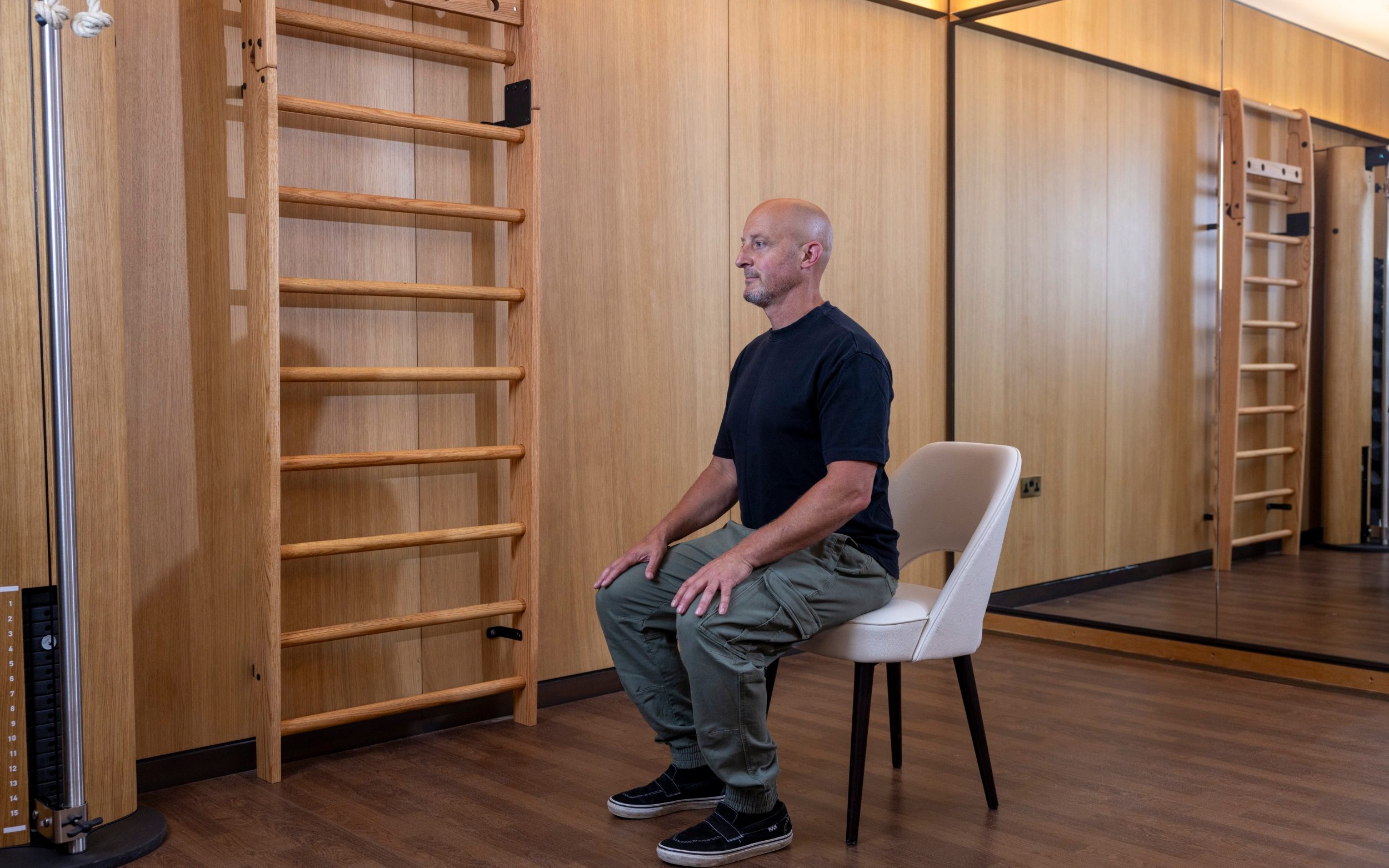
Measures:Lower-body strength and functional mobility
How to do it: Sit on a sturdy chair with your arms folded across your chest and your feet flat on the floor. Stand up fully and sit back down five times as quickly as you can, without using your hands for support
Use a stopwatch to time how long it takes to complete all five repetitions. Stop the clock when you are seated after the fifth stand
Make it easier:Place your hands on your thighs for support
What to aim for: A healthy adult in their 60s should be able to perform five stands in around 11 seconds. This times rises to around 13 seconds in your 70s and 15 seconds in your 80s
2. One-legged stance test
Heathcliff O’Malley
Measures:Balance and stability
How to do it:Stand with your feet slightly apart. Place your hands on your hips. When you feel steady, lift one foot a few inches off the floor, bending your knee so your foot is clear of the ground without touching your standing leg
Time how long you can keep your balance without putting your foot down or grabbing for support. Repeat on the other leg and record your best time
What to aim for: In your 60s, you should be able to balance for around 32 seconds. In your 70s, it’s 22 seconds while in your 80s, it’s nine seconds. Being unable to balance for five seconds can indicate an increased risk of falls
3. 30-second chair stand test
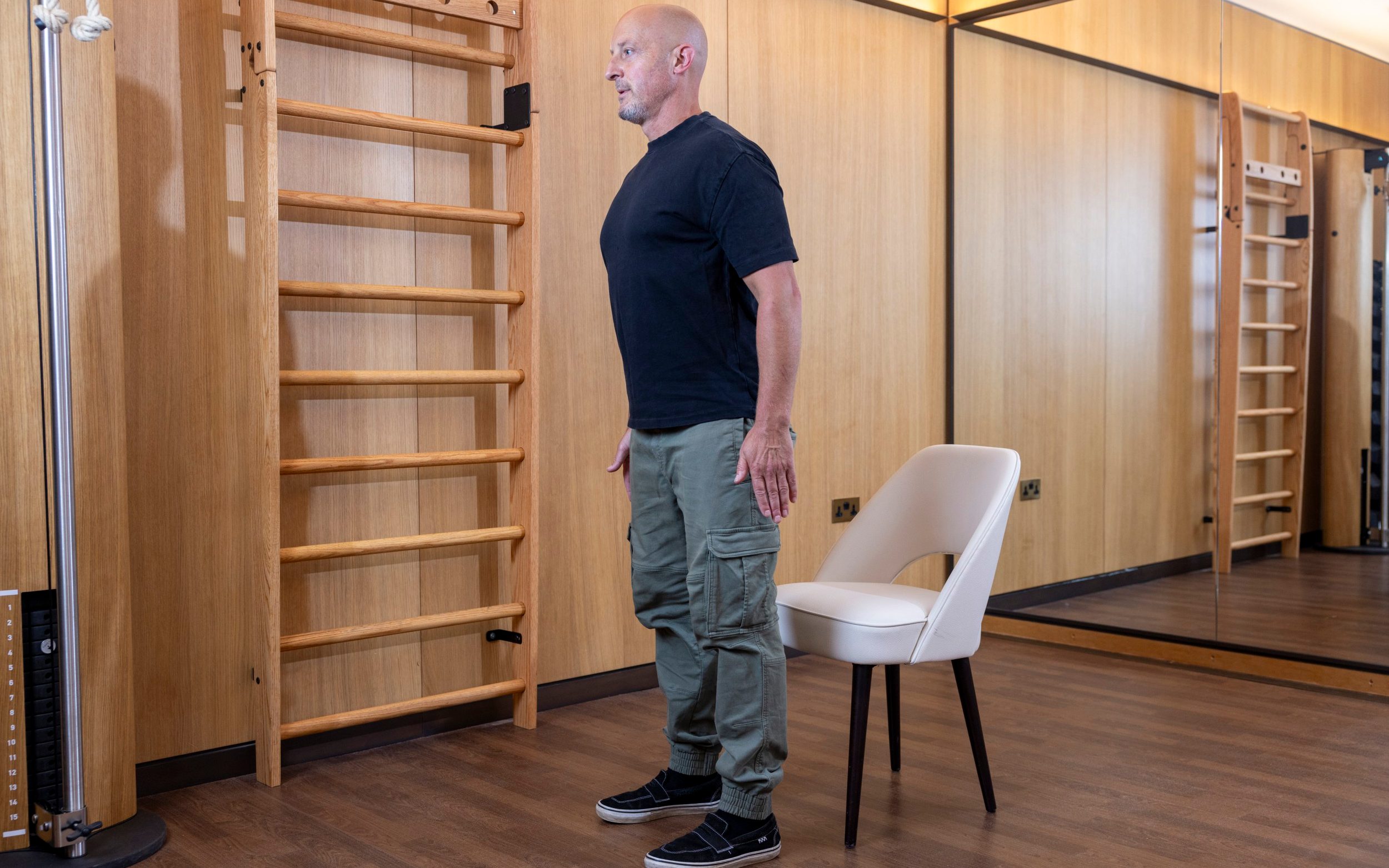
Measures:Lower-body strength and muscular endurance
How to do it:Sit in the middle of a sturdy chair with your feet flat on the floor, hip-width apart and your arms folded across your chest. Set a timer for 30 seconds
Stand up fully, then sit back down with control. Count how many complete stands you can perform in 30 seconds without using your hands
What to aim for: In your 60s, you should be able to manage around 11 to 14 stands, depending on your age and sex. In your 70s, it’s 10 to 12; in your 80s it’s eight to 10
Try full access to The Telegraph free today. Unlock their award-winning website and essential news app, plus useful tools and expert guides for your money, health and holidays
