


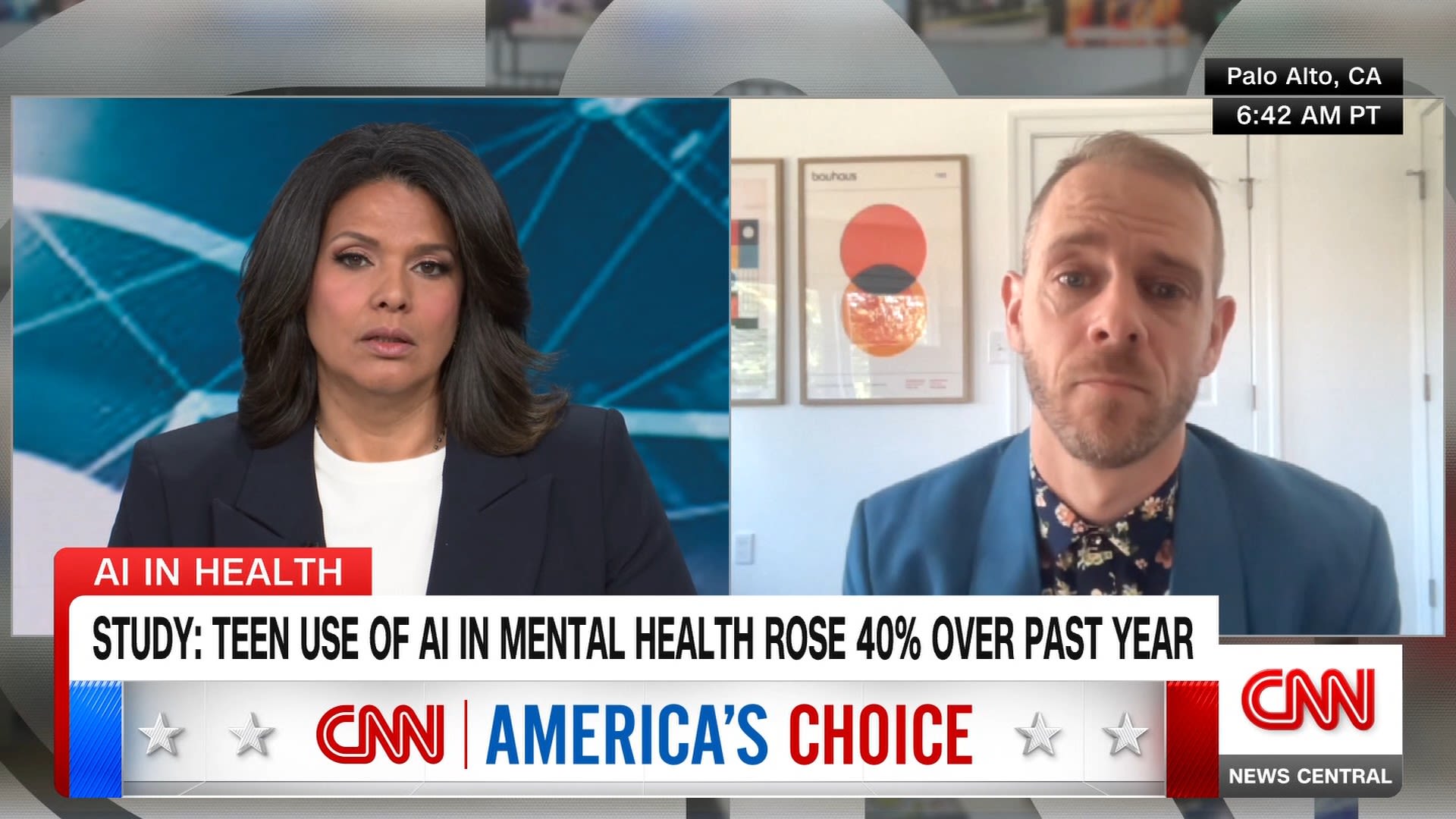
New study shows uptick in number of young people seeking mental health help from AI
2:45• Source:
CNN
New study shows uptick in number of young people seeking mental health help from AI
2:45
See all topics
Not sure what type of bug bit you or what caused that rash? Many Americans hashtag their questions and turn to social media for health information, whether they are looking up symptoms, researching a diagnosis or learning about a treatment
More than 1 in 5 adults in the United States who use social media reported making health decisions based on information they encountered there, according to a study published June 30 in the journal JAMA
How should people use social media to learn about their health? What are the biggest pitfalls? And how should people think about artificial intelligence, which is increasingly shaping the information they see online?
To help answer these questions, I spoke with CNN wellness expert Dr. Leana Wen, an emergency physician and clinical associate professor at George Washington University. She previously served as Baltimore’s health commissioner
CNN: What did we learn about Americans using social media for health information in this new study?
Dr. Leana Wen: The study found that social media has become a major source of health information. Nearly 88% of adults reported using social media in the previous year. Among those users, almost 85% said they had shared general or personal health information, and about 70% participated in online health communities. Perhaps the most notable finding was that more than 1 in 5 social media users — about 47 million Americans —reported making health decisions based on information they saw on social media.
At the same time, nearly 78% of users said they believed health information on social media was false or misleading. The researchers also found that older adults and Hispanic users were more likely to report making health decisions based on social media
Adults with chronic medical conditions including cancer, cardiovascular diseases and mental health conditions were just as likely as those without chronic conditions to make health decisions based on information they encountered online, which suggests that social media has become an importantlso for those managing ongoing medical conditions
The study analyzed data from the 2024 Health Information National Trends Survey, which is a nationally representative survey funded by the US National Cancer Institute. Researchers examined responses from more than 7,270 adults, representing approximately 262 million adults in the US, to better understand how people engage with health information on social media
CNN: Why are so many people turning to social media for health information?
Wen: There are many understandable reasons. Social media is fast, free and available at any hour. Certain platforms offer short, easy-to-understand videos or graphics that can explain complicated medical topics. People can also hear directly from others who have experienced the same diagnosis, treatment or procedure, which can be reassuring in ways that a textbook or medical website cannot
Another reason is that healthcare has become increasingly complex.Office visits are often extremely time-limited, and people leave with additional questions that they couldn’t get answered there. Or they have new questions but can’t reach their provider in time. Patients may prefer to turn to social media to learn more about a condition, hear how others managed side effects or find practical tips for living with a chronic illness
AI models are not advanced enough to be relied upon for accurate medical information, so be sure to verify online guidance with your physician.
CNN: What are the greatest risks of relying on social media for health advice?
Wen: One of the biggest concerns is that social media does not distinguish between expert advice and personal opinion. An experienced physician, a scientist, a patient sharing their story and an influencer with no medical training peddling their own “treatments” may all appear side by side in someone’s feed, with no way to tell which is the most reliable
Another problem is that social media platforms are designed to maximize engagement. Posts that are surprising, emotional or controversial can often spread much farther, with more “likes” and responses, than nuanced scientific explanations
In addition, financial conflicts of interest may exist that aren’t being disclosed. Some creators, including some medical providers, are being paid to promote supplements, tests or wellness products
Finally, the algorithms contained in social media can perpetuate misinformation. Once someone begins watching or interacting with one type of health content, the platform is likely to recommend more of the same. Over time, that can create an echo chamber in which inaccurate claims seem increasingly credible because they are encountered repeatedly. This could lead the patient to distrust genuine — and accurate — medical advice
CNN: Social media platforms are increasingly using artificial intelligence, and many people are also asking AI chatbots health questions directly. How should people think about using AI for health information?
Wen: AI is changing the health information landscape by generating and amplifying content that people see on social media. Also, many people are now asking AI chatbots health questions directly instead of using a traditional search engine
I think AI can be a useful educational tool. It can explain medical terminology, summarize reputable medical information, compare treatment options at a high level and help people prepare questions for their next medical visit. Used this way, AI can help patients become better informed and more engaged in their care
At the same time, AI has important limitations. It can generate information that sounds authoritative but is inaccurate. The tool can misunderstand the details of an individual’s medical situation. At this point, AI models are not advanced enough to be relied upon for medical information and should not replace clinical judgment by a human clinician. People should be just as wary of information obtained from AI as they are of content from social media — and always verify with their clinician.
CNN: Can social media ever be a good
Wen: Absolutely; there are many physicians, nurses, scientists, public health agencies, hospitals and patient advocacy organizations that provide accurate, evidence-based information on various social media platforms. Many experts find it to be an excellent way to communicate new research findings and public health recommendations quickly
Social media can also be valuable for people living with chronic conditions, in particular rare diseases. Patients can learn practical tips for managing daily life, engage in support groups and online communities, and find comfort in knowing that they are not alone
CNN: What are some best practices for evaluating health information you find on social media?
Wen: The first question is to ask is who is providing this information. Is thepublic health agency or established patient advocacy organization? Even if it’s a reputable individual giving health advice, it’s worth asking whether the information is supported by scientific evidence and not just someone’s personal opinion
Second, be cautious of content that promises quick fixes. If it sounds too good to be true, it probably is. Be especially skeptical if someone is trying to sell a supplement, device or treatment. Medicine is rarely absolute, so I would also be cautious of people who speak in certainties or claim that everyone else is wrong
Third, verify important information before acting on it. Do your own research and find out whether multiple trusted organizations, such as the World Health Organization, American Medical Association, American College of Physicians, American Academy of Pediatrics and the Cleveland Clinic, are making similar recommendations. If the information would lead you to start a new medication, stop a prescribed treatment or spend money on a product the source is selling, make sure to discuss it with your healthcare provider first.
CNN: What is your bottom-line advice for people who use social media to learn about their health?
Wen: Social media and AI have become permanent parts of how people obtain health information, and there could be real value in making medical knowledge more accessible than ever before
Like any tool, though, people should understand the best uses and limitations, and to use them wisely. Use the tools to help you understand medical concepts and learn from the experiences of others. But when it comes to decisions about diagnosis or treatment, rely on evidence-based recommendations and discussions with qualified healthcare professionals who can tailor the treatment to your individual medical circumstances
Get inspired by a weekly roundup on living well, made simple. Sign up for CNN’s Life, But Better newsletter for information and tools designed to improve your well-being
See all topics
