


Published On 24 Aug 2026
These days, Gaza’s healthcare system is not in the news. There are no violent raids on hospitals, as happened to Al Shifa Hospital, while I was working there in November 2023; there are no bombings of hospital wards or sniper killings in their yards; there are no new claims of secret tunnels under medical facilities
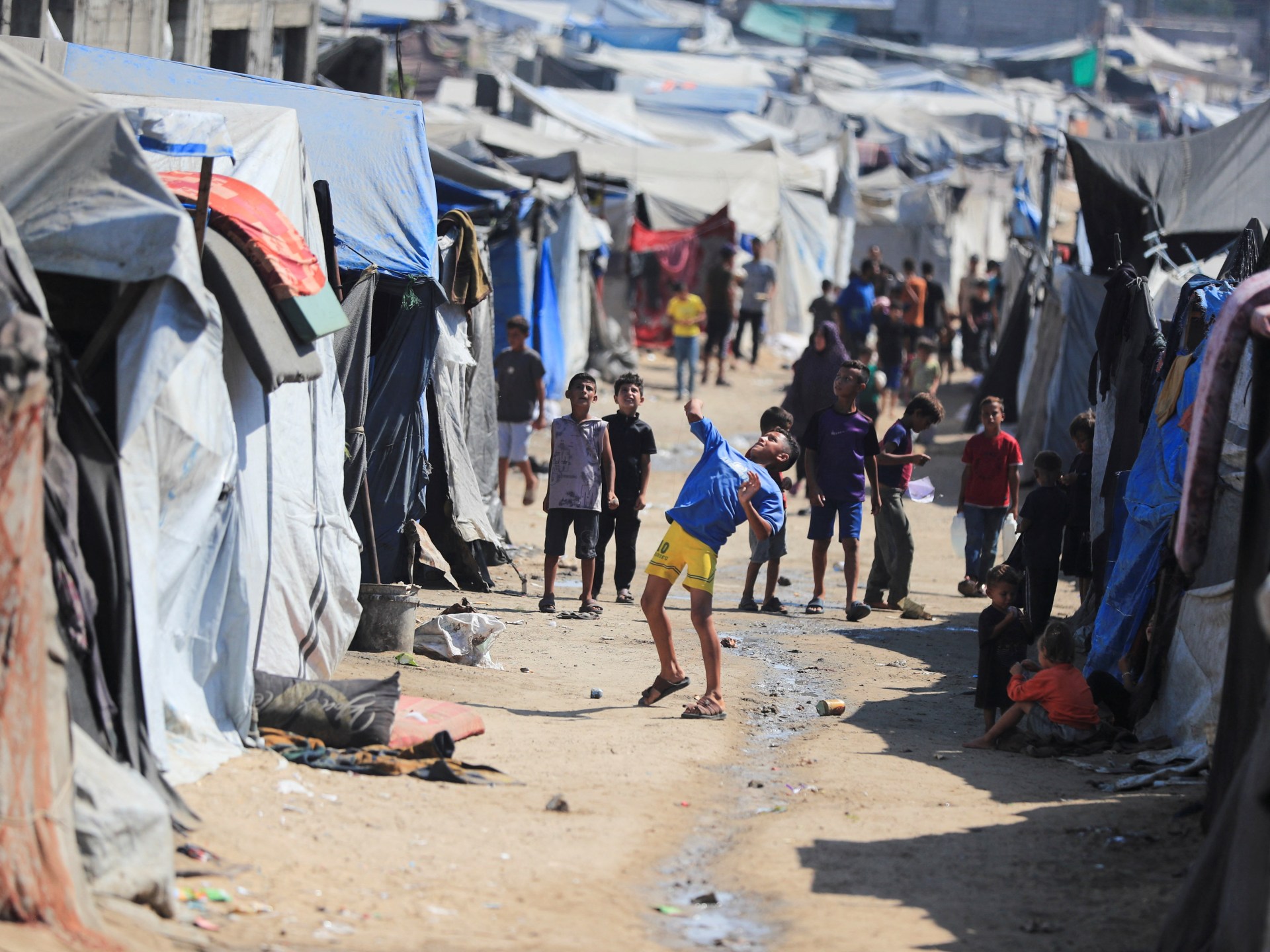
And yet Gaza’s medical system continues to suffer from worsening collapse. Perhaps, this is the most apparent in displacement camps, where the most impoverished and vulnerable people are forced to live. There, the devastated healthcare system cannot reach those who need it the most, nor are the ill and injured able to come to its few functioning points. Lack of sanitation, safe potable water and constant exposure to unbearable heat or cold make the health crisis even worse
Last month, I had the opportunity to visit an informal camp that has emerged on the grounds of what is left of Hassan Salama school in the Nasr neighbourhood of Gaza City. The school was devastated after it was bombed along with the neighbouring Nasr school in August 2024, which resulted in the deaths of at least 30 people
Today, hundreds of people who have been rendered homeless and destitute by the war live in tents in the schoolyard and what is left of the school building. No organisation runs the camp, so there is no provision of any services, including medical ones
I joined a team of several medics from a local private clinic who offered free check-ups at the camp for a day. Our arrival was warmly welcomed. We saw at least 150 patients
Advertisement
Complaints ranged from high blood pressure to chronic diseases, such as diabetes and kidney problems, and infections, such as hepatitis and scabies. We also saw many children with chickenpox, gastroenteritis, diarrhoea and respiratory infections
Although we provided just basic services, the gratitude we received was immense
For many patients in displacement camps, reaching a doctor has become an almost impossible journey that requires effort, energy and relong distances and exhaustion caused by displacement and extreme heat all contribute to some patients delaying medical care, despite their urgent needs
One patient we had, 46 years old, had a bad foot injury caused by shrapnel and needed crutches to move. He had hypertension problems but could not go to the nearby Al Rantisi Hospital as the facility is partially functioning and offering services mostly to children and oncology patients
Walking a long distance to another hospital was clearly not an option for him. To get to a doctor to assess his hypertension problem for free and receive a prescription for medication, he would have had to pay at least $8 for transportation to the nearest health facility
That is a large sum of money for most people in displacement camps who struggle to secure even their daily meals
Delayed medical care, combined with the lack of medication and difficult living conditions, can worsen diseases and can even be fatal
All of this could be prevented if basic healthcare returns to Gaza, particularly under the umbrella of a large organisation such as UNRWA
After the Nakba, UNRWA played an instrumental role in setting up basic healthcare provision for the Palestinian refugees who came to Gaza. It established clinics in each refugee camp, which helped secure a basic level of free healthcare provision
Before the war, UNRWA ran 22 clinics across the Gaza Strip. According to a recent report, only six of them are operational today. Just 19 of Gaza’s 34 hospitals are partially functioning – and “partially functioning” is the key word here. Most wards in these hospitals are not working because of the destruction they have sustained
Today, in the whole of the Gaza Strip, there are just 2,200 inpatient beds available to serve 2 million people. Before the war, just Al Shifa Hospital alone had 700 beds
Various medical services, including lab tests, surgeries and treatments, are no longer available because there are no supplies for them or living medics to perform them
Advertisement
The destruction of medical facilities and the dispossession of Gaza’s residents have transformed the right to healthcare into a privilege
We urgently need a healthcare intervention that focuses, not only on rebuilding hospitals, but also on re-establishing basic care clinics and reaching the most vulnerable in displacement camps
The views expressed in this article are the author’s own and do not necessarily reflect Al Jazeera’s editorial stance
