


NPR
Planet Money
Planet Money
The sneaky economics of healthwashing
August 4, 20266:30 AM ET

d3sign/Getty Images
This article first appeared in thePlanet Moneynewsletter.You can sign up here.
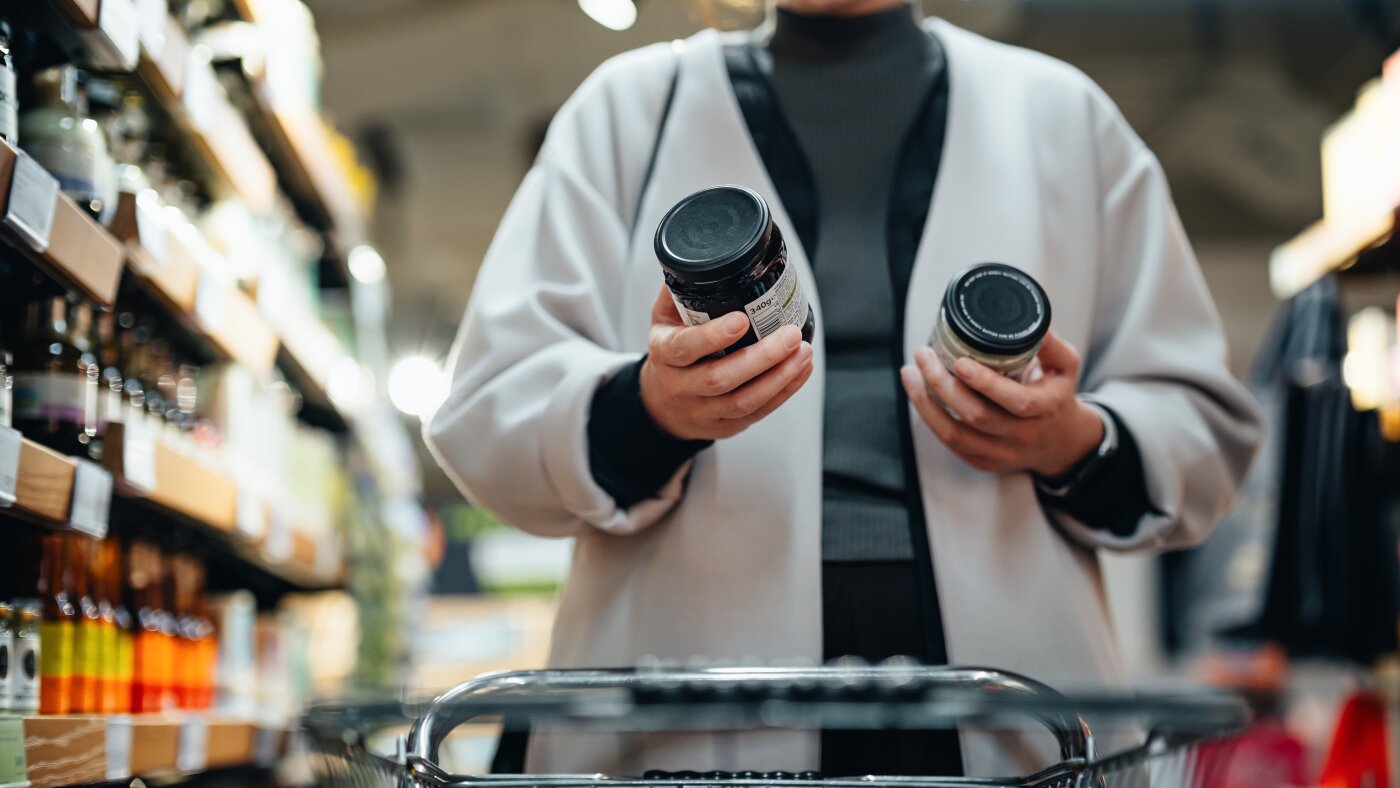
If you go to a store like Whole Foods, you’ll find a lot more than … whole foods. You’ll also find bougie packaged snacks, cereals, and all sorts of other processed foods and drinks. Often they’ll have buzzwords on their packaging. “Organic.” “Non-GMO.” “High protein.” “No Cholesterol.” “100% Avocado Oil.” These products tend to cost more, and they come with a sort of promise: they’re better for you than the cheaper stuff
But these food products may not actually be healthier than the cheaper stuff. Sometimes it’s because they’re still packed with sugar, salt, saturated fat, preservatives, and other additives. Other times their healthy-sounding ingredients aren’t actually healthier (labels like “organic” and “non-GMO” don’t necessarily make a product more nutritious). In other, more extreme cases, these products may not even include the healthier ingredients they’re charging you a premium for
Our NPR colleague Maria Godoy recently reported on a new study by researchers at UC Davis that suggests a bunch of avocado-oil products have false claims on their packaging. The researchers did a chemical analysis of 54 products that listed avocado oil as their only oil ingredient. We’re talking swanky products like avocado-oil potato chips, salad dressing, and mayonnaise
The researchers found that, despite being labeled as containing only that pure, uncut avocado oil — a whopping 89% of the products they tested appeared to be adulterated with other oils. One avocado-oil product appeared to have no avocado oil at all, according to one of the researchers
For Millennials like me who sustain ourselves almost exclusively on avocado products, it’s enough to make you fall into an avocado pit of despair
The good news is that this appears to be one of the more egregious recent examples of food mislabeling. If a product lists avocado oil as its only oil ingredient but actually contains other oils, that could violate federal food-labeling rules. The study did not determine who introduced the other oils or whether the brands themselves knew about them. But it could help lead to more accurate labels
The bad news, however, is that companies don’t have to literally lie on their ingredient lists to mislead consumers. There are subtler ways. They can nudge consumers into believing their products are healthier — and worth paying a premium price — by using buzzwords, clever packaging, and other marketing gimmicks. Some consumer advocates call this “healthwashing.”
So in this edition of the Planet Money newsletter, we’re digging into the economics of healthwashing. Why is it so profitable? Why are our brains so susceptible to it? And what, if anything, should regulators do about it? Along the way, we called up one of the legends of food policy to help us figure out how to shop without getting hoodwinked
People shop at a supermarket in Santa Monica, California, on September 13, 2022. US annual inflation slowed slightly in August, largely thanks to falling gasoline prices — but likely not enough to satisfy the Federal Reserve and President Joe Biden, as high prices continue inflicting pain on Americans. (Photo by Apu GOMES / AFP
APU GOMES/AFP
toggle caption
APU GOMES/AFP via Getty Images
The economics of healthwashing
The economics of healthwashing starts with a simple reality: we often don’t really know what’s in the food products we’re buying
Economists have one of those off-putting, jargony terms for this: asymmetric information. But it’s a simple idea. It’s when one side of a transaction has less information than the other. And it can have serious consequences for the health of a marketplace
One consequence is that it gives businesses more opportunities to mislead and overcharge consumers. Think getting ripped off by a mechanic, being convinced to get an unnecessary test by a doctor, buying a crappy used car from a dishonest dealer — or paying $10 for a bag of supposedly pure avocado-oil chips when those chips are actually made with cheaper, less Millennial-coded oils
In the absence of complete information about what we’re buying, we consumers have to rely on clues to figure out whether the stuff we’re buying is legit. What is the Yelp review of this mechanic? Where did this doctor go to med school? Do I trust that this brand of avocado-oil chips is actually using avocado oil? It’s like we’re lost in the supermarket (h/t The Clash) and searching for anything that helps us make the best decision for ourselves and our families
Economists see this sort of information problem as a justification for government intervention. When buyers can’t easily tell what they’re buying, markets don’t work as well as they should. That’s why the federal government requires most packaged foods to disclose their ingredients and nutrition information. (Though, as Sarah Gonzalez recently reported forPlanet Money, the FDA’s oversight of our food system still has some surprising blind spots.)
But we’re human. We’re busy. We don’t have hours to spend at the grocery store decoding nutritional information. So we resort to mental shortcuts. We focus on the front of the package. We look for buzzwords. Attractive packaging. Pictures of healthy-looking people frolicking under avocado trees or whatever
Behavioral economists call our tendency to make these kinds of snap judgments based on marketing cues the “health halo effect.” It’s a cognitive bias where one healthy-sounding claim or visual can cast a halo over everything else, making us assume a product is healthier overall than it really is. Sometimes that could be a “high-protein” or “organic” label. Sometimes it could be, well, hamburger buns packaged to look like a six-pack of abs
Healthwashing isn’t just about persuasion. It may also be part of a pricing strategy. Some shoppers are willing to pay more for products than others. Companies would love to know the maximum each of us is willing to pay for a bag of chips, and then charge each of us exactly that amount
Some shoppers — typically those with more disposable income to burn — are willing to pay more for foods that seem healthier (even if they aren’t necessarily). Labels like “organic,” “non-GMO,” and “100% avocado oil” may help companies appeal to those customers and convince them to pay a premium, sometimes for products that aren’t all that different from their cheaper counterparts
How breakfast cereal helped pioneer healthwashing
To get a richer — or should we say more nutritious — understanding of healthwashing, we called up Marion Nestle, who is pretty much a legend in the food policy world (and has no relation to the food company with the same name). She’s now an emerita professor of nutrition, food studies, and public health at New York University, and she’s spent decades studying how the food industry shapes what we eat through marketing, supermarket practices, and government lobbying
Nestle has been spending her recent days thinking a lot about… breakfast cereal. I mean, so have I. I always think about cereal. But she’s thinking about it more in an academic, intellectual sense. She has a book coming out soon, Sugar Coated, which she co-authored with a former cereal executive. It traces how cereal companies helped pioneer many of the marketing strategies that made sugary, ultra-processed foods seem wholesome and nutritious
In fact, Nestle says, one of the first big cereal companies, Kellogg’s, got its start promoting breakfast cereal as a health food. Over the next century, cereal companies became masters at selling products as healthy — even as many of those cereals became increasingly sugary
Nestle says cereal boxes are essentially billboards. And, facing fierce competition for your attention in the grocery aisle, cereal companies have become masters at marketing their products
Nestle also argues that sustained government pressure from Big Cereal helped expand the health claims they could place on packages. Think like “heart healthy” or “good for your immune system.”
“The cereal companies pushed, and pushed, and pushed, and pushed, and eventually forced the FDA to allow them to make health claims on cereal boxes,” Nestle says. She says this was ultimately backed up by Congress and the courts. “First Amendment rights to market junk food to kids, you know?”
One of her favorite recent examples of what she considers healthwashing, Nestle says, is Cookies & Crème Cheerios Protein. Because what could be healthier than protein-packed cookies and cream for breakfast?
How not to get hoodwinked by healthwashing
So how do we avoid getting hoodwinked by healthwashing?
Of course, not every healthy-sounding label is misleading. A “low-sugar” fruit snack may very well be healthier than a regular fruit snack
Nestle says it’s important to read a product’s nutrition facts and ingredients list. She puts more weight on the ingredients list because she says the nutrition facts information can be confusing. “The ingredient list is easier,” she says. “It just lists everything in order of weight. That one’s easy and tells you a lot.”
But even with government regulations that force food makers to list ingredients and nutrition information, many consumers continue to get tricked into believing that products are healthier than they actually are. Is there more the government should do?
There’s now a movement to make nutrition information much harder to miss. Under a proposed FDA rule, most packaged foods would have to carry a small box on the front labeling their levels of saturated fat, sodium and added sugar as “Low,” “Med” or “High.” The idea is to translate the numbers buried in the Nutrition Facts panel into something shoppers can understand at a quick glance
Nestle points to several Latin American countries that have gone further, requiring prominent warning symbols on products that are high in sugar, sodium, saturated fat or other ingredients of concern
”There’s now an enormous amount of research that shows that sales of foods with warning labels are down — significantly enough so that the food industry just hates them,” she says. “ What has been more difficult to show is that the reduction in sales of these foods has had an effect on health. That’s been harder to show.”
But maybe healthy eating doesn’t have to be so complicated. “The healthiest foods don’t have nutrition facts panels,” Nestle says. Think apples, oranges, farro, almonds, kale, and broccoli
Nestle says Michael Pollan, the author of The Omnivore’s Dilemma, has been able to distill proper healthy eating advice into seven words: “Eat food. Not too much. Mostly plants.”
Maybe it’s worth adding three more words: Ignore the marketing
P.S. I left out one of the wildest implications of asymmetric information. When buyers can’t reliably tell high-quality products from low-quality ones, the low-quality products can actually drive the good ones out and wreck a whole market. Think of the avocado-oil market: if shoppers can’t reliably tell faux avocado-oil products from the real deal, honest producers are forced to compete against cheaper knockoffs that look just as good on the shelf. This is known as “adverse selection.” It’s one of the central insights of Nobel Prize-winning economist George Akerlof’s famous paper “The Market for Lemons“— one of the most influential economics papers ever written. It’s also one of the inspirations behind the Planet Money board game: Sell Me a Sasquatch. Which is convenient, because next week’s newsletter is a little behind-the-scenes look at the economics ideas and inside jokes baked into the game. Stay tuned! You can subscribe here.
