


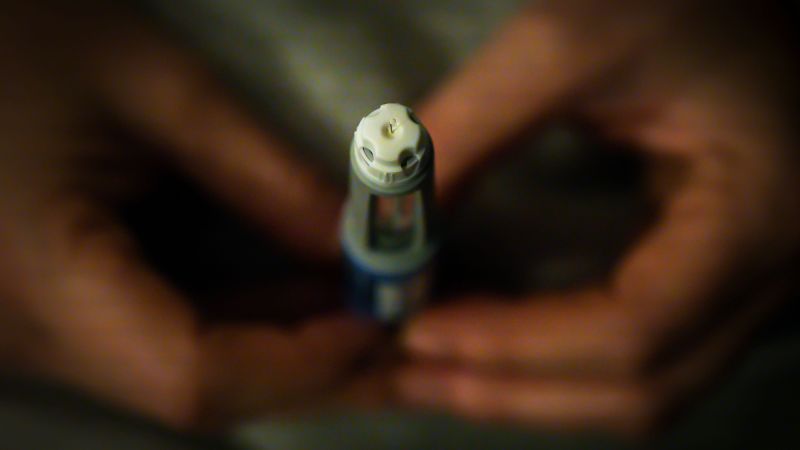
A woman holds an Ozempic needle shot pen in Warsaw, Poland in November 2023.
See all topics
London —
The temperature was 92 degrees Fahrenheit. The sweat, profuse. And I was walking toward an exhibition about the “obesity experience” on London’s bustling riverside funded by a $220 billion pharmaceutical company
It was daytwo of two. In a few hours’ time, the exhibition, designed as a maze, would be gone. And so too would be my chance to see, up close, the promotional gymnastics of a booming weight-loss drug industry bound by strict laws around what it can – and absolutely cannot – say to the British public
Heatwave be damned, I was going
When I appeared at the mouth of the maze, a green T-shirted man explained that he was from Danish drugmaker Novo Nordisk. The exhibition, he said, represents the many stops, starts and setbacks people find when trying to lose weight — it can sort of feel like getting lost in a maze
A “maze” exhibition on obesity funded by Novo Nordisk in London, July 2026.
I asked what Novo Nordisk did or made specifically
“I don’t know,” he replied
I asked again
“Ok, I do know. I’m just not allowed to tell you.”
Novo Nordisk is the maker of Ozempic and Wegovy, GLP-1 medications approved for diabetes control and weight loss, respectively. Like all pharmaceutical companies and pharmacies in Britain, it is banned from advertising medications to the public that can only be prescribed by a doctor. And so, in a country where the market for weight loss drugs is extremely competitive, they must get creative
In the United States, it’s a very different picture
“It’s everywhere,” said Jesse Dresser, a partner at Frier Levitt, a New Jersey-based law firm specializing in healthcare and life sciences. “It’s every television program … every time you go on the internet … you wind up invariably seeing (ads) for drugs.”

A commercial for GLP-1 drugs during the Super Bowl LX broadcast on television screens at a bar in California, United States in February 2026.
But — and I say this with love to American readers — that is not normal. In fact, the vast majority of countries around the world ban ads for prescription-only medications to the public. The US and New Zealand are the only exceptions
The First Amendment to the US Constitution restricts the American government from regulating most kinds of speech, and helps to explain the US’ outliter status, Dresser said. In 1997, the US Food and Drug Administration also relaxed rules around drug ads on TV and radio, paving the way for Big Pharma’s omnipresence in American life today – despite recent government efforts to restrain the practice
Yet, in many countries, including Britain, companies can promote their brandside information about a health condition but under no circumstances push a specific medication

An information board on obesity in Novo Nordisk’s maze exhibition in London, July 2026
A spokesperson for Novo Nordisk told CNN that it aimed to encourage people to understand obesity as a complex, chronic health condition through its July disease awareness campaign
“Obesity is often misunderstood and associated with stigma, and we believe more open, informed conversations can help improve understanding of the realities people face,” the spokesperson said in a statement
Washington is also taking a stricter stance on Big Pharma advertising than in years past. Health Secretary Robert F. Kennedy Jr. has spoken openly of his wish to ban direct-to-consumer ads, arguing that they are fueling over-consumption of prescription medications
Though an outright ban is unlikely – it would meet stiff legal challenges from the industry – President Donald Trump has directed federal agencies to more stringently enforce existing regulations. His administration is also hoping to introduce new rules requiring companies to make lengthier disclosures of drugs’ side effects
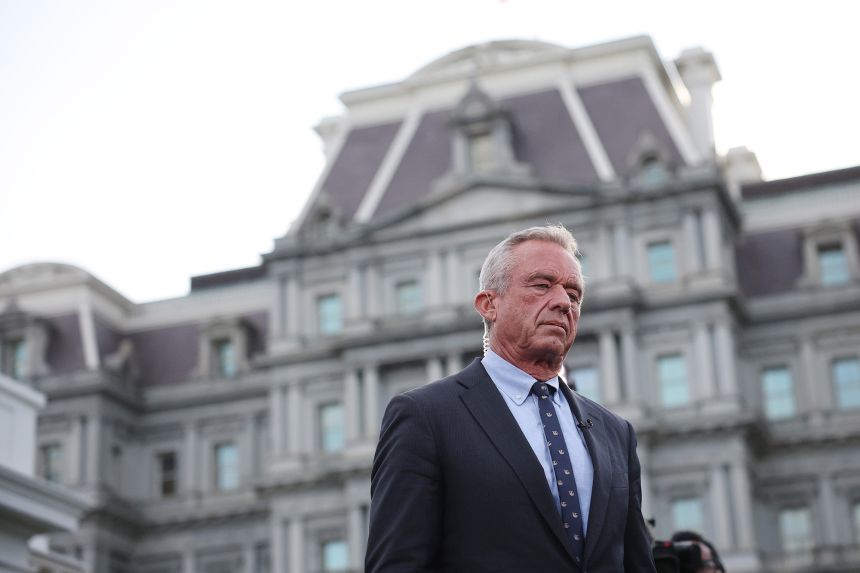
US Health and Human Services Secretary Robert F. Kennedy Jr. is interviewed on Fox News outside of the White House West Wing in September 2025 in Washington, DC.
Geoff Meacham, global head of healthcare at Citi, told CNN that drug advertising in the US has ramped up over the past 10 to 15 years
Then, ads were mostly for drugs targeted at a very broad consumer market, like statins to lower cholesterol, or Botox, he said
“But then they started to advertise cancer drugs – and now it’s (for) everything.”
The Danish drugmaker is far from unique
Its American rival Eli Lilly, the maker of GLP-1s Mounjaro and Zepbound, recently ran its own campaign in London. A few weeks ago, I spotted a poster on the city’s transit network reading: “Obesity is a complex disease.” It directed viewers to an Eli Lilly website with a questionnaire intended to “empower” an “informed discussion” with a healthcare provider about their weight
Britain’s Advertising Standards Authority told CNN that it normally receives only one two complaints about any given ad, but it has received over 100 complaints from members of the public about Eli Lilly’s ad campaign. Jessica Tye, regulatory projects manager at the ASA, said a chunk of those complaints argued that Eli Lilly should have made its commercial interests more explicit
Tye said the regulator is assessing the complaints but has not decided whether to launch an investigation into the ad
In France, however, both GLP-1 giants have already fallen afoul of advertising rules. Earlier this year, the country’s pharmaceutical regulator announced fines of roughly €1.8 million euros ($2.1 million) for Novo Nordisk and €110,000 ($126,000) for Eli Lilly over public campaigns it considered to be indirect promotion(s)” of prescription-only drugs
The ads were “likely to mislead audiences in a context marked by extensive media coverage and increasing misuse of (GLP-1s), particularly for weight loss purposes with aesthetic goals,” the regulator ANSM said in a statement
Novo Nordisk said it was “exploring all possible legal avenues to challenge” ANSM’s decision. “These campaigns – which are no longer being broadcast – were part of best practices for prevention and awareness, designed to ensure the safety of the patient care pathway and to share reliable information with patients,” a spokesperson said in a statement
Eli Lilly did not respond to CNN’s request for comment. The company said in a statement to French newspaper Le Monde in May that it believed its campaign was “in line with the framework applicable to communications relating to human health.”
The bulk of weight-loss ads come not from the makers of GLP-1s but the raft of online pharmacies distributing them
Tye, at Britain’s ASA, said some of these pharmacies have strayed into a “gray area” between a disease awareness campaign and flagrant prescription drug promotion, such as using images that heavily imply a specific medication
“There’s a huge opportunity for businesses in this sector… so it’s perhaps not surprising that we’ve seen huge numbers of these ads and that we have seen quite a lot creeping into that grayarea,” she told CNN
Despite theirrelative permissiveness, health agencies in the US are cracking down on online pharmacies’ promotion of GLP-1s – specifically ads for their copycat, or “compounded,” versions that were needed to fill previous supply shortages of name-brand products
The US FDA has sent dozens of warning letters to telehealth companies this year over misleading ads for compounded GLP-1s, many of which implied the drugs were FDA-approved. Compounded drugs are not FDA approved, and they are not mass-produced to the same specification, but customized – perhaps adding a novel ingredient or altering the drug’s form
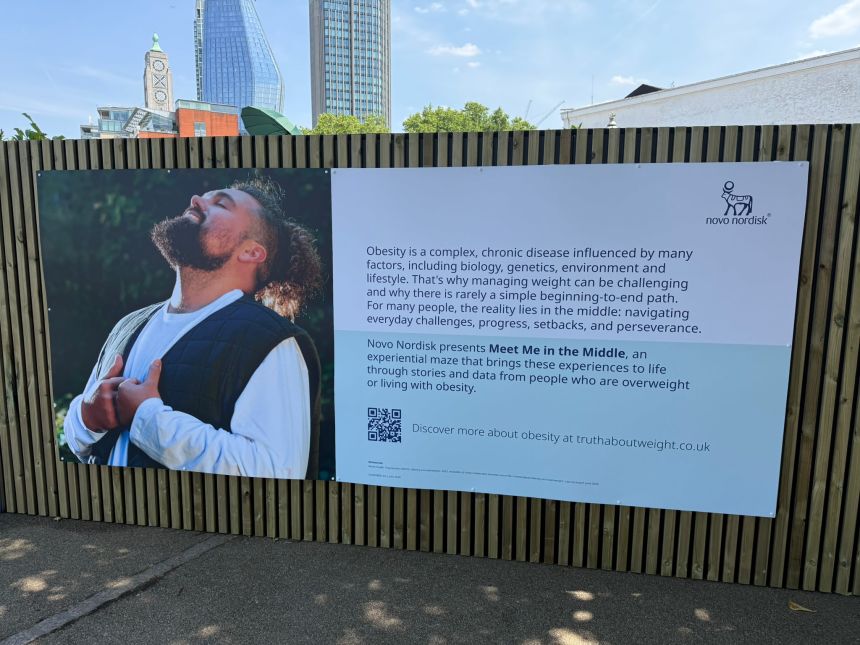
An information board on the outside of Novo Nordisk’s obesity exhibition in London, July 2026.
Back in London, as I entered the maze, I overheard Green T-shirt’s colleagues reassure him that he had responded correctly to my questions (bushes aren’t very soundproof). As I wound my way through, information boards and TV screens cited statistics on obesity in Britain and featured interviews with people saying how difficult they found losing weight
One board, in small print, read: “This experience does not promote any specific treatment or product.”
Everywhere was Novo Nordisk’s logo. Nowhere were its drugs
See all topics
