



The Worldfolio: CCC Shapes the Future of Retail Through Lifestyle Design and Experience-Led Spaces
JAPANOTHERSASIA-PACIFICJAPANRETAILLIFESTYLE
CCC Shapes the Future of Retail Through Lifestyle Design and Experience-Led Spaces
Interview – July 14, 2026
As consumers increasingly value experiences over ownership, CCC is creating spaces that blend culture, community and lifestyle. From TSUTAYA BOOKS to SHARE LOUNGE and SHIBUYA TSUTAYA, the company continues to reshape how people connect with retail, culture and everyday life
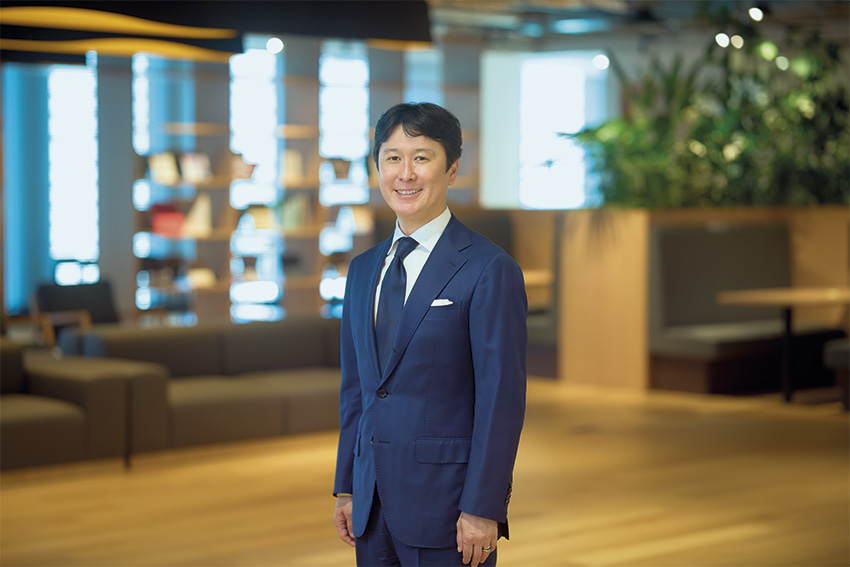
YASUNORI TAKAHASHI | PRESIDENT AND CEO OF CCC (CULTURE CONVENIENCE CLUB., LTD.)
Across global markets, retail is undergoing a profound structural shift. In Japan, a retail market worth roughly JPY 150 trillion has been reshaped by forces such as the rise of e-commerce, the decline of physical media, and a broader move among consumers away from ownership and toward experience-led spending. Japan is often seen as one of the strongest examples of how retail can evolve into something more immersive, emotional, and spatial. From your perspective, what has allowed Japan to move so strongly in this direction, and what distinguishes Japanese retail space design and consumer understanding from what you see in overseas markets?
Because we do not actually live in the United States or Europe, it is honestly difficult for us to compare those markets with Japan in a completely lived, first-hand way. So I would not want to overstate that comparison. At the same time, because I travel overseas often for both work and private reasons, one thing I do feel is that Japanese retail spaces tend to be exceptionally fine-tuned. What I mean by that is not simply that they are aesthetically polished, but that the value being delivered is designed very carefully at the level of detail. The expression of the space, the way the service is layered, the way the customer experience is shaped, all of that tends to be thought through very precisely.
Another characteristic may be speed of improvement. Retail is still business, so naturally some things succeed and some do not. But when something does not work, I think Japanese retail often responds very quickly. There is a willingness to refine, adjust, and improve at speed, and that may be one of its strengths
At CCC, our basic philosophy has long been to propose lifestyles. In each era, we ask what kind of service or package we can provide for the lifestyle that customers find comfortable or desirable at that particular moment. That is the basis of our thinking. So the real question for us is always how to adjust to the era, whether we are talking about the 1980s, the 1990s, the 2000s, the 2010s, or the present day. Internally, we often talk about what we call a kind of “shift” or “tremor” in the times. When those early signs appear, we focus very strongly on identifying the point at which a new business can be ignited.
In reality, there are actually not many cases where we created something completely from zero. For example, in Japan we are strongly associated with the book-and-cafe style, but similar ideas already existed in the United States. We were not the first in the world. What mattered was whether we could define that concept sharply and establish it in Japan, where it had not existed in that form
Our business has involved combining fields that were not traditionally combined. In the Japanese publishing and distribution world, it was not normal to place books and a cafe together and say to customers, “Feel free to enjoy a coffee and browse books before purchasing.” When we first did that, we were heavily criticized. People felt we were disrupting the order of the industry. But our starting point has always been the customer. We build business based on what customers actually want, not based only on what an industry has historically accepted. In that sense, our role is sometimes to go beyond old conventions and habits, even if that creates resistance.
A good example is the assumption many competing bookstores had at the time. They believed that if people sat all day drinking coffee and reading books, they would never buy anything. But that was not what happened. When customers were able to spend time with a book, read it carefully, and engage with it in a relaxed way, they actually developed attachment to it. As a result, many of them ended up buying it and taking it home. That allowed us to see a deeper customer need that could not be seen from the seller’s side alone. I think that kind of customer-based understanding is very important when thinking about why experience-led retail has taken the form it has in Japan.
Japan is also facing a very different kind of transition, one linked not just to commerce but to demography, place, and the long-term viability of local communities. With population decline accelerating and projections suggesting that many municipalities could disappear by 2040, the issue is no longer simply how to attract visitors, but how to create environments that encourage people to gather, participate, and remain connected over time. Governments may invest in tourism and regional revitalization, but social and spatial design also matter. Your company has worked on spaces that appear to do exactly that. In your view, what determines whether a community space succeeds or fails when the goal is to build sustainable local communities?
One thing is very clear to me: simply creating a beautiful place is not enough. Even if you make an attractive library or some other impressive facility, that alone will never make it sustainable. A beautiful place may draw people at first, but that does not mean the relationship will continue. Initial attention and long-term sustainability are not the same thing
What matters most is the relationship between the people who live there, the people who work there and run local industries, and the people like us who create and operate places. We need to stay in the area continuously, communicate deeply, and build trust over time. Through that process, we begin to understand values that local people themselves may not always fully recognize. Very often, a place has real experiential, cultural, or social value already inside it, but the people who live there do not necessarily see it in that way because it is simply part of their everyday life. Our role is to understand that value deeply and then find ways to communicate it to others. I think that communication design is one of the most important elements.
Take the case of the library we created in Takeo, in Saga Prefecture. That project increased not only the use of the space by local residents, but also the number of people from outside the area who became connected to it. I would prefer to provide exact numbers separately in order to be precise, but the important point is that the space became meaningful both to the people who lived there and to people beyond the immediate community
Part of what made that possible was operational change. Places that had previously been closed on weekends, or that had closed at six in the evening, were opened almost every day of the year and kept open until nine at night. That alone changes the relationship between a place and the people around it, because it creates conditions in which gathering becomes easier and more natural. On top of that, we held events nearly every day, involving local people directly. The source mentions around 700 events a year, which means one or two events almost every day. That kind of rhythm matters. It turns a place from a static facility into something alive.
Once that happens, a kind of positive chain reaction can begin. Local people may start to feel that it is acceptable for others to know more about them, their place, their products, and their culture. They may feel more comfortable sharing what they have, showing what they do, and participating in public life. That is very important. The success of a community space, in that sense, depends not only on design quality but on whether it creates ongoing participation, local ownership, and a continuing exchange between residents and the wider world.
Japanese cultural influence has expanded globally for decades through anime, design, food, and retail concepts, but increasingly that influence is being felt not only through products and content, but through experiences, spaces, and ways of living. Your company seems to occupy an unusual position within that shift, because it does not simply distribute culture, but translates it into environments people can physically enter and inhabit. How do you see CCC’s role as a bridge between Japan and the world at a moment when Japanese culture is being engaged with more and more through lived experience rather than through objects alone?
Our company name is Culture Convenience Club, so from the beginning we have been very conscious of the question of how to deliver culture in a way that people can access easily. But when we use the word “culture,” we are not thinking only of art, content, or visible products. In Japanese, the word bunka can also be understood as a way of life. In other words, it refers to the lifestyle of people living in a particular era. That broader meaning is very important to us
What we want to communicate is not only the external form of Japanese culture, but also the depth behind it. There are products, spaces, and visible expressions, of course, but behind those things there are mindsets, spiritual elements, values, and ways of seeing the world. I think the essence of Japanese culture lies there. So if we can communicate not just the visible surface but also something of that inner background, then that would be meaningful
For example, Steve Jobs is often said to have been interested in Zen. I do not think that means he was interested only in Zen as a formal practice. It may be that he was drawn to the spirituality or sensibility behind it. I think the same can be said of many forms of Japanese IP content that are popular overseas. What people are responding to may not be only the surface story, design, or character, but also the underlying values and worldview that came out of Japanese life and Japanese sensibilities. We ourselves are interested in understanding more deeply what exactly people overseas find compelling.
A very simple and visible example might be Shohei Ohtani. The way he shows consideration for others, or behaves with care and discipline, can be read as expressing certain Japanese values in a form that people abroad can immediately see. The same can be said of Japanese sports supporters who pick up trash after games. For many Japanese people, that may feel ordinary and natural. But people from other countries may look at it and ask why they do that, and what kind of values are behind it. That moment of curiosity is important. It suggests that people are not only interested in what Japan produces, but in the sensibility behind it.
If our role can be to create places and experiences that help convey that deeper background, then I think that is a meaningful form of cultural bridge-building. It is not only about exporting a product. It is about helping people encounter a way of thinking and a way of living that sits behind the visible form
Many companies now speak the language of the experience economy, but in practice a large number remain fundamentally transactional. Your company, by contrast, seems to have spent decades questioning the traditional hierarchy in which products come first and experience follows. In that context, how do you define CCC today? Is it still best understood as a retailer, a lifestyle company, a planning company, or something else altogether?
Since our founding, CCC has consistently held the vision of becoming the world’s greatest planning company. That vision has not changed, and we have no intention of changing it. Of course, whether every employee fully understands that in the same way is another question, but as a company, that is the core vision
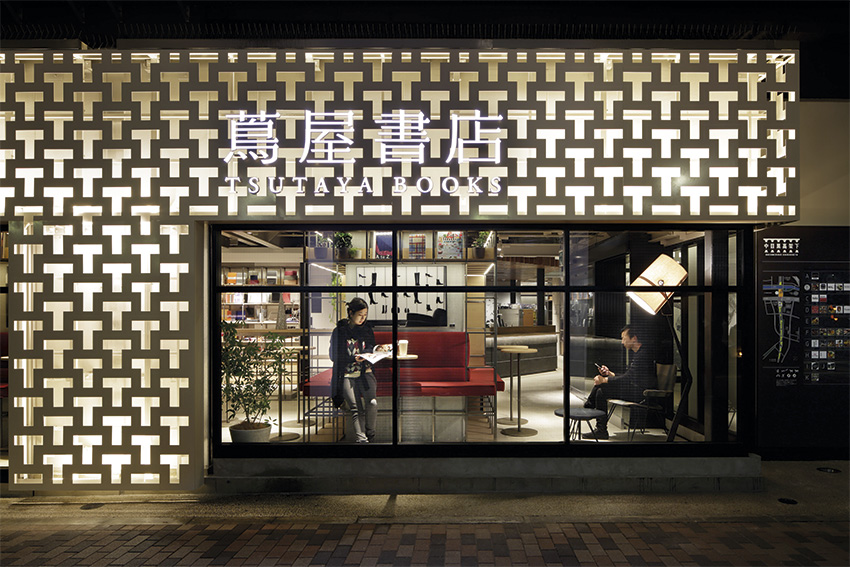
In different periods, we have created businesses such as TSUTAYA, TSUTAYA BOOKS, Daikanyama T-SITE, and SHARE LOUNGE. Those businesses may look different on the surface, but for us they were all proposals for a lifestyle suited to their time. They were not created simply as businesses to be operated indefinitely in the same form. They were attempts to identify where the world was moving and to respond with something that could shape a new kind of customer experience
The difficulty is that once a business becomes successful, the business itself can become the goal. People begin to focus on operating it, scaling it, and growing it. But I always say to our employees that because we are a planning company, our purpose is not merely to expand a business we have already created. Our purpose is to continue searching for the next shift in the times, to identify where the next edge can be created, and to move there ahead of anyone else. That is what our work is supposed to be.
So if one of our businesses grows to a certain scale, I do not necessarily think we must continue to lead it ourselves with full capital ownership forever. The point is not to remain attached to a single format. The point is to keep generating the next proposal
There is also a nuance issue in translation. In English, especially in Western business contexts, the word “planning” can sometimes sound relatively narrow, as if it refers mainly to documents, concepts, or proposal stages. But when we use the term, we mean something much broader. It includes designing spaces, designing the experience value customers have within those spaces, and turning an idea into a real environment and a functioning business. So in that sense, what we call planning includes vision, design, customer experience, and business creation all together. That is why I would still define CCC above all as a planning company, but planning in a much broader and more embodied sense than the English word sometimes suggests.
SHIBUYATSUTAYA has become one of the clearest recent examples of that philosophy in action. Once associated above all with the rental and sale of physical media, it has now been rebuilt around a very different proposition, one that seems to place destination value and immersive experience ahead of conventional merchandise-led retail. Reports suggest that the reopened site is drawing around 40,000 visitors a day, roughly double the previous level. Where did the vision for that transformation come from, and why do you think it has resonated so strongly?
It is already difficult to create a successful business. But once a business becomes successful, a different problem begins: energy naturally goes toward scaling it and extending what is already working. That is what is often described as the innovator’s dilemma. We ourselves have fallen into that many times. Even if your intention is to pursue innovation, you can still become trapped by the momentum of what has already succeeded
SHIBUYA TSUTAYA is a very clear example of that. It was once the number one place in Japan for DVD rentals and CD sales. That business was highly successful, and for a long time it had real strength. But the environment changed. Streaming emerged, the role of physical media declined, and then the pandemic added further pressure. In the context of those multiple changes, the value of that old business model declined very quickly
At that point, the important thing is that the new idea did not come from some abstract theory. It came from the project team on the ground, from people struggling seriously with what the place should become next. They ultimately came forward and said that they wanted to create a store that did not fundamentally revolve around selling things. When I first heard that, I thought, what are they talking about? Because of course, on one level, a store is supposed to sell. But the real meaning of what they were saying was more subtle.
In the previous model, value was created by putting many products on shelves, displaying them in large volume, and allowing customers to encounter them and buy them. In the new model, the goal was to create an overwhelmingly strong experience value, something that could only be enjoyed there. That does not mean products disappeared completely. Products are still sold. But the order of importance was reversed. Before, product sales were the main subject and the experience was secondary. Now, the experience is the main subject, and product sales are secondary.
That reversal is extremely difficult for any business, because it requires letting go of a successful formula. It means accepting that what once made you strong may no longer be the thing that should define you. So when the people on the ground proposed that change, I felt that perhaps they had discovered the next market
As for why it has resonated so strongly, I think part of the reason is precisely that the space now offers something that cannot be reduced to merchandise. It offers a reason to go. It offers a destination. The source also indicates that the main visitor demographic is broadly from the teens through the thirties, especially because the location handles IP-related content. So there is clearly a strong connection between the content, the experience, and the audience. But more fundamentally, I think the success comes from the fact that the space is no longer organized around inventory. It is organized around a form of experience people feel they can only have there.
Given that success, some might assume the next logical step would be replication, especially in other major cities. But destination-driven concepts often derive much of their power from the uniqueness of the site in which they are embedded. Do you see the SHIBUYATSUTAYA model as something that can be expanded elsewhere, or is its value inseparable from that specific location?
Basically, we are not thinking about expanding it in the same form. The reason is that the value lies in the fact that the experience can only be had there, in that specific place, at the corner of Shibuya Scramble Crossing, which may be one of the busiest intersections in the world. That location is not incidental. It is part of the value
If you took only the content or only the visible format and moved it somewhere else, I think it would quickly become commoditized. It would lose the very rarity and distinctiveness that make it powerful. So as a full concept, the business of that particular experience is not something we are currently planning to reproduce elsewhere
That said, not every element is entirely non-transferable. TheP SHOTEN, and that certain elements or essences from that part have already been taken to places such as Kyoto.
Your comments on Shibuya connect directly to a broader international question. As interest in Japanese culture grows overseas, companies face a strategic choice: whether to export a format, export content, or create localized expressions that carry Japanese sensibilities into new contexts. You have already expanded into several Asian markets, but you have also indicated that your own thinking has changed. What now defines your overseas strategy, and what matters most when bringing CCC’s ideas beyond Japan?
At present, we are operating in four overseas markets: China, Taiwan, Malaysia, and Cambodia. When we first expanded internationally, our strategy was based more on increasing store numbers in each market and growing scale in that conventional sense. I would not say that approach was completely wrong, but I do think it is something we need to revise
What I am now saying internally is that we should move toward a flagship strategy. In other words, rather than thinking in terms of ten stores, twenty stores, or one hundred stores in each country, I think what matters is creating strongly defined flagship locations that clearly express a unique value. Whether that takes the form of something like Daikanyama TSUTAYA BOOKS, a Shibuya-style model, or another concept, the point is to establish a place with real edge and real significance in a major symbolic urban location, somewhere equivalent to a Times Square, or perhaps in cities such as Paris or London.
The reason is that a flagship can do more than just sell. It can help people understand Japanese culture through the place itself. It can become a destination for people who already have an interest in Japan, and it can also become a place where those people gather and perhaps create something new in response. So the goal is not simply scale. The goal is cultural and experiential impact
At the same time, that does not mean we would take an existing Japanese model and transplant it unchanged. In fact, the speaker is very clear on this point. A key Japanese sensibility is adapting to the place you are in. So if we go overseas, we would want to show deep understanding of and respect for the local culture, the local context, the history of the site, and the surrounding environment. Only within that context would we think about how to express Japanese culture and what kind of spatial and experiential value we could provide.
So I do not think the strategy is to export a fixed design. It is more about bringing a way of thinking, a planning capability, and a cultural sensibility, then expressing those in a way that is appropriate to the place. As for the next flagship, thenal desire expressed to make that happen within around five years

Daikanyama T-SITE (Shibuya)

Hangzhou Tenmokuri TSUTAYA BOOKS (China)

Kyoto TSUTAYA BOOKS (Kyoto)

SHARE LOUNGE (Tokyo)

SHIBUYA TSUTAYA

TAKEO CITY LIBRARY (Takeo)
One of the most important precedents in your company’s history was the partnership with Starbucks, which began in 2003 and helped introduce a model in which people could browse books, drink coffee, and spend time in a space without immediate pressure to purchase. Looking back, that now seems like a decisive break from traditional bookstore logic. Why do you think that idea emerged from CCC first, rather than from within the bookstore industry itself?
Because this happened in 2003, more than twenty years ago, it is important to remember the context of the time. The bookstore industry still had very strong assumptions about what a bookstore was supposed to be. People worried that if coffee were placed near books, the books would get dirty. They worried that if customers were allowed to read without buying, sales would decline. There was a deeply rooted sense that a bookstore should simply remain a bookstore and should not cross certain boundaries.
So in that sense, the barrier was not a lack of imagination alone. It was also the weight of industry convention. What we have tried to do, consciously or unconsciously, is innovate from the customer’s point of view precisely in those areas where an industry cannot easily innovate on its own. That, I think, is our role. We do not begin with the protection of industry custom. We begin with the customer’s needs. So even if others in the industry became angry or criticized us, that was not the basis on which we made the decision.
That is why I think we were able to do it first. We were willing to ask what the customer actually wanted from the experience of being in a bookstore, rather than just protecting the inherited structure of the category. And that style has not changed for us. It is still the same
The source also makes an important distinction here. Today, many stores may put a cafe next to a bookstore, separated by a wall, and call it a “book and cafe” model. But simply copying the visible format is not the same thing as understanding the customer value behind it. If the wall remains, if customers are not allowed to bring books freely, or if the rules are heavily restricted, then the space may reproduce the appearance but not the actual meaning of the innovation. The deeper point was never just that coffee and books exist side by side. It was that the customer’s way of using the space was reimagined. That is why the concept mattered.
More recently, SHARE LOUNGE seems to have taken that thinking even further by dissolving boundaries not only between books and coffee, but between work, study, family use, and informal community. In many markets, coworking is still understood in a fairly narrow professional sense, but your concept appears to have evolved into something much broader and more socially flexible. How do you understand the role of SHARE LOUNGE today, and what does its popularity reveal about how people actually want to use space?
There are two parts to that answer. First, I should say a little more about the relationship with Starbucks, because the evolution of those collaborations is itself important. We began with Book and Cafe. After that, we moved into Library and Cafe, which, in Japan, we were the first to do in a seamless way within a public library. Then we developed Lounge and Cafe. And beyond that, the source says we even transformed a branch of Sumitomo Mitsui Banking Corporation into a combination of SHARE LOUNGE and Starbucks. In other words, the collaboration kept moving into new kinds of spaces, and each step represented a new kind of innovation.
I think that has been meaningful for both sides. By partnering with us, Starbucks Japan has been able to enter locations it might not normally choose on its own, especially places where population or standard market logic might make a standalone store look less attractive. At the same time, one reason Starbucks has been willing to continue saying yes to these experiments, even where they involve new formats and operational adjustments, is that they trust the quality of the space value and spatial design we create.
The source also makes a very interesting point about performance. Among the roughly one hundred Starbucks locations operated in these collaborations, excluding very special cases like Shibuya, many of the top sellers are not in the biggest urban centers but in local areas, including library-based stores. That is significant because it suggests that population size alone does not determine business performance. If a place offers overwhelming value, people will gather there. That is an important lesson not only for business, but also for regional revitalization.
As for SHARE LOUNGE itself, we do not see it simply as a business coworking space. Of course, there are business users. But that is only one layer. We also see parents coming with children in strollers and meeting friends while the children play. We see students using the space to study. We see working adults studying for qualifications or exams. In the past, some of those people may have gone to a library or a cafe, but they now choose to pay an hourly fee to come to SHARE LOUNGE because it offers a very particular environment. It is not too quiet, but it is not too noisy either. That balance seems to matter a great deal.
Theng conditions. Homes and apartments are often not especially large, and it can be difficult to create an environment for concentrated study or work at home. So we increasingly see parents and children coming together, with the parent working beside the child while the child studies. That kind of scene has become common
What is especially interesting is that customers themselves seem to have discovered uses for the space that go beyond what we originally imagined. In that sense, the market is not only receiving the concept but actively interpreting it. That is one reason the speaker describes SHARE LOUNGE as having multiple faces. For some people it is a coworking space. For others it is like a family restaurant. For others it is a cafe. For others it is like a library. What makes it distinctive is precisely that it cannot be reduced to a single category. It is a flexible social space that different people can inhabit in different ways, depending on what they need from it.
Finally, for an international readership that includes both consumers interested in Japanese culture and industry readers such as distributors, developers, and potential partners, how would you describe CCC in the clearest possible terms? What is the company ultimately trying to do?
Last year, on the occasion of our fortieth anniversary, we established a formal company purpose. That purpose is: “Make the world more beautiful through ideas.”
I think that sentence captures the company very well. It is concise, but it contains the essential ambition. The idea is not only to operate stores or facilities, and not only to sell products or services. It is to create places that people have not yet seen, or perhaps have not yet imagined, through the act of planning in the broad sense I described earlier. That means bringing together vision, space, customer experience, and cultural understanding in order to create something new in the world.
So if I were to put it very simply for international readers, I would say that CCC is trying to create new kinds of places that embody new kinds of lifestyle proposals. And the message at the end of the interview is very direct: in the country, city, or area where you live, we may one day come and create such a place there. I hope we will meet you in that place
If you want, I can also turn this into a cleaner publication-ready interview with more polished magazine-style English while preserving the same meaning
For more information, visit their website at: https://www.ccc.co.jp/en/
