


Señora Era Newsletter and Yahoo may earn commission from links in this article
If you’re over 30, and you remember the fitness trends from your youth, the scale was your report card, and shrinking was the big goal. You were scared of weights and hadn’t heard of anything beyond that measurement tool
But Co-Founder and CMO at Hume Health tools (one that I personally own and use consistently), that old assumption from our younger years is what’s leading a lot of women in their late 30s, 40s, and 50’s astray – because we are avoiding critical measurements that are actually happening inside your body as you age
We asked Lee to walk us through what the data really shows, what most people are still missing, and the one habit he says compounds the most by the time you hit 60
Women were sold a very specific version of “health” for decades — cardio, calorie counting, the scale. What does the data actually say that version got wrong, especially heading into your 40s?
“I think we confused being lighter with being healthier,” Lee says. “The scale only tells you how much you weigh, it tells you nothing about what you’re made of.”
Advertisement
As women enter their 40s, estrogen begins to decline, and that’s when muscle mass naturally starts decreasing while body fat often increases — even if body weight stays exactly the same. Someone can weigh precisely what they did ten years ago and still have significantly less muscle and more visceral fat than they did back then
“What’s fascinating is that skeletal muscle isn’t just about strength or appearance, it’s one of the strongest indicators of healthy aging,” Lee explains. Research has repeatedly linked greater muscle mass and strength to lower risk of chronic disease, longer independence, and longer lifespan overall compared to those with low muscle mass
Part of why: muscle functions like a metabolic organ. It helps regulate blood sugar, supports bone health, improves insulin sensitivity, reduces fall risk, and gives the body resilience during recovery from illness or surgery
“The research consistently shows that muscle mass, strength, and metabolic health are much stronger predictors of healthy aging than simply being thin,” Lee says. “So the goal shouldn’t be to lose weight, it should be to preserve, and ideally build, muscle while reducing excess body fat. That’s a completely different definition of health.”
What’s a biometric trend that quietly signals trouble years before a doctor would normally flag it?
“One of the biggest is a slow decline in muscle mass combined with an increase in visceral fat,” Lee says
Advertisement
It happens gradually enough that most people never notice — the number on the scale barely moves. But metabolically, the body is becoming less resilient underneath that stable number. Insulin sensitivity declines, inflammation increases, and risk for type 2 diabetes and cardiovascular disease can start climbing years before standard bloodwork crosses a diagnostic threshold
“That’s why looking at trends over time — not just annual snapshots — is so powerful,” Lee says
If someone’s already “doing everything right” — eating well, working out — what’s the metric they’re probably still ignoring?
“I don’t think people are missing one metric, I think they’re missing the connection between all of them,” Lee says
Most people know their weight. Some track workouts or sleep. But far fewer know whether they’re actually losing muscle, gaining visceral fat, or how poor sleep might be quietly undercutting their recovery and performance
Advertisement
For example, when I started tracking sleep, muscle and fat percentage, and the bloodwork markers my primary care provider wasn’t going to check until much later, I felt better and stronger than I had since my late 20s
“Health doesn’t happen in silos,” Lee says. “Your sleep affects your recovery, your recovery affects your workouts, your workouts affect your muscle, and your muscle affects your long-term health. When you connect those dots, that’s when you start making smarter decisions. You can’t improve what you don’t measure, and you can’t optimize what you don’t understand.”
A DEXA scan (available at imaging centers and some gyms) is one of the more precise ways to measure muscle, fat, and bone density. Bioelectrical impedance scales offer a rougher, more accessible estimate of the same. For bloodwork — fasting insulin, HbA1c, CRP — ask your primary care provider, or consider a direct-to-consumer lab panel if you want to test more often than an annual visit allows
For sleep, wearables like Oura, Whoop, or an Apple Watch give a reasonable (if imperfect) estimate. The Hume Pod is built to track several of these — sleep, muscle and fat percentage — in one device, without needing separate scans or appointments to see the trend over time
What’s a preventative habit that looks small now but compounds the most by 60?
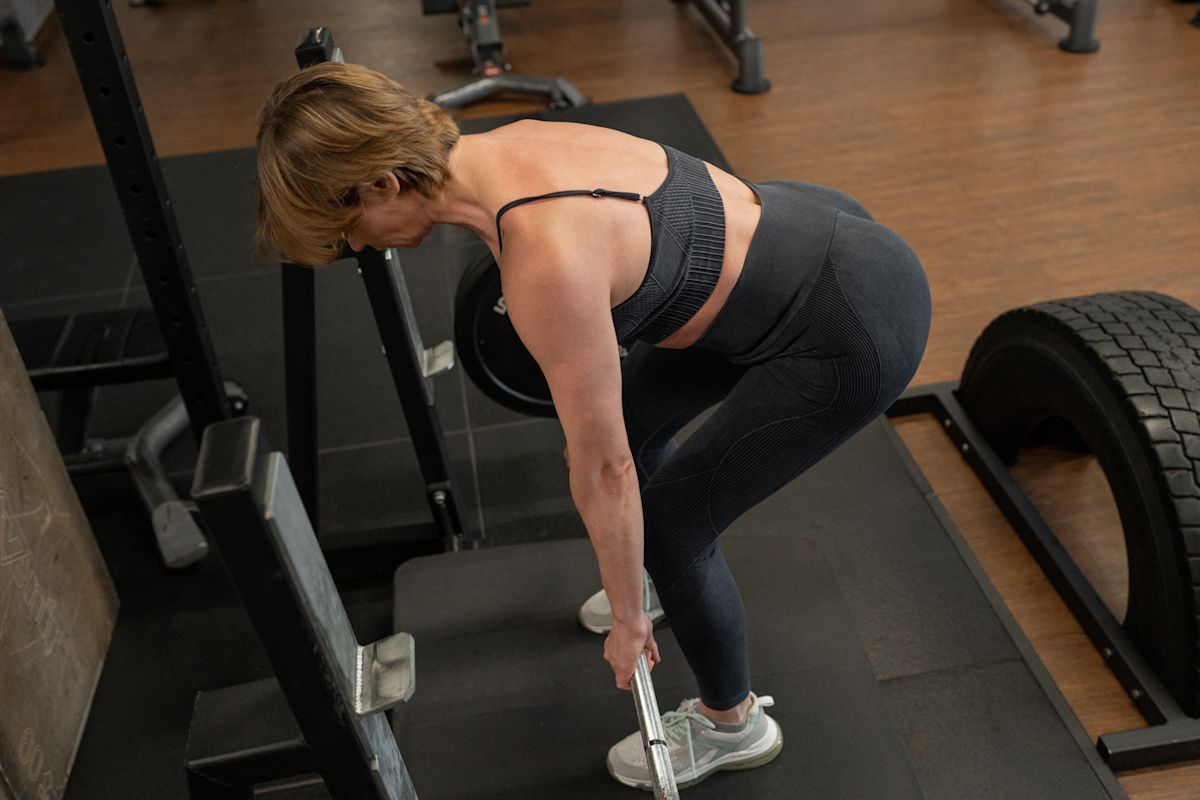
Resistance training tops Lee’s list — “preserving muscle is one of the best investments you can make for healthy aging,” he says. But he pairs it with something less obvious: measuring your health with the same consistency most of us reserve for our finances
Advertisement
“We track our finances every week, but most people don’t track their health until something goes wrong,” Lee says. “If you can see changes in muscle mass, visceral fat, recovery, sleep, or heart health early, you can make small adjustments before they become big problems.”

Amazon
Hume Health – The Body Pod – Home Body Analyzer and Free Bluetooth App – 45+ Key Health Metrics – Accurate Personalized Data – Body Composition Scale – Smart Scale for Body Weight – HSA & FSA Eligible
What’s one piece of mainstream health advice you’d tell women in midlife to actually ignore?
“I think we’ve spent too much time telling women to be lighter instead of stronger,” Lee says. “And that’s why I’d probably ignore the advice to simply ‘eat less and move more.’ It’s well intentioned, but it’s way too simplistic, especially after 40.”
The body genuinely changes: hormones shift, muscle naturally starts to decline, recovery takes longer, and metabolism adapts. At that stage, eating less at all costs can backfire if muscle is lost along the way
“Muscle is one of the strongest predictors we have of healthy aging,” Lee says. “It supports your metabolism, helps regulate blood sugar, protects your bones, and helps you stay independent as you get older. So I’d rather see women focus on eating enough protein, doing resistance training, sleeping well, managing stress, and preserving muscle while reducing excess body fat — not just chasing a lower number on the scale. The goal shouldn’t be to weigh less. The goal should be to become stronger, more resilient, and healthier for the next 30 or 40 years.”
Advertisement
Muscle isn’t the only thing worth reconsidering about the way we were taught to exercise in our 40s — we recently talked to an exercise scientist about why the “get smaller” advice women got in their 20s was actually backwards, and how strength training changes what aging can look like
This article is for informational purposes only and isn’t a substitute for medical advice — talk to your doctor before making changes based on what’s tracked here
Creators are not employed by Yahoo. Views expressed by creators do not reflect the opinions and position of Yahoo.Learn how to become a creator.
