


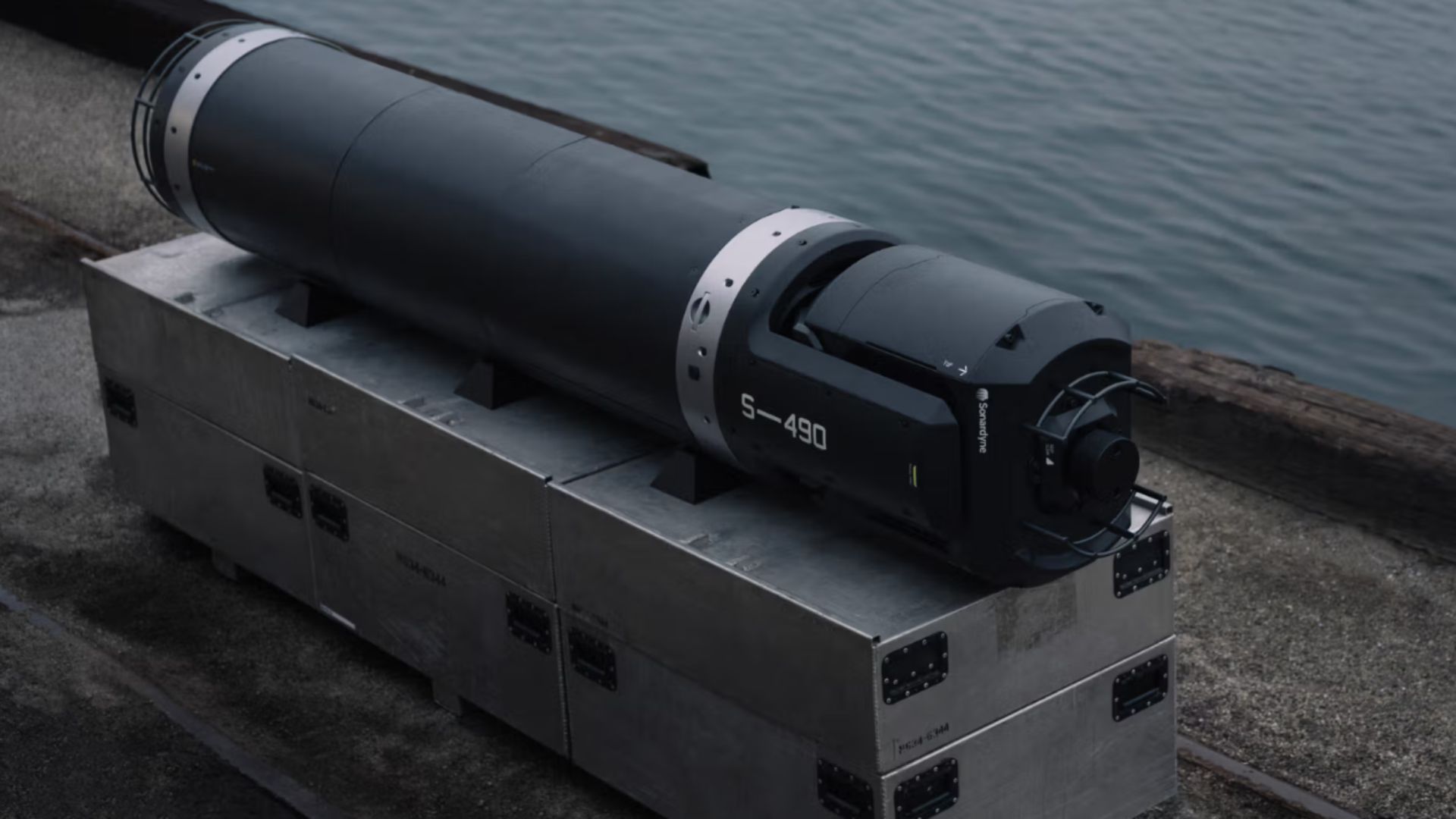
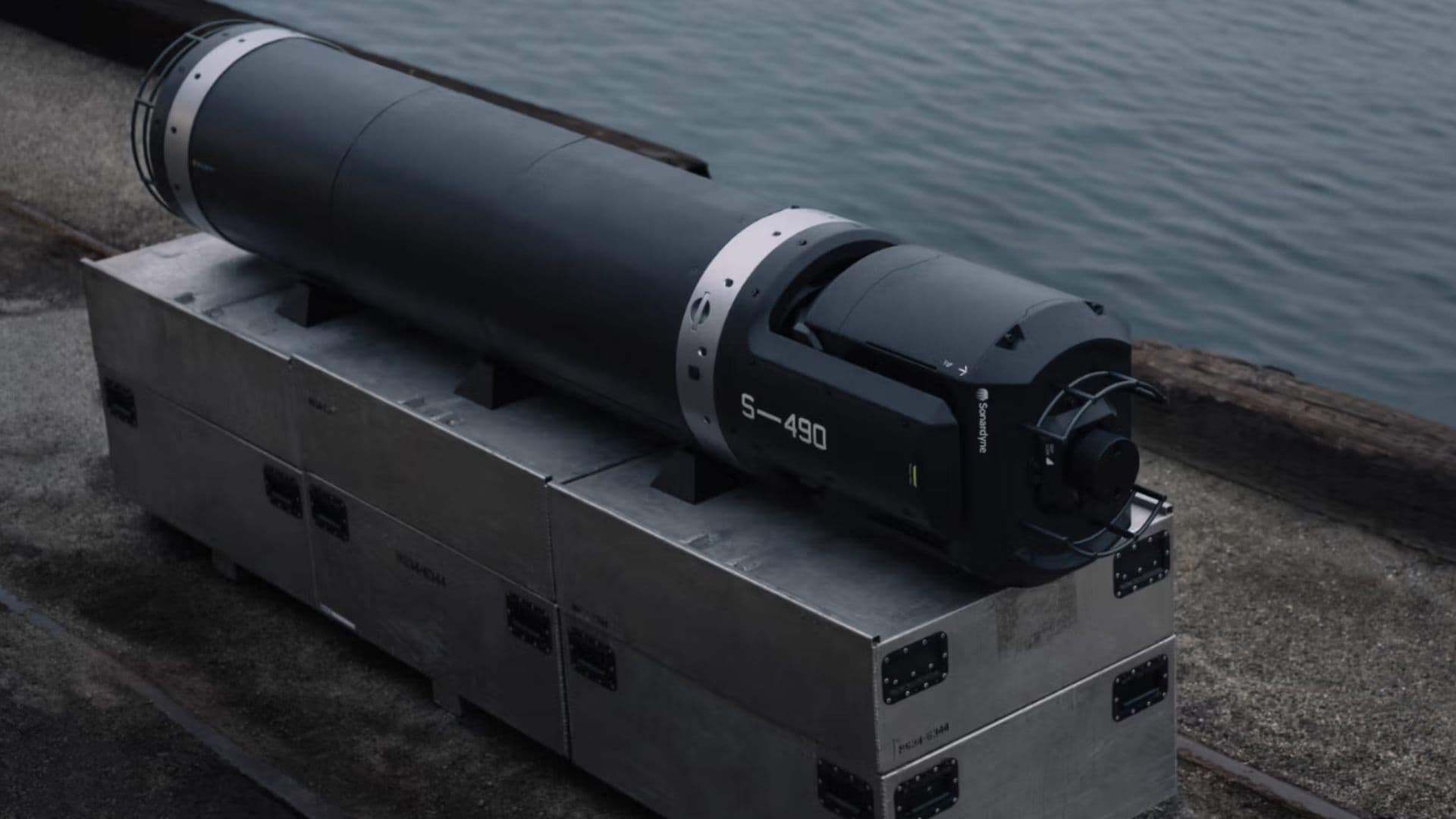
Ultra Maritime demonstrated a counter-unmanned underwater vehicle (C-UUV) capability during the US Navy’s Lanternfish 2026 exercise. The demonstration served as a proof of concept for the company`s Sea Sphere deployable sonar system. The sonar was able to detect and classify autonomous undersea threats in a realistic port protection mission setting
Operationally unmanned underwater vehicles (UUVs) have grown in relevance across multiple navies worldwide. They can conduct surveillance, mine-laying, and infrastructure reconnaissance with minimal crew risk. Countering them requires passive and active acoustic sensing, signal processing, and rapid classification
What happened at Lanternfish 2026
Lanternfish is a multilateral naval exercise focussesing on critical undersea infrastructure protection and emerging autonomous vehicle threats. During the exercise, Sea Spear consistently detected, tracked and classified medium- and large-diameter UUVs. The demonstration validated the systems’ ability to provide persistent acoustic sensing while transmitting track data to undersea command centers worldwide
When integrated with Anduril’s Seabed Sentry, Sea Spear forms part of a distributed autonomous undersea network built for rapid deployment and scalable production. The system can be discreetly deployed from both crewed and uncrewed platforms, delivering persistent underwater sensing across remote regions, maritime choke points, and strategically significant waterways. Sea Spear is configurable as either a permanent installation or an attritable asset
More from Military
See All
MilitaryUS neighbour could gain domestic engine overhaul capability for future fighters
MilitaryUS Army trials advanced military planning platform to speed battlefield decisions
MilitaryChina possibly making new class of stealthy attack submarine, satellite images suggest
MilitarySurface-to-air missiles vs interceptor drones: Which is better for modern air defense?
MilitaryEnergy resilience: US Army and Air Force eye smart micro grids in a 10-year deal
The technical problem C-UUV systems must solve
Detecting a UUV is fundamentally different from detecting a crewed submarine. UUVs run quieter, operate at varied depths, and can be programmed for evasive behavior. Acoustic signatures are weaker and harder to classify against background ocean noise
A C-UUV system must differentiate between a threat vehicle and marine fauna or benign autonomous platforms, and do so quickly enough to enable a response. False-positive rates matter operationally, as acting on a misclassification wastes re
The proliferation of UUVsamong potential adversaries has pushed undersea autonomous threat response up the Navies priority list. Undersea infrastructure like optical fiber internet cables, pipelines, sensor arrays are vulnerable to covert UUV operations. Traditional anti-submarine warfare tools are not optimized for small, slow, quiet autonomous vehicles
The Navy has structured exercises like Lanternfish partly to mature vendor technologies in realistic settings before committing to large procurement decisions. The broader engineering challenge of autonomous undersea threat detection connects to developments in machine learning-based acoustic classification and distributed sensor networks. Ultra Maritime’s Lanternfish result shows C-UUV detection is achievable at
Recommended Articles
Get the latest in engineering, tech, space & science – delivered daily to your inbox.
By subscribing, you agree to ourTerms of UseandPoliciesYou may unsubscribe at any time.
Subscribe to

Today!
Access to exclusive content, expert insights and a deeper dive into engineering and tech. No ads, no limits.
Explore Now!
ByAditya Jadhav
- 1Spider-inspired four-legged robot boat could track and retrieve people from water
- 2China unveils humanoid robots with dual-battery hot swap for nonstop factory operations
- 3Aurora launches second-gen driverless trucks with hardware built for one million miles
- 4US rare earth project reveals heavy rare earth zone with standout yttrium grades
- 5Could hydrogen fuel aviation by 2050? NASA-backed study evaluates five alternatives
