


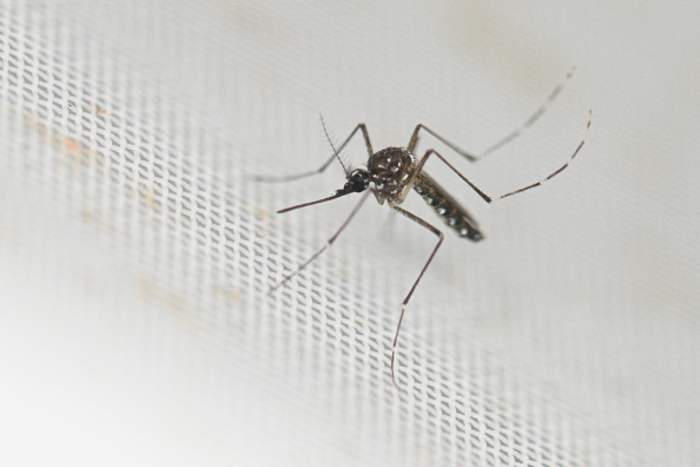
VDH investigating dengue virus in Northern Virginia, first-ever documented case of virus being acquired locally
Published: August 4, 2026 at 2:47 PM
The Virginia Department of Health announced they are investigating a confirmed case of dengue virus that occurred in a resident in Northern Virginia
The VDH stated that they, along with the Fairfax County and Loudoun County Health Departments, are investigating a case of dengue virus reported in a resident who did not have known travel outside of Virginia before the illness’s onset. This is the first-ever documented case of locally acquired dengue in the commonwealth
Recommended Videos
Authorities said the patient was “in close proximity to a recent internationally acquired case in a Virginian who was diagnosed” recently
The dengue virus is spread to people by infected Aedes species mosquitoes. Health officials believe the transmission occurred when a local mosquito bit the resident who was infected with the internationally acquired case of the virus, which then went on to bite the local resident, resulting in the infection
The VDH believes the potential risk for acquiring the virus in the commonwealth remains low, and they are working to monitor for any additional cases
While some cases of dengue can be asymptomatic or have mild symptoms, around one in 20 people develop severe dengue, which is a medical emergency. The following are symptoms of severe dengue:
- Severe abdominal pain or tenderness
- Persistent vomiting (≥3 episodes in 1 hr. or ≥4 episodes in 6 hrs.)
- Clinical fluid accumulation (e.g., pleural effusion, ascites, or pericardial effusion)
- Mucosal bleeding
- Altered mental status
- Liver enlargement
- Progressive increase of the hematocrit (in at least 2 consecutive measurements taken 6 hours apart).
If you are a healthcare provider, health officials recommend the following:
- Advise patients on strategies to prevent mosquito bites. This will not only reduce risk of dengue but also of mosquito-borne disease endemic to Virginia, such as West Nile Virus.
- Aedes mosquitoes, which can transmit dengue virus, breed in water-filled containers that may be as small as a bottle cap. Advise patients to “tip and toss” containers around their homes and businesses that may hold water.
- Obtain a travel history for all patients presenting with acute febrile illness.
- Consider dengue in patients presenting with fever who live in or recently traveled to areas with risk of dengue.
- Consider dengue in patients without travel history if presenting with an acute febrile illness and strongly suggestive symptoms, including eye pain, muscle pain, joint pain, and bone pain.
- Alert your local health department immediately if you suspect dengue illness in a patient who has no history of travel to areas with risk of dengue or other risk factors for dengue infection, such as receiving a blood or organ transplant.
- Obtain diagnostic testing in suspect cases of dengue virus infection.
- Review the Centers for Disease Control and Prevention (CDC) guidance on dengue case management, including recommendations by patient groups.
You can read more information from the VDH here
Copyright 2026 by WSLS 10 – All rights reserved
