


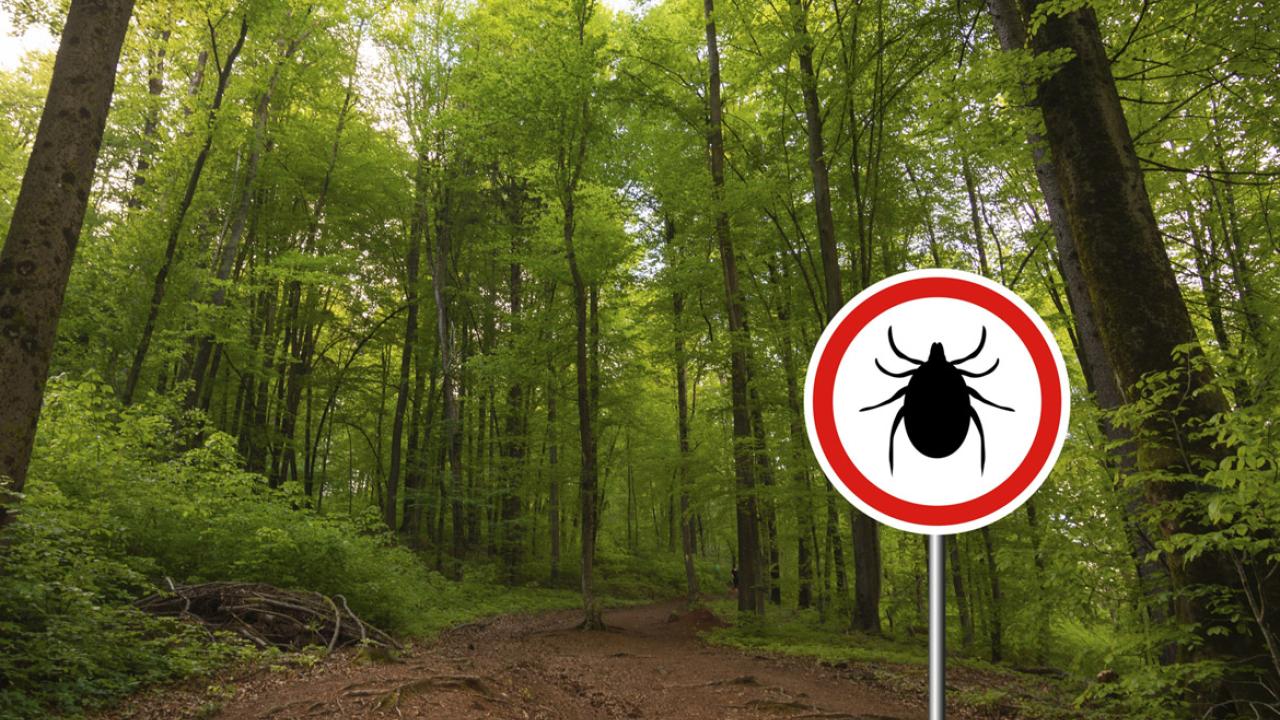
AT A GLANCE: As tick activity continues to be a concern in many parts of the country, physicians say prevention starts before you go outside and continues after you come back in. Here are five key things patients will learn about tickborne illnesses from Alex Benjamin, MD, an infectious diseases physician at Jefferson Health, in this article:
- Diseases carried by ticks—including Lyme disease, anaplasmosis, babesiosis, ehrlichiosis and Rocky Mountain spotted fever—can begin with flu-like symptoms and may be mistaken for other illnesses.
- Prevention is essential, so use tick repellents, wear long sleeves and pants, check yourself after outdoor activities and treat clothing with permethrin to reduce risk of tickborne illnesses.
- Up to 30% of patients with early Lyme disease don’t recall being bitten, as ticks are often too small to notice.
- Remove ticks properly and contact your doctor, especially if the tick was attached for more than 36 hours, you develop a rash or fever, or you live in or visited a high-risk area.
- Diagnosis of a tickborne illness may involve clinical evaluation or blood test while treatment will vary by the type of infection.
Health vs. Hype Podcast
The loudest wellness trends on the internet—answered with science.
Listen Now
Walking through tall grass, a weekend hike or even a few minutes in the backyard can come with an overlooked health risk: tickborne illnesses
Ticks are small, but the infections they can spread can cause serious illness, including Lyme disease, anaplasmosis, babesiosis, ehrlichiosis, Rocky Mountain spotted fever and alpha-gal syndrome. And because early symptoms—such as fever, fatigue, headache, muscle aches, delayed allergic reactions or a rash—can be easy to mistake for something else, knowing how to prevent tick bites and what to do after one happens can make a difference
The AMA’s What Doctors Want Patients to Know™ series gives physicians a platform to share what they want patients to understand about today’s healthcare headlines and how to take charge of their health through preventive care.
In this installment, Alex Benjamin, MD, an Allentown, Pennsylvania infectious diseases physician and chief of infection control and hospital epidemiology in the Lehigh Valley Region of Jefferson Health, took the time to discuss what patients should know about tickborne illnesses
Jefferson Health is part of the AMA Health System Member Program, which provides enterprise solutions to equip leadership, physicians and care teams with re
Ticks can carry many types of diseases
“The most common tickborne illness—at least in our area of the Northeast—is Lyme disease,” said Dr. Benjamin. “But ticks can also carry other types of illnesses, including babesiosis, which is a type of parasitic infection.”
“Some viral illnesses are transmitted by ticks as well,” such as Powassan virus, Colorado tick fever, Heartland virus and Bourbon virus, he noted.
You can get infected with more than one tickborne illness
“It is not unheard of for patients to get more than one disease from the same tick bite if the tick is carrying more than one illness,” Dr. Benjamin said. “The classic presentation is, someone gets diagnosed with Lyme disease, they receive antibiotics for that and they for some reason are not getting better or their lab work looks abnormal
“Patients will come back and say they are still not feeling that great and don’t know what’s wrong,” he added. “Sometimes then we have to consider whether the patient is co-infected with something else.”
Tickborne illnesses have other symptoms beyond a bullseye rash
“Anytime people develop flu-like illness in the summertime in an endemic area, it’s definitely worth ruling out Lyme disease,” Dr. Benjamin said. “That can be high fevers that strike all of a sudden, weakness, muscle aches, headaches and profound fatigue.”
“We obviously think of those symptoms with influenza and other respiratory illnesses, but in the summertime, late spring, early summer when you get those types of symptoms, it’s worth thinking about tick exposure and illness,” he said
“About 30% of people don’t remember being bitten by a tick because they’re usually bitten by forms of the tick that are smaller than a pencil tip,” Dr. Benjamin said. “So, it’s not unheard of for people to have been exposed and not known.”
“More and more people think that if they don’t go hiking or camping that they won’t be exposed,” he explained. “But we have heard of exposures where people are doing yard work, cleaning up leaf litter, which is a common place for ticks to be found at the edges of forests or wooded areas.”
“If you see a deer in your neighborhood, there’s going to be a risk that they’re going to carry those ticks,” Dr. Benjamin said
Diagnosing tickborne illnesses may involve blood testing
“For early tickborne illness, if you find that classic bullseye rash in the setting of classic symptoms, we usually don’t do any blood testing, it’s a clinical diagnosis,” Dr. Benjamin said. “But for some patients, when they don’t feel better with the standard treatment, then we can do things like PCR testing to look for other tickborne illnesses.”
“Sometimes we will do a blood smear, like we do for malaria, to look at some red blood cells under the microscope and look for parasites in the blood cells themselves,” he explained. “That’s pretty common with Babesia
“Then sometimes we need serologic testing. We need immunoglobulins lgM and lgG to look at whether patients have been exposed or not to other types of infections,” Dr. Benjamin added.
Advancing public health
AMA membership offers unique access to savings and resources tailored to enrich the personal and professional lives of physicians, residents and medical students.
Join the AMA
Alpha-gal syndrome is a meat allergy that can be caused by tick bites
With “alpha-gal syndrome, patients develop hypersensitivity to a specific carbohydrate (galactose-α-1,3-galactose, also called alpha gal) found in mammalian meat after being bitten by certain types of ticks,” Dr. Benjamin said. “The allergy may not show up until several weeks or months after you’ve been exposed to the tick.”
For patients with alpha-gal syndrome, “they will have a meat-containing meal and hours later, sometimes after they have fallen asleep, and will wake up with nausea and vomiting, thinking it’s food poisoning or something simple and don’t think anything of it,” he explained. “Then they have another exposure the next day or the following day and have similar delayed symptoms.”
“If you come from an area where the ticks may cause alpha-gal syndrome where you might be exposed, usually you don’t need to see an infectious diseases doctor, but you may want to involve an allergist who may be better equipped to make the diagnosis in those cases,” Dr. Benjamin said.
In the U.S., the Lone Star Tick (Amblyomma americanum) is the primary species responsible for causing alpha-gal syndrome, which triggers an allergy to the alpha gal molecule in mammalian meat and dairy. Other tick species have also been shown to carry or transfer the alpha-gal molecule, including blacklegged ticks, Asian longhorned ticks and brown dog ticks
Rocky Mountain spotted fever is a severe tickborne illness
“Rocky Mountain spotted fever is one of the severe forms of tickborne illnesses,” said Dr. Benjamin. “Even though the name implies it’s in the Rocky Mountains, we do see it in areas on the East Coast like North Carolina and sometimes in the Midwest as well.”
With Rocky Mountain spotted fever, “patients may present with flu-like illness, but they also can develop a severe rash and come in with really bad symptoms,” he explained. “Not only are they feeling flu-like illness, but they are vomiting, they feel dizzy or lightheaded, their blood pressure may drop.”
“It takes a clinician to think about where that patient has been, where they might’ve been exposed to the ticks that carry Rocky Mountain spotted fever—the American dog tick and the Rocky Mountain wood tick—and then treat it quickly,” Dr. Benjamin said. “While the treatment is the same with doxycycline, it’s just thinking of those things and initiating the treatment quickly that prevents mortality.”
Ehrlichiosis and anaplasmosis are tickborne illnesses that infect blood cells
Two other tickborne illnesses are “ehrlichiosis and anaplasmosis,” said Dr. Benjamin. “Both of those infect different types of blood cells in your body and present very similarly to a flu-like illness.”
“Sometimes people can develop lab abnormalities—their platelet counts may go low or their liver enzymes may go up,” he explained. “And sometimes those are treated with the same treatments that we give for Lyme disease
“So, doxycycline, which is very common, treats some of those infections,” Dr. Benjamin said. “But sometimes people are co-infected yet do get better because they just happen to get one antibiotic that treats the two infections.”
Related Coverage
What doctors want patients to know about Lyme disease
Treatments for tickborne illnesses vary
Tickborne illnesses require a thorough medical evaluation with treatments varying by disease. For example, “Babesiosis requires a combination of two antibiotics—azithromycin and atovaquone,” Dr. Benjamin said. “The combination of those two for about 10 days will treat babesiosis.”
“Depending on your area, it may make more sense to go ahead and treat for Lyme disease, which is the most common tickborne infection,” he said. “We usually don’t recommend that you get all of those antibiotics at once and then wait for the test results.”
“Sometimes those test results come back fairly quickly, within one or two days, so even if you get started on doxycycline and you receive the rests a day or two later and you have a co-infection with babesiosis,” Dr. Benjamin said, “you can go ahead and start that treatment without having to get it upfront. The outcomes are still good.”
Be familiar with the different types of ticks
“The common one for Lyme disease is the deer tick. It’s also called the blacklegged tick,” said Dr. Benjamin, noting that blacklegged ticks also transmit anaplasmosis, babesiosis, hard tick relapsing fever and Powassan virus.
“We have to distinguish those ticks from dog ticks, which pet owners see very commonly, but those don’t transmit Lyme disease,” he said. “It also depends on the region you’re in because there are also different types of ticks that transmit Rocky Mountain spotted fever,” which are American dog ticks, Rocky Mountain wood ticks and brown dog ticks.
Meanwhile, Lone Star ticks transmit ehrlichiosis, tularemia and Southern tick-associated rash illness (STARI). They are also associated with alpha-gal syndrome
The Centers for Disease Control and Prevention (CDC) “is a great real universities and state agencies may also have information on the species of ticks common to the area. The CDC also offers a helpful re

What doctors want patients to know™
Subscribe for the answers to the latest questions patients are bringing to the exam room.
Milder winters means more ticks
“A milder winter usually means ticks have the ability to thrive and not get killed off by cold temperatures,” Dr. Benjamin said. “When the temperature is below 40 degrees Fahrenheit, ticks don’t do very well, but for some places in the U.S., the winter is pretty mild, and the spring comes a little earlier
“We see that ticks are able to complete their life cycle and therefore we get more of them around,” he added. “They also do better in humid and wet conditions, so if you have a warmer winter and cold rain, then they thrive in those conditions as well.”
If a tick is attached to you, remove it immediately
“The first thing you want to do is try to get the tick off you. Some people get really freaked out and they just grab the nearest tweezer and rip the tick off,” said Dr. Benjamin. “But the biggest concern is that you want to remove the tick as intact as possible so that you’re not still exposed to whatever is in it.”
“Using tweezers, try to get as close to the skin as possible and then lift up with steady pressure. Don’t jerk it. Don’t try to rip it off. That’s your best way of ensuring that you remove the whole tick,” he explained. “It may also be worth it at that point to get a good look at the kind of tick that was attached to you
“You want to see if it is a blacklegged tick. If you’re not sure, you can take a picture of it,” Dr. Benjamin said. “Knowing what kind of tick it is tells you whether or not you’re at risk of having contracted an infection or not.”
Take steps to prevent tick bites
“If you’re going to be outdoors in an area where ticks may live, it makes sense to wear long sleeves and pants. With your pants, tuck them into your socks and wear closed-toe footwear,” Dr. Benjamin said. Also, “use insect repellent. But make sure your insect repellent has an indication for ticks and not just mosquitoes.”
“The other thing you can do is if you spend a lot of times outdoors—camping or hiking for a long period of time—you can also treat types of clothing with a compound called permethrin,” he said. “Permethrin is not an insect repellent per se. It’s not something you put on your skin, but it can embed itself into fabric.”
“If there’s a hat or a pair of jeans that you’re going to wear frequently or even shoes, you can make a bath with permethrin and soak those pieces of clothing and the permethrin will attach to the fabric,” Dr. Benjamin explained. “The fabric can withstand several wash cycles before it comes out of the clothing.”
“I also often recommend if you’re going to wear a specific jacket, those things might be good to treat with permethrin too,” he said
Contact your doctor if you find a tick attached to you
“The CDC has some definite criteria about when you might be at higher risk of having acquired an infection,” Dr. Benjamin said. “If the tick has been attached to you or you think the tick has been attached to you for more than 36 hours, it probably will have enlarged its body because it’s engorged with blood. That might be a sign.”
“If you think the tick is rotund, it may have gotten a blood meal, and the risk of transmitting infection may be higher,” he said. For example, “if you went hiking on Friday and you see it on you Monday, there’s a good chance that you may have acquired an infection at that point if it occurs in a highly endemic area, such as Wisconsin or Northeastern Pennsylvania.”
“Then if you know the type of tick, such as the blacklegged tick, that is a risk factor for a tickborne illness,” Dr. Benjamin said. “If you meet those criteria—attached for more than 36 hours, you’re in a high-risk area and you’ve been bitten by a blacklegged tick—then the CDC says that your primary care doctor can give you a dose of doxycycline 200 milligrams, which is double the standard dose.
“That has good efficacy in terms of preventing tickborne illness from occurring,” he added. “Now if the illness is one that isn’t treated by doxycycline, it’s not going to be very helpful, but it would help prevent Lyme disease.”
“Those are the indications and it’s worth just getting checked out at that point,” Dr. Benjamin emphasized

5 physician leaders on what comes next in healthcare
Aug 3, 2026
|

Lifelong learning for physicians enters a new chapter
Aug 4, 2026
|
This doctor’s journey to lifestyle medicine started at the gym
Aug 5, 2026
|
Review in internal medicine: 8 drivers of orthostatic hypotension
Jul 31, 2026
|
