



NPR
Fresh Air
Fresh Air
<What evolution reveals about eating, dieting and fat
August 17, 20261:35 PM ET
What evolution reveals about eating, dieting and fat
Listen·45:4045:40
Transcript
- Download
- Embed
<iframe src="https://www.npr.org/player/embed/nx-s1-5935412/nx-s1-mx-5935412-1" width="100%" height="290" frameborder="0" scrolling="no" title="NPR embedded audio player"> - Transcript
Transcript
This is FRESH AIR. I’m Terry Gross. Whether you want to lose weight or just eat healthy, it’s sometimes confusing to know what to eat. There’s a lot of contradictory advice, and diets that are the opposite of other diets. Do you want to go low fat, high carbs or low carbs, high fat? Do you want to be vegan or eat mostly meat? How about the paleo diet, and eat like our distant ancestors? How much salt should you eat? There’s contradictory advice about that, too. If you’re trying to lose weight, should you consider GLP-1s? What do we know about the possible side effects?
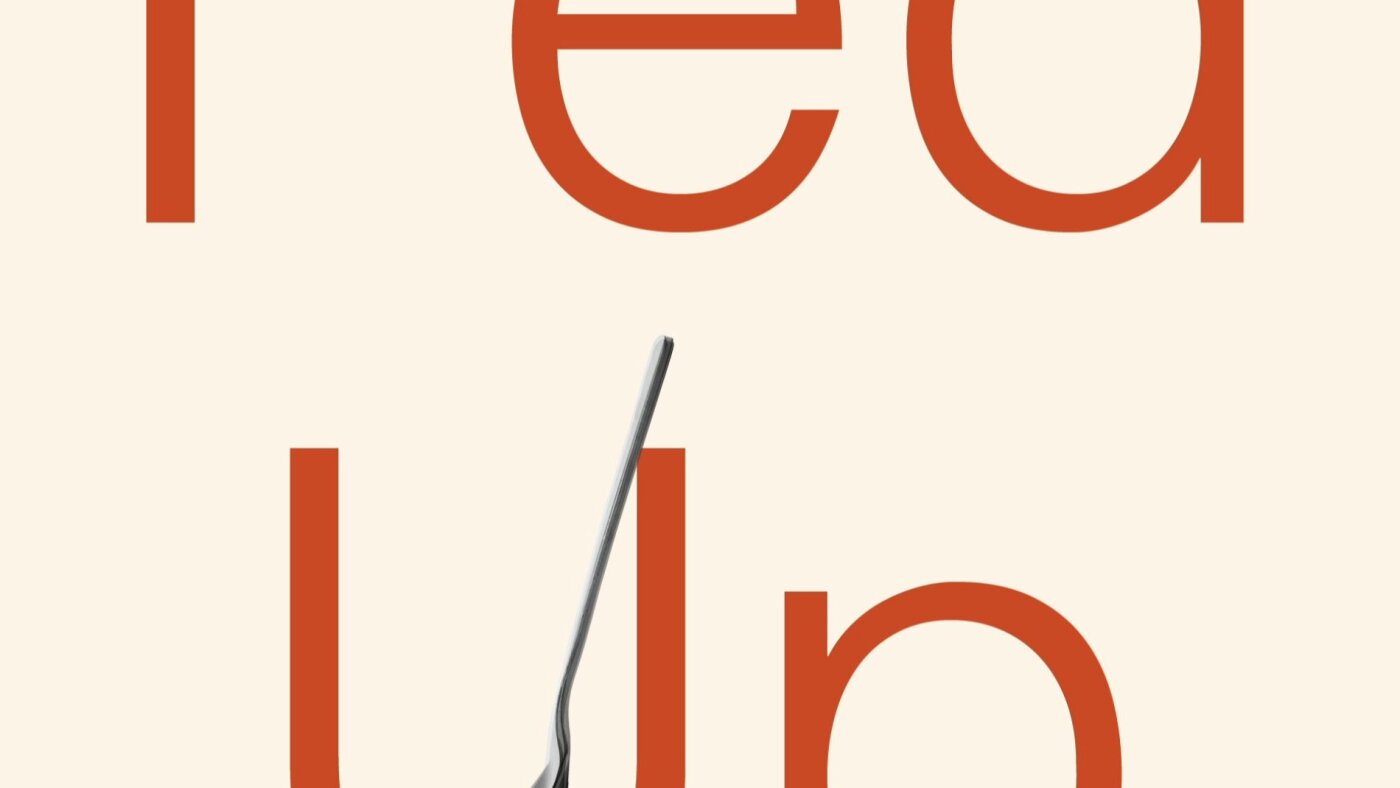
To make sense of all of this, it’s helpful to know something about how our digestive systems evolved in ways that make some foods harmful and make it difficult to lose weight and challenging to keep it off. My guest, Daniel Lieberman, studies how evolution has affected our digestive system and the amount of exercise we get and need. He’s a professor at Harvard and founding chair of its Department of Human Evolutionary Biology. His new book is titled “Fed Up: What Evolution Reveals About Food, Diet, Health, And Eating Well.”
As part of his research, he and his wife tried many diets, each for two weeks, to see how their bodies, minds and appetites responded. Over the years, as a paleoanthropologist, his research has taken him to the Arctic, Africa and Latin America to study the activities and diets of Indigenous people in remote villages with no electricity or running water and see how their bodies compare to Americans today. Daniel Lieberman, welcome back to FRESH AIR
DANIEL LIEBERMAN: I’m pleased to be here
GROSS: So you tried several different diets, each for two weeks
LIEBERMAN: (Laughter)
GROSS: …To see how you responded, just to get a sense of what they’re like before writing about them. And, of course, you couldn’t figure out, like, the long-term effects or how much weight you’d lose
LIEBERMAN: Yeah
GROSS: But you got a sense of, like, how your body responded and how your appetite responded. And you recruited your wife to do this with you. What was, like, the worst diet that you tried, that was just, like, too difficult? And let’s exclude here (laughter) the first diet that you mentioned in the book, which was a diet that our ancestors used before they learned how to make a fire and actually cook, because that sounded so horrible that you gave up within a few days
LIEBERMAN: (Laughter)
GROSS: You didn’t last the two weeks
LIEBERMAN: Yeah, the raw food diet was by far the worst. I mean, I think my wife lasted three days. And I lasted four days. That was just really rough. I think the next diet I didn’t like the most was I wouldn’t say – it’s probably a toss-up between – well, no, actually, I’m sorry, I know the answer. That would be the meal replacement diet, because I picked diets that sort of corresponded to the period of, you know, the evolutionary history of food and diet
And for the beginning of the industrial era, I thought, well, what’s more industrial than a meal replacement diet? And so I decided to replace my breakfast and lunch, but not dinner because there was no way I was going to do that, with one of these milkshake things, which has all the nutrients that a human being supposedly needs. And, you know, after a day or two, it became a form of torture because I missed food. They’re, you know – they’re just kind of gloppy kind of milkshake-like concoctions that are very nutritious, but very unsatisfying.
GROSS: And how about a natural food diet that you tried?
LIEBERMAN: I would say it was a toss-up between the Atkins diet, which I found – I just missed plants, you know? I mean, I just missed eating, you know, carbohydrates. So that was
GROSS: What’s in the Atkins diet?
LIEBERMAN: So the Atkins diet is a high-fat diet, a high-protein, high-fat diet with very few carbohydrates. And you’re kind of limited to, like, you know, a little bit of broccoli on your plate. That’s basically it. But no bread, no pasta, no rice, no crackers, no – I mean, the list goes on of carbohydrates that you basically cannot eat. You can only eat very low-carb plant foods. And that got really, really wearing. I mean, it was really tough. You know, I like my carbs
And I also found it frustrating because I think that if you have carbohydrates that are not refined – the whole wheat products, brown rice instead of white rice – I think they’re pretty healthy, actually. So I miss those. And then the other diet I think that I – maybe it’s a toss-up – that I found very challenging was the paleo diet because the paleo diet bans all legumes. So no peanuts, no beans, no soybeans, no tofu, no all these things. And I love those. And also, no cereals, no grains. So that was also challenging. And because I know the science, I disagree with those eliminations and found it very frustrating.
GROSS: Can you talk about the theory behind each of those diets?
LIEBERMAN: Yeah, so let’s talk about the paleo first. So the paleo diet – again, all of these diets, we have to remember, have a grain of truth to them, or maybe multiple grains of truth to them. And the paleo diet
GROSS: But not necessarily the grains
(LAUGHTER)
GROSS: Sorry (laughter)
LIEBERMAN: Exactly, exactly. And the paleo diet is a perfect example. I mean, the idea is that you should eat like our ancestors ate because that’s the diet we’re adapted to eat. And it gets two things wrong. So the first thing it gets wrong is what our ancestors actually ate. So it claims that our ancestors never ate any cereals or grains and never ate any legumes. So peanut butter, which is, by the way, my favorite food – I would probably cease to exist without peanut butter. But the problem is that it turns out that our ancestors did eat legumes.
For example, if you go to the Kalahari, where the hunter-gatherers there, and look at what the hunter-gatherers eat, the second most eaten food is a kind of bean called a marama bean, which is a legume. So don’t tell me that hunter-gatherers don’t eat legumes. And we also have plenty of evidence that hunter-gatherers, when there are wild cereals available in Africa and the Middle East, and then in Europe, were gathering those wild cereals and eating them. So first of all, the kind of cartoon characterization of Paleolithic diets is just wrong.
But then the other reason that they ban these is that the claim is that these foods have what’s called antinutrients. These are compounds in the foods that bind to vitamins and minerals and prevent us from absorbing them. And it is true that cereals and legumes do have these compounds. But what they don’t mention is that when you cook your food or ferment it, you basically reduce them to basically harmless, completely nonimportant concentrations. So, otherwise, you know, people who are vegetarians, they’d all be walking around malnourished, which clearly, they’re not. So the ban on these foods is kind of like – you know, it’s an example of an elimination diet that has really no scientific basis whatsoever.
GROSS: And the Atkins diet, which is a high-fat, low-carb diet, what’s the theory behind that?
LIEBERMAN: So that, theory behind that – and again, it’s actually based on some really good science. In fact, I should mention, I’m a coauthor on a major paper in the American Journal of Clinical Nutrition on the carbohydrate-insulin model, which is the basic theory behind it. And that’s when you eat foods that have a lot of glucose in them, so you eat carbohydrates. And the two main sugars in carbohydrates are fructose, which is the sort of sweet – the sweet sugar that we find in fruit, hence the name fructose, and glucose, which is the more starchy sugar that we find in, I don’t know, like, a potato chip, for example.
And glucose, when you eat it, goes into your bloodstream. But our physiology is adapted to handling a very, very, very discrete range of glucose. We have about a teaspoon and a half of glucose in our entire bloodstream. And if it goes above that, that’s really unhealthy. It causes all kinds of health problems. So the idea behind the Atkins diet, and it’s a good idea, is that if you reduce your glucose levels, you reduce your sensitivity to glucose. And you’re keeping your insulin levels down. And when you keep your insulin levels down, it means you’re less likely to store fat, which is good if you’re not trying to gain weight. And you’re also less likely to hold onto that fat, which is good if you’re trying to lose weight.
So there’s a lot of good science behind the Atkins diet in terms of weight loss. The problem with the diet is not so much the science. The problem is how well it works in the real world. And it turns out, in the real world, people have a hard time with the Atkins diet. And they have a hard time maintaining it. So most people on an Atkins diet, although they tend to lose more weight than on, say, a low-fat diet or a low-calorie diet. They’re not losing a huge amount more weight because they struggle to keep up with this kind of very strict, low-carbohydrate regime.
GROSS: Is the low-carb, high-fat diet still popular?
LIEBERMAN: Absolutely. It’s very popular. And, you know, again, for good reason. If you can maintain a low-carb diet, it is a good way to lose weight. It’s just that some people have a hard time doing it. And the other thing is that, you know, it’s not the only diet that works. I mean, there are people who have on low-fat diets, and they can lose a lot of weight, too, if they can stick to it. The problem is that fat is also really delicious. I mean, food without fat is really often very unappealing. You know, look, you can’t take a whole bunch of people and randomize them into three groups and then follow them for 30, 40 years to see which diets work the best. It’s not ethical, and it’s not possible.
So what you really need – so what we need to do is look at other forms of data. And one form of data is to look at people who have dieted and who’ve succeeded, and see what they did. This is called the National Weight Loss Registry, and they’ve looked at a lot of people who’ve managed to lose weight and keep it off. And it turns out they don’t – most of these people don’t follow any particular diet. They’re not following an Atkins diet, they’re not following a low-fat diet, they’re not following a low-calorie diet. They’re just not eating a lot of store bought, you know, I mean, they’re not eating a lot of processed food, so they’re cooking their food at home. They’re exercising. They’re weighing themselves on a regular basis, and they’re just kind of eating sensibly, and they manage to do pretty well. So the best diet, really, is the diet that you can stick to.
GROSS: Right. So instead of eliminating whole categories of food that have nutritional value and are pleasurable to eat, eliminate, like, the fast foods, the processed foods, and stuff like that. And – yes?
LIEBERMAN: Yeah, basically. I mean, one of the arguments I make in the book is that, you know, why do I have to pick a low-fat diet versus a low-calorie diet versus a low-carb diet? Why can’t I pick the best part of all three diets, right? A diet that doesn’t have too many calories. A diet that doesn’t have too much saturated fat. A diet that doesn’t have too much processed, high glycemic carbohydrates that – high glycemic means it raises your blood sugar levels. Why can’t I have the – you know, take the best of all three and combine them? And guess what that diet is? It’s the Mediterranean diet or any other traditional sort of farming, non-processed sort of farming diet, like a traditional Asian diet or traditional Mesoamerican diet or traditional African diet. These diets all, I think, essentially combine the sort of key elements of the three sort of competing weight loss diets.
GROSS: Describe the Mediterranean diet
LIEBERMAN: Well, the Mediterranean diet is, you know, there’s two Mediterranean diets. There’s the Mediterranean diet with capital M, capital D that has been defined by nutritionists. And then there’s the Mediterranean diet that people in the Mediterranean sort of actually eat. And of course, the latter is extremely variable and hard to characterize very simply. But the Mediterranean Diet with the capital D is essentially a diet that’s based on whole grains. So often with sourdough, for example, plus legumes. So you’d have – think about – you might have pasta or you might have bread or something like that or – with chickpeas or lentils or, you know, some kind of legume or bean like that plus lots of vegetables and fruits plus moderate amounts of dairy – so some cheese. You prioritize fish over really fatty meats, but you do eat meat occasionally, just not all the time. Lots of nuts. And, of course, most famously, Mediterranean diets have a lot of olive oil, which is a monosaturated fat and well-known to have a lot of positive health effects.
And the thing about the Mediterranean diet is that if you were to pick a diet that has been – you know, for which there is the most evidence that it’s a healthy diet that helps people, Mediterranean diet wins hands down. I mean, there are study after study after study. We’re talking studies of hundreds of thousands of people now that are extremely long-term – 20, 30 something years. And the studies show that people on this kind of diet are less likely to gain weight. They’re less likely to get heart disease. They’re less likely to get a variety of other chronic diseases like Type 2 diabetes and certain cancers. It’s not a magic bullet. It’s not a – you know, it’s not a panacea. It’s not a cure-all, but it substantially reduces your risk of a wide range of diseases, and no other diet so far studied has come close in terms of the outcomes that measure. Now, of course, people haven’t studied as much, you know, a traditional Asian diet or a traditional Mesoamerican diet. So there’s a bit of a Eurocentric sort of bias here. But it’s very well supported.
GROSS: I want to ask you about eggs because I eat a lot of eggs
LIEBERMAN: Me, too
GROSS: I think they’re the perfect food
LIEBERMAN: I love eggs
GROSS: So many different ways to prepare them. But, you know, so I’ve looked up, like, are eggs healthy? And, of course, I’ve read contradictory advice on that. What’s your take about eggs?
LIEBERMAN: Well, eggs are a perfect example of, I think, how we try to look for simple answers to complicated problems. Everything has trade-offs, and eggs are a perfect example. So eggs have cholesterol and saturated fat in them. And it turns out that eating dietary cholesterol doesn’t really have much effect on your actual cholesterol levels ’cause most of your cholesterol is manufactured in your liver by your body. But there are fats in the eggs, and there are people who worry about how much saturated fat you should have. So there are some people out there who think you should just eat as many eggs as you want, and there are others who worry that you shouldn’t have too many because they look at epidemiological relationship between how much saturated fat you eat and various health outcomes. So eggs are a perfect example of the fact that we do not agree. And you can talk to, you know, major experts in the diet world and get really divergent opinions about eggs.
GROSS: Well, we need to take a break here, so let me reintroduce you. My guest is Daniel Lieberman, author of the new book, “Fed Up: What Evolution Reveals About Food, Diet, Health, And Eating Well.” We’ll be right back. This is FRESH AIR
(SOUNDBITE OF JULIAN LAGE GROUP’S “TELEGRAM”)
GROSS: This is FRESH AIR. Let’s get back to my interview with Daniel Lieberman, author of the new book, “Fed Up: What Evolution Reveals About Food, Diet, Health, And Eating Well.” He’s the founding chair of Harvard’s Department of Human Evolutionary Biology. As part of his research, he tried a series of diets to see how his body reacted, including the Atkins diet and lesser-known diets like the Blue Zone diet
You mentioned the Blue Zone diet. What is that?
LIEBERMAN: (Laughter) So, the Blue Zone diet, it’s a wonderful example of a generally healthy diet that has some – let’s just call it questionable marketing. So Blue Zones are – there are these five areas in the world that demographers have identified as having a high percentage of centenarians. So, you know, people who live to be 100. And there are about twice the prevalence of centenarians in those five little spots than there are as in, like, places like the United States
GROSS: So the blue zone diet looks at places where people live to be 100 and say, let’s eat like that
LIEBERMAN: That’s correct. Right. And so the idea is that if you eat this diet you’re going to be more likely to be – you know, live to be 100. And so (laughter) there are some problems. The first is that the actual prevalence of centenarians in these populations, although it’s higher, is still extremely low. I mean, the percentage of these people in these – it’s, like, we’re talking, like, 6 people out of, you know, 10,000 as opposed to 3 people out of 10,000. So these are statistical outliers even in these populations. So unless you and I are statistical outliers, it doesn’t make sense to necessarily assume that eating like these people is going to help us live to 100. It’s really good marketing, but it’s – from a statistical perspective, it’s basically nonsense.
The other problem is the data. There’s a demographer at the University of Oxford, Saul Newman, and he actually spent a lot of time investigating who the individuals were in these blue zones (laughter). And according to him – this is not my research, this is Newman’s research – only about 18% of these individuals actually have birth certificates. So we don’t even
GROSS: (Laughter) So we don’t know
LIEBERMAN: We don’t know how old they are. And he thinks that a lot of them are insurance fraud and whatever. And actually, one of the blue zones is Loma Linda, California, right? So, you know, one of them is – you know, one of the others is Sardinia. There’s this, like, little area of Sardinia, and there’s a little part of Costa Rica, and there’s the island of Okinawa and there’s another island in the middle of the Mediterranean. But, you know, for example, in Sardinia, you know, there’s this little, like, circle around this little part of Sardinia where there are supposedly a lot of centenarians, but then if you go, like, 20 miles north, you’re no longer in the blue zone. But are you telling me that people, like, 20, 30 miles north of the blue zone in Sardinia are eating a completely different diet? I mean, I don’t believe that in the slightest.
And in Loma Linda, that’s – the reason Loma Linda is a blue zone is that that’s a – it’s a – sort of a suburb of Los Angeles which has a really high percentage of Seventh-day Adventists. And Seventh-day Adventists believe for religious reasons that you have to take care of your body. So they don’t smoke, they don’t drink alcohol, they’re really good at exercising, they eat very healthy diets and have very healthy lifestyles. And that’s probably why they have a pretty good longevity record
GROSS: Right. OK. Marketing (laughter)
LIEBERMAN: Yeah. But if you actually look at the blue zone diet, it’s not too bad. It’s a – basically a very vegetarian diet. It asks you – I think you’re supposed to eat half a cup of beans a day. It recommends that you eat all your meals within an eight-hour period. It – you know, there’s other components to the diet. I mean, the prescription isn’t a bad prescription. I think it’s the – again, my concern really is how we market all these diets, right?
There’s a very famous saying. It comes from a scratch of – you know, a little scrap of parchment from the seventh century B.C. by a Greek poet, Archilochus of Paros. And he wrote, the hedgehog – no, the fox knows many things, but the hedgehog knows one big thing. And the idea behind that is that when you chase a fox it’ll do anything to escape, but when you chase a hedgehog, the only thing it’ll do is roll into a ball. And later, in the 1950s (laughter) – a good seven – you know, several thousand years later – the philosopher Isaiah Berlin wrote a really wonderful essay called “The Fox And The Hedgehog” (ph) in which he divided thinkers up into foxes, who see complexity and nuance and trade-offs and, you know, costs and benefits, versus hedgehogs, who try to fit, you know, everything into one big idea.
And I think that a lot of the diets that we follow or we tend to fall for are these hedgehog big-idea diets. You know, eliminate this, don’t eat this. You know, go – eat just carbs or don’t eat carbs. You know, they’re all very simple diets. Eat what the people who live to be 100 are. And it doesn’t work that way. Everything has trade-offs. There are no magic bullets. There’s no such thing as an optimal diet. And so really, if anything, my book is a plea for us to stop trying to oversimplify a complicated problem.
GROSS: We need to take a short break, so let me reintroduce you. My guest is Daniel Lieberman, author of the new book “Fed Up: What Evolution Reveals About Food, Diet, Health, And Eating Well.” He’s a professor of biological sciences at Harvard and is a paleoanthropologist. We’ll talk more after a break. I’m Terry Gross, and this is FRESH AIR
(SOUNDBITE OF KENNY BURRELL’S “CHITLINS CON CARNE”)
GROSS: THIS IS FRESH AIR. I’m Terry Gross. Let’s get back to my interview with Daniel Lieberman, author of the new book “Fed Up: What Evolution Reveals About Food, Diet, Health, And Eating Well.” It’s about all the contradictory diet advice we get about the best ways to lose weight and the best foods to eat and stay healthy. He explains why evolution has made it difficult to lose weight and challenging to keep it off, and why certain foods are damaging to our bodies. As part of his research, he tried many different diets, each for two weeks, to see how his body responded. Lieberman is a paleoanthropologist, a professor of biological sciences at Harvard and founding chair of Harvard’s Department of Human Evolutionary Biology.
You write about how evolution has conspired against us in terms of losing weight, and one of the things that you write about is how evolution has made it really difficult to diet and to stay on that diet. So tell us about why or how evolution has made dieting so difficult
LIEBERMAN: Well, it’s important to recognize that, you know, when people are struggling to lose weight and they’re frustrated and they’re feeling somehow there’s something wrong with them, you need to understand that there’s absolutely nothing wrong with you. That’s what we evolved to do, which is to hold on to our weight. And we actually evolved to store an unusual amount of fat compared to other mammals. And the reason we have a lot of body fat is that body fat’s really important for our biology. We use that fat to take care of our brains. So right now, when you’re breathing, 1 out of every 5 of your breaths is just paying for your brain and you need to have that extra reserve. It’s like having money in the bank – right? – to pay for your brain. Our reproductive strategies take a lot of energy, so we need the extra energy for that. Being physically active takes a lot of energy.
So having a lot of fat played an incredibly important role in our evolution, and because of that, our bodies have all kinds of adaptations to hold on to that fat. We don’t want to lose it. And so when you start to lose fat on a diet, which is what a diet is basically about, your body sends out these signals, these, like, alarm bells to your metabolism to slow your metabolism down and to make you hungry so that you gain the weight back. And these signals are extremely difficult to override. And that’s why a lot of people, when they diet, they struggle.
And just as importantly, when the diet’s over, the – your body just wants to bring you back to where your former – your previous weight was. And for reasons that we don’t understand, that includes the maximum previous weight that you had. So you might have been, you know, 120 pounds when you were 20, and you may have gained 30 pounds and now you’re 150 pounds. Well, your body wants to bring you back to that 150-pound level, not the 120-pound level
GROSS: So when you’re trying to lose weight, you’re working against evolutionary devices to make sure that you stayed at a stable weight
LIEBERMAN: That’s correct. That’s correct
GROSS: And then
LIEBERMAN: You’re (ph) fighting
GROSS: Yeah
LIEBERMAN: …All these adaptations
GROSS: And likewise, when you’re trying to keep the weight off, your body is telling you, no, no, put it back on
LIEBERMAN: Exactly, exactly. And that’s the problem that so many people have. They lose weight on a diet, right? If you can sustain a diet, you will lose that weight, right? And then the diet’s over and then you kind of relax your guard, and slowly but surely, for many people, the weight comes back. And that’s, for so many people, a problem
And to add to that, when you lose weight, you know, you’re not losing just fat. Sometimes you lose muscle. And when you lose – when you gain the weight back, often you gain back just the fat, not the muscle. And so you end up with a higher proportion of your body weight being fat and less being muscle, and that can put you at risk of old-age muscle loss – a condition that’s technically called sarcopenia. Sarco is flesh in Greek and penia is loss, so it means flesh loss, right? And it’s a real issue for a lot of people. As they age, they become more frail, and when you become more frail, just acts of daily living become more difficult and you become less active, and it causes kind of a positive feedback loop and sort of vicious cycle and things get worse and worse.
GROSS: And in your lab you study sarcopenia, so you know a lot about that
LIEBERMAN: Yeah, we’re very interested in this. We’re interested in to what extent sarcopenia is a natural adaptation or to what extent it’s a mismatch caused by the kinds of worlds in which – the world which we live, where physical activity – especially strength-based physical activity – is much less necessary
GROSS: Oh, you mean because we’re not schlepping around food and hunting and
LIEBERMAN: That’s right. Yeah
GROSS: We’re basically, like, spending a – lot of us are spending a lot of time just sitting
LIEBERMAN: Yeah. I mean, well, there’s two major kinds of physical activities, sort of. There’s endurance – you know, just walking, running, things like that. But also, there’s strength-based physical activity. And, like, how much – most of us don’t really need to use our muscles that much for strength. I mean, when we go to the supermarket, we have a shopping cart. When we go to the – you know, travel, we have our suitcase on wheels. When we want water, we just, you know, open a tap and out comes the water. We don’t have to carry the water. But for most of our evolutionary history, people had to – had not only to do endurance physical activities – you know, walk and run and things like that – they also had to do strength based-activities. And strength, of course, builds – strength activities build muscle. And so as we lack that – those strength activities, our muscles are a use-it-or-lose-it tissue and we – well, if you don’t use it, we lose it.
GROSS: In terms of evolution, being hungry is stressful. Stress releases cortisol, which does what? So how does that cortisol – how does that response work against dieting?
LIEBERMAN: Yeah. This is a really important question because – so there – people associate stress and cortisol. Cortisol is a hormone that’s produced by a little gland on top of our kidneys called the adrenal gland. And cortisol doesn’t make us stressed, it goes up when we are stressed. And cortisol’s job is to arouse us to deal with a challenge, an emergency. Like, you know, if there was a fire in the building, my cortisol levels would shoot up and it’ll help me get the energy to run out of the building and – you know, and save myself.
And so cortisol’s a good thing. But one of the things that – but, again, remember, it’s about getting energy, so in addition to releasing energy, cortisol also causes people to become hungry. So – because after all, when you’re stressed, you need more energy. So often when I’m very stressed, I eat more, and I – especially in the middle of the night. I’m – that’s when I travel down to the kitchen in the middle of the night (laughter) and gorge at the refrigerator. It’s my cortisol levels that are doing that. And that chronically elevated cortisol has ruinous effects throughout our body, including causing us to eat more and to store more of that excess energy as belly fat.
GROSS: So if trying to diet and staying on that diet is stressful, your body’s going to totally work against you. It’s – tell you, like, you’re stressed, you need food (laughter)
LIEBERMAN: Absolutely
GROSS: Yeah
LIEBERMAN: Absolutely. And it’s also related to sleep. When we don’t get enough sleep, we also get stressed. That stress then not only prevents us from sleeping – ’cause cortisol prevents sleep – but it also makes us eat more. So all of these things are, unfortunately, related to each other
GROSS: So how does everything that you’ve been saying about fat relate to BMI, the body mass index, which has become very controversial. And especially people who are considered technically obese have a lot of objections to being evaluated based on the BMI. First explain what the BMI is for people who don’t know
LIEBERMAN: Well, first of all, I agree with their objections. So BMI is just an index. It’s your body weight in kilograms divided by your height in meters squared. And then it was not until later that insurance companies were trying to figure out how much insurance to charge people. And it was insurance companies which said, hey, hold on. If they have this high index, that was then called Catalase index – if they have this high index, they might be more likely to get sick. And they’re going to cost us money. So they decided to use this index to basically evaluate whether to insure people. And it turns out that on a population level – not an individual level, but at a population level – it’s not too bad.
If somebody has a higher BMI, it means that they have a higher percentage of body fat. But there are a lot of problems. The first problem is that – let’s just say you’re very muscled, right? You could have a lot of weight but there’s very little fat there. So for example, Arnold Schwarzenegger. When he was, you know, winning the whatever it was – he was Mr. Olympia, right? He had a BMI that was technically, you know, would’ve claimed he had obesity. But obviously he didn’t. He had very little body fat on his body, right? So that’s one problem.
And then finally, as you say, it’s kind of a stigmatizing, reductionist way of just, you know, all of a sudden, you know, you have a BMI of 29.9, you’re overweight. All of a sudden, bam, 30, you’re obese. And I agree that that’s just a kind of dismal way of categorizing people and stigmatizing people. And the sooner we can get ourselves off this index, I think, the better. There are many more aspects of health than just your BMI
GROSS: Well, we need to take another break here, so I’m going to reintroduce you. If you’re just joining us, my guest is Daniel Lieberman. He’s the author of the new book “Fed Up: What Evolution Reveals About Food, Diet, Health, And Eating Well.” We’ll be right back. This is FRESH AIR
(SOUNDBITE OF LULLATONE’S “ALL THE OPTIMISM OF EARLY JANUARY”)
GROSS: This is FRESH AIR. Let’s get back to my interview with Daniel Lieberman, author of the new book “Fed Up: What Evolution Reveals About Food, Diet, Health, And Eating Well.” He’s the founding chair of Harvard’s Department of Evolutionary Biology. He’s a paleoanthropologist
Let’s talk about GLP-1s. You wrote a paper about that that was published in JAMA, right?
LIEBERMAN: That’s correct. Yeah
GROSS: Yeah
LIEBERMAN: About GLP-1s and strength training
GROSS: Right. So let’s start from the beginning. Can you explain in a simple way how GLP-1s work? Because they’re kind of mimicking a hormone in our body, right?
LIEBERMAN: That’s correct. GLP-1s are kind of a alternative version of a hormone that our intestines produce. And the GLP-1 that our intestines produce is very short-lasting. It only lasts, you know, a minute or so. But what it does is it causes our pancreas to release insulin. So when you have, like, a high-carb diet or something, it helps your pancreas, you know, deal with the glucose in your body. But it turns out that there are creatures out there – and the famous one is the Gila monster from the desert in the Southwestern United States – which produces a GLP-1-like hormone that is really long-lasting.
And when scientists studied this thing, they discovered not only that it helped people with diabetes, so produces insulin, tells the pancreas to produce insulin, but for reasons we still don’t understand, it turns off your appetite, or it turns down your appetite. And so people taking these drugs suddenly lose that hunger sensation that is such – that makes dieting so challenging. And, in fact, some people, it can – it has – you know, it turns off other desires, like, you know, for alcohol and certain drugs. It has all kinds of interesting effects. And so, GLP-1s can help people lose – I think the latest versions can help people lose up to 25% of their body weight while they’re taking these drugs. And it’s quite extraordinary.
GROSS: But there are some side effects. We don’t know the long-term effects because it hasn’t been around long enough
LIEBERMAN: Yeah. Yeah, so
GROSS: But what do we know?
LIEBERMAN: Well, so some people get gastrointestinal side effects, so nausea, diarrhea, that sort of thing. A few people become anhedonic. They just kind of lose pleasure in all kinds of ways. That’s much more rare. But the side effect that concerns me the most is that people on these, on GLP-1s, they can lose a lot of weight, but that weight’s not all fat. Some of it’s muscle
And, in fact, they seem to lose a large percentage of muscle mass. And losing that muscle mass is a problem when you – potentially, when you get older because you’re going to be – you’re more at risk of that old-age frailty we were talking about, sarcopenia. So I think that people, when they’re on GLP-1, it’s really important that they engage in strength training so that they can maintain their muscle mass. And the good news is that you don’t have to do a lot of strength training in order to turn that loss off, to keep your muscle mass levels.
GROSS: So that’s important to know
LIEBERMAN: Yeah. And here’s the other sort of thing that’s a bit scary about them, is that once you stop taking them, your appetite comes roaring back, it seems. And at the moment, the percentage of people who quit GLP-1s after a year or two is pretty high. It’s over 50% in the last data I’ve seen. And that may change, as now there are oral versions of GLP-1s available. And maybe dosage gets improved. But the danger is that as people quit – ’cause people don’t like taking drugs, and they’re expensive. If they – when they quit the GLP-1s, their weight – their appetite’s going to get turned back on, and they’re going to – and they need to figure out what they’re going to eat afterward. So GLP-1s are a real game-changer for some folks, but let’s not call them a magic bullet. They’re a useful tool, but they still don’t replace the problem of what we should be eating in the first place.
GROSS: So as part of your work as a paleoanthropologist, you’ve studied tribes in Africa, Latin America. You’ve been to the Arctic, looking at what people ate, how they eat it, and what their bodies look like and how that compares to contemporary American bodies. What are some of the things that you’ve learned from doing that that help you understand what’s going right and what’s going wrong with our bodies today?
LIEBERMAN: Well, I think that the thing I’m, you know, most impressed about is just the incredible diversity of what people can and do eat around the world. I mean, in the – in Kenya and Rwanda, where we’ve done a lot of work in – with members of my lab and collaborators in Kenya and Rwanda, the farmers that we study – the subsistence farmers – eat a really high-carbohydrate diet. They’re eating, you know, 65-, sometimes – some of them as much as 75% of what they’re eating is carbohydrate (laughter). And, you know, according to, you know, a typical Western perspective, those people, you know, would have – would be hyperinsulinemic – i.e. they’d have really high levels of insulin and should be overweight or obese. But they’re skinny as – you know, they’re thin as rails. You know, it’s very hard, if not impossible, to find somebody who’s overweight in these populations because they’re so physically active and their metabolisms are just simply different because of all that physical activity. And also the fact that they’re not really eating processed foods.
And, you know, if you look at the diets that other hunter-gathers, it’s – you know, that hunter-gatherers eat, they’re really all over the place. I mean, there are some hunter-gatherers who eat very high-animal-food diets and there are some who eat almost no animal foods whatsoever, and there’s everything in-between. So the – you know, the one thing I’ve really learned is that humans, you know, we evolved to eat almost everything. We’re the animal kingdom’s ultimate omnivores and the variation that we’re able to tolerate and thrive on is quite enormous. But the one thing that we clearly don’t do well at is handling lots of processed foods – foods that have been engineered to have really high levels of sugar, really high levels of fat, lots of salt. You combine those three things and it just lights up our brains and we just don’t cope very well.
GROSS: Why should we know how our bodies evolved to understand what we should eat?
LIEBERMAN: Because our bodies weren’t designed, they weren’t engineered, they evolved. And so evolution explains why things are the way they are. And if you understand why things are the way they are, you have a much richer, deeper understanding than simply somebody telling you you should do this or you should do that
GROSS: Has your diet been changed by all the research you’ve done about diet?
LIEBERMAN: (Laughter) Well, I mean, certainly during the book because I tried (laughter) all those different diets
GROSS: Well, yes. Yes
LIEBERMAN: I was constantly shifting diets. But, you know, I’m kind of back to my sweet spot, which is I’m pretty much a kind of a sort of Mediterranean diet kind of guy, which is sort of how I was raised. It’s the diet I feel most comfortable with, and fortunately, it turns out to be a diet that seems to be pretty healthy. But if somebody puts chocolate cake in front of me, I will absolutely eat it
I think there’s one really important point, which is that our ancestors had to know a lot in order to get their food, and now we live in this really weird world where we don’t have to know how to get our food, we need to know a lot how to choose our food. And that requires knowing about how to read those nutrition facts labels and how – it means knowing something about, you know, the different kinds of fats and carbohydrates and fiber, and this, that and the other. And it’s valuable and useful, and we often treat it as if it’s, like, this sort of arcane form of knowledge. In fact, we don’t even teach it to many medical students. You know, the – doctors really aren’t trained in nutrition. And so I think what I’ve tried to do in “Fed Up” is to provide everybody with what I think is the sort of basic knowledge that all of us need to know in order to choose our food.
GROSS: Daniel Lieberman, thank you so much. Really appreciate it
LIEBERMAN: It’s been my pleasure. Thank you
GROSS: Daniel Lieberman’s new book is called “Fed Up: What Evolution Reveals About Food, Diet, Health, And Eating Well.” He’s the founding chair of Harvard’s Department of Human Evolutionary Biology
After we take a short break, Maureen Corrigan will review a new anti-war novel narrated by a trained military dog who assisted soldiers during a war. She says it’s brilliant. This is FRESH AIR
(SOUNDBITE OF GOMEZ SONG, “BUENA VISTA”)
Copyright © 2026 NPR. All rights reserved. Visit our website terms of use and permissions pages at www.npr.org for further information.
Accuracy and availability of NPR transcripts may vary. Transcript text may be revised to correct errors or match updates to audio. Audio on npr.org may be edited after its original broadcast or publication. The authoritative record of NPR’s programming is the audio record
