


Key points
- Something essential is lost when our lives become human-centric.
- Animals like Jimothy helps us to recognize that we have become disconnected from the natural world.
- Collective effervescence can create bonding through the shared experiences of joy, wonder, or awe.
- Jimothy helps us to remember that we are a part of the bigger ecosystem around us.
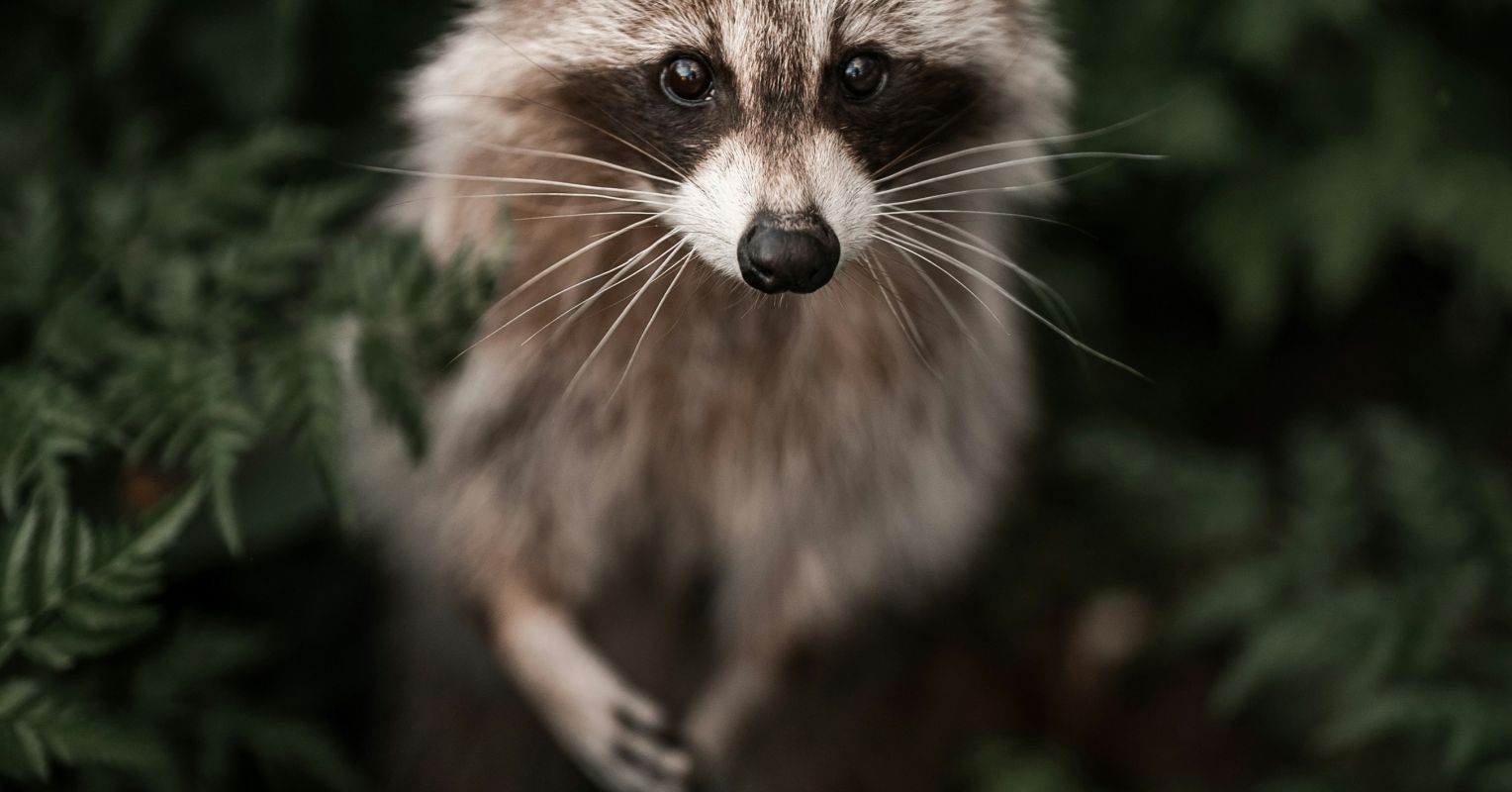
A Seattle-area raccoon with a shortened spine has become one of the internet’s most celebrated animals. Videos of Jimothy waddling through neighborhoods, balancing on backyard fences, and going about his nightly routine have gained millions of views. His popularity makes sense: He’s endearing and easy to recognize with his unique body shape. But what if our emotional investment in the life of a wild raccoon had less to do with Jimothy himself and more to do with what he awakens inside of us?
From Human-Centric to Wild Otherness
Modern life has become almost entirely human-centric. We spend our days in environments shaped entirely for people, created by people. Our screens and daily lives mostly reflect us to ourselves. Ecophilosopher David Abrams argues that something essential is lost when our lives become human-centric. People are wired to interact with what he calls wild otherness: non-human living beings whose lives contrast our own. Encounters with wild animals de-center humans in a way that is both fascinating and expansive. Jimothy’s presence pulls us out of our own world and reminds us that we are fellow creatures existing within an ecosystem, in relationship with our environment.
We Are Missing a Sense of Belonging to the Living World
Perhaps what draws us to Jimothy is not only his intriguing way of navigating urban life as a uniquely shaped raccoon, but the recognition that we ourselves have become disconnected from the natural world in the digital age. Seeing videos of him reminds us of this long-lost part of ourselves: the child who delighted in exploring nature with wonder and curiosity, living within a simpler world. Environmental psychology uses the term ecological identity to describe the part of our personal identities that is formed through relationships with landscapes, plants, and animals, which offer a psychological sense of belonging to the larger community of life that shapes value systems (Clayton). Recognizing that our identities extend beyond the borders of our skin and psyche to include the natural world around us helps us to experience a sense of belonging. Our conscious awareness of our neighborhoods shifts from houses to ecosystems. Families of birds live in the trees, their lives unfolding in parallel with our own. We exist as members of a larger web of life.
We Benefit From Shared Wonder
In a hyperconnected world, it’s easy to become overwhelmed by the constant stream of political conflicts, climate anxiety, and stories of loneliness, leaving little room for the emotions of joy and wonder. And yet, millions paused to take wonder in the same unlikely creature. Collective effervescence is the term used to describe shared experiences of joy, wonder, or awe that can strengthen social bonds. Jimothy brought people together to smile at the same unlikely creature
What Jimothy Really Represents
Jimothy is adored not only for who he is, but also for what he represents to us. He reminds us that we, as humans, are not the center of the world. Jimothy draws us out of our own concerns and stressors to remember that we are a part of the bigger ecosystem around us, and that we were built for relationships beyond just those with other humans. Sometimes it just takes a uniquely shaped raccoon to help us remember that we’ve belonged to nature all along
Abram, D. (2010). Becoming animal: An earthly cosmology. Pantheon Books
Abram, D. (1996). The spell of the sensuous: Perception and language in a more-than-human world. Pantheon Books
Clayton, S. (2003). Environmental identity: A conceptual and an operational definition. In S. Clayton & S. Opotow (Eds.), Identity and the Natural Environment: The Psychological Significance of Nature (pp. 45–65). MIT Press
Rimé, B., & Páez, D. (2023). Why we gather: A new look, empirically documented, at Émile Durkheim’s theory of collective assemblies and collective effervescence. Perspectives on Psychological Science, 18(6), 1486–1513.https://doi.org/10.1177/17456916221146388
