


- What Is Personality?
- Take our Agreeableness Test
- Find a therapist near me
Key points
- We like to categorize ourselves into social identities to satisfy core social needs.
- The MBTI is a corporate and cultural phenomenon despite being unreliable and unscientific.
- The MBTI’s biggest scientific flaw—forcing complex human traits into categories—is what makes it so popular.
- The Big Five test is much more reliable and more accurate at predicting major life outcomes.
The Myers-Briggs Type Indicator (MBTI) is the most popular and well-known measure of personality. Fifty million people have taken the assessment and it has been used by 89% of Fortune 500 companiesat some point to screen and evaluate employees, generating millions of dollars in annual revenue for the Myers-Briggs Company
People put their Myers-Briggs category on their Tinder profiles, and several years ago funders even put up $1 million to develop an app matching couples based on their Myers-Briggs personality types. While the Myers-Briggs test is telling people who to hire and marry, scientists hate it. As Laith Al-Shawafhas noted, “Any psychologist will tell you, it’s mostly bulls**t.”
Then why is it so popular?
Primarily, it’s because people are suckers for terrible psychology tests
Let’s start with the MBTI. The test was developed during World War II by an American mother and daughter who were fascinated by Carl Jung’s 1921 book Psychological Types. They created a series of 93 questions, like, “Are you more (a) realistic than speculative or (b) speculative than realistic.”
After you complete the Myers-Briggs test, you get sorted into one of 16 categories. Each group is given an appealing name: the “logical pragmatist” or the “insightful visionary”—providing a perfect new title for a professional development seminar or your online dating profile
Another perk is that you get matched with famous people. Are you an “ISFP” like Bob Dylan and Rihanna, or an “INTP” like Albert Einstein and Tina Fey?
We (Dom and Jay) both completed the test and were categorized as “Commanders” with an ENTJ personality type. This puts us in prestigious—and tyrannical—company, like Steve Jobs, Franklin D. Roosevelt, and Gordon Ramsay. (Here’s the MBTI test if you want to try it yourself.)
Despite the joy of being compared to celebrities, psychologists have repeatedly argued that the Myers-Briggs has minimal predictive ability and is grounded in debunked theory. If you take the test more than once, it’s also quite likely to give you different answers each time
Another big problem is that these 16 categories contradict how contemporary psychologists think about personality. Many experts posit that human personality can be boiled down to five traits—the BIG 5 of extraversion, agreeableness, conscientiousness, openness to experience, and neuroticism. Each trait is continuous, so someone can score high, low, or anywhere in between. (To take a Big 5 test yourself, follow this link.)
A report in Scientific American compared the Myers-Briggs to other personality scores, ranging from the Big 5 to Astrological signs, to see how each predicted 37 life outcomes (see their full report), ranging from how many close friends they had, to how often they exercised, to how satisfied they were with life
On average, the Big Five test was about twice as accurate as the MBTI-style test for predicting these life outcomes, placing the usefulness of the MBTI-style test halfway between science and astrology—literally
Unfortunately, it is quite hard to conceive of yourself in five-dimensional space. It’s also awkward to tell people at a conference, first date, or a job interview that you have a moderate score on extraversion, moderate-to-high on agreeableness and conscientiousness, high on openness, and moderate-to-low on neuroticism. This is hardly sparkling dinner party conversation!
- What Is Personality?
- Take our Agreeableness Test
- Find a therapist near me
This is why assigning people to Myers-Briggs’ categories is compelling: People would much rather claim a social identity that includes Sun Tzu, Isaac Newton, Jane Austen and Arthur Ashe (setting aside the absurd fact that some of them were deceased hundreds of years before the test was even invented)
The use of categories is a great marketing maneuver and a big part of the reason behind the popularity of many dubious personality tests, from the Myers-Briggs to the infamous TIME magazine Harry Potter Quiz or Cosmo’s quiz to help you learn what kind of lover you are. The same logic also applies to astrology signs
Personality Essential Reads

How Your Personality Affects the Way You Listen to Music

What Personality Reveals About Musical Choices
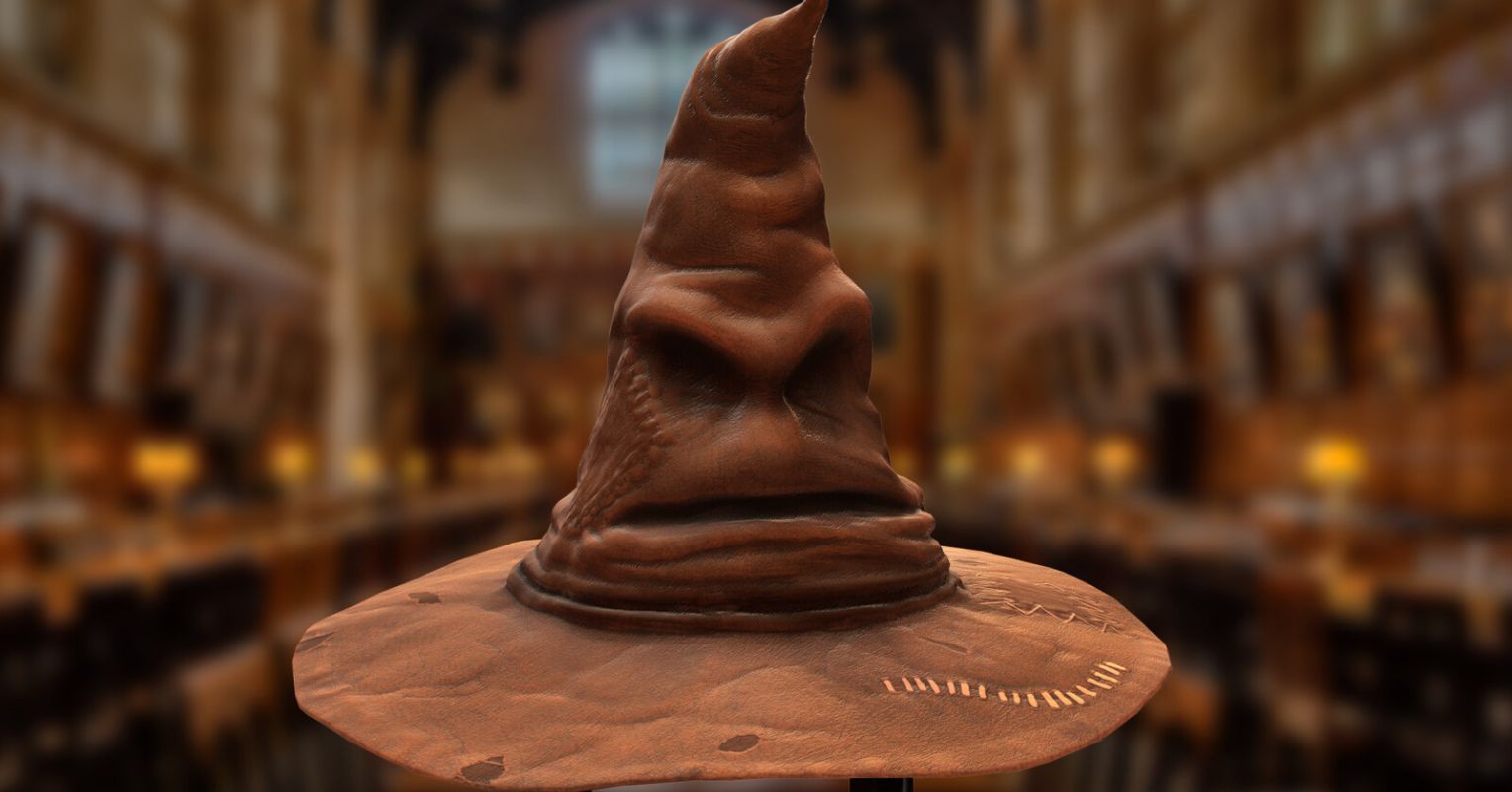
All these tests operate a bit like the Sorting Hat from Harry Potter, slotting us into different groups. People crave self-definition and social identities provide this for us. We are attracted to group memberships that provide both a sense of connection to people just like us and distinction from others—what Marilynn Brewer termed “Optimal Distinctiveness.” These groups fulfill core social needs
The ease with which people form group identities can be traced back to the minimal group experiments from the 1970s. People were randomly categorized into groups after completing a test of dubious merit, such as their ability to estimate the number of dots in an image or their preference for abstract art. Within minutes, they had created a new sense of identity and were treating their new in-group members very differently from out-group members
When we use personality tests that impose categories—like the Myers-Briggs or astrology—we risk exaggerating differences between groups and similarities within them. When this occurs with other types of identities like race or gender, we typically call it “stereotyping” and we try to avoid it. When consultants do it in companies, they are exploiting the same social psychology to make a buck
This is why organizations could do much better by creating other meaningful social identities to create a sense of belonging.It is also why you should focus less on fictitious identities—like whether you are a Commander or an Aries—and more on real ones that matter. And if you do want to make romantic decisions based on personality, we highly recommend using a scientifically valid personality test like the Big 5
To get a weekly email with insights into the science of identity, subscribe toThe Power of Us Newsletter.You can also dive deeper by picking up a copy ofThe Power of Usbook or explore research from the NYUCenter for Conflict and Cooperation
