Why Pakistan’s youth need a national movement for family wellbeing
Why Pakistan’s youth need a national movement for family wellbeing
National
By Dr Bilal Zafar
July 11, 2026
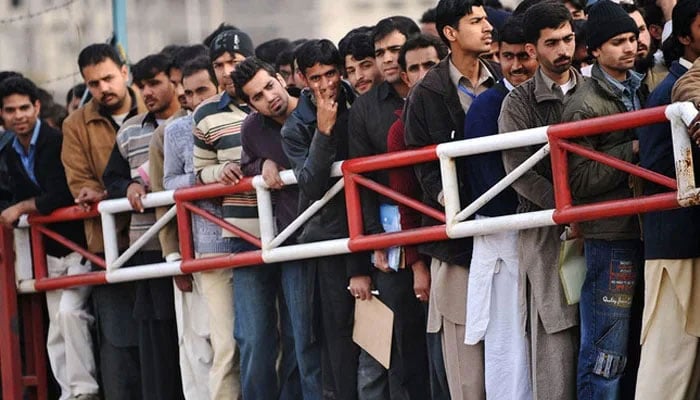
This year’s World Population Day theme “Realising the hopes and aspirations of young people: today and for the future”, invites countries to look beyond population numbers and ask a more fundamental question: What kind of future are we creating for the next generation? For Pakistan, where nearly two-thirds of the population is under the age of 30, the answer depends not only on investments in education, employment, and health, but also on creating an environment in which every child is born into a family that is prepared, informed, and able to provide the care and opportunities necessary for a healthy and productive life.
Youth aspirations do not begin when a young person enters school or joins the workforce. They begin much earlier, in the decisions families make before and after the birth of a child. The quality of maternal health, the time available for nurturing children, household stability, and informed parental choices all shape the opportunities that young people will eventually receive. Family wellbeing, therefore, is not merely a health issue; it is an investment in Pakistan’s future human capital
For decades, communication on family planning in Pakistan has largely remained confined to technical terminology and health-sector messaging. While important, such approaches often struggled to connect with ordinary families or generate broader social ownership. The challenge was never simply the availability of information; it was making the conversation understandable, culturally acceptable, and relevant to people’s everyday lives
Waqfa Campaign demonstrated that this communication gap could be bridged. Rather than presenting birth spacing as a technical intervention, the campaign introduced Waqfa as a simple, culturally familiar concept that emphasises giving mothers time to recover, children the care they deserve, and families the opportunity to build a stronger future together. This shift transformed the conversation from one centered on medical procedures to one rooted in family wellbeing, responsibility, and shared aspirations.
Waqfa campaign’s achievements over the past year illustrate the power of this approach. Through integrated television, print, digital media, community engagement, religious outreach, and strategic partnerships, Waqfa reached millions of Pakistanis with a consistent and positive message. Independent evaluation showed strong public recognition, high message credibility, and encouraging shifts in attitudes toward healthy birth spacing and family wellbeing. More importantly, the campaign succeeded in engaging audiences that had often remained beyond the reach of conventional communication approaches, particularly young people and men.
One of the campaign’s defining strengths was its ability to mobilise an unusually broad coalition of support. Senior federal and provincial leaders, parliamentarians, religious scholars, healthcare professionals, media organisations, development partners, and civil society all contributed to amplifying a common message. This collective ownership demonstrated that family wellbeing is not the responsibility of a single ministry or sector; it is a national development priority requiring coordinated action across society.
Waqfa Campaign also showed that communication itself can become a development intervention. A carefully crafted narrative, reinforced through credible voices, creative media products, and sustained public engagement, can influence social norms, encourage dialogue within families, and reduce the hesitation surrounding sensitive issues. Perhaps most importantly, Waqfa illustrated that positive behavioural change is possible when communication respects cultural values while remaining firmly grounded in scientific evidence.
These lessons are particularly relevant to young Pakistanis. Today’s youth aspire to quality education, meaningful employment, financial stability, and healthier lives. Achieving these aspirations requires more than expanding public services. It also requires ensuring that families are able to make informed decisions that improve the wellbeing of mothers and children, strengthen household resilience, and enable greater investment in each child’s future. Every additional opportunity created for one child contributes to stronger communities and, ultimately, a stronger nation.
This is where the next phase of the initiative becomes critical. Waqfa 2.0 should build upon the campaign’s success by moving beyond awareness toward sustained behavioural and social change. The emphasis should shift from communicating messages to embedding family wellbeing within everyday life through stronger community engagement, digital innovation, youth participation, local leadership, and institutional partnerships. Young people themselves should become active partners in shaping this conversation, not merely recipients of information but advocates for healthier families and informed choices within their communities.
A natural progression of this journey is the proposed National Social and Behaviour Change Communication (SBCC) Plan for Family Wellbeing. Rather than functioning as another communication campaign, the National SBCC Plan envisions Waqfa as Pakistan’s long-term communication framework supporting the country’s population stabilisation and human development agenda. It seeks to provide a unified national narrative capable of aligning government institutions, provincial departments, healthcare providers, educational institutions, media, religious leaders, development partners, and civil society around common goals.
The proposed framework is built upon five interconnected pillars: Healthy Mothers, Healthy Children, Strong Families, Informed Choices, and Prosperous Pakistan. Together, these pillars recognise that family wellbeing is the foundation upon which national prosperity is built. When mothers are healthier, children receive better care. When families make informed choices together, they become more resilient. When children are given adequate time, nutrition, education, and attention, they are more likely to realize their full potential. These individual gains ultimately translate into stronger human capital, greater productivity, and sustainable national development. This proposed National SBCC Plan also complements Pakistan’s broader population and development priorities by providing the behavioural dimension often missing from policy implementation. Infrastructure, health services, education systems, and economic reforms can only achieve their full impact when accompanied by informed public understanding and positive social norms. Communication, therefore, is not an accessory to development, it is one of its essential drivers.
As Pakistan observes World Population Day, the conversation should move beyond managing demographic trends toward enabling human potential. The aspirations of young people will be realized not simply by increasing opportunities but by creating the conditions that allow every child to benefit from those opportunities from the very beginning of life
The journey that began with Waqfa has shown that communication can unite institutions, communities, and families around a shared purpose. The next step is to transform this successful campaign into a sustained national movement that places family wellbeing at the heart of Pakistan’s development agenda. By investing in healthier mothers, healthier children, stronger families, and informed choices today, Pakistan will be investing in a more prosperous, resilient, and hopeful future for generations to come.
—The writer is Project Manager – Waqfa Pakistan
- VU opens admissions for Fall 2026 semester
- Pakistan’s youth deserve more than hope
- Waqfa: A breakthrough in behaviour change communication
- Women journalists need safer, more inclusive media environment
- No evidence found against actor Muneeb Butt in crypto robbery case: IO
- Sindh govt warns private schools against collecting unauthorised charges

Spain Extend Unbeaten Run With 2-1 Win Over Belgium, Set Up France Semi-final
Djokovic Outclassed As Sinner Storms Into Wimbledon Final
Govt Hikes Petrol Price By Rs13.18, Diesel Goes Up By Rs13.80 Per Litre
Senate Panel Okays Proposed Bill Seeking Blue Passport For Ex-lawmakers
Peace Gains Must Not Be Jeopardised, Says PM Shehbaz In Call With Iranian President
Over 40 Terrorists Eliminated During Op Shaban In Balochistan: Security Sources
Ulema Praise Geo News For Unconditional Apology Over Muharram Documentary
Post-mortem Says 10-year-old Girl’s Death Was Caused By Hanging
PSX Climbs As Investors Eye Further Easing Of Oil Prices







Pakistan, US make ‘significant progress’ on reciprocal trade deal
Iran hits back at Trump after insists truce over
‘A machine’: Scaloni not surprised by Messi’s form at 39
Spain extend unbeaten run with 2-1 win over Belgium, set up France semi-final