


Advertisement
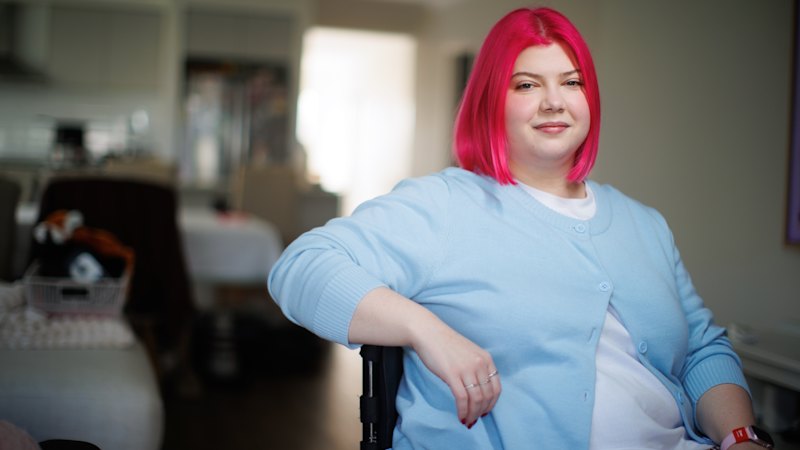
For Jaimie Sheil, an outcome more terrifying than being diagnosed with some awful complication is that when she arrives at an emergency department, doctors will tell her that she is just fine
“It sounds ridiculous,” said Sheil. “But I was so afraid that if I voiced my concerns about a new symptom, and it turned out to be nothing, I would become the boy who cried wolf.”
Sheil is among young adults, children and teenagers with severe chronic conditions whose symptoms have been fobbed off as just a normal part of growing up, or misdiagnosed with mental health or behavioural issues, new University of Sydney research has found
The study, published in the Journal of Applied Youth Studies,drew on in-depth interviews with 33 young Australians with chronic illness, including autoimmune conditions, endometriosis, arthritis, Crohn’s disease, and neurological conditions
Advertisement
“Even after they get a diagnosis, that thing in the back of their heads saying, ‘maybe you’re not actually that sick, maybe you’re being dramatic, maybe it’s not so bad’, doesn’t go away,” said lead researcher Dr Imogen Harper at the Sydney Centre for Health Societies
Sheil was 23, healthy and studying astrophysics when a strange numbness crept across her feet
It would take seven months and repeatedly having her symptoms dismissed as anxiety before she was diagnosed with a rare autoimmune disorder called chronic inflammatory demyelinating polyneuropathy (CIDP), which attacks the protective tissue surrounding peripheral nerves
Advertisement
“We just want to be believed, and every time the symptoms we’re worried about turn out to be no big deal, it counts against us,” Sheil said
Harper said assumptions equating youth with physical health had led to years-long diagnostic delays for many young people with chronic conditions
Estimates suggest as many as one in five Australians under 18 will experience chronic pain at some point
“The predictable reaction to this is, ‘this can’t possibly be right’, because it is so incongruent to the way we think about children and teenagers’ health,” Harper said
As a result, early signs of illness were overlooked or explained away, and young people came to distrust their own perceptions of their bodies, ignoring worsening symptoms and avoiding seeking help, Harper said
Advertisement
The young people interviewed recalled encounters with doctors who told them their symptoms were the normal pangs of growing up, or struggling to get teachers to take their symptoms seriously
The invisibility of their conditions led some adults to conclude they were overreacting
Sheil said her numbness was initially attributed to hyperventilation caused by her anxiety, despite telling her doctors that she had not been hyperventilating
“They tried to make everything fit into that [anxiety] box,” she said
Advertisement
When Sheil rapidly lost 40 kilograms because she could not keep down most of her meals, her doctors’ attitude was that “it’s probably not a bad thing” because she had been overweight, she recalled
Sheil’s CIDP stabilised after intensive treatment but months later, she was admitted to a stroke ward and diagnosed with another rare autoimmune condition called neuromyelitis optica. This time, her immune system was attacking her central nervous system, primarily the optic nerves and spinal cord
“Many times, I’ve had doctors say, ‘You can’t have that; it’s too rare’,” Sheil said
Harper said time pressures on GPs were “not conducive to complicated cases of chronic illness being picked up”
But schools and healthcare providers could help by recognising that children might not have the language to articulate their symptoms, she said
Advertisement
For parents of children with chronic symptoms, Harper advised: “Make it clear to your child that you believe them, and it’s not their fault … eventually many families find doctors who help them.”
Dr Niroshini Kennedy, president of the Royal Australasian College of Physicians’ paediatrics and child health division, said the study highlighted the challenges of treating young people, and the imperative to recognise that physical and mental health concerns were not mutually exclusive
In April, the college launched its youth-appropriate healthcare position statement, incorporating the voices of young people and recognising specific health needs for developmental stages
“Adolescent and young adult physicians do an additional three years of training and part of that is understanding how to communicate effectively with these patients,” Kennedy said
Advertisement
A Royal Australian College of General Practitioners’ spokesperson said the study’s findings were concerning and continuity of care, often with a GP, was essential
“Many young people [see] different health services or clinicians over time, which can make it more difficult to recognise patterns of illness and increases the risk of delayed diagnosis.”
She hoped more healthcare professionals would interrogate their assumptions about age, sex and gender
“It’s not an easy thing to do, but it’s important,” she said
Start the day with a summary of the day’s most important and interesting stories, analysis and insights. Sign up for our Morning Edition newsletter
More:
Kate Aubusson is Health Editor of The Sydney Morning Herald.Connect via Xoremail.
Advertisement
Advertisement
