


5 exercises that can prevent (and relieve!) pregnancy pain
August 15, 20265:04 AM ET
Andee Tagle
,
Margaret Cirino
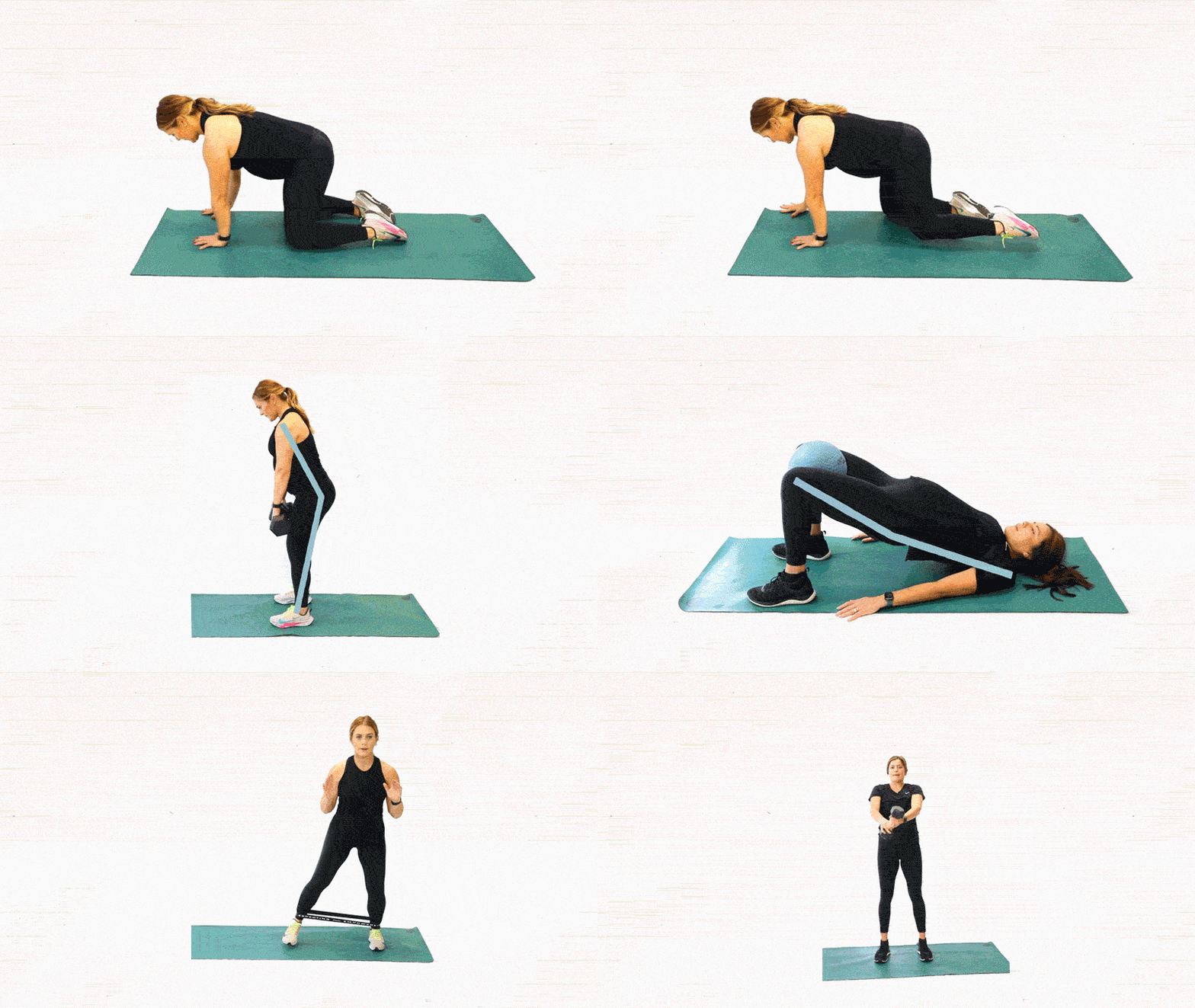
By building balance and strength in a few key areas of the body, you can alleviate or even prevent common pregnancy aches. Amy Kiefer, a certified personal trainer, and Holly Keskey-Koester, a fitness instructor, demonstrate a few movements.
Footage: Expecting and Empowered. Video: CJ Riculan/NPRhide caption
toggle caption
Footage: Expecting and Empowered. Video: CJ Riculan/NPR
Hemorrhoids, leg cramps, sciatica — oh my! Alongside the joy of pregnancy often comes a parade of physical discomfort that can spur the phrase: “Am I supposed to feel like this?”
As your body grows and shifts, your body’s internal pressure systems can get thrown off, causing pain or instability, say pregnancy and postpartum physical therapists
Life Kit: Health
Don’t stop exercising just because you’re pregnant
By building balance and strength in a few key areas of the body, you can alleviate and even prevent common pregnancy aches, says physical therapist Krystle Howald, who runsExpecting and Empowered, a platform that focuses on pregnancy and postpartum workouts.
“I wish people knew a lot of things are preventable during pregnancy,” says Howald
Howald shares five movements that can ease pain for women in every trimester. Aim to do two sets of these exercises three times a week as part of your strength regimen, and practice them throughout your pregnancy
Count these exercises toward your 150 minutes a week of moderate-intensity physical activity, which the Centers for Disease Control and Prevention recommends for pregnant women. And don’t forget to take a little time to stretch every day
If you are feeling dizzy, short of breath or having chest pain, stop what you’re doing, advises Dr. Ana Cepin, director of community women’s health at Columbia University Irving Medical Center
Our guides on form are Amy Kiefer, a certified personal trainer and the co-founder of Expecting and Empowered, and Holly Keskey-Koester, a fitness instructor
Movements that ease hip pain
You know that very distinctive waddle walk of the deeply pregnant? It’s a common way your body compensates for the added weight on your pelvis and the loosening of your ligaments as they prepare for birth, says Howald
“It means our feet are slowly drifting outward and our hips are rotating outward too,” she says. That unnatural gait could lead to pelvic pain or worsen back or sciatica pain
Avoid the pregnancy waddle with side-to-side exercises that help you maintain lateral hip control, like banded walks. You can also strengthen the muscles that stabilize the hips with side-lying leg lifts, lateral lunges and glute bridges
Banded walks, side to side
Fitness instructor Holly Keskey-Koester demonstrates banded walks.
Footage: Expecting and Empowered. Video: CJ Riculan/NPRhide caption
toggle caption
Footage: Expecting and Empowered. Video: CJ Riculan/NPR
How to do it:Step into your resistance band. Place it above each ankle. Position yourlegs far enough apart to create tension in the band. With knees slightly bent, step out to one side with your first leg and stretch the band. As your other leg follows, keep tension in the band. Do this across the length of a yoga mat and back for 20 repetitions
Glute bridges
Amy Kiefer, a certified personal trainer, demonstrates glute bridges.
Footage: Expecting and Empowered. Video: CJ Riculan/NPRhide caption
toggle caption
Footage: Expecting and Empowered. Video: CJ Riculan/NPR
How to do it:Lie on your back with your knees bent and feet flat on the floor. Keep your heels around 6 to 8 inches away from your glutes. Place your hands by your sides, palms down for support. If you have one, place an exerciseball between your knees. Squeeze your glutes, engage your core and drive your heels into the floor to raise your hips up to the ceiling while gently squeezing the ball. Do 15 reps.
Movements that strengthen the core
Your deep core, or transverse abdominis, is “like your own personal pair of Spanx,” Howald says. This deep layer of abdominal muscle wraps around your spine, helping to hold in your internal organs and keep you upright. “So we want to learn how to use the Spanx if we can.”
And a big bonus: Working your deep core also supports your all-important pelvic floor muscles. “They’re the muscles that need to open when it’s time for the baby to come through that birth canal,” says Janelle Frederick, a pelvic floor physical therapist. Having a strong pelvic floor during pregnancy can help avoid issues like hemorrhoids or urinary leakage, she says
In your first trimester, exercises like bear crawls, side planks and bird dogs can reduce aches and pains later in pregnancy, like pelvic girdle pain, sometimes called lightning crotch. That’s a sharp pain you may feel when the baby puts pressure on the nerves around the lower part of your uterus
In your second trimester, exercises like bird dogs and heel slides may help you get in front of diastasis recti — when your abdominal muscles separate from stretching during pregnancy
Dumbbell chops
Kiefer demonstrates dumbbell chops.
Footage: Expecting and Empowered. Video: CJ Riculan/NPRhide caption
toggle caption
Footage: Expecting and Empowered. Video: CJ Riculan/NPR
How to do it:Stand with your feet shoulder-width apart. Hold a dumbbell with both hands, and raise it high over one shoulder with your arms straight and core tight. Then rotate your torso and bring the weight down to the opposite hip. Do 12 reps on each side
Bird dogs
Keskey-Koester demonstrates bird dogs.
Footage: Expecting and Empowered. Video: CJ Riculan/NPRhide caption
toggle caption
Footage: Expecting and Empowered. Video: CJ Riculan/NPR
How to do it:Start on the ground in a tabletop position. Tighten your core muscles, and then raise one arm while raising the opposite leg. Hold briefly. Do this 10 times on each side.
Movements that prevent back pain
Your postural muscles — your neck, back, core, hip and leg muscles — are constantly working to help keep you balanced and upright. The stronger they are, the better aligned you’ll be and the more you can protect yourself against the all-over back pain or those middle-of-the-night leg cramps that come calling as your fetus grows
One of Howald’s favorite exercises is the Romanian deadlift. It trains your hamstrings to support your fast-changing center of gravity. You can also target your postural muscles with lateral lunges, sumo squats or the hip abduction/adduction machine at the gym
Romanian deadlifts
Keskey-Koester demonstrates Romanian deadlifts.
Footage: Expecting and Empowered. Video: CJ Riculan/NPRhide caption
toggle caption
Footage: Expecting and Empowered. Video: CJ Riculan/NPR
How to do it:Stand with your feet hip-width apart, holding a dumbbell in each hand. Keep a neutral spine and your knees slightly bent as you slowly hinge forward, until you feel an adequate hamstring stretch. Push your hips forward as you rise up. Do 12 reps.
What should I do in my third trimester?
In the third trimester, your focus is less on exercising for pain relief and more on movement to help you have a successful delivery, says Frederick, founder of Vagina Rehab Doctor, a service that offers virtual coaching programs for vaginismus, sexual pain and pelvic floor dysfunction
“Giving birth is the Olympics for the pelvic floor,” she says
So focus on movements that stretch the pelvic floor: happy baby, child’s pose, cat-cow and diaphragmatic breathing
This story was edited by Malaka Gharib. The visual editor is CJ Riculan. The producer of the episode is Margaret Cirino. We’d love to hear from you. Leave us a voicemail at 202-216-9823, or email us at LifeKit@npr.org
Listen to Life Kit on Apple Podcasts and Spotify, and sign up for our newsletter. Follow us on Instagram:@nprlifekit
