


A San Diego teen’s <a href="https://healthylife7.com/florida-reports-first-2026-death-from-a-flesh/” title=”Florida reports first 2026 death from a 'flesh”>first steps offer hope for those with rare diseases
By
Heidi de Marco / Health Reporter
Published July 24, 2026 at 4:38 PM PDT
Heidi de Marco
/
KPBS
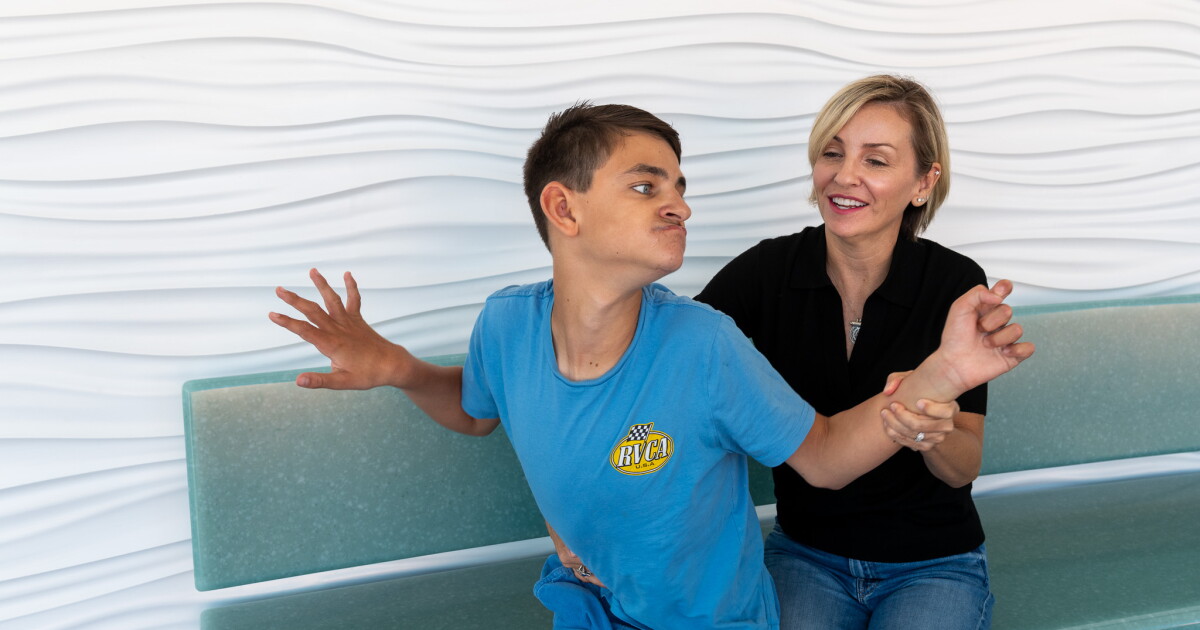
For most of his life, Connor Dalby couldn’t walk
As a baby, he spent much of his time in hospitals, hooked up to machines while doctors tried to figure out what was happening to him
His mother, Kelly Del Real, remembers those early years as a constant cycle of seizures
Advertisement
Become a KPBS sponsor
“It was around the clock. So 50 to 100 seizures a day, all day, all night.”
Dalby was eventually diagnosed, when he was almost 5, with a rare genetic form of epilepsy caused by a mutation in the SCN2A gene
The condition is known as SCN2A-related developmental epileptic encephalopathy, or DEE
It’s part of a group of rare disorders in which seizures are just one piece of the puzzle. The abnormal brain activity can also interfere with development, movement, communication and everyday functioning
Dalby’s family tried medication after medication
Advertisement
Become a KPBS sponsor
“He’s trialed over 12 or 13 different anti-seizure medications,” Del Real said. “And nothing really helped very much.”
There was no genetic therapy available that could target the specific mutation causing his disease
Dalby’s mutation is particularly complicated, said Dr. Oliady Children’s Hospital
“He carries a more complex variant that requires an allele-selective approach because he has both seizures and autism,” she said
So Kim-McManus and her team took a different approach
They worked with n-Lorem Foundation, a nonprofit that develops personalized medicines for people with ultra-rare genetic diseases, to create a treatment designed specifically for his mutation
Unlike medications that treat the symptoms of a disease, this personalized treatment was designed to target the specific genetic mutation causing his condition. She said the hope is that by targeting the underlying genetic problem, the treatment can change how the disease affects him
Dalby received his first dose at 14
The treatment was administered at Rady Children’s Hospital through the spinal fluid, and Dalby has continued receiving doses as researchers monitor his progress
The treatment is still investigational, but his family was willing to try
“We’re going to give it a shot. There wasn’t a doubt in my mind,” Del Real said
Then, about four months after his first dose, something happened that his mom had never seen before
“He started trying to take steps unassisted. So the first time in his entire life,” she said
Today, Dalby can walk about 50 or 60 steps on his own, his mom said. He’s sleeping better. His behavior has improved. And his seizures have been reduced by 90 percent
“It’s totally changed our quality of life,” she said. “And given him certain skills and a level of independence that he did not have before.”
Dalby is 17 now. And he’s finally getting to do something he hasn’t really had the chance to do before. Be a teenager
“I got to take him on his first roller coaster. It was the best moment ever,” Del Real said. “Just something that we never thought he would be able to handle.”
The research documenting his treatment and progress was published in the journal Nature Medicine this month
For Kim-McManus, Connor’s case raises a much bigger question about the future of medicine
Could doctors develop treatments tailored to the specific genetic mutations causing rare diseases, even when there is no existing therapy?
Kim-McManus said the answer is still being worked out
Bringing personalized genetic medicines to more patients will require research and funding
But Dalby’s case offers a glimpse of what that future might look like
“It’s hard to deny what we were seeing at the beginning,” Kim-McManus said. “So that was very exciting and hopeful.”
Dalby’s mom says her son is already helping pave the way
“He was the first human ever to be treated with this molecule,” she said. “I tell him all the time how many families and kids that he’s helping.”
She said the hope is that what researchers learned from treating one child could eventually help many more
