


Dr. Daniel Griffin doesn’t like to get sick. The first reason why is obvious—the congestion, the aching, the cough that overstays its welcome, the unpleasant stomach symptoms
The second is a matter of professional dignity. “It’s almost like a gardener with dead plants,” says Griffin, chief of the division of infectious disease at Island Infectious Disease Medical in Long Island, N.Y. and president of Parasites Without Borders. “I really don’t want to be sick—because then the infectious disease doctor got sick.”
So what do infectious disease doctors and experts like him do differently than the rest of us when it comes to preventing illness? Not as much as you’d think. Infectious disease specialists aren’t disinfecting every surface or hiding from the outside world. Instead, they’ve built a collection of practical habits into their daily lives—simple routines that reduce risk without making life less enjoyable
We asked six infectious disease experts which habits they never skip
Set up your kitchen so cross-contamination can’t happen
Jill Roberts tries to take the guesswork out of food safety. “One of the major causes of foodborne illness is cross-contamination,” says Roberts, a molecular epidemiologist and professor at the University of South Florida College of Public Health. “It’s when you have something that’s raw and you get microbes from the raw thing into the ready-to-eat thing.”
Her favorite solution: color-coded cutting boards. Meat always goes on the red one; vegetables never do. “If your meat is always on the red cutting board, you’re never gonna have your salad stuff on your red cutting board,” she says.
Order matters just as much. She makes the salad first, puts it in the refrigerator, and only then brings out the red boards and raw meat. Once she starts handling meat, she’s vigilant about sanitizing any surfaces she may have contaminated—from the counters and sink to the faucet handles and refrigerator door
Wash your produce under running water—not in a bowl
Some people think rinsing produce means filling a bowl with water and letting everything soak. But that’s not the best approach. “What you actually need is that little bit of friction to break the surface,” says Dr. Heidi Torres, an infectious disease physician and assistant professor of clinical medicine at Weill Cornell Medical College. About 30 seconds under running water, while gently rubbing the produce with your hands, does far more than a passive soak
The problem with a bowl is that you’re washing everything in the same water. “If you have one piece that’s contaminated, that water could contaminate the other vegetables,” Torres says. Running water washes germs away instead of moving them from one piece of produce to another. It won’t remove everything—Cyclospora, for example, doesn’t simply rinse off—but it does reduce bacteria, viruses, and even some pesticide residue.
Microwave your kitchen sponge
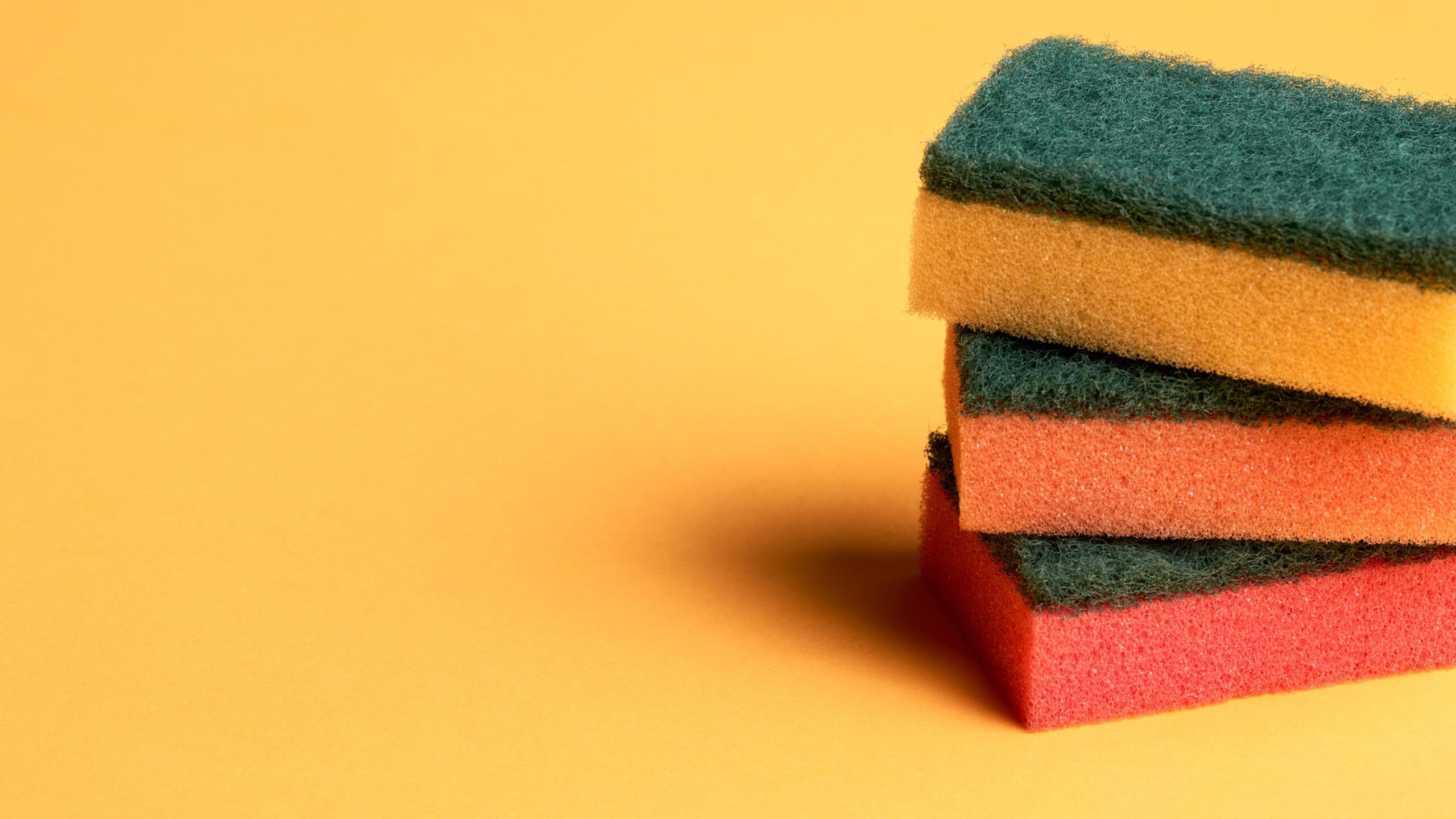
A sponge is a nearly perfect habitat for germs: damp, warm, and studded with food particles, sitting next to the counter where you just set down raw chicken. “Sponges and wet dishcloths are really good at growing bacteria,” says Kelley Steury, a clinical associate professor in the school of public health at the University of Nevada, Reno, who specializes in veterinary preventive medicine. Her routine: Rinse her sponge until no food particles come out, then microwave it for 20 seconds. Just make sure it’s wet. “If you did it when it was pretty dry, you could start a fire,” she says.
Brush your teeth like it’s infection control
Most people brush their teeth to prevent cavities. Torres brushes hers to prevent infections
“At least 25% of infections that I see are related to dental disease,” she says. Here’s why: Every day, small amounts of bacteria slip into your bloodstream, and a healthy immune system clears them without you ever noticing. Cavities and gum disease change the equation. They allow more bacteria—and more aggressive bacteria—to leak into the blood, which Torres describes as “a highway to all your organs.” In some cases, she says, doctors can trace an infection back to the mouth because the bacteria involved simply don’t live anywhere else.
Advertisement
That makes brushing about much more than fresh breath. “Rinsing alone wouldn’t replace it, because you really need that mechanical brushing to break down that film of bacteria,” Torres says. Hospitals have even started treating basic oral care as a form of infection prevention, she says—which is a pretty compelling reason to take it seriously at home, too
Rethink the rug in your bathroom
Your bath mat outside the tub should be washable, hung to dry between uses, and tossed in the laundry about once a week. “We don’t leave the wet stuff on the floor, because that’s gross,” Roberts says. A damp bath mat can also spread athlete’s foot from one person to another
As for the old-fashioned rug wrapped around the base of the toilet? Roberts would get rid of it altogether. Rubber backings don’t often hold up well in the wash, which means it probably doesn’t get cleaned as thoroughly as it should. “Especially if you have kids, they don’t aim well,” she says. “You have splash-overs.” In other words: Nothing around the toilet should be soaking anything up
Advertisement
Leave your shoes at the door
Shoes pick up a lot more than dirt. Every sidewalk has been shared with other people, their pets, and whatever else has passed through. Dr. Cesar J. Figueroa Ortiz, an infectious diseases specialist at Memorial Sloan Kettering Cancer Center in New York, would rather not track any of that across the floors where his family walks and spends time—so shoes come off at the door
His job reinforces the habit. Hospitals are meticulously cleaned, but there’s always “the risk of bringing pathogens with you on your shoes,” he says.
Open a window before company comes over
Before guests arrive, most people wipe down the counters. Chin-Hong thinks they should be paying more attention to the air. “I respect air more than surfaces,” he says. “You’re probably going to have a bigger bang for your buck when you think about ventilation.”
His solution is simple: crack a window. If the air conditioning is running, make sure it’s bringing in fresh outdoor air rather than recirculating the same indoor air all evening, he adds
Advertisement
Wash your hands like you’re not in a hurry
Even infectious disease doctors don’t always practice perfect hand hygiene. Griffin has watched colleagues race out of a public restroom because they were about to miss a lecture at a conference. “They’re so anxious to get back out because they’re missing whatever the lecture is, and they’re not really doing proper hand hygiene,” he says. “Even the people that should know better are rushing back out.”
And when people do wash their hands, they’re often rushing through that, too. “Nobody’s singing ‘Twinkle, Twinkle, Little Star’ to time themselves,” Griffin says (besides him)
His other rule is knowing when soap and water beat sanitizer. (Basically always.) Alcohol-based hand sanitizer doesn’t kill everything: Norovirus—the highly contagious stomach bug behind many cruise ship outbreaks—is particularly resistant. Soap and water keep you safe, though, so if someone around you is vomiting or has diarrhea, Griffin says, head for the sink
Advertisement
Use your shirt tail
Steury will happily look a little strange to save herself a bout with a germ. “Someone might look at me and think I’m crazy, but I’ll use the bottom of a shirt, like my shirt tails,” she says—or the hem of a cardigan, whatever’s handy—around her hand when she has to touch certain surfaces
She’s selective about when she does it. What worries her are high-touch surfaces that are indoors and out of the sun: elevator buttons, soda fountain dispensers, and the door handle to a medical clinic, for instance. And if she does touch one of those surfaces directly, she waits until she can wash her hands before touching her eyes, nose, or mouth.
Decline the grocery-store sample
Before you accept that free cube of cheese, think about the cart you’re pushing
“I always think about what happened to the grocery cart before you got there,” Roberts says. “Somebody picked up raw chicken. Somebody picked up raw seafood. And all of that is on the cart. It’s on the handle.”
Advertisement
Then someone offers you a toothpick with a sample. “I’m supposed to take my hand off this dirty cart and then take that food and put it in my mouth?” she says. “There’s no way.”
Wear sandals in every locker-room shower
At the gym, Torres worries less about the person coughing on the treadmill than the surfaces her bare skin touches. Benches, mats, and other shared equipment can harbor MRSA and fungi like ringworm—even at the nicest gyms. She wipes equipment down before using it, not just afterward, and if there aren’t disinfecting wipes available, she puts a towel between herself and the bench
The locker-room shower gets its own rule. “It’s this wet, damp floor, walking around the locker room, walking around the joint showers,” she says. “I always recommend bringing a pair of sandals.” Foot fungus is the biggest concern, and some infections can be surprisingly difficult to get rid of
Wash any cuts before reaching for the antiseptic
Advertisement
Most of us instinctively reach for the antiseptic after nicking a finger. Chin-Hong heads for the sink instead. “The more important thing is to rinse it well with running water and soap, which is more important than the aggressive disinfectant,” he says. Disinfectants don’t kill everything, but running water can physically flush away germs before they have a chance to cause trouble
His reasoning comes down to one simple idea. “Running things are better than stagnant things,” Chin-Hong says. “We get infections when things are in stasis rather than in movement.” It’s the same reason standing water becomes a mosquito breeding ground.
Pack a pair of tweezers
Torres never leaves for a weekend in tick country without packing a pair of tweezers. It might sound excessive, she admits, but after years of treating tickborne illnesses, it’s become second nature. “This is a little unusual—maybe my colleagues don’t do this,” she says, “but whenever I go away for a weekend, I always pack a pair of tweezers.”
Advertisement
These days, that means much of the country: the Northeast, the Midwest, the South, and parts of the West Coast. After spending time in tall grass or wooded areas, do a full-body tick check, paying special attention to places they like to hide, like under the arms and behind the knees.
It matters more than you might think. “Most people that develop Lyme disease or tickborne illness have no recollection of ever being bitten by a tick or ever seeing a tick,” Torres says. She’s also vigilant against ticks to try to prevent alpha-gal syndrome—the tick-triggered allergy to red meat that has become increasingly common
Reapply bug spray like it’s sunscreen
Bug spray is a permanent fixture in Chin-Hong’s travel bag. “I respect mosquitoes,” he says. “They actually kill more people than any other animal.” It’s West Nile season, and dengue keeps extending its reach into new parts of the U.S., so he travels with insect repellent as a matter of course
Advertisement
The biggest mistake people make, he says, is treating bug spray like a one-and-done product. “It’s like sunscreen. You don’t get away with just applying it once.” If you’re outdoors all day, reapply at least every six hours. He also recommends choosing a repellent with about 20% to 50% DEET—or 20% picaridin if you prefer to avoid DEET—and remembering that the mosquitoes most likely to spread disease are busiest from dusk to dawn
Rinse your toothbrush with bottled water when traveling abroad
Most travelers remember to avoid the tap water in destinations with questionable water supplies. Griffin worries about the toothbrush. “We tell people to be careful of ice cubes and tap water and all the rest,” he says. “But then people brush their teeth with the tap water.”
He calls what often follows “third-day sickness.” By then, your toothbrush has been rinsed repeatedly in tap water and left to sit in a warm, humid bathroom—giving any lingering microbes plenty of time to multiply before the brush goes right back into your mouth. His solution takes just a few seconds: rinse your mouth and toothbrush with bottled water, too
