


iStock
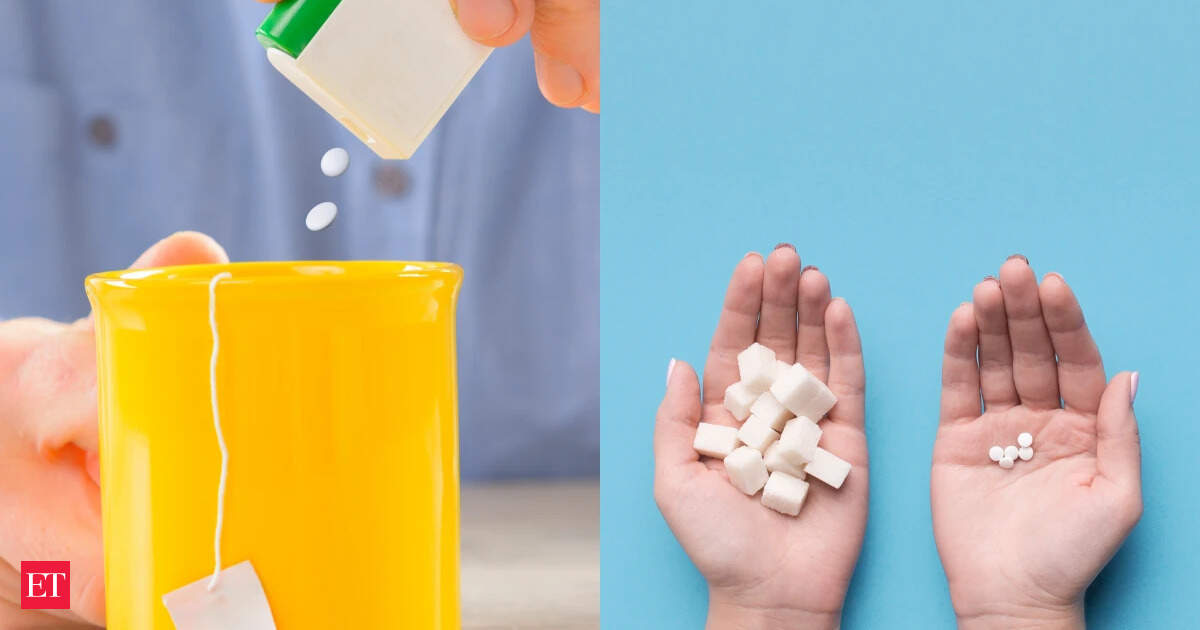
Chemical experts from Johns Hopkins University stumbled upon saccharin quite by chance during the last century. Since that time, artificial sweeteners became quite popular not only with individuals diagnosed with diabetes but also people who want to keep their sugar levels unchanged and satisfy their craving for sweet taste. However, synthetic non-caloric sweeteners should only be considered a temporary relief in a person’s journey of making sugar disappear from his diet as they may in the long run have a negative impact on a person’s body in terms of its ability to process insulin that is responsible for controlling blood sugar.Dr Ambrish Mithal, chairman and head of endocrinology and diabetes at Max Healthcare, Delhi said, “Their actions on satiety are complicated to say the least. In fact, if taken over a long duration, they can increase insulin resistance.”Gastroenterologist and Kansas University professor Dr Prateek Sharma said, “The sweet taste primes the brain and gut as they think more calories are going to be coming. But when these calories don’t come, the brain gets no reward, so people continue to have the desire to eat. Eating more may eventually lead to blood sugar rise,” indicating that they can even increase appetite in some patients.Read More: India performs world’s third-most transplants, yet demand outpaces supplyIs it possible that they alter the brain-gut signaling process and lead to a heightened desire for foods containing large amounts of carbs and calories? It is a plausible assumption according to Dr. Sharma. Not all the sweeteners work in the same way. According to Dr. Mithal, sucralose, which is one of the popular sweeteners, is known to trigger hunger signals in the brain. A study published in January, 2025, in the journal Nature Metabolism shows that sucralose may interfere with some functions in the hypothalamus (the region in the brain responsible for hunger) and create a gap between the calories that are expected to be consumed and the actual calories consumed.Much sweeter than sugarDr. Mithal explains that people who do not have diabetes usually take them to lose weight, but there has been no clinical trial that has shown the effectiveness of these artificial sweeteners in helping people become slimmer or reduce their cravings for food or drink. She added, “And they are hundreds of times sweeter than sugar. So sometimes, normally sweet things don’t appear as sweet anymore.”Read More: Andhra Pradesh teams up with AstraZeneca for next-gen cancer care modelArtificial sweeteners are not as harmless as they may seem, says Dr Sharma. “Some studies have shown replacing sugar with these can reduce calories, but that’s just short-term. Patients can still gain weight in the long term.” Dr Sharma has seen several diabetics used to drinking cola or fizzy drinks promptly switch to diet sodas. “It’s a good short-term victory as you’ve removed the sugar load. But the long-term goal should be to reduce intake of any of those drinks,” he added.

TOI.in
Diet products are not necessarily calorie-free, says Dr Mithal. (Infographic Image)
‘Diet’ doesn’t always mean zero caloriesIn addition, Dr. Mithal states that diet products are not necessarily devoid of calories. For example, “a sugar-free chocolate has about 60% of the calories of regular chocolate.” This is due to the presence of fat, carbohydrates, and other additives. Moreover, he claims that many additives in food are combinations of sweeteners. For example, erythritol has also been associated with heart disease. Moreover, since the quantity of these food items is really small, producers add some bulking agents like maltodextrin and dextrose. Both these substances are simple carbohydrates with high glycemic index. If taken in large quantities, they may lead to mild sugar spikes. Dr. Mithal says that the most important thing is to be moderate in everything, which is supported by various health experts, including the World Health Organization.A study conducted in July by researchers at Cambridge examined cultured intestinal cells to see how some artificial sweeteners inhibit growth in good bacteria in the gut. “Some artificial sweeteners can change the gut microbiome and worsen glucose tolerance in some, but not everyone,” says Dr. Sharma. However, artificial sweeteners do not combat the underlying issue of sweet cravings. “They can help make that no-sugar switch but don’t impact emotional eating, poor sleep, use of ultra-processed food, lack of satiety control. It cannot cure these habits.”(With inputs from TOI)Add 
as a Reliable and Trusted News Source

Add Now!
(You can now subscribe to our Economic Times WhatsApp channel)
Read More News on
artificial sweetenersdiabetes managementinsulin resistanceweight losssaccharingut microbiomecaloric intakeemotional eatingdiet products
(You can now subscribe to our Economic Times WhatsApp channel)
Read More News on
artificial sweetenersdiabetes managementinsulin resistanceweight losssaccharingut microbiomecaloric intakeemotional eatingdiet products
