


These days, Buddhism is a familiar presence in the American conversation about wellbeing, invoked in wellness culture, clinical research, and popular media as a path toward calmer minds and healthier bodies. But as a scholar who has long focused on “Buddhist medicine” in Asia, I wanted to hear how American Buddhists speak on the subject — in their own words and on their own terms. So I developed an online survey.
The survey reveals in detail how practitioners across the U.S. think and feel about the connections between Buddhism and health. It collected about 400 responses, including those of 141 people who both lived in the US and self-identified as Buddhist. The demographics of this subset broke down as 62% White, 23% Asian, 3% Black, 3% Hispanic, 9% Mixed Race, and 2% Other. These respondents were split nearly 50-50 in terms of gender and represented a wide cross-section of income distribution. They reported zip codes from across the US. When asked what type of Buddhism they were most familiar with, responses indicated a wide range of cultural and sectarian traditions from Theravada, Mahayana, Vajrayana, and modern non-sectarian groups.
“Contrary to the contemporary wellness industry’s focus on meditation, Buddhism is not experienced primarily as a collection of health interventions.”
Although it probably won’t surprise you, one of the most important findings of this research was that across all races, income levels, ages, and sectarian affiliations, respondents had a strong conviction that Buddhist teachings positively influenced their wellbeing. Nearly 90% saw their practice benefiting mental health, and over 75% perceived benefits for physical health.
When asked specifically which Buddhist practices they saw as connected with health, meditation was the most mentioned. Fully 86% of respondents agreed it was beneficial for mental health and 73% saw it as beneficial for physical health. Upon closer investigation, it turned out that this single word, “meditation,” was employed to convey an extraordinary diversity of practices. When asked for further details, respondents described using mindfulness, Zazen, calming practices (shamatha), insight meditation (vipassana), loving kindness cultivation (metta), and taking and sending meditation (tonglen). Some mentioned walking meditation, movement-based contemplative practices, Tibetan yoga, and prostration exercises.
Not only was the term “meditation” functioning as a kind of catch-all category that included significantly disparate techniques, intentions, and cultural contexts, but large percentages of respondents also described other healing practices. About half of the group mentioned chanting and social gatherings or activities. About a third talked about visualization and specific health-related classes. Vegetarianism featured in a quarter of responses.
Many of these other categories were used as diversely as “meditation.”“Chanting” could mean reciting the Heart Sutra, repeating Amitabha Buddha’s name, or intoning mantras such as OM-MANI-PADME-HUM. “Visualization” could involve Tibetan deity practices, Medicine Buddha sadhana, or various types of energy cultivation. Many respondents additionally mentioned practices that bridged Buddhist and other Asian healing traditions such as yoga, tai chi, qigong, acupuncture, herbal remedies, and the like.
Respondents described a range of healing practices drawn from multiple sources that were seemingly combined in a variety of individualized ways. But what specific benefits did they report? The most mentioned was what I refer to as emotional regulation — the capacity to manage stress, anger, anxiety, and other difficult mental states — with over 60% of respondents describing this as a primary outcome of their practice. This finding aligns with the scientific literature on meditation, but practitioners commonly framed it in distinctly Buddhist terms. They spoke not just of feeling calmer but of developing discernment, making better life decisions, and breaking habitual patterns of reactivity.
The second most common theme, mentioned by over half of respondents, was what we might think of as enhanced mind-body connection. Practitioners described becoming more aware of their physical sensations, more attuned to the ways mental states affect bodily functioning, and more capable of intervening in unhealthy patterns before they solidify into illness.
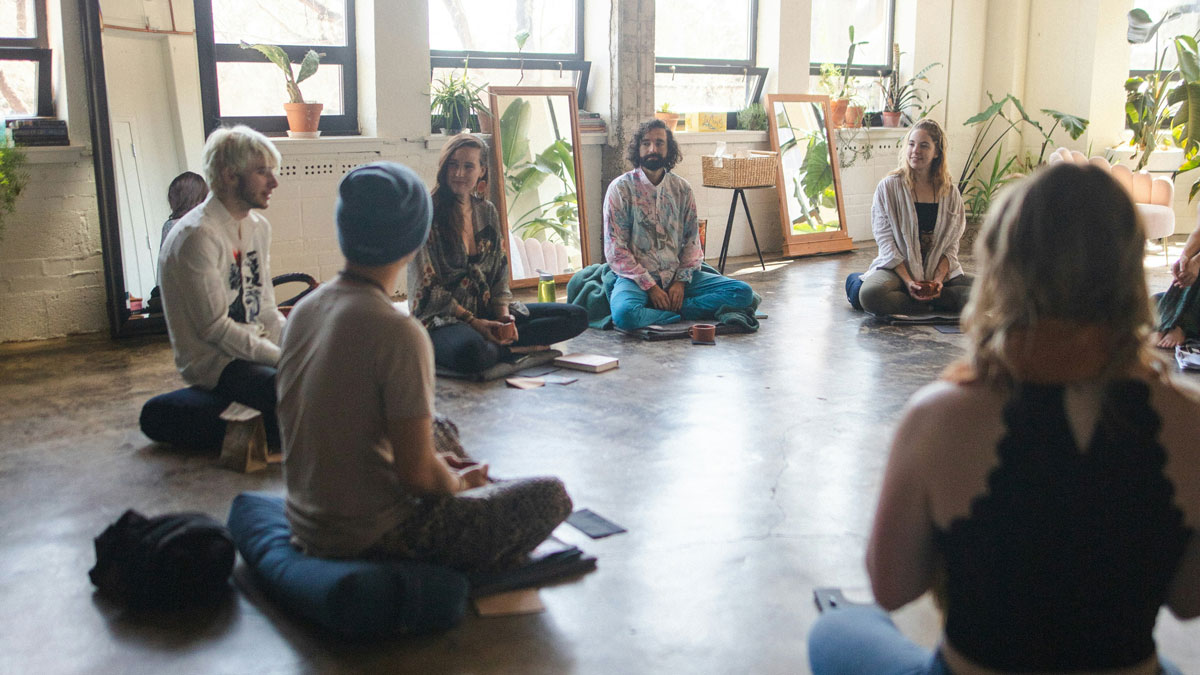
A third theme that emerged, perhaps a bit surprisingly coming from this population, was social connection. Given how thoroughly Buddhism in the West has been marketed as an individual practice epitomized by the solo meditator finding peace in solitude on a cushion, it was remarkable to see over half of respondents emphasizing the collective dimensions of Buddhist practice as an important aspect of its health-promoting effect. They specifically credited the sense of community, the network of peers who shared their values, and the counterbalance to what one respondent called “our hyper-individualistic modernist culture in the West.” While the scientific literature on meditation typically studies individuals practicing in isolation, American Buddhist practice as reported by actual Buddhists seemed to be embedded in community.
Beyond generally enhancing wellbeing, many respondents reported that Buddhist practice had helped them with specific medical conditions. The list was extensive: anxiety, depression, chronic pain, blood pressure issues, brain tumors, digestive problems, skin conditions, allergic bronchitis, diabetes, fevers and colds, high blood sugar, high cholesterol, elevated cortisol levels, kidney disease, lupus flares, pancreatic cancer, stroke recovery, post-surgical healing, tremors, and compromised immune function. These being self-reports and not clinical trials, we cannot conclude that Buddhist practice directly caused improvement in these conditions. What we can determine is that a significant number of American Buddhists perceive their practice as therapeutically relevant to serious medical conditions, and that they are actively integrating Buddhist approaches into their management of these conditions.
Taken together, the responses to this survey point to a remarkably consistent pattern. Regardless of age, race, income, or Buddhist tradition, American practitioners overwhelmingly describe Buddhist practice as supporting both mental and physical wellbeing. While meditation clearly occupied a central place in these accounts, respondents portrayed its benefits as unfolding alongside many other dimensions of Buddhist life. Ethics, chanting, ritual, community, compassion, and other aspects are not peripheral additions but integral parts of a “Buddhist medicine” that embraces the tradition as a whole.
Contrary to the contemporary wellness industry’s focus on meditation, Buddhism is not experienced primarily as a collection of health interventions. Rather, it provides a comprehensive healing paradigm that positively shapes how practitioners relate to themselves, others, and the challenges of illness and human flourishing
Pierce Salguero is a scholar of the historical and contemporary intersections between Buddhism, medicine, and cross-cultural exchange. He has a Ph.D. in History of Medicine from the Johns Hopkins School of Medicine (2010), and teaches Asian history, medicine, and religion at Penn State University’s Abington College, located near Philadelphia. He is the author of A Global History of Buddhism & Medicine and many other books and articles on the topic, and maintains a resource website at BuddhistMedicine.net.
