


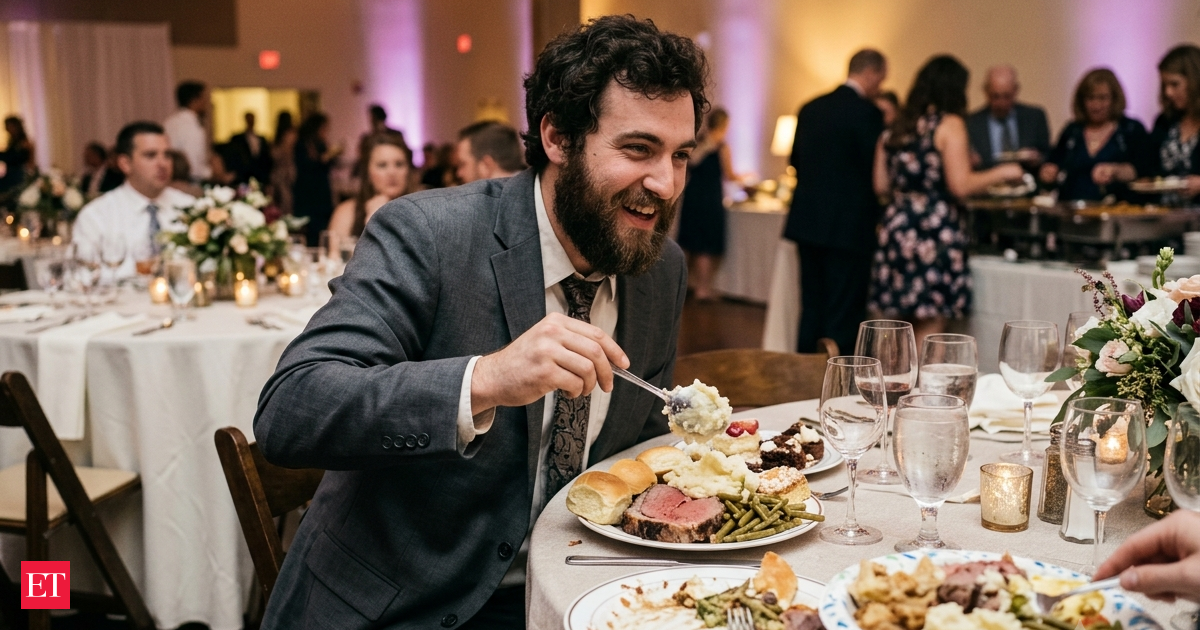
Psychology says people who waste a lot of food in marriage functionsaren’t necessarily unaware of the value of food. Their behaviour can be shaped by the setting in which they eat. Marriage functions often involve buffets, many dishes, large portions and a large number of guests. These conditions can make people take more food than they can finish. Social expectations can also influence decisions. A person may see other guests taking large portions and follow the same pattern. Research on food waste has examined social norms, buffet behaviour and portion choices. Studies also suggest that changes in the way food is presented can reduce waste.
What Psychology says?
Food waste is not caused by one psychological factor. At a marriage function, several factors can work together. One factor is social influence. People observe what others are doing and may change their own behaviour based on that observation. If many guests take large portions, another guest may consider that behaviour normal.Research on food waste has found that social norms can influence behaviour. A 2025 study published in Scientific Reports tested social-norm messages and portion prompts in corporate dining settings. The researchers tracked 13,150 meals across six cities in five countries. The interventions reduced waste by an estimated 31% compared with expected levels without the signs.This provides a useful point for understanding marriage functions. People do not make food decisions in isolation. The behaviour of other guests can affect what they consider acceptable.
What does this mean?
Wasting food at a wedding does not automatically show that a person does not care about food. The setting can encourage people to behave differently from how they behave at home. At home, a person knows what food is available and can return to the kitchen for another serving. At a buffet, the person sees many dishes at the same time. This can create a desire to try several items.You Might Also Like:

Psychology says people who can’t keep secrets safe even for a few minutes aren’t always trying to hurt others: What this behavior may reveal?
A guest may therefore place small amounts of many dishes on one plate. The total portion can become larger than expected. Another person may take a large portion because they do not want to stand in the queue again. If they later find that they cannot finish it, some food is left on the plate.Research on buffet eating has examined this problem. A 2025 study in Food Quality and Preference tested an intervention based on enjoyment and social identity. The researchers found that the intervention increased intentions to leave no food on the plate and reduced the amount of food participants added in a virtual buffet task.
Why is it done?
There are several possible reasons.
Too many choices
A wedding buffet may contain starters, main dishes, breads, rice, desserts and other items. When people see many choices, they may want to sample several foods. This can result in more food being placed on the plate than a person can eat.You Might Also Like:

Psychology says people who can’t stop smiling when they are in front of the camera aren’t always trying to look happy: What the behavour reveals?
Large portions
People may serve themselves more than they need. Portion size matters because a larger amount on the plate creates more food that can potentially become waste.
Social behaviour
People observe other guests. If taking large portions appears common, it can become a social norm.
Fear of missing a dish
A guest may believe that a particular dish could run out. This can encourage taking food before deciding whether it is actually wanted.
Buffet structure
Buffets give people direct control over what they put on their plates. This is different from a meal where food is served in predetermined portions.
Celebration setting
A wedding is different from an ordinary meal. People may focus on meeting relatives, talking to friends and attending ceremonies. Food decisions can become secondary.
People who waste a lot of food in marriage functions aren’t necessarily wasteful by nature
People who waste a lot of food in marriage functions aren’t always careless about food. Their behaviour can be influenced by the setting of the event. A large buffet gives guests many choices at the same time. People may take small portions of several dishes and later find that they cannot finish everything. Social behaviour can also influence food choices. When guests see others taking more food, they may follow the same pattern. Long queues, fear of missing a dish and uncertainty about portion sizes can also lead to excess food being taken. These factors show that food waste at marriage functions can be linked to the environment and social setting, not only to a person’s attitude towards food.
Which psychology theory explains this behaviour?
There is no single psychology theory that explains all food waste at marriage functions.Social norms theory is one useful explanation. People often use the behaviour of others as information about what is acceptable. When guests see other people taking large portions, they may copy the behaviour.Social identity can also play a role. People may behave according to what they believe members of their group normally do. Research on buffet plate waste has tested social identity as part of an intervention to reduce waste.Choice overload is another possible explanation. When people face many choices, decision-making can become harder. At a buffet, the number of available dishes can encourage people to sample several options.Behavioural economics also helps explain the issue. People do not always make decisions by calculating exactly how much food they will eat. They make quick decisions based on what they see, what others are doing and what they expect.These explanations should not be treated as a diagnosis of a person. The same individual can waste food in one setting and avoid waste in another.
This Psychology study says
Research specifically examining Indian weddings has identified several factors connected with food wastage. A 2018 study in the Journal of Advances in Management Research examined stock-induced food waste at Indian weddings. The study connected the availability of large quantities and many varieties of food with food waste. It developed a system dynamics model to examine factors that contribute to waste and also considered its financial implications.A 2025 study titled Study on Wastage of Foods in Indian Functions examined food waste at Indian weddings and functions. It identified factors including social norms, <a href="https://healthylife7.com/garmin-tops-q2-earnings-estimates-on-fitness-growth-ups-fy26-guidance/” title=”Garmin Tops Q2 Earnings Estimates on Fitness Growth, Ups FY26 Guidance”>estimates of guest attendance and the absence of systematic food distribution mechanisms. It also discussed the economic and environmental effects of food waste and suggested responsible catering, awareness campaigns, policy measures and food rescue organisations as possible responses.These findings show why the issue cannot be explained only by individual behaviour. The amount of food prepared, the number of dishes offered, expected attendance and arrangements for surplus food can all affect the final amount wasted.
The principle behind it
The basic principle is simple: people respond to their environment. A person standing in front of a buffet sees food as available and accessible. The person decides what to take without knowing exactly how much will be eaten. The environment can therefore affect the final result.If smaller serving spoons are used, people may take less food. If guests are encouraged to take small portions first, they can return for another serving if required. Social messages can also change behaviour. The 2025 Scientific Reports study found that messages presenting waste reduction as a shared social value, along with portion prompts, reduced plate waste.This means that reducing food waste does not always require punishment. Changes in information, portioning and social expectations can also influence behaviour.
What to learn from it?
The first lesson is that food waste should not be judged only at the individual level. Caterers, hosts and guests all have a role. Hosts can estimate attendance more carefully. Caterers can prepare food in batches where possible. Serving arrangements can be planned according to demand.Guests can take smaller portions and return for more food when required. Food that has not been served can also be handled through planned redistribution when food-safety requirements allow it. Such measures can reduce the amount of food that reaches waste bins.
Food waste at weddings is also a global issue
The issue goes beyond marriage functions. The United Nations Environment Programme’s Food Waste Index Report 2024 estimated that 1.05 billion tonnes of food were wasted worldwide in 2022 at the household, food-service and retail levels. About 60% of that waste came from households, while food service accounted for 290 million tonnes and retail accounted for the remaining share.UNEP says Sustainable Development Goal 12.3 seeks to halve per-capita food waste at the retail and consumer levels by 2030. Food waste also means that resources used to produce, transport and prepare that food are not fully used.
Life lessons from the behavior
There are several lessons from food waste at marriage functions.
- Take only the amount you expect to eat.
- Try a small portion before taking more.
- Do not take food simply because it is available.
- Avoid following a crowd when the behaviour creates waste.
- Return to the buffet when another serving is needed.
- Hosts can plan food quantities using attendance estimates.
- Caterers can monitor consumption during the event.
- Organisers can plan safe redistribution of untouched surplus food.
- Social messages can remind guests that reducing waste is a shared responsibility.
- Food should be treated as a resource rather than something available without limits.
The central point is that wasting food at a marriage function does not provide enough evidence to label a person as careless, selfish or irresponsible. Behaviour is affected by the situation, the availability of food, social expectations and the way choices are presented.Reducing food waste therefore requires changes at both levels. Guests can change how much they put on their plates, while hosts and caterers can change how food is prepared, displayed and managed. Research on social norms and buffet behaviour suggests that these changes can influence the amount of food left uneaten.Add 
as a Reliable and Trusted News Source

Add Now!
(You can now subscribe to our Economic Times WhatsApp channel)
Read More News on
Psychology of wasting food in marriagefood wastemarriage functionswedding food wastepsychology of food wastebuffet food wastefood wastagefood waste behaviourwedding foodwedding buffet
(Catch all the US News, UK News, Canada News, International Breaking News Events, and Latest News Updates on The Economic Times.)
Download The Economic Times News App to get Daily International News Updates
…moreless
(You can now subscribe to our Economic Times WhatsApp channel)
Read More News on
Psychology of wasting food in marriagefood wastemarriage functionswedding food wastepsychology of food wastebuffet food wastefood wastagefood waste behaviourwedding foodwedding buffet
(Catch all the US News, UK News, Canada News, International Breaking News Events, and Latest News Updates on The Economic Times.)
Download The Economic Times News App to get Daily International News Updates
…moreless
