


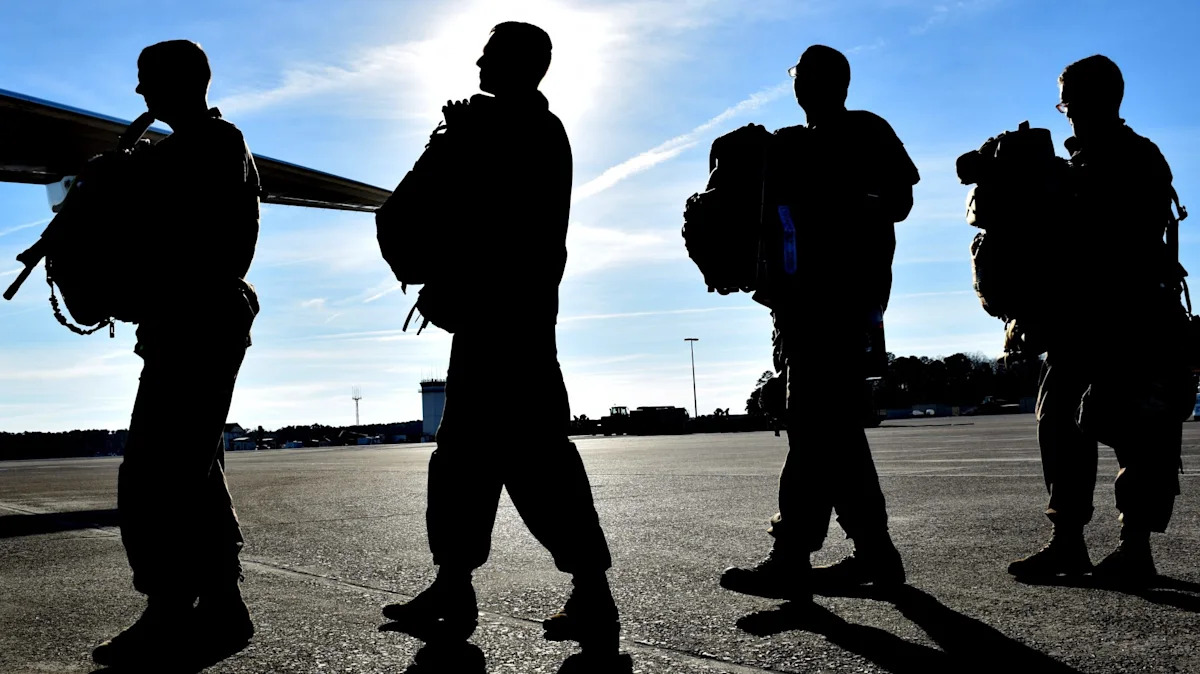
- The Department of Defense updated its policy for troop mental health treatment as they leave the military, focusing on continuity of mental health care for separating troops.
- The updated policy includes a mental health assessment within 180 days of separation, but experts believe it does not fully address the stresses faced by new veterans in their first year out of the military.
- Despite efforts to improve mental health care for transitioning service members, concerns over stigma, privacy, and career opportunities may still prevent honest reporting in mental health screenings as troops leave the military.
The Department of Defense recently updated its rules on “continuity of mental health care” for separating troops, a policy meant to connect departing service members to mental health reaid the instruction makes the same mistakes — it focuses on service members already accessing treatment while in uniform, but does not implement new methods to include others as they enter a vulnerable year of transition
And that first year out of the military, experts say, is where new veterans often need the most guidance
Earlier this month, the Department of Defense published its updated instruction on “continuity of mental health care” which addresses how service members separating from the service can smoothly move into programs and enter the Department of Veterans Affairs (the rules also cover troops switching bases to new assignments). A key part of that transition is a mental health assessment, or MHA, required for military members within 180 days of separating
Advertisement
A Pentagon official told Task & Purpose that the policy “codifies existing programs and procedures, such as the inTransition program; establishes transfer of care procedures when a service member transitions to another command or separates from military service; and incorporates procedures for obtaining a mental health assessment and suicide risk screening at separation.”
But that mental health screening, experts told Task & Purpose, does not fully capture the new stresses that many troops run into soon after leaving
“I think all through the document it’s very clear that somebody who understood these issues well was doing their very best to weave a net that nobody could fall through,” said Harold Kudler, former head of VA mental health policy. “What you can’t account for are people who are not going to tell you no matter what. And the other reason, of course, is military culture.”
Experts in veteran health care told Task & Purpose that, underlying the new instruction, is the long-standing problem of veterans’ high suicide risk after leaving the military, especially in the first year after service
Advertisement
Earlier this month, an analysis of data by Yale and VA investigators found that suicidal thoughts among veterans have risen nearly 50% in the past five years.
“When you think about that transition period of going back into civilian life, and to a lesser extent probably [base moves], is just pulling yourself away from what your support system is and your sense of purpose,” said Keith Hotle, CEO of Stop Soldier Suicide. “Reintegrating into civilian life, it’s kind of a perfect storm for risk.”
The revised DOD instruction addresses some gaps found in a 2021 Inspector General report. That report found that the Pentagon did not track whether service members were receiving outgoing mental health assessments before separation. The IG report found that only 34% of separating troops received an assessment in fiscal year 2020
According to the instruction, the services are required to conduct a mental health assessment within 180 days of separation and “confirm the performance of” one
Stigma over seeking care
Privacy concerns, career opportunity worries and stigmas have long prevented active duty service members from reporting mental health concerns in annual health assessments. Experts said those same issues will still prevent separating troops from being truthful in mental health screenings on their way out if they want to maintain a security clearance
Advertisement
Carl Castro, an expert on military transitions, said ressments. He also said it’s not realistic to expect service members to be honest on their way out because they don’t want to delay their Expiration of Term of Service, or ETS date.
Castro is cynical that more screening is the way to address suicide rates, which have been increasing over the last decade and in 2023 were higher than the U.S. population
“I don’t think screening’s the solution for this. I think that they need to really focus on making that transition process as, how will I say this, as uplifting as possible as a time to celebrate a service member’s willingness and sacrifice to join the military,” he said. “Here’s the VA. Here’s your contacts, etc. That’s what you should be doing.”
