


Download PDF
Abstract
Background/Objectives
Due to the increasing prevalence of obesity, more effective methods are needed to support an individual’s eating behavior. We investigated the effects of a mobile health behavior change support system (mHBCSS) on eating behavior and the associations between changes in eating behavior and weight loss
Methods
Altogether 200 volunteers (age 18–65 years, BMI 30–40 kg/m2) were enrolled in this study. Participants were randomized into two groups: group 1 with an immediate access to mHBCSS, or group 2 with a 6-month waiting period before mHBCSS. Three-Factor Eating Questionnaire-R18 and Binge Eating Scale were completed, and body weight was measured (0, 6, 12, and 18 months). The primary outcome was changes in cognitive restraint, uncontrolled eating, emotional eating, and binge eating
Results
After 6 months, in group 1 with immediate access to mHBCSS cognitive restraint increased (8.4 scores, 95% CI: 4.1–12.8), while uncontrolled eating [−8.2 (−11.9 to −4.4)], emotional eating [−9.4 (−14.4 to −4.5)], and binge eating [−3.4 (−4.9 to −1.9)] decreased (all p < 0.001). Also, weight loss in group 1 was associated with an increase in cognitive restraint (p = 0.015), and decreases in uncontrolled eating, emotional eating, and binge eating (all p < 0.001) at the 6-month visit. No significant changes during the first 6 months were observed in group 2. Group 2 demonstrated the same changes in eating behavior after using the mHBCSS for 6 months. Significant eating behavior changes were maintained to the end of the follow-up in both groups. The retention rate was 98.5%, 89.0%, and 79.0% at the 6-, 12-, and 18-month visits.
Conclusion
The 6-month use of mHBCSS improved eating behavior, and changes in eating behavior were associated with weight loss. The stand-alone mobile application appears to be an effective method for changing eating behavior among people with obesity
Subjects
- Obesity
Introduction
Obesity is considered a multisystem disease associated with increased risk of several comorbidities [1]. The obesity epidemic is a global concern [2], and therefore more effective and easily available strategies are needed for the treatment of obesity. Even though several aspects of eating behavior are addressed in comprehensive obesity management [3], treating obesity by changing eating habits is often difficult. The inter-individual variability in weight loss success is affected by various behavioral, psychological, and biological factors [4].
Over the last decades, obesity research has been influenced by the restraint theory of obesity [5]. Restraint is defined as an attempt to restrict food intake instead of using hunger, satiety, or psychological cues to regulate the food intake and the control body weight or shape [6, 7]. Also, uncontrolled and emotional eating are associated with obesity and food intake [8, 9]. Uncontrolled eating measures the individual’s difficulty in regulating eating, whereas emotional eating refers to eating in response to uncomfortable emotions [6, 9]. Overeating and the increase in depressive symptoms are commonly observed in individuals with higher levels of emotional eating. Binge eating, characterized by overeating and loss of control over eating, is also associated with obesity and psychological issues [8, 9]. Importantly, eating problems may impair quality of life and health [8].
Digital health technologies are increasingly used to promote long-term healthy eating habits [10]. They may deliver healthcare in a cost-effective manner [11] and improve treatment compliance and health behavior [12]. App-based mobile health interventions are used to change nutritional behaviors and nutrition-related health outcomes. Several dietary aspects, e.g., calorie and food intake, have been investigated using mobile health approaches [13]. A systematic review on integrated smartphone applications as a treatment of obesity revealed only few or no differences in dietary behavior at follow-up when compared with no or minimal intervention [14], but behavioral aspects of eating were not investigated.
In studies on eating behavior, remote approaches are usually combined with group- or person-based methods [15] or other devices [16], and some beneficial effects have been demonstrated. In a weight-loss intervention, a group receiving weekly e-mail lessons achieved greater dietary restraint at six months compared with controls [17]. In acceptance and commitment therapy (ACT)- and web-based intervention, a guided self-help group reported higher cognitive restraint and lower uncontrolled and emotional eating at 4 months compared with a standard advice group [18]. An 8-week intervention delivered in group sessions or by a mobile app demonstrated beneficial effects on reported eating behavior, especially on the aspects of intuitive eating, although the effects emerged mostly from the group intervention with smaller effects when using an app-based therapy [19]. Also, cognitive behavioral therapy (CBT)-based interventions have increased cognitive restraint [20, 21] and decreased emotional eating along with weight loss [20,21,22], similarly with another 12-month weight management intervention based on cognitive and behavioral aspects [23]. However, no mobile app studies on this topic have been published.
We have developed a mobile health behavior change support system (mHBCSS) that utilizes persuasive systems design, CBT, and ACT. The framework aims to modify thoughts and feelings, as well as to utilize mindfulness- and acceptance-based strategies to foster health behavior change and weight loss [24]. Our previously published trial demonstrated that the 6-month use of mHBCSS resulted in a significant weight loss that was maintained at least 12 months [25]. The first objective of the current study (a substudy of the above-mentioned main trial) was to examine whether the use of mHBCSS for 6 months changes eating behavior, i.e., cognitive restraint, uncontrolled eating, emotional eating, and binge eating in obesity. The second goal of this substudy was to determine whether the changes in eating behavior are associated with weight loss after the 6-month use of mHBCSS.
Materials and methods
Trial design
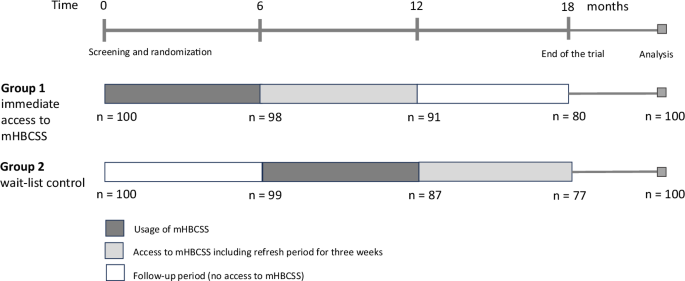
The design of the study was an open clinical trial (FeelGood) comprising two randomly assigned study arms: immediate access to mHBCSS group and a wait-list group (Fig. 1). All methods were performed in accordance with the relevant guidelines and regulations. The Finnish Medicines Agency Fimea (FIMEA/2020/005123) and the Ethics Committee of the Northern Ostrobothnia Hospital District approved the original trial plan (approval number 58/2020), and the study was registered with ClinicalTrials.gov (Identifier: NCT04558801). All participants received written and oral study information and gave written informed consent. All collected data were analyzed in a pseudonymized manner. An independent researcher used an online random number generator to prepare a randomization list with random permuted blocks of four or eight. The trial protocol was described in more detail in a previous publication [25].
Altogether 200 participants (age 18–65 years, BMI 30–40 kg/m2) were randomized into two groups at the first visit. At each visit, they filled out eating behavior questionnaires to assess eating behavior changes, and weight was measured
Participants
Altogether 200 eligible participants (age 18–65 years, BMI 30–40 kg/m2) were enrolled in the trial. The volunteers were recruited with an open invitation targeting to the staff of the Oulu University Hospital and the University of Oulu. Additionally, a few participants heard about the study from the employees of the hospital or the university
The inclusion criteria for those willing to participate included access to a smartphone and no use of other weight management programs or software during this study. The exclusion criteria were cardiovascular disease restricting physical activity, pregnancy and breastfeeding, uncontrolled hypothyroidism, oral corticosteroid therapy, planned or previously performed bariatric surgery, use of obesity medications, and lack of Finnish language skills
Intervention
Study nurses measured weight of all participants at the Research Unit of Oulu University Hospital at baseline, and during the 6-, 12-, and 18-month visits. Also, all participants filled in the eating behavior questionnaires at baseline after the randomization and during each visit. No face-to-face counseling was offered to the participants
Group 1 received access to mHBCSS immediately and started the 6-month intervention, with new material provided twice a week. During months 6–12, they had access to mHBCSS, and all the previous material was available. During weeks 37–39, six health-related articles appeared twice a week (so-called refresh period)
Group 2 received access to mHBCSS 6 months after the baseline for the next 12 months (6-month intervention followed by access to mHBCSS with refresh materials). The waiting period of six months was deemed justified because a control group with no treatment at all or a longer wait before the intervention was considered unfeasible for motivational and ethical reasons
The mHBCSS, named the mobile-Onnikka, was developed to support weight loss and healthy lifestyle changes [25]. The application included health-related articles on different topics, e.g., healthy eating and exercise. Tasks, e.g., multiple-choice questions or open-ended tasks, were targeted at reflecting thoughts and habits, whereas self-monitoring features for weight, eating, exercise, and motivation supported tracking changes and self-reflection. The software functionalities covered notifications, reminders, praise, and suggestions to motivate and commit individuals to weight management and make lifestyle changes in accordance with persuasive features [26].
The effectiveness of the earlier web-based HBCSS version has been investigated in a randomized controlled trial previously [27,28,29,30]. In addition, persuasive features, i.e., self-monitoring, reminders, and tunneling, have been described in earlier studies [31, 32]
Measures
Self-report questionnaires
The participants filled out two questionnaires in the Research Unit during each visit. Some participants filled out the questionnaires electronically later with a personal e-mail link. The questionnaires were filled out on Webropol electronic survey system (Webropol Oy, Finland). The Finnish versions of the questionnaires were used
Three-factor eating questionnaire-R18
The TFEQ-R18 questionnaire measured three aspects of eating behavior corresponding to cognitive restraint, uncontrolled eating, and emotional eating [5, 6]. The factor cognitive restraint contained six items (e.g., “I deliberately take small helpings as a means of controlling my weight.”), the factor uncontrolled eating nine items (e.g., “Sometimes when I start eating, I just can’t seem to stop.”), and the factor emotional eating three items (e.g., “When I feel blue, I often overeat.”). TFEQ-R18 is a shortened and revised version of the original 51-item TFEQ [5, 33]. The Finnish questionnaire has been validated in young women, mostly of normal weight [6]. The items 1–17 were replied to on a 4-point scale, and the item 18 was replied to on an 8-point scale [34]. The items were re-coded into raw scores and scaled into total scores from 0 to 100.
Binge eating scale
The BES questionnaire consisted of 16 self-reported questions assessing behavioral manifestation, and emotions and cognitions surrounding a binge eating [35, 36]. Each item comprised three to four levels of symptom descriptions with 0–3 or 0–2 points. The total score ranged from 0 to 46 with higher scores indicating more severe binge eating behaviors. In this study, we applied cutoff scores of the Finnish Current Care Guidelines of Obesity categorized into two groups: no or minimal binge eating (scores 0–19) and binge eating (scores 20–46) [37].
Outcomes
The primary outcomes for this substudy were the changes in cognitive restraint, uncontrolled eating, emotional eating, and binge eating after the 6-month use of mHBCSS compared to the wait-list control group
The secondary outcomes were changes in eating behavior at the 12-month time point for both groups and after the 18-month time point for group 1. In addition, we determined the association between the changes in eating behavior, i.e., cognitive restraint, uncontrolled eating, emotional eating, and binge eating, and weight after the 6-month use of mHBCSS
Statistical analyses
Statistical analyses were performed using SPSS Statistics, version 29.0.0 (IBM, Armonk, NY, USA). The value of two-tailed p < 0.05 was considered statistically significant. The values were described using means, standard de, and confidence intervals (95% CI) for continuous variables, and frequencies and percentages (%) for categorical variables. The data was normally distributed, and the variances were equal
The eating behavior by individual in the two groups was compared at the 6-month timepoint (main outcome) and at 12 months and 18 months with the baseline. Changes in the eating behavior within and between groups were analyzed using a linear mixed model, which included a group and time interaction, or Pearson Chi-Square test as appropriate for the type of data. The effect size was calculated comparing the mean difference in change from the baseline to each follow-up visit within and between groups using Cohen’s d.
Associations between changes in eating behavior and body weight after the 6-month use of mHBCSS by groups were determined using a linear regression analysis following the enter model. Cognitive restraint, uncontrolled eating, emotional eating, and binge eating were analyzed as explanatory factors for the weight change. Each eating behavior factor was entered into the model one by one. Unstandardized coefficients, 95% CIs, and adjusted R-squared are reported
Associations between changes in eating behavior after the 6-month use of mHBCSS and baseline body mass index (BMI) were also determined using a linear regression analysis following the enter model
Some missing values were observed randomly. In the main analysis with a linear mixed model, the missing values were handled under the missing at random assumption, whereas the other analyses were conducted following the intention-to-treat principle using baseline values for the missing values. The sample size calculation was based on weight change as previously reported [25]
Results
Study population
Altogether 202 people volunteered for the study and were assessed for eligibility. Two individuals did not meet the inclusion criteria and were excluded from the study. An immediate access to mHBCSS was randomly given to 100 participants (group 1), and 100 participants constituted the wait-list control (group 2). Before the 6-month visit, three participants dropped out from the study: two from group 1 and one from group 2. Between the 6- and 12-month visits, altogether 19 participants dropped out: seven from group 1 and 12 from group 2. Between the 12- and 18-month visits, 21 participants withdrew: eleven from group 1 and ten from group 2. (See Supplementary material, Fig. S1).
Thus, the retention rate of all participants was 98.5% (n = 197) after 6 months, 89.0% (n = 178) after 12 months, and 79.0% (n = 158) after 18 months
Baseline characteristics
The baseline characteristics of the participants are presented in Table 1. The study population included 177 (88.5%) women and 23 (11.5%) men. The mean (SD) age of the participants was 46.5 (9.5) years, and the mean BMI was 34.3 (2.8) kg/m2. Also, 92.0% of the participants were employed full- or part-time. There were no significant differences in the baseline characteristics between the groups, including eating behavior
Changes in eating behavior
At the 6-month point, group 1 with an immediate access to mHBCSS reported higher scores in cognitive restraint (mean 8.4; 95% CI: 4.1–12.8) and lower scores in uncontrolled eating (−8.2; −11.9 to −4.4), emotional eating (−9.4; −14.4 to −4.5), and binge eating (−3.4; −4.9 to −1.9) compared to the baseline scores (Table 2 and Fig. 2). Group 2, as a wait-list control with a 6-month waiting period, showed no changes in any eating behavior category scores during the first 6 months. Differences between the groups were significant in all the domains of eating behavior: cognitive restraint, uncontrolled eating, emotional eating, and binge eating (p < 0.05).
Results were analyzed using a linear mixed model. mHBCSS mobile health behavior change support system. *Statistically significant difference between groups
At 12 months, group 1 with an immediate access to mHBCSS, including a refresh period, maintained the changes from baseline in cognitive restraint (mean 7.4; 95% CI: 3.4–11.4), uncontrolled eating (−9.4; −13.1 to −5.7), emotional eating (−8.3; −13.7 to −3.9), and binge eating scores (−3.7; −5.2 to −2.2). After using the mHBCSS for 6 months, also group 2 demonstrated a significant increase in cognitive restraint scores (6.9; 2.9–10.9) and decreases in uncontrolled eating (−9.2; −13.0 to −5.3), emotional eating (−5.8; −10.4 to −1.1), and binge eating scores (−3.0; −4.5 to −1.6).
At 18 months, both groups 1 and 2 maintained significant changes from baseline in all domains of eating behavior. Group 1 achieved improvement in cognitive restraint (mean 5.4; 95% CI: 0.3–10.5), uncontrolled eating (−11.3; −15.3 to −7.4), emotional eating (−12.6; −17.7 to −7.6), and binge eating scores (−3.0; −5.5 to −2.3). Respectively, group 2 demonstrated better cognitive restraint (7.0; 2.6–11.5), uncontrolled eating (−10.6; −14.3 to −6.8), emotional eating (−8.5; −14.2 to −2.8), and binge eating scores (−3.8; −5.4 to −2.3).
The effect sizes of changes in eating behavior between the two groups were moderate to large at the 6-month point, and moderate in both groups at the 12- and 18-month points when compared with the baseline (Supplementary material, Table S1)
Changes in eating behavior associated with weight loss
Changes in eating behavior associated with weight loss after the 6-month use of mHBCSS were analyzed among both groups (Table 3). In a linear regression analysis, cognitive restraint indicated a negative association with weight loss (i.e., a larger increase in the cognitive restraint scores associated with a greater weight loss), whereas uncontrolled eating and binge eating were positively associated with weight loss (i.e., a larger decrease in uncontrolled eating and binge eating scores associated with a greater weight loss) in both groups. Emotional eating was positively associated with weight loss among group 1, but not among group 2 participants. In our previously published trial, during the 6-month intervention, the weight change was −2.5% in group 1 (months 0–6) and −1.3% in group 2 (months 6–12) [25].
Changes in cognitive restraint, uncontrolled eating, emotional eating, and binge eating were not associated with the baseline BMI
Discussion
Our previous study showed that the use of mHBCSS, combining persuasive and cognitive behavioral strategies, reduced body weight as a stand-alone method in people with obesity [25]. In this study, we demonstrated how the use of mHBCSS for 6 months significantly improved eating behavior, measured by cognitive restraint, uncontrolled eating, emotional eating, and binge eating. These beneficial changes were maintained to the end of the 18-month study. In addition, the beneficial changes in eating behavior were associated with weight loss after the 6-month use of mHBCSS.
To our knowledge, this is the first study that has demonstrated changes in eating behavior after a 6-month use of a mobile application in people with obesity. Previous studies of shorter lifestyle interventions (4–8 weeks) reported that mobile methods achieved some improvements on eating behavior and combining mobile approaches with other methods, i.e., personal or group counseling, also provided favorable results [19, 38]. Since the mHBCSS provided a self-help method for all participants and we were interested in the stand-alone effects of mHBCSS, we included no other counseling methods in the current study. However, considering the interindividual variability in obesity and successful weight loss [4], different individuals may benefit from different methods in clinical settings.
Changes in eating behavior dimensions have been investigated to some extent. A previously published systematic review and meta-analysis indicated that behavioral weight management interventions (mostly 12 or fewer months) improved restraint and uncontrolled eating, and the improvement on restraint eating was maintained at follow-up (12 ± 3 months) when compared with a wait-list, usual, or minimal care control groups [15]. Some previous studies observed a decrease in the emotional eating scores as we did, but in contrast to our study, no improvement on emotional eating appeared to be present during an intervention or follow-up as well. Also, the improvement on uncontrolled eating was not seen at follow-up [15]. This may be explained by the intervention content or type, i.e., variations of CBT- or ACT-based methods, or the individual background of participants. In addition, the distinction between emotional, binge, and uncontrolled eating may not be clearly defined, as uncontrolled eating is suggested to include aspects of emotional and binge eating [8].
Our findings are in agreement with the face-to-face intervention studies indicating that the increased cognitive eating restraint in people with obesity in a 36-month lifestyle intervention [20], and the increased, flexible cognitive restraint in a 12-month intervention [23], were related to successful weight loss. Similarly, improved uncontrolled eating has been correlated with successful weight loss in the long term [20]. Another study describing an intensive and short-term face-to-face lifestyle intervention successfully improved cognitive restraint, uncontrolled eating, emotional eating, and binge eating symptoms, and reduced weight at 18 months [21]. There is also evidence that lower emotional eating scores were related to weight loss success at 12 months but not maintained longer [23]. As a previously published review summarized, unhealthy eating behavior and obesity seem to be associated with emotional eating [9]. Therefore, coping methods for negative emotions along with nutritional education are needed to prevent emotional eating. From that perspective, the content of mHBCSS addressed the influence of emotions on eating and provided healthy nutritional information, which was handled through reflective tasks and tools while using the application.
A systematic review and meta-analysis of emotional eating interventions suggested that CBT provides the most promising improvement of emotional eating and reducing weight in individuals with overweight and obesity [22]. This finding is consistent with our result of decreased emotional eating scores for 12 months in both groups but, due to the trial design, we cannot, however, discern whether that was the result of CBT methods, the implementation of the intervention, or other aspects of the study. CBT has also been utilized in an internet- and app-based intervention for the reduction of objective binge eating [39], and similarly, we also demonstrated decreased binge eating symptoms. Importantly, recurrent binge eating episodes still need more detailed identification and treatment with other specific methods [40].
Only some aspects of mobile-based interventions for improving eating behavior in obesity have been studied. In a trial investigating the use of a digital toolkit, better weight maintenance at 18 months was associated with decreased reactive eating (defined as binge eating) and increased reflective eating (defined as restraint eating) compared with individuals who re-gained weight [16]. Also, similarly to our study, improvements in cognitive restraint scores were observed with both an ACT-based health behavior tracking app [38] and a mobile app for self-monitoring of eating rhythm [41]. Unfavorably, the mobile-based self-monitoring of eating rhythm resulted in increased uncontrolled and emotional eating [41], which was contrary to our findings with the mHBCSS providing also a tool for self-monitoring eating habits, i.e., eating rhythm and feelings of hunger and satiety.
Alongside CBT, ACT aims at mindful acceptance of unwanted thoughts and experiences [24]. Therefore, these methods can impact weight loss differently [42]. In another ACT-based study, beneficial changes in eating behavior mostly emerged in ACT-based group sessions compared to the mobile group during the 36-week intervention [19]. However, uncontrolled eating decreased only in the face-to-face group during the follow-up. The mHBCSS in our study also utilized ACT, i.e., by coaching the person to contemplate the unwanted health-related thoughts and habits as well as focusing on the reflection of personal values [25, 42]. This combination may have better supported the individual to improve eating behavior with a wider perspective on personal behavior and necessary lifestyle changes.
The strength of our study is the length of 18 months, while most weight management studies on eating behavior have lasted only twelve or fewer months [15]. In our study, all participants were given access to the mHBCSS, and both groups received the same 6-month intervention followed by access to the app and a 3-week refresh period until the 12-month timepoint. The wait-list control group enabled comparisons of the effects of the use of mHBCSS at the 6-month timepoint. The 18-month retention rate was 79%, which is in line with other recent digital weight loss clinical trials [43]. The reflective and gentle approach may have facilitated the effects of mHBCSS as a self-help method.
This study also has some limitations. First, most participants were women (88%), working (92%), either full-time or part-time, and had professional healthcare backgrounds. That may limit the generalizability of results, but was expected since women are more likely to participate in lifestyle weight loss programs in research and clinical settings [15, 44]. Second, the effects of seasonal variations on weight, and therefore, the application timing should be carefully assessed. Third, the restraint eating was not further examined by the subcategories of flexible and rigid restraint eating behaviors [45]. Neither dietary aspects nor food consumption habits were investigated, although dietary behavioral changes can be related to health outcomes [13].
This study demonstrated that the 6-month use of the mHBCSS improved eating behavior, i.e., increased cognitive restraint and decreased uncontrolled eating, emotional eating, and binge eating in people with obesity. In addition, the favorable changes in eating behavior were associated with weight loss. It seems that the mHBCSS can be used as a stand-alone method for improving eating behavior and it provides a useful option for obesity treatment. However, the most effective counseling method for each person should always be evaluated carefully, as it is still unclear which method works best for each individual when aiming for sustainable eating behavior.
References
Sarma S, Sockalingam S, Dash S. Obesity as a multisystem disease: trends in obesity rates and obesity-related complications. Diabetes Obes Metab. 2021;23:3–16
World Health Organization. Obesity and overweight. 2025. Available from: http://www.who.int/news-room/fact-sheets/detail/obesity-and-overweight. Accessed 5 May 2025
Yumuk V, Tsigos C, Fried M, Schindler K, Busetto L, Micic D, et al. European guidelines for obesity management in adults. Obes Facts. 2015;8:402–24
Pigsborg K, Kalea AZ, De Dominicis S, Magkos F. Behavioral and psychological factors affecting weight loss success. Obes Rep. 2023;12:223–30
Karlsson J, Persson LO, Sjöström L, Sullivan M. Psychometric properties and factor structure of the Three-Factor Eating Questionnaire (TFEQ) in obese men and women. Results from the Swedish Obese Subjects (SOS) study. Int J Obes Relat Metab Disord. 2000;24:1715–25
Anglé S, Engblom J, Eriksson T, Kautiainen S, Saha MT, Lindfors P, et al. Three factor eating questionnaire-R18 as a measure of cognitive restraint, uncontrolled eating and emotional eating in a sample of young Finnish females. Int J Behav Nutr Phy Act. 2009;6:41
Herman CP, Mack D. Restrained and unrestrained eating. J Pers. 1975;43:647–60
Vainik U, García-García I, Dagher A. Uncontrolled eating: a unifying heritable trait linked with obesity, overeating, personality and the brain. Eur J Neurosci. 2019;50:2430–45
Dakanalis A, Mentzelou M, Papadopoulou SK, Papandreou D, Spanoudaki M, Vasios GK, et al. The association of emotional eating with overweight/obesity, depression, anxiety/stress, and dietary patterns: a review of the current clinical evidence. Nutrients. 2023;15:1173
Seid A, Fufa DD, Bitew ZW. The use of internet-based smartphone apps consistently improved consumers’ healthy eating behaviors: a systematic review of randomized controlled trials. Front Digit Health. 2024. https://doi.org/10.3389/fdgth.2024.1282570
Khokhar B, Jones J, Ronksley PE, Armstrong MJ, Caird J, Rabi D. Effectiveness of mobile electronic devices in weight loss among overweight and obese populations: a systematic review and meta-analysis. BMC Obes. 2014;1:22
Ibrahim MS, Mohamed Yusoff H, Abu Bakar YI, Thwe Aung MM, Abas MI, Ramli RA. Digital health for quality healthcare: a systematic mapping of review studies. Digit Health. 2022. https://doi.org/10.1177/20552076221085810
Kankanhalli A, Shin J, Oh H. Mobile-based interventions for dietary behavior change and health outcomes: Scoping review. JMIR mHealth uHealth. 2019. https://doi.org/10.2196/11312
Metzendorf MI, Wieland LS, Richter B. Mobile health (m-health) smartphone interventions for adolescents and adults with overweight or obesity. Cochrane Database Syst Rev. 2024. https://doi.org/10.1002/14651858.CD013591.pub2
Kudlek L, Eustachio Colombo P, Ahern A, Tait S, Reid N, Wickramarachchi M, et al. The impact of behavioral weight management interventions on eating behavior traits in adults with overweight or obesity: a systematic review and meta-analysis. Obes Rev. 2025. https://doi.org/10.1111/obr.13871
Dakin CA, Finlayson G, Horgan G, Palmeira AL, Heitmann BL, Larsen SC, et al. Exploratory analysis of reflective, reactive, and homeostatic eating behaviour traits on weight change during the 18-month NoHoW weight maintenance trial. Appetite. 2023;189:106980
Steinberg DM, Tate DF, Bennett GG, Ennett S, Samuel-Hodge C, Ward DS. Daily self-weighing and adverse psychological outcomes: a randomized controlled trial. Am J Prev Med. 2014;46:24–9
Mueller J, Richards R, Jones RA, Whittle F, Woolston J, Stubbings M, et al. Supporting weight management during COVID-19: a randomized controlled trial of a web-based, ACT-based, guided self-help intervention. Obes Facts. 2022;15:550–9
Järvelä-Reijonen E, Karhunen L, Sairanen E, Muotka J, Lindroos S, Laitinen J, et al. The effects of acceptance and commitment therapy on eating behavior and diet delivered through face-to-face contact and a mobile app: a randomized controlled trial. Int J Behav Nutr Phys Act. 2018;15:22
Nurkkala M, Kaikkonen K, Vanhala ML, Karhunen L, Keränen AM, Korpelainen R. Lifestyle intervention has a beneficial effect on eating behavior and long-term weight loss in obese adults. Eat Behav. 2015;18:179–85
Keränen AM, Savolainen MJ, Reponen AH, Kujari ML, Lindeman SM, Bloigu RS, et al. The effect of eating behavior on weight loss and maintenance during a lifestyle intervention. Prev Med. 2009;49:32–8
Smith J, Ang XQ, Giles EL, Traviss-Turner G. Emotional eating interventions for adults living with overweight or obesity: a systematic review and meta-analysis. Int J Environ Res Public Health. 2023;20:2722
Teixeira PJ, Silva MN, Coutinho SR, Palmeira AL, Mata J, Vieira PN, et al. Mediators of weight loss and weight loss maintenance in middle-aged women. Obesity. 2010;18:725–35
Schumacher LM, Miller N, Jennings EL, Chabria R, Butryn ML. Acceptance and commitment therapy for obesity. Curr Obes Rep. 2025;14:41
Markkanen JO, Oikarinen N, Savolainen MJ, Merikallio H, Nyman V, Salminen V, et al. Mobile health behaviour change support system as independent treatment tool for obesity: a randomized controlled trial. Int J Obes. 2024;48:376–83
Karppinen P, Oinas-Kukkonen H, Alahäivälä T, Jokelainen T, Teeriniemi AM, Salonurmi T, et al. Opportunities and challenges of behavior change support systems for enhancing habit formation: a qualitative study. J Biomed Inform. 2018;84:82–92
Seo YG, Salonurmi T, Jokelainen T, Karppinen P, Teeriniemi AM, Han J, et al. Lifestyle counselling by persuasive information and communications technology reduces prevalence of metabolic syndrome in a dose–response manner: a randomized clinical trial (PrevMetSyn). Ann Med. 2020;52:321–30
Teeriniemi AM, Salonurmi T, Jokelainen T, Vähänikkilä H, Alahäivälä T, Karppinen P, et al. A randomized clinical trial of the effectiveness of a Web-based health behaviour change support system and group lifestyle counselling on body weight loss in overweight and obese subjects: 2-year outcomes. J Intern Med. 2018;284:534–45
Hilvo M, Salonurmi T, Havulinna AS, Kauhanen D, Pedersen ER, Tell GS, et al. Ceramide stearic to palmitic acid ratio predicts incident diabetes. Diabetologia. 2018;61:1424–34
Turkkila E, Pekkala T, Merikallio H, Merikukka M, Heikkilä L, Hukkanen J, et al. Five-year follow-up of a randomized weight loss trial on a digital health behaviour change support system: Clinical Research. Int J Obes. 2025;49:949–53
Karppinen P, Oinas-Kukkonen H, Alahäivälä T, Jokelainen T, Keränen AM, Salonurmi T, et al. Persuasive user experiences of a health behavior change support system: a 12-month study for prevention of metabolic syndrome. Int J Med Inform. 2016;96:51–61
de Oliveira RSC, Nabwire S, Rantaiso S, Merikallio H, Savolainen MJ, Hukkanen J, et al. Mobile weight self-monitoring adherence and eating behavior changes: a secondary analysis of a 12-month RCT. Digit Health. 2025. https://doi.org/10.1177/20552076251395530
Stunkard AJ, Messick S. The three-factor eating questionnaire to measure dietary restraint, disinhibition and hunger. J Psychosom Res. 1985;29:71–83
De Lauzon B, Romon M, Deschamps V, Lafay L, Borys JM, Karlsson J, et al. The Three-Factor Eating Questionnaire-R18 is able to distinguish among different eating patterns in a general population. J Nutr. 2004;134:2372–80
Marcus MD, Wing RR, Lamparski DM. Binge eating and dietary restraint in obese patients. Addict Behav. 1985;10:163–8
Gormally J, Black S, Daston S, Rardin D. The assessment of binge eating severity among obese persons. Addict Behav. 1982;7:47–55
A working group set up by the Finnish Medical Society Duodecim. Duodecim. 2025. Obesity (children, adolescents and adults). Valid treatment recommendation. http://www.kaypahoito.fi/hoi50124. Accessed 7 May 2025
Levin ME, Krafft J, Seifert S, Lillis J. Tracking valued and avoidant functions with health behaviors: a randomized controlled trial of the acceptance and commitment therapy matrix mobile app. Behav Modif. 2022;46:63–89
Linardon J, Messer M, Shatte A, Skvarc D, Rosato J, Rathgen A, et al. Targeting dietary restraint to reduce binge eating: a randomised controlled trial of a blended internet- and smartphone app-based intervention. Psychol Med. 2023;53:1277–87
Hilbert A, Hoek HW, Schmidt R. Evidence-based clinical guidelines for eating disorders: international comparison. Curr Opin Psychiatry. 2017;30:423–37
Pentikäinen S, Tanner H, Karhunen L, Kolehmainen M, Poutanen K, Pennanen K. Mobile phone app for self-monitoring of eating rhythm: field experiment. JMIR mHealth uHealth. 2019. https://doi.org/10.2196/11490
Castelnuovo G, Pietrabissa G, Manzoni GM, Cattivelli R, Rossi A, Novelli M, et al. Cognitive behavioral therapy to aid weight loss in obese patients: current perspectives. Psychol Res Behav Manag. 2017;10:165–73
Jain B, Bajaj SS, Stanford FC. Randomized clinical trials of weight loss: pragmatic and digital strategies and innovations. Contemp Clin Trials. 2022;114:106687
Cooper AJ, Gupta SR, Moustafa AF, Chao AM. Sex/gender differences in obesity prevalence, comorbidities, and treatment. Curr Obes Rep. 2021;10:458–66
Teixeira PJ, Carraça EV, Marques MM, Rutter H, Oppert JM, De Bourdeaudhuij I, et al. Successful behavior change in obesity interventions in adults: a systematic review of self-regulation mediators. BMC Med. 2015;13:84
Acknowledgements
We would like to thank all research staff of the Research Unit of Biomedicine and Internal Medicine, especially study nurses Heidi Häikiö and Saara Korhonen, Dr. Helena Kuivaniemi for language editing of manuscript, research unit members of Oulu Advanced Research on Service and Information Systems for developing the application, as well as all the volunteer participants for their contribution to this study conducted in Oulu, Finland, in 2020–2022
Funding
The FeelGood trial was supported by Business Finland (6704/31/2019), the Novo Nordisk Foundation (NNF21OC0072621), Riitta and Jorma J Takanen Foundation, Suorsa Healthcare Foundation, and the Finnish Foundation for Cardiovascular Research. SR received funding from the University of Oulu Graduate School. MN received funding from the Fibrobesity project (University of Oulu & the Academy of Finland Profi 6 no. AF 336449). The funders had no role in the collection and analyses of the data, preparing the article, or submitting the publication. Open Access funding provided by University of Oulu (including Oulu University Hospital).
Author information
Authors and Affiliations
Research Unit of Biomedicine and Internal Medicine, University of Oulu, Oulu, Finland
Silja Rantaiso, Laura Heikkilä, Heta Merikallio, Noora Oikarinen, Markku J. Savolainen & Janne Hukkanen
Medical Research Center Oulu, University of Oulu and Oulu University Hospital, Oulu, Finland
Silja Rantaiso, Laura Heikkilä, Marjukka Nurkkala, Heta Merikallio, Noora Oikarinen, Markku J. Savolainen & Janne Hukkanen
Research Unit of Population Health, University of Oulu, Oulu, Finland
Marjukka Nurkkala
Department of Sports and Exercise Medicine, Oulu Deaconess Institute Foundation sr, Oulu, Finland
Marjukka Nurkkala
Oulu Advanced Research on Service and Information Systems, University of Oulu, Oulu, Finland
Harri Oinas-Kukkonen
Authors
- Silja RantaisoView author publications
Search author on:PubMed Google Scholar
- Laura HeikkiläView author publications
Search author on:PubMed Google Scholar
- Marjukka NurkkalaView author publications
Search author on:PubMed Google Scholar
- Heta MerikallioView author publications
Search author on:PubMed Google Scholar
- Noora OikarinenView author publications
Search author on:PubMed Google Scholar
- Harri Oinas-KukkonenView author publications
Search author on:PubMed Google Scholar
- Markku J. SavolainenView author publications
Search author on:PubMed Google Scholar
- Janne HukkanenView author publications
Search author on:PubMed Google Scholar
Contributions
Conceptualization and study design: HM, NO, MJS, HOK, and JH. Supervision: JH, LH, and HM. Data collection: NO and HM. Statistical analyses: SR and LH. Writing—original draft: SR. Writing—review and editing: LH, MN, HM, MJS, and JH. All authors reviewed and approved the final version of the manuscript
Ethics declarations
Competing interests
HOK and MJS (founders), SR, and the University of Oulu are shareholders of Onnikka Health Oy, which owns the intellectual property rights of the mHBCSS described in this study. The other authors declare no competing interests
Additional information
Publisher’s note Springer Nature remains neutral with regard to jurisdictional claims in published maps and institutional affiliations
Supplementary information
Supplementary information (download PDF )
Rights and permissions
Open Access This article is licensed under a Creative Commons Attribution 4.0 International License, which permits use, sharing, adaptation, distribution and reproduction in any medium or format, as long as you give appropriate credit to the original author(s) and the source, provide a link to the Creative Commons licence, and indicate if changes were made. The images or other third party material in this article are included in the article’s Creative Commons licence, unless indicated otherwise in a credit line to the material. If material is not included in the article’s Creative Commons licence and your intended use is not permitted by statutory regulation or exceeds the permitted use, you will need to obtain permission directly from the copyright holder. To view a copy of this licence, visit http://creativecommons.org/licenses/by/4.0/.
About this article
Cite this article
Rantaiso, S., Heikkilä, L., Nurkkala, M. et al. Changes in eating behavior in people with obesity after the use of a mobile health behavior change support system: an 18-month randomized controlled trial.
Int J Obes (2026). https://doi.org/10.1038/s41366-026-02176-2
Received:14 January 2026
Revised:02 July 2026
Accepted:20 July 2026
Published:31 July 2026
Version of record:31 July 2026
DOI
:https://doi.org/10.1038/s41366-026-02176-2
