


Getting your Trinity Audio player ready…
Massachusetts is setting out to lower health care costs with steps like investing more state reardizing out-of-network service rates Gov. Maura Healey announced Monday
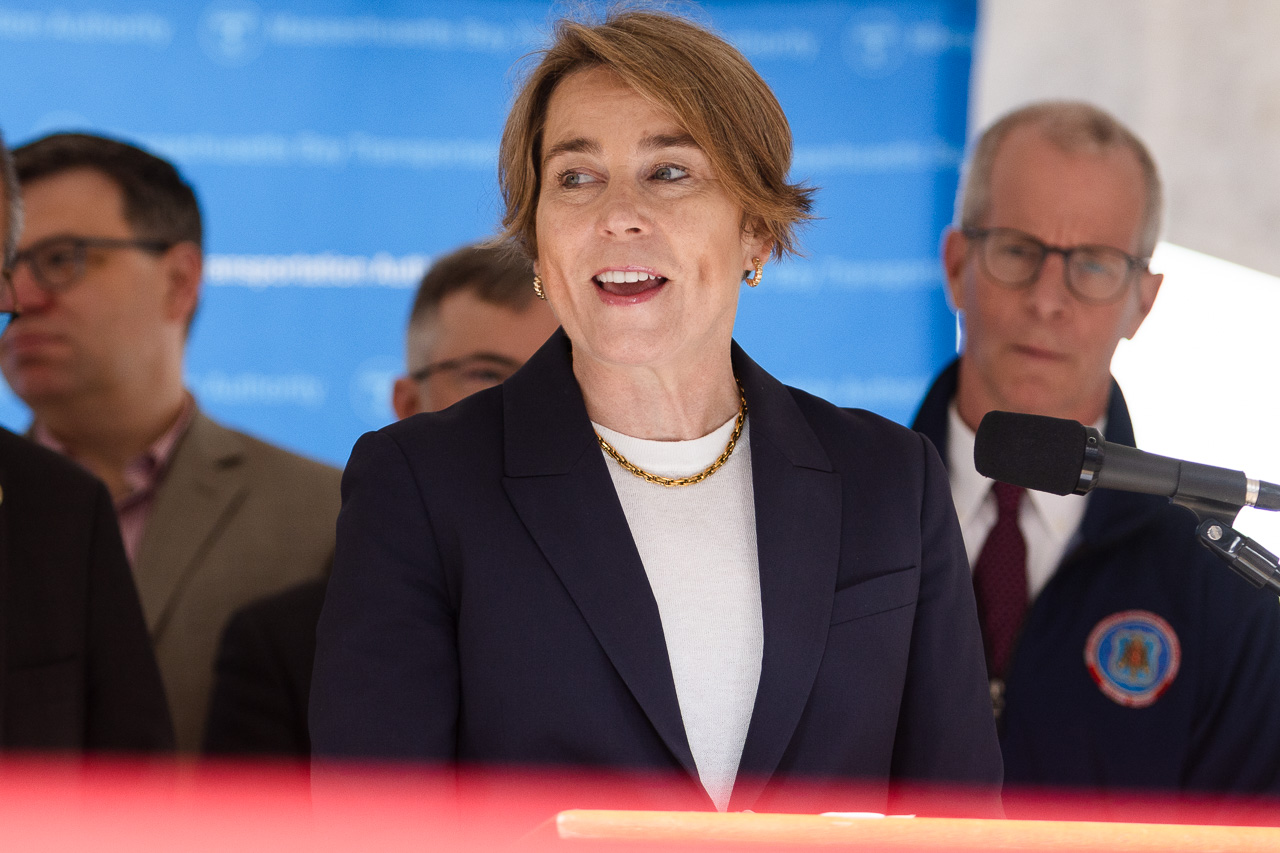
“We know that healthcare costs are burdening people, families, employers, budgets at the state, the local level, and I can’t wait for Washington to fix it,” said Healey. “So I asked a few folks if they would come together as sort of a SWAT team, a working group, to come up with some short, medium, and long-term recommendations of things that we could actually do to lower people’s costs, and today we’re here to announce the first installation of those recommendations.”
The governor commissioned recommendations from a Health Care Affordability Working Group, made up of representatives from government, hospitals, insurers, advocates, labor and more, in January. The recommendations mark the fist installation of the group’s work, to be followed by more as the task force continues through the end of 2026
In line with the first 12 recommendations, Healey stated she signed an executive order increasing MassHealth investment in primary care to 12% of total medical spending by the end of 2028
“Strong primary care is the foundation for good health for all of us, and is important to a strong healthcare system,” Healey said. “When people see a primary care provider, they stay healthier. They avoid unnecessary emergency department visits or they avoid bigger problems down the line that get really costly to pay for too, both for them and for the system.”
Primary care made up 8.4% of MassHealth spending in 2024, the highest spending category, according to the Massachusetts Center for Health Information and Analysis
Healey and others highlighted several key upcoming steps within the recommendations during a press announcement at Cape Cod Hospital on Monday, including standardizing rates for out-of-network services
“Here’s what we are directing our commissioner of insurance to do,” said Healey. “He’s going to work with insurers and providers to establish some set standard rates that will kick in that will pay healthcare providers for any out-of-network services. This is going to bring down costs that get passed on in the form of premiums and get passed on to patients. The Division of Insurance will also be working to reduce loopholes that keep patients from getting these surprise medical bills.”
The administration also noted there are over 2,000 Massachusetts patients in hospital waiting for discharge every day, noting they plan to streamline transitions in care with changes like a “standardized discharge form” and “modernized” surrogate healthcare proxy laws
Officials pointed to federal health care cuts in the affordability Monday, including the estimated cuts around one trillion dollars to Medicaid included in the Trump administration’s One Big Beautiful Bill
“States across the country are struggling with healthcare affordability challenges, and the cuts we’re experiencing from the federal government right now make this task significantly harder,” said Health and Human Services Undersecretary of Health Amy Rosenthal
The remaining recommendations in development took on lowering prescription drug costs by leveraging the state’s purchasing power; targeting commonly ordered but unneeded “low-value care” with mechanisms like payment incentives and reporting requirements; improving data sharing across the healthcare system; investing in the nursing workforce through approaches like scholarships and loan forgiveness; and adjusting state employee health insurance to “lower costs by setting standards for fair prices for some services without limiting where members receive care.”
