


Overview:
- Recent wildfire smoke events in Michigan have triggered widespread anxiety, grief, and anger about climate change, particularly among teens and parents
- Studies show wildfire smoke exposure is linked to increased emergency visits for depression, anxiety, and mood disorders beyond physical health impacts
- Mental health experts recommend joining climate action groups, building community support networks, and seeking professional help when symptoms interfere with daily life
Planet Detroit’s Voices column includes opinion pieces from our community of partners and readers. These pieces express the voices of the authors and not necessarily those of the publication
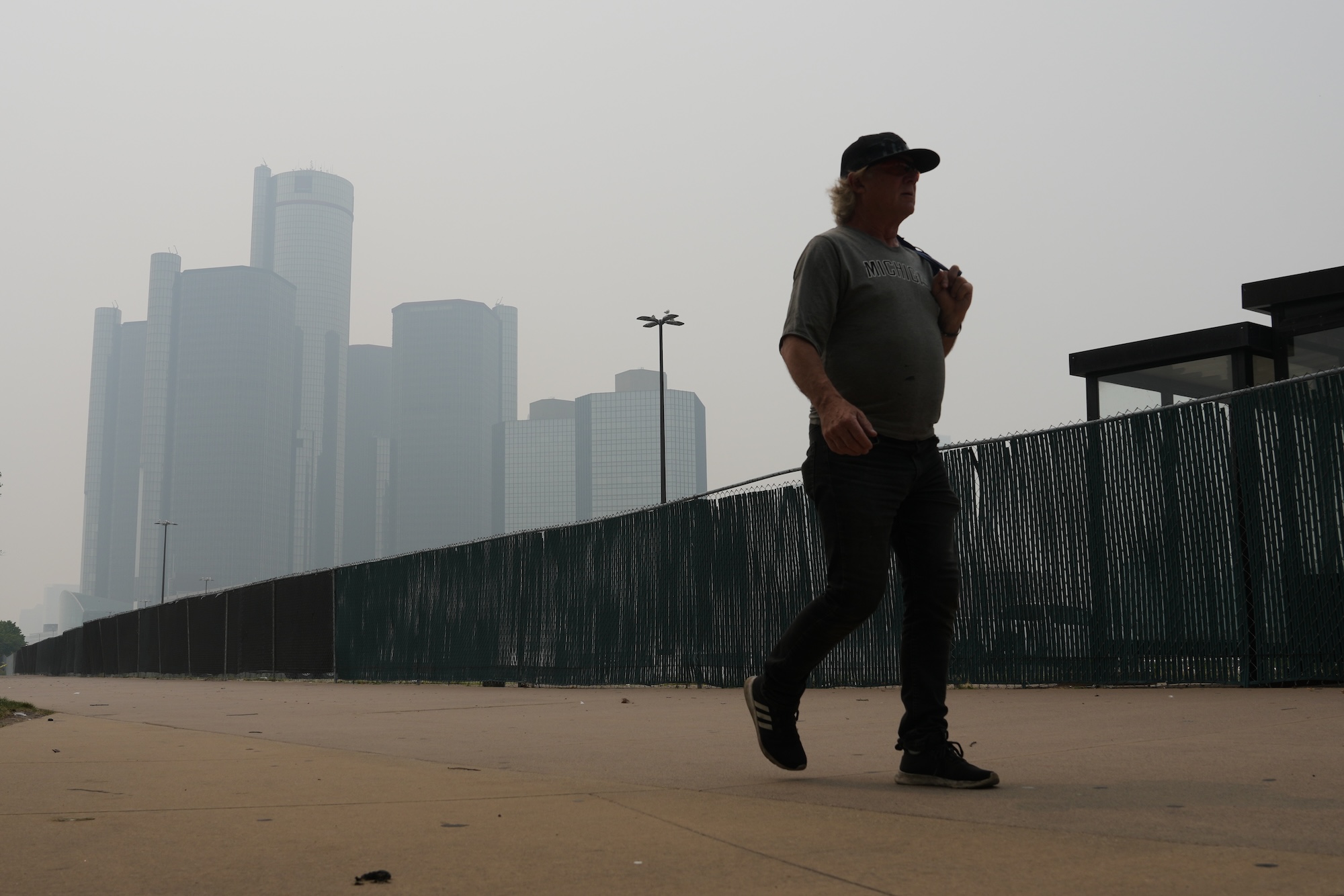
With wildfire smoke suffocating the state last month, the haze set an eerie tone. The streets were scant, birds were quiet, and many canceled summer plans.
As the air quality index climbed into hazardous levels, health officials advised the public to stay inside, keep our windows shut, run air filtration systems, and wear N-95 masks if we must venture outside
Now that the smoke has cleared, it’s easy to forget the profound impacts these wildfire events have on our health and well-being
Most media coverage focused on the hazardous levels of air pollutants like fine particulate matter, including PM2.5 and PM10. Exposure to these toxic particles can trigger acute asthma attacks, increase the incidence of heart attacks and strokes, and lead to more pre-term deliveries, among other adverse health impacts.
But these kinds of unnatural disasters, increasing in their frequency and severity, also weigh heavily on our psyche, bringing up anxiety, grief and anger.
As a therapist, I have held clients’ fears as they envision full seasons of wildfire smoke, spending summer indoors instead of on the lakes and rivers they have enjoyed their whole lives. Anticipatory grief arises as clients consider their children’s or grandchildren’s uncertain futures, wondering whether they will enjoy their summer breaks smoke-free, hands stained and covered in dirt from picking fruit and digging for worms
Teen clients have expressed anger that previous generations have not done more to protect the planet. The American Psychological Association, in a 2020 survey, found that two-thirds of Americans (67%) are somewhat or extremely anxious about the impact of climate change on the planet, and more than half (55%) are somewhat or extremely anxious about its impact on their own mental health.
It’s normal to feel deep concern about the health of our planet, but the impact of climate change on our mental health has the potential to impair daily functioning. Exposure to wildfire smoke has been linked to an increase in emergency department visits for depression, anxiety, and other mood-affective disorders.
But taking action can help prevent despair and mitigate the impact of climate change. Joining groups working toward climate solutions in your community can help move the needle on climate change with collective action while inspiring you and expanding your social network
I also tell my clients not to hesitate in asking for – or offering – support. There is no shame in turning to friends, family members, or neighbors for help, especially if you have any health conditions that are exacerbated by wildfire smoke. Engaging in social support helps build community, making you and your network more resilient to challenges
Deepening your connection to nature can also help reduce stress and improve your mood and attention. You may also feel more called to engage in climate activism to protect the Earth you care deeply about.
As someone who has lost sleep worrying about the sustainability of the planet for my growing toddler, involvement in organizations like the Michigan Clinicians for Climate Action has helped me to feel more hopeful and less alone
I am also learning how to integrate climate work into my therapy practice, and believe that everyone can apply their unique skills toward climate solutions. Finally, if anxiety, post-traumatic stress, sleep disturbances, or other mental health symptoms are impacting your daily life, reach out for professional support. Talk with a therapist, health professional, or someone else you trust about your concerns
MORE WILDFIRE SMOKE REPORTING
Wildfires that choked Detroit in July are twice as likely due to climate change: Report
Wildfires in Ontario and Canada’s Northwest Territories that sent toxic smoke to Detroit in mid-July are twice as likely to occur due to human-caused climate change, according to a new report from World Weather Attribution
byBrian AllnuttAugust 6, 2026
August 5, 2026
Wildfire smoke is back in Detroit. A cheap, DIY air purifier can help
As Canadian wildfire smoke returns to Detroit, a simple $40 DIY air purifier made from a box fan and furnace filter can help protect your lungs. Here’s how to build one
byKoby LevinJuly 16, 2026
July 16, 2026
Detroit Zoo stays open through wildfire smoke: How it keeps animals, people safe
As Detroit’s air quality hit a dangerous 724 on the Air Quality Index during recent wildfire smoke, the Detroit Zoo modified operations to protect animals, staff, and visitors while staying open
byAmy OpreanJuly 22, 2026
July 22, 2026
