


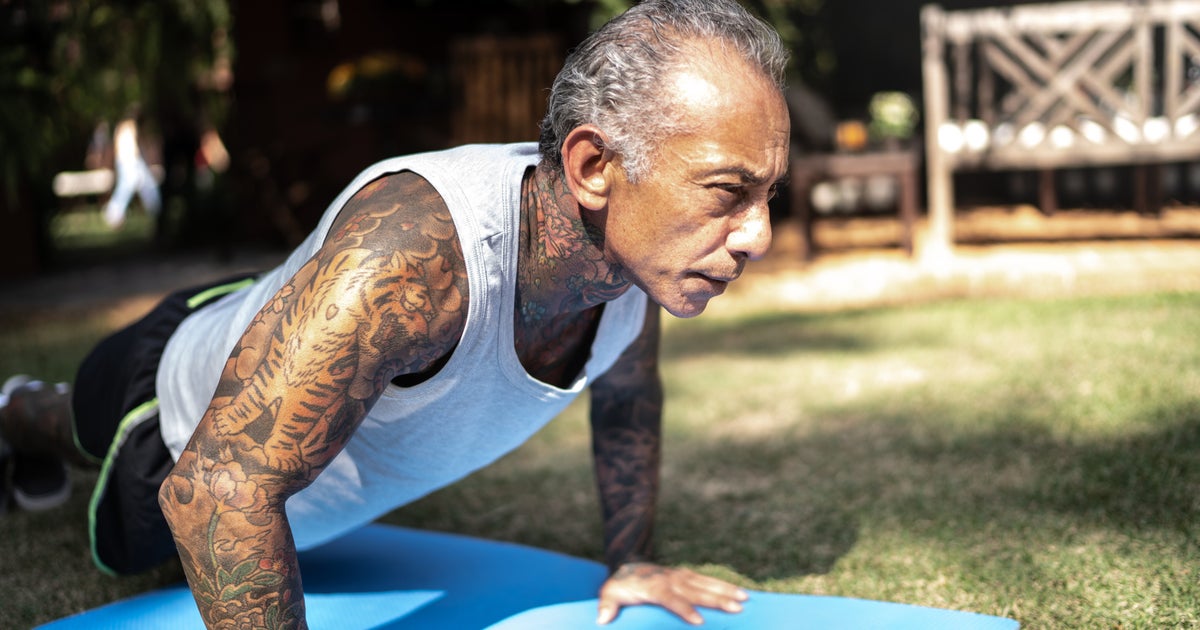
We already know exercise is crucial for health – and can be protective against everything from heart disease and stroke, to dementia and even some types of cancer
The NHS suggestsadults should aim to do at least 150 minutes of moderate intensity activity a week (or 75 minutes of vigorous intensity activity a week). Ideally, spread over four to five days
Two of these days should focus on strengthening activities, the health service added
And a new study has suggested as little as four minutes of daily strengthening exercise can dramatically improve quality of life for older adults
Exercise is complicated and it can put some people off
Routine length and pain are just some of the reasons why fewer older adults regularly exercise, the authors of the study – published in PLOS One – noted
Co-author Smita Dandekar, associate professor of paediatrics at Penn State College of Medicine, said exercise is “complicated” as you have to decide how many repetitions, how far, how many sets, how much rest and how many times per week
“It’s hard work, so there’s huge problems with people wanting to do exercise. If we can make it short, we’re part way there,” she said
The four-minute exercise helping stave off ageing
Previously, the team had conducted a study where 24 older adults performed 30 seconds of push-ups and squats daily, resulting in improved squat performance over six months
For the new study, they tested the effects of a program, called FAST-2, to see if it improved mobility and physical capability in over-65s
A total of 97 participants (average age of 74) were randomly assigned to receive either the exercise regimen treatment or no intervention
FAST-2 involved four exercises:
Participants performed each movement for 30 seconds followed by a 30-second rest. Written explanations and modifications were provided for the exercises, such as performing pushups with hands on a countertop or wall, or chair stands with hands on the knees
As participants improved, they were encouraged to progress to higher levels of difficulty
Researchers assessed the participants’ ability and speed at standing up and ability to stand on one leg at the beginning, middle and end of the study
The authors found that this exercise regimen, which included only 60 seconds of lower body resistance training, was enough to give significant improvements in functional performance over 12 weeks
Lead author Christopher Sciamanna, professor of medicine and of public health at Penn State College of Medicine, said: “The human body is designed to improve very quickly. And just a few repetitions of an exercise performed regularly can lead to huge improvements.”
