


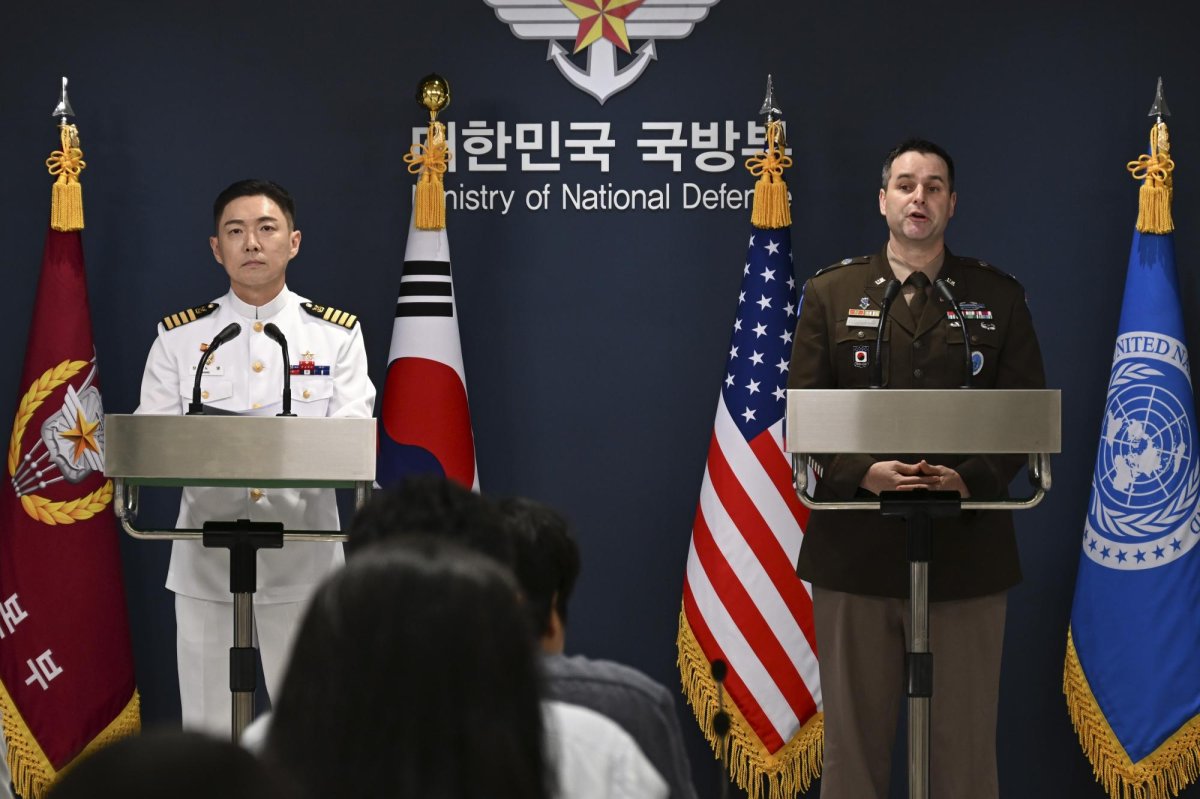
Aug. 10 (UPI) — The United States and South Korea will kick off a major joint military exercise next week, both countries announced Monday, as they prepare for evolving North Korean threats and the transfer of wartime operational control from Washington to Seoul
The annual Ulchi Freedom Shield exercise will take place Aug. 17-27 and will incorporate “realistic threats, including lessons learned from recent conflicts … to further strengthen the Alliance’s readiness and capabilities through combined, joint, all-domain operations,” the militaries said in a joint statement
“The exercise will also serve as an opportunity to support ongoing preparations for a conditions-based wartime operational control transition, consistent with alliance agreement,” the statement added
South Korea is looking to complete the handover of wartime command from the United States before President Lee Jae Myung’s five-year term ends in 2030. Last week, Seoul’s Defense Ministry presented its plan at a presidential briefing and reaffirmed a push to verify the combined forces’ “full operational capability,” or FOC, ahead of a meeting of the allies’ defense chiefs this fall
FOC certification is the second phase of a three-stage operational control, or OPCON, transition plan
“If the agreed-upon criteria are met, we anticipate being able to recommend the timing for the Future Combined Forces Command’s FOC certification and the transition at this year’s Security Consultative Meeting,” South Korean Joint Chiefs of Staff spokesman Capt. Jang Do-young said in a press briefing. “We are concentrating all our efforts toward this goal.”
U.S. Forces Korea spokesman Col. Ryan Donald stressed that OPCON discussions are managed through established bilateral channels and stopped short of endorsing that timeframe
“I will not get ahead of those formal bilateral assessments or speculate on timelines,” he said
Some 18,000 South Korean troops will take part in this year’s UFS, Jang said. U.S. Forces Korea did not disclose the number of participating troops
The exercise will include live field maneuvers, computer simulation-based command post exercises and related civil defense drills. It will also draw on the changing nature of warfare seen in recent conflicts, including threats from drones, GPS jamming and cyberattacks, officials said
Donald added that North Korea’s military cooperation with Russia, including its deployment of troops to help Moscow in its war against Ukraine, will be factored into the exercise
“DPRK soldiers have deployed and fought in Ukraine and they’ve taken those lessons they learned there and brought them back to North Korea,” Donald said, using the official acronym for North Korea. “That changes the DPRK capability and our training accounts for that threat.”
The allies did not disclose the number of field training exercises that will be held this year. Local media reports have said that 14 such drills at the battalion level or higher are planned, down from 39 held during last year’s exercise
Jang said combined field training would be conducted throughout the year in a “balanced” manner, rather than concentrated during UFS
President Lee, who took office in June of last year, has sought to improve frayed relations with Pyongyang, and the shift in field training has been seen as an effort to lower tensions
North Korea routinely denounces the allies’ joint exercises as rehearsals for an invasion and frequently responds with weapons tests. On Thursday, Pyongyang launched a short-range ballistic missile toward the East Sea, Seoul’s military said
The allies stressed Monday that the exercise is defensive in nature
“We’re up here today announcing Ulchi Freedom Shield to the entire world before it even starts,” Donald said. “UFS is not a pretext, it’s not a provocation. It’s a transparent, longstanding defensive training event.”
In addition to U.S. and South Korean forces, personnel from 11 other member states of the United Nations Command will join the exercise, Donald said, while the Neutral Nations Supervisory Commission will observe to monitor compliance with the Armistice Agreement
The U.S.-led UNC plays a key role in maintaining and enforcing the armistice agreement that halted fighting in the 1950-53 Korean War, with duties that include controlling DMZ access and communicating with the North Korean military
