


Brad Culp
Emma-Kate Lidbury
Published August 13, 2026 06:00AM
Speed-Building Drills for Triathletes
- •Drills for the pool•Drills for the trainer•Drills for the treadmill
The midseason rut is as familiar as it is predictable: You know the swim set before you get in the water, where your watts will land before you clip in, and some mornings it feels like you’re running your treadmill session in your sleep
That familiarity isn’t a failure. It’s what consistency looks like, and that’s the secret sauce that makes endurance athletes faster, stronger, and more resilient. But it can also be the point at which the training stops asking as much of you
“Routine creates consistency, and consistency is the foundation of improvement in triathlon,” says coach Marilyn Chychota, a former professional triathlete and cyclist who has been coaching endurance athletes for two decades. “However, consistency does not mean repeating the same workouts and drills indefinitely.”
The physiology is unglamorous: You get good at what you repeat. “Once your body becomes comfortable with a particular session, it becomes more efficient at completing it,” Chychota says. “That is useful at first, but over time, the training provides less of a stimulus.”
If the challenge never changes, the body has less reason to keep adapting – and progress flattens out, or quietly starts moving the wrong direction
That’s where new drills come in
Why new drills work
A drill isn’t just variety for variety’s sake. It’s a way to make a familiar movement unfamiliar again and improve your technique (and efficiency)
“Introducing new drills gives both the body and brain a fresh problem to solve,” Chychota says. “It challenges coordination, balance, timing, technique, and body awareness in ways that ordinary steady training may not. It can also expose weaknesses that your normal movement patterns allow you to hide or compensate for.”
Fair warning: New drills tend to feel bad before they feel good. “A drill may initially make you feel awkward or slower, but that is often because it is asking you to move in a way you have not yet mastered,” Chychota says. And that’s the point. “The objective is not simply to become good at the drill. It is to use the drill to improve a specific part of your stroke, then carry that improvement into normal swimming.”
There’s a strong case for doing this work indoors, too. “The pool, indoor trainer, and treadmill are ideal places to work on these skills because they remove many outside distractions,” Chychota says. No traffic, no terrain, no navigation, no weather. Just you and one specific movement to focus on
The case for shaking things up midseason
Midsummer is when a lot of athletes hit a wall that isn’t physical
“Midseason is often when motivation begins to dip, and training can start to feel repetitive,” Chychota says. “A new workout can provide a valuable mental reset while introducing a different physical stimulus. It may also expose weaknesses that familiar sessions allow an athlete to hide – for example, an inefficient pedal stroke, poor running posture, or a technical issue in the water.”
Remember that this should be a supplement to your plan, not a replacement for it. “The goal is not to change the entire program, but to add enough variety to keep athletes engaged and progressing without compromising the consistency required for their key races,” Chychota says
The drills outlined below can slot into a warm-up or a skills-focused session; there’s no need to rebuild your training week to fit them in
And Chychota also points out that drills belong in your program permanently, not just when you’re bored. “It should be a part of an athlete’s program weekly, year-round, and part of warm-ups and fundamentals,” she says
But she’s specific about how they’re chosen: “Rather than including drills simply for variety, I choose them according to the individual athlete’s needs and connect them to the full movement. A drill is most effective when the athlete understands what it is addressing and can carry that improvement into normal swimming, cycling, or running.”
The drills below are all favorites of Cliff English, head coach of Arizona State University’s women’s triathlon team and a four-time Olympic coach
Drills for the pool
“Balance is the biggest challenge most triathletes have in the water,” English says
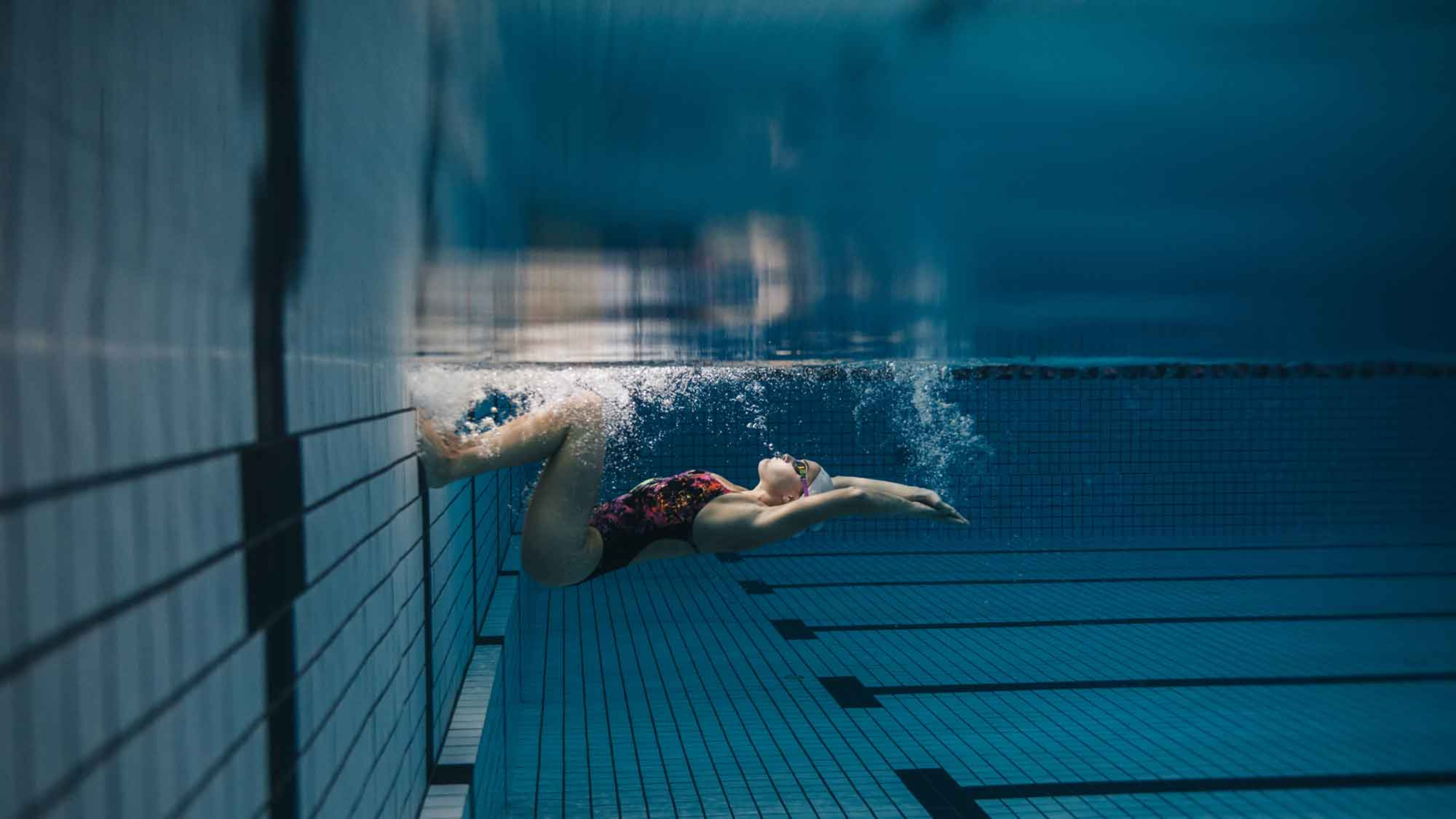
To improve it, he recommends a progressive balance drill. Start by pushing off the wall and holding a tight streamline, and just “feel” what happens. Once you can maintain a balanced streamline off the wall, add kicking on your side with one arm out front and your body at 45 degrees (0 degrees being staring straight down, 90 degrees being staring at the wall). Focus on holding a neutral head position while rotating from the hips and shoulders. Every six to 12 kicks, take three long strokes and rotate to the other side.
Fins will help you maintain body position, but English recommends beginning without them to get a better feel for what your body is actually doing in the water
As a variation, try what English calls “pause one” or “pause three”: Take one or three long strokes, holding one arm in front with your body rotated and head neutral
Why it works
“In the water, different drills can improve your feel for the water, body position, breathing, rotation, catch, and stroke timing,” Chychota says. That’s exactly why this one may feel worse before it feels better – and that’s information. If you can’t hold the position, you’ve found the thing to work on
Drills for the trainer
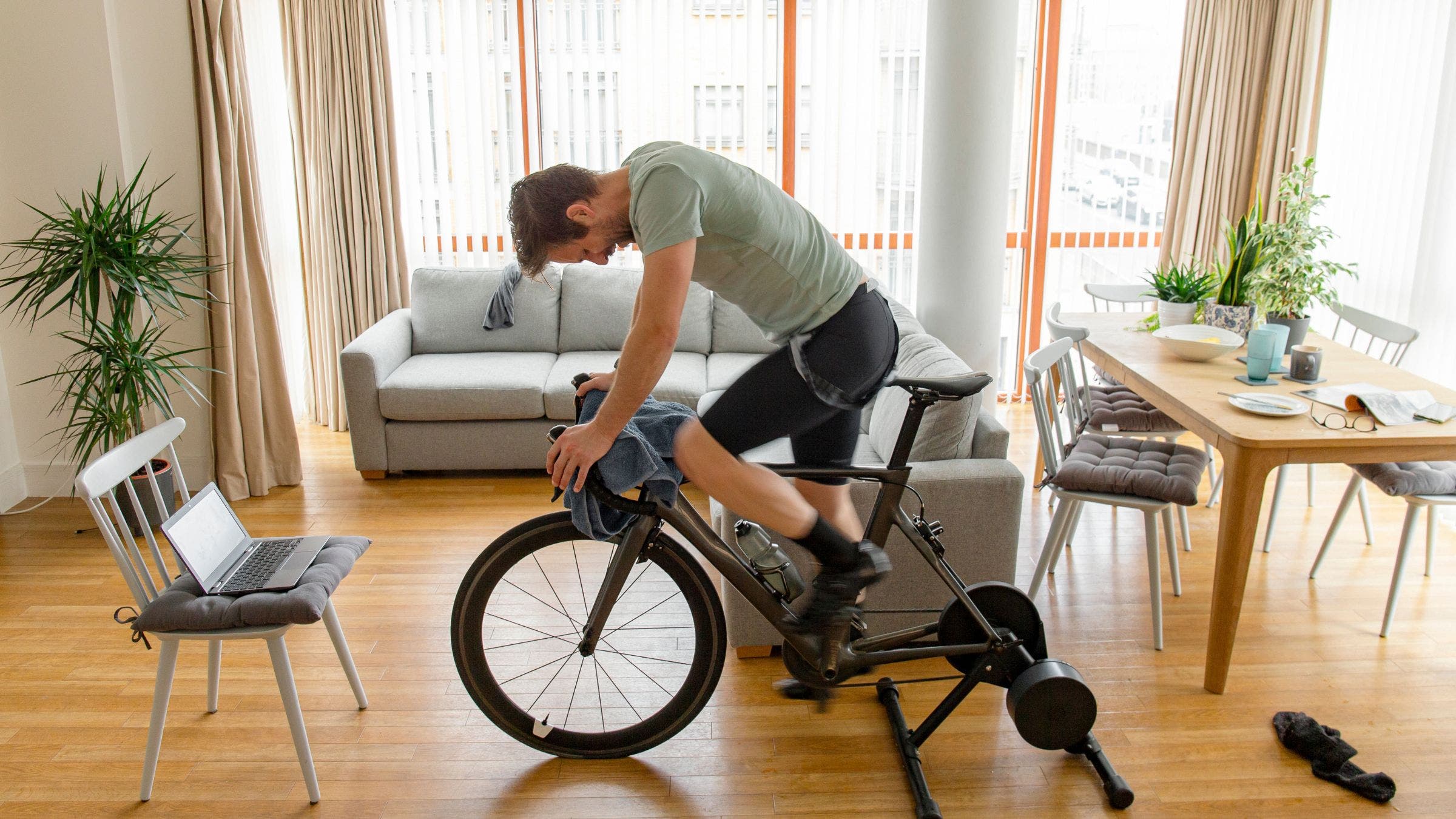
“I love cadence builds combined with big gear work,” English says. “This is my favorite way to improve pedal stroke efficiency.”
One of his favorite trainer sets is three rounds of:
- 4 minutes, biggest gear possible (60–75 RPM at 75% max power)
- 4 x (45 seconds building from 100 to 110 to 120 RPM every 15 seconds; 30 seconds easy)
As you get comfortable with this set, increase your max cadence to 130–140 RPM
“The goal is to be smooth and not bounce when you hit the higher RPM,” English says. “Once 120–140 RPM feels comfortable on the trainer, racing at 90–100 RPM becomes possible and will even become a default cadence. Racing at 90–100 RPM will never feel truly comfortable until the higher cadences are adapted in training.”
Why it works
The trainer is a controlled environment, which is precisely what makes it useful. “Because the trainer provides a stable environment, you can pay attention to how smoothly you apply power, whether your hips remain stable, and how well you maintain your position as fatigue develops,” Chychota says. Her low-tech add-on: “You can place a full-length mirror in front of yourself and watch and feel technical changes.”
Drills for the treadmill
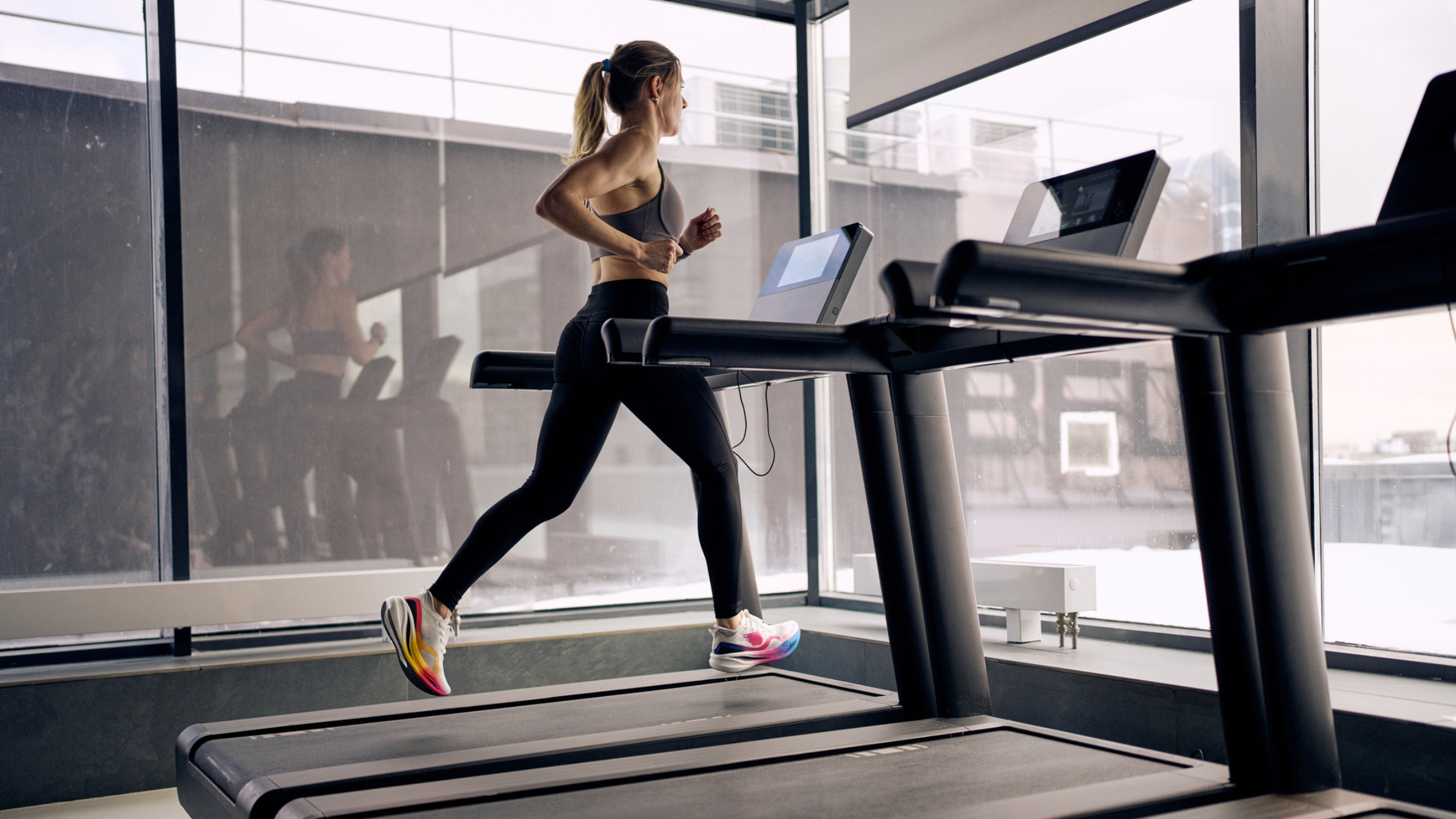
“We run more efficiently and with better turnover when running fast, and the treadmill provides a great way to do this in a controlled environment on a soft surface,” English says
Ideal running position means a slight forward lean with head and eyes pointed 20 to 30 degrees down, and the treadmill display gives you a handy visual cue for both. Once you’re up to speed, run with that good head and body position for 20 seconds, then look straight ahead and stand straight up (bad position) for 20 seconds, before switching back to ideal position for 20 seconds. Run easy for a minute, then repeat as many times as you like
“You’ll notice more heel striking when you lean back, and the rest of your mechanics, like arm swing, will also feel off,” English says. “Run mechanics often fall apart late in a race, so it’s important to be able to feel the difference between good and bad form. Running on the treadmill provides a great opportunity to play around with those mechanics to find that perfect feel.”
Why it works
You’re training your own error-detection. “The consistent surface and controlled speed make it easier to notice when your form begins to deteriorate,” Chychota says. Use your ears as well as your eyes: “The treadmill also provides a sound cue from your feet to feel rhythm and foot speed or cadence changes.”
The bigger payoff
Beyond the immediate technical gains, there’s a durability argument for regularly asking your body to learn something new
“Race conditions are rarely perfect or completely predictable,” Chychota says. “Open-water contact, hills, wind, heat, changes of pace, and accumulated fatigue all require you to adjust. An athlete who regularly develops new movement skills is often better prepared to respond when conditions change.”
The formula, ultimately, is uncomplicated: enough routine to build consistency, and enough new challenge to keep your body and brain engaged
