



Research and Innovation
Miller School of Medicine Researchers Identify Molecular Marker Linked to Faster Cognitive Decline in Alzheimer’s Disease
By: Chad Hanson | August 14, 2026 | 9 min. read |
An abnormal RNA signature tied to TDP-43 dysfunction was associated with poorer cognitive performance and faster decline in people with Alzheimer’s disease, pointing to a potential new biomarker and therapeutic target
A molecular abnormality known to contribute to <a href="https://umiamihealth.org/en/treatments-and-services/neurology/amyotrophic-lateral-sclerosis-(als)” rel=”nofollow noopener” target=”_blank”>amyotrophic lateral sclerosis (ALS) and frontotemporal dementia (FTD) may also help explain why some people with Alzheimer’s disease experience more severe memory loss and faster cognitive decline than others, according to new research led by Mercedes Prudencio, Ph.D., associate professor of biochemistry and molecular biology at the University of Miami Miller School of Medicine. Leonard Petrucelli, Ph.D., professor of neurology and founding director of the Miller School’s Neuroscience Institute, also contributed to the research.
The study identified an abnormal RNA signature associated with poorer cognitive performance and more rapid decline in people with Alzheimer’s disease, suggesting it could one day help identify patients at greatest risk for worsening symptoms
The findings, based on analyses of 1,672 individuals with neuropathologically confirmed Alzheimer’s disease, point to a biological pathway that may contribute directly to cognitive deterioration and could represent a promising target for future therapies
Looking Beyond Amyloid and Tau
Alzheimer’s disease is most commonly associated with amyloid-beta plaques and tau tangles in the brain. However, many patients also develop abnormalities involving a protein called TDP-43, which has increasingly been linked to neurodegeneration and cognitive decline
Previous research has shown that, when TDP-43 functions improperly, it can disrupt normal RNA processing inside cells. One of the genes affected by this process is UNC13A, which plays a critical role in communication between nerve cells
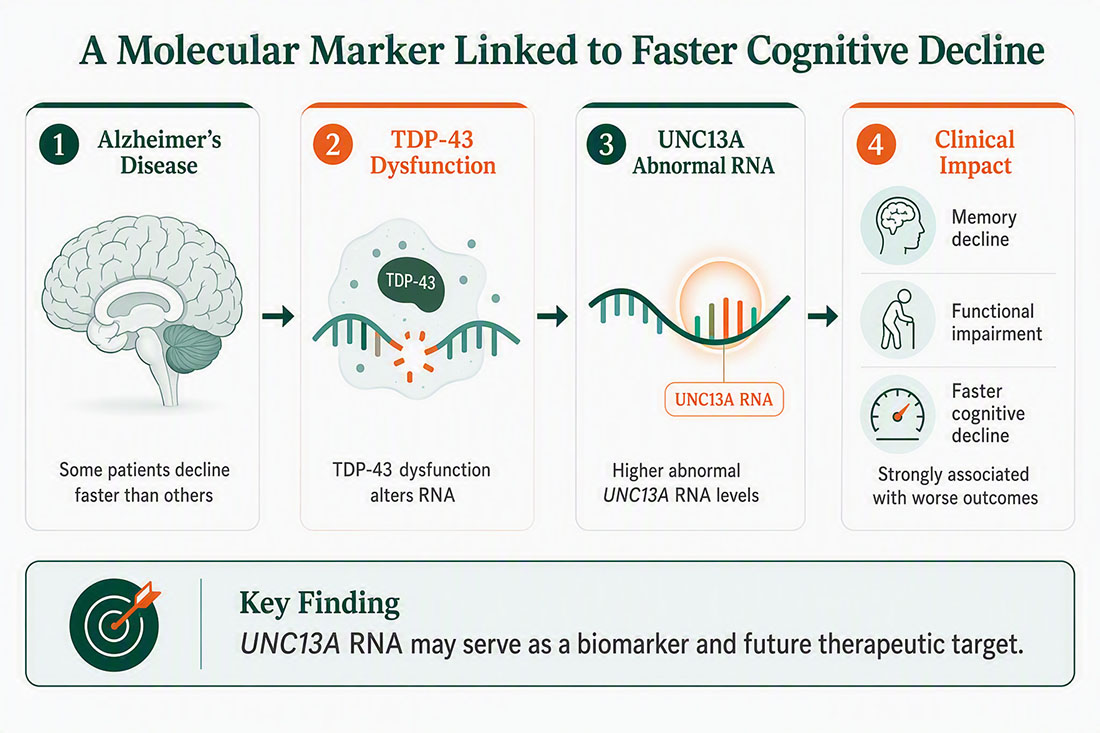
“UNC13A is a gene that helps nerve cells communicate with one another by supporting the release of neurotransmitters at synapses,” Dr. Prudencio said. “Healthy synaptic communication is essential for memory, learning and cognition. Researchers believe disruptions in UNC13A function may contribute to cognitive decline in neurodegenerative diseases, including Alzheimer’s disease.”
In ALS and FTD, abnormalities involving UNC13A have already been associated with worse disease outcomes. Dr. Prudencio wanted to determine whether the same mechanism might influence Alzheimer’s disease
To answer that question, the investigators analyzed genetic, clinical and neuropathological data from 1,672 individuals with autopsy-confirmed Alzheimer’s disease. Among those patients, hundreds also exhibited TDP-43 pathology, allowing researchers to examine how the two processes might interact
Evaluating the Genetics Behind Cognitive Decline
The team investigated a common genetic variant within the UNC13A gene and examined whether it influenced disease severity, survival and cognitive performance. They also analyzed data from more than 466,000 participants in the UK Biobank to determine whether the same variant was associated with dementia in a broader population
Researchers evaluated cognitive function using established clinical measures, including the Mini-Mental State Examination and the Clinical Dementia Rating Sum of Boxes. They compared baseline and follow-up assessments to determine whether genetic differences influenced the severity and progression of symptoms
The investigators also examined brain tissue to measure levels of abnormal UNC13A RNA, often referred to as cryptic RNA, a molecular consequence of TDP-43 dysfunction. They then assessed whether those RNA changes were associated with worsening cognition
Understanding UNC13A and Alzheimer’s Disease
What is the UNC13A gene and why is it important?
UNC13A is a gene that helps nerve cells communicate by supporting the release of neurotransmitters at synapses. Healthy synaptic communication is essential for memory, learning and cognition. Researchers believe disruptions in UNC13A function may contribute to cognitive decline in neurodegenerative diseases, including Alzheimer’s disease
What did researchers discover about UNC13A and Alzheimer’s disease?
The study found that a common genetic variant in UNC13A was associated with worse cognitive performance in people with Alzheimer’s disease. Researchers also discovered that elevated levels of abnormal UNC13A RNA were strongly linked to faster cognitive decline and greater impairment over time
What is TDP-43 and how does it affect Alzheimer’s disease?
TDP-43 is a protein involved in regulating RNA processing inside cells. In many people with Alzheimer’s disease, TDP-43 becomes dysfunctional, leading to abnormal RNA changes and worsening neurodegeneration. The study suggests that UNC13A abnormalities resulting from TDP-43 dysfunction may contribute to accelerated cognitive decline
Could UNC13A help predict how quickly Alzheimer’s disease will progress?
The findings suggest that measuring abnormal UNC13A RNA levels may provide a more accurate indicator of disease progression than genetic testing alone. Higher levels of UNC13A cryptic RNA were strongly associated with worse cognitive function and faster rates of decline in study participants
Could this research lead to new Alzheimer’s treatments?
Potentially. Because UNC13A plays an important role in neuronal communication and synaptic function, researchers believe therapies designed to correct UNC13A missplicing or reduce abnormal UNC13A RNA accumulation could help preserve brain function. The findings identify UNC13A as a promising target for future precision medicine approaches in Alzheimer’s disease and related TDP-43 proteinopathies
Genetic Risk Was Important But Molecular Changes Mattered More
The study found that the UNC13A genetic variant did not increase the likelihood that a person would develop TDP-43 pathology and was not associated with shorter survival
However, individuals carrying increasing numbers of the risk-associated genetic variant demonstrated worse cognitive performance and greater functional impairment. Researchers also observed a higher likelihood of dementia diagnoses among individuals carrying two copies of the risk variant in the UK Biobank population
The most significant finding emerged when researchers examined brain tissue
Higher levels of abnormal UNC13A RNA were strongly associated with poorer cognitive performance, greater functional impairment and faster rates of cognitive decline over time. These associations were observed across multiple clinical measures and proved more informative than genetic status alone
Notably, researchers did not observe the same relationship in another gene affected by TDP-43 dysfunction, suggesting that UNC13A may play a uniquely important role in Alzheimer’s disease progression
New Clues to How Alzheimer’s Disease Progresses
The findings provide additional evidence that abnormal RNA processing may contribute directly to the neuronal dysfunction underlying Alzheimer’s disease. UNC13A is essential for communication between nerve cells. Disruptions in its normal function could contribute to the synaptic dysfunction that often precedes memory loss and cognitive impairment
Dr. Prudencio says the work also highlights the potential value of measuring UNC13A cryptic RNA as a biomarker of disease activity. Unlike genetic testing, which reflects inherited risk, the RNA marker may provide a more direct window into ongoing biological changes occurring within the brain
The discovery could also have therapeutic implications. Previous studies have shown that correcting UNC13A missplicing can restore neuronal function in experimental models. The new findings suggest that therapies targeting this pathway may eventually help slow cognitive decline in patients whose disease involves TDP-43 dysfunction
“We know that people with AD who also have TDP-43 dysfunction often experience a faster and more severe decline,” Dr. Prudencio said. “But TDP-43 dysfunction can only be detected at autopsy. Further, current treatments primarily target amyloid and tau, but these approaches may not fully address the additional impact of TDP-43. Our findings suggest that developing therapies aimed at TDP-43 or its downstream effects could lead to more personalized treatments and potentially improve outcomes for patients and families.”
Ultimately, the researchers conclude that UNC13A cryptic RNA may serve as both a promising biomarker and a potential therapeutic target. The work expands understanding of the molecular mechanisms underlying Alzheimer’s disease and points toward future precision-medicine strategies aimed at preserving cognition and brain function
NIH-Funded Study Explores How the X Chromosome Influences Alzheimer’s Disease Risk
Women are twice as likely as men to develop Alzheimer disease. An NIH-funded University of Miami study explores the X chromosome’s role
Read more

University of Miami Researchers Study Genetic Change Linked to Alzheimer’s Risk in Men
Miller School researchers are studying whether loss of the Y chromosome may help identify men at higher risk for Alzheimer’s disease
Read more
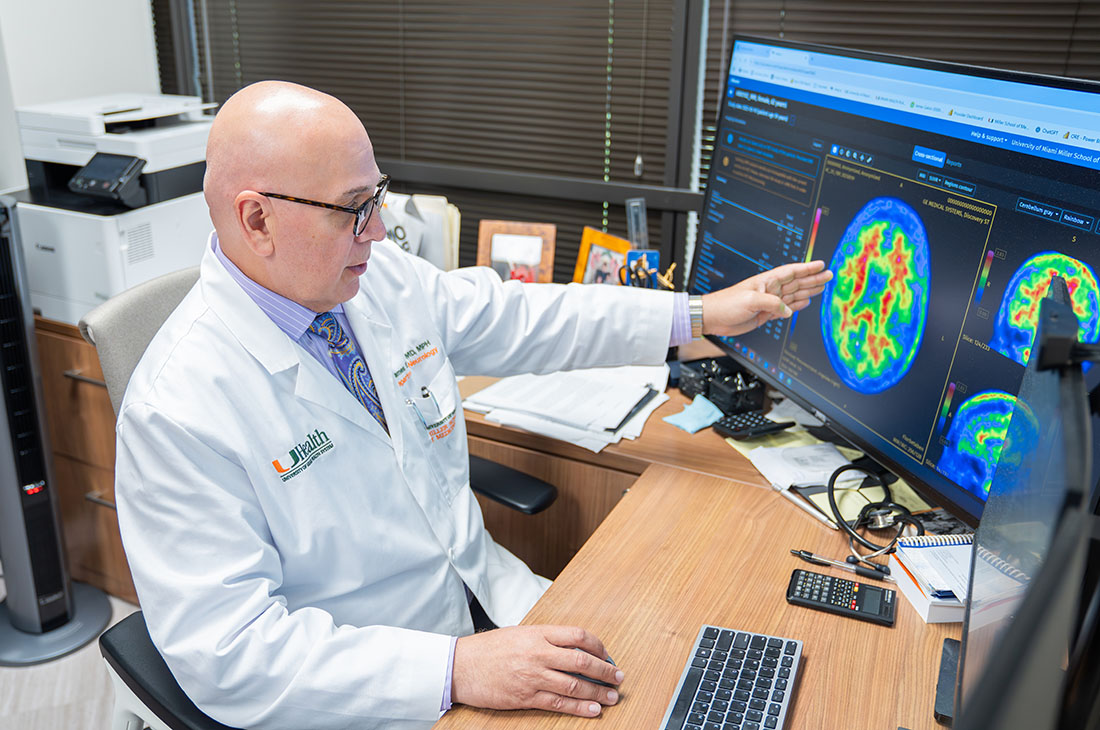
University of Miami Researchers Showcase Advances in Dementia Detection, Treatment and Brain Health at AAIC 2026
Researchers from the University of Miami Comprehensive Center for Brain Health shared 16 studies at AAIC 2026, highlighting advances in dementia treatment, blood-based biomarkers and early cognitive screening
Read more
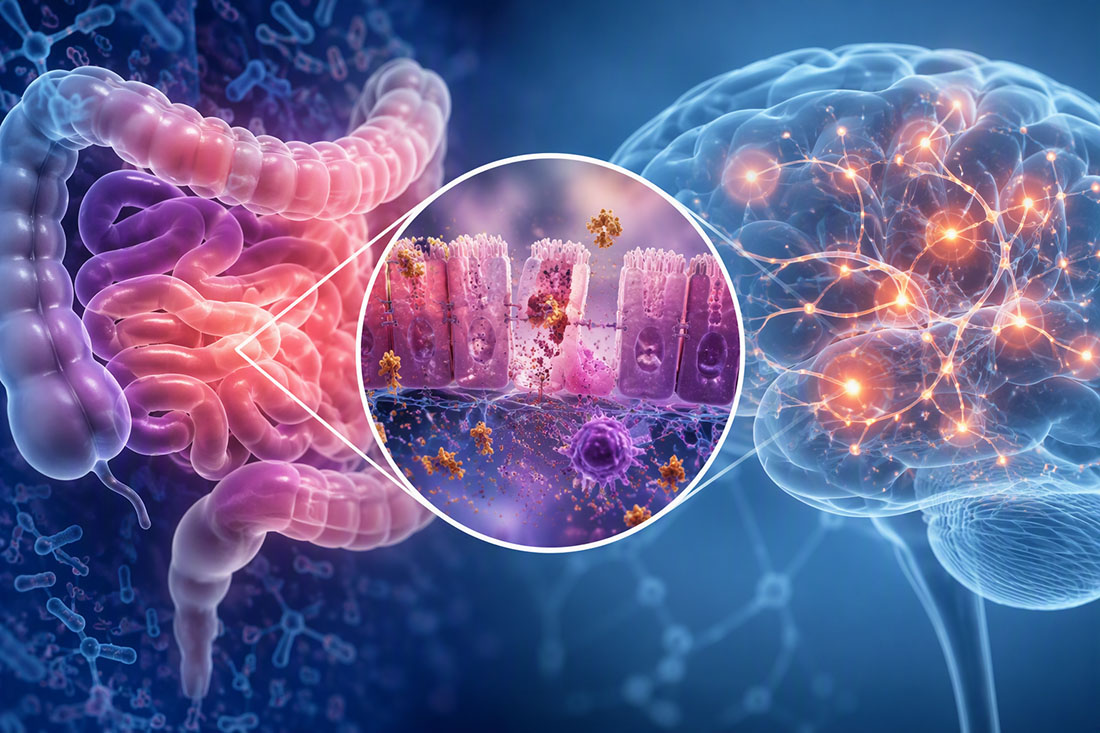
Could the Gut Hold Early Clues to Alzheimer’s Disease?
Miller School researchers found early Alzheimer’s-related damage in lab-grown intestinal tissue, revealing new clues about the gut-brain connection
Read more
