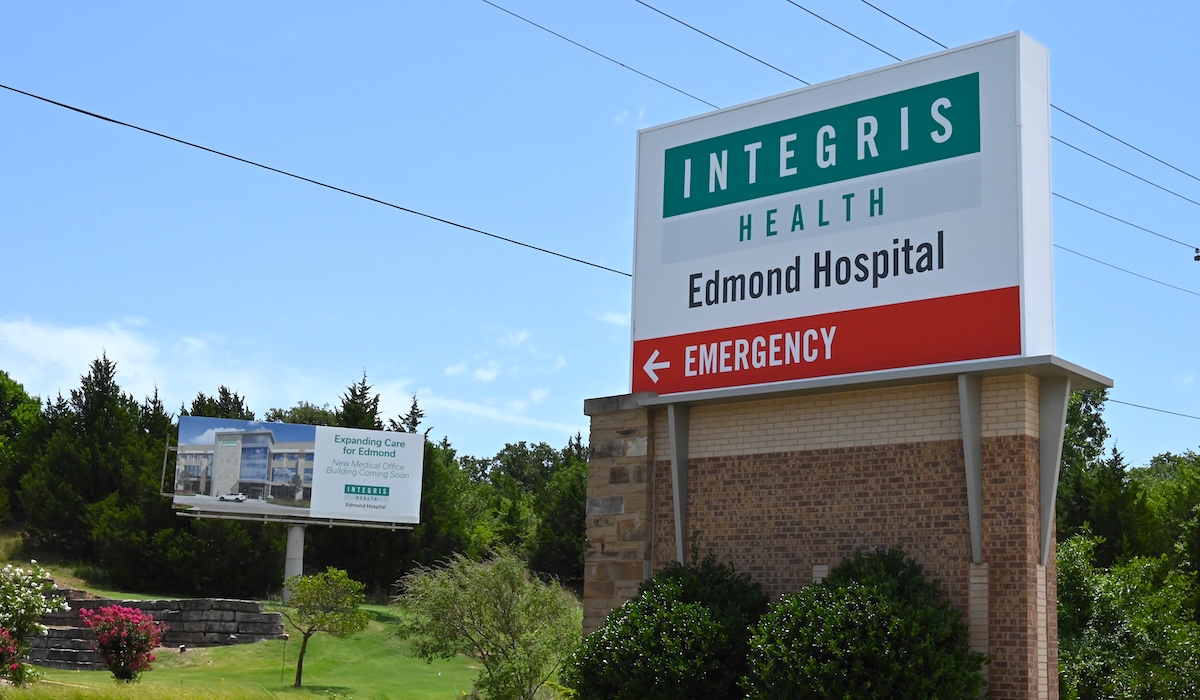

Invalidating a $7.5 million verdict awarded to an Edmond family more than a year ago, the Oklahoma Supreme Court reversed a wrongful death case involving COVID-19 last week, finding that INTEGRIS Health Edmond Hospital and its providers were immune from liability under state law
Justices said Oklahoma County District Court Judge Richard Ogden erred by denying the defendants’ motion for a directed verdict granting immunity in the 2020 death of Blake Burgess, a University of Oklahoma student who experienced a pulmonary embolism that his parents allege INTEGRIS physicians should have caught
In their June 30 decision, all nine Supreme Court justices found that INTEGRIS Edmond and its providers were immune under Oklahoma’s COVID-19 Public Health Emergency Limited Liability Act, which codified protections for providers working under abnormal circumstances during the pandemic:
A health care facility or health care provider shall be immune from civil liability for any loss or harm to a person with a suspected or confirmed diagnosis of COVID-19 caused by an act or omission by the facility or provider that occurs during the COVID-19 public health emergency, if:
1. The act or omission occurred in the course of arranging for or providing COVID-19 health care services for the treatment of the person who was impacted by the decisions, activities or staffing of, or the availability or capacity of space or equipment by, the health care facility or provider in response to or as a result of the COVID-19 public health emergency; and
2. The act or omission was not the result of gross negligence or willful or wanton misconduct of the health care facility or health care provider rendering the health care services
Joined by Justices James Edmondson, Douglas Combs, Noma Gurich and Travis Jett, Justice Richard Darby wrote the court’s majority opinion, which found that the COVID-19 pandemic “impacted” the care provided to the 21-year-old Burgess
“Providers in this case were certainly among those making the hard decisions and implementing changes which impacted COVID patients who came to them for medical services,” Darby wrote. “The issue we must decide is whether those changes specifically impacted Blake and his treatment when he came to the emergency room and saw Dr. (Bret) Langerman.”
The 5-4 decision remanded the case back to Oklahoma County District Court for a new trial, and it also found that the federal Public Readiness and Emergency Preparedness Act — passed with a similar intent of protecting providers performing countermeasures during a health crisis — was inapplicable to the case. The four dissenting justices disagreed on that point and wrote separately to emphasize their beliefs that the providers were also immune under the federal PREP Act
Burgess was majoring in business at OU when he tested positive for COVID-19 at a Norman urgent care clinic Sept. 11, 2020. When his symptoms did not improve, his mother took him to INTEGRIS Edmond on Sept. 14 where he reported a shortness of breath and sharp, stabbing pain in his right chest
Because of COVID-19 procedures, visitors were not allowed into the hospital, according to the majority opinion’s summary of facts. Burgess’ mother attempted to send a handwritten note through the registration clerk, who was not allowed to leave her post. The note aimed to inform providers of the Burgess family’s history of a blood clotting disorder called antithrombin III deficiency
Langerman responded to Burgess’ complaints by running an EKG and an X-ray. Burgess’ EKG indicated an abnormality and possible ischemia (lack of blood flow to the heart muscle) consistent with right heart strain. At trial, Langerman testified that normal practice would have been to inform Burgess of the abnormality, though such discussion was not reflected in Burgess’ chart
Langerman, who was not informed of the Burgess family’s history of blood clotting, utilized an evaluation process known as the Pulmonary Embolism Rule-Out Criteria. The results did not prompt Langerman to pursue more tests, though in testimony he said he would have asked more questions had he known of the patient’s family medical history
A cardiologist reviewed the EKG and X-ray and noted abnormalities in both, which were reflected on Burgess’ online patient portal, though evidence did not show he was directly notified of the abnormalities. Justice James Winchester’s dissent stated that the abnormalities discovered were typical for an active COVID patient
In his discharge instructions, Burgess was told to follow-up with his primary care physician in two days and return to the emergency room if symptoms worsened. Burgess did neither, although the Supreme Court’s majority opinion disagreed with the assertion and district court finding that Burgess himself was negligent
“The evidence did not establish that Blake’s failure to obtain follow-up treatment was the sole, independent cause of his death. Blake died due to cardiac arrest as a consequence of an undiagnosed pulmonary embolism with an underlying cause of COVID-19,” Darby wrote. “Providers set that course of events in motion when they released Blake from the emergency room without diagnosing and treating this life-threatening condition of PE.”
On Sept. 23, Burgess passed out while running up and down stairs at his house. The lead paramedic on the scene encouraged Burgess to go to the emergency room. Instead, Burgess signed a release for his refusal to accept medical care or transportation to a medical care facility
Five days later, Burgess passed out again and was transferred to Norman Regional Hospital where he died Oct. 4 of cardiac arrest as a consequence of pulmonary embolism with an underlying cause of COVID-19
Burgess graduated from Edmond Memorial High School, which now offers a annual scholarship in his honor to a football player seeking higher education
During the 2026 legislative session, Rep. Preston Stinson (R-Edmond) authored the Blake Burgess Act to require hospitals with emergency departments and ambulatory surgical centers to develop policies and procedures for identifying and responding to patients at risk of venous thromboembolism. The act took effect July 1 and also requires annual training for non-physician staff on such procedures
Stinson co-authored HB 3644 with Sen. Kelly Hines (R-OKC)
“Blake’s death was a heartbreaking reminder of how quickly and quietly this condition can take a life,” Stinson said in a press release. “Every six minutes, someone dies from complications of [venous thromboembolism]. If we can increase awareness and improve screenings and respond faster, we can save lives like Blake’s.”
Court finds ‘impacted’ standard ‘not a high bar’
The Oklahoma County jury’s verdict Feb. 22, 2024, awarded $10 million in damages to the Burgess family, with the amount reduced to $7.5 million owing to its finding that Blake Burgess was 25 percent contributorily negligent. The jury found INTEGRIS Edmond to 35 percent negligent and Langerman to be 40 percent negligent
However, the Supreme Court’s ruling vacated that verdict, with all justices finding INTEGRIS immune under Oklahoma’s COVID-19 Act but the majority five not finding immunity under the federal PREP Act
Darby’s majority opinion stated that the parents maintain the alleged negligence was unrelated to the COVID-19 health emergency because the hospital was fully staffed and below its capacity of six emergency room patients.
However, Darby’s opinion considered the prohibition of visitors and the inability of the registration clerk to pass on the note from Burgess’ mother as criteria for “impact” from decisions made because of COVID-19
“This court continues to interpret the COVID-19 Act to require that a patient was ‘impacted,’ as we have described, as one element of immunity,” Darby wrote. “We also continue our view that showing the patient was ‘impacted’ is not a high bar.”
The court upheld INTEGRIS’ appeal that the COVID-19 Act was misinterpreted in jury instructions and allowed for a claim of ordinary negligence to be confirmed, which is outside the scope of the act. Under the state statute, “the only fact question for the jury should have been whether providers were grossly negligent or acted willfully and wantonly,” Darby wrote
The second defense INTEGRIS maintained was that the PREP Act limited legal liability for losses relating to the administration of medical countermeasures such as diagnostics, treatments and vaccines during a public health emergency
Arguments as to whether the federal law was applicable centered around what counts as a countermeasure and the causal relationship between such measures and Burgess’ death
“The fact that Blake had COVID-19 did not, in and of itself, dictate whether providers should or should not have proceeded with testing and treating Blake’s pulmonary embolism,” Darby wrote. “The causal relationship between administration of medical care and Blake’s death, as required by the PREP Act, is lacking here.”
However, Chief Justice Dustin Rowe’s dissent argued that the EKG and X-ray used by Langerman constituted countermeasures that would trigger PREP Act protections. Therefore, Rowe said the use of the devices could not be separated from the claim that providers were negligent in relaying their interpretation of the scans to Burgess, thus establishing the causal relationship
Vice Chief Justice Dana Kuehn wrote separately to say the majority opinion “looks through a distorted lens which not only creates a result that skews the facts, but also leads the majority to support its conclusion with irrelevant caselaw.”
“The trial court granted parents’ motion for partial summary judgment on the PREP Act. However, the majority instead considers the issues in this case through the lens of a motion to dismiss, as it relies heavily on a Connecticut case, [Mills v. Hartford Healthcare Corporation], which involved defendants’ motions to dismiss pursuant to the PREP Act,” Kuehn wrote. “Beginning with this premise, the majority fails to consider facts that the trial court considered under parents’ motion for partial summary judgment. This is an important distinction. Parents alleged a claim distinct and separate from COVID in their petition, yet by the time they filed for partial summary judgment, parents’ claim related to COVID and the reliance on proscribed countermeasures and, based on that reliance, the lack of prescribing different and other optional countermeasures to treat COVID. So, what occurs when the majority looks only to the allegations in the petition? The majority unfortunately begins the analysis and reaches its conclusion, without considering the facts considered by the trial court or using the correct caselaw to support the outcome.”
Support Journalism