


Key points
- Large datasets are revealing how our physical environment may influence health.
- Creating greener, healthier environments may benefit both brain and overall health.
- Not all environmental risks are modifiable, but some may be changed individually or collectively.
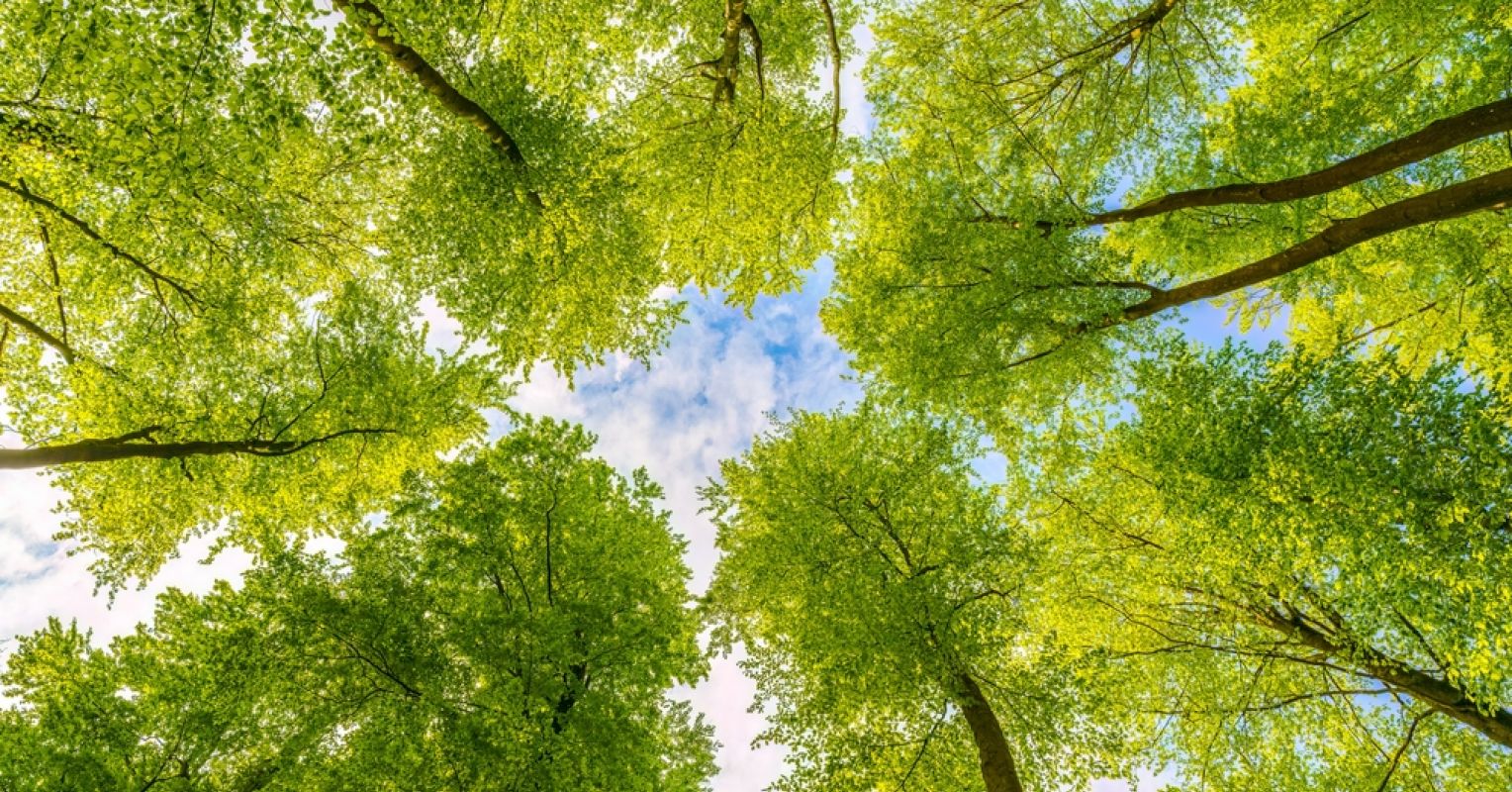
- Increasing tree canopy, for example, has been associated with lower mortality over time.
I wrote about why nature may begood for our brains in my last post, and just this week, I came across another interesting study that made me think about the question more broadly: How much does the physical environment affect our health and brain?
Impressively, this study was led by medical student. The research team combined high resolution tree canopy estimates, temperature, and mortality data in Chicago over a 10-year period (2011 to 2021). The novelty of this study was not just examining the relationship between tree canopy and health but how changes in tree canopy from year to year were associated with changes in mortality over time
The finding was striking. Each year-to year-percent increase in tree canopy was associated with about a 10% reduction in mortality. The associations were seen in deaths related to cardiovascular, mental health, musculoskeletal, and respiratory conditions. A 10% reduction in mortality is a whopping number, if we think about what we hope to achieve, say, in a drug trial
Correlation Is Not Causation
Of course, one of the first lessons in science is that correlation is not causation
In their study, Chicago’s South and West side had higher temperatures and greater absolute canopy loss over time (despite higher baseline canopy levels) and was associated with increased mortality. These are areas known for economic disadvantage, so we are faced with classic chicken-or-egg dilemma. Was the decline in canopy a reflection of decline in socioeconomic state of the neighborhood? Or perhaps tree canopy was a proxy for other health-promoting factors, such as places to exercise and cleaner air.
This study cannot fully answer what caused what. But it illustrates something else that I find fascinating: epidemiology is changing. Increasingly, researchers can combine large-scale health datasets with detailed information about the physical environments in which people live
And that is beginning to change how we study neurological disease as well
Address Can Become Environmental Data
“This is why I don’t have a nice house by the golf course. Not that I cannot afford it.”
That became something of an inside joke last year among us after a study reported an association between living near a golf course and Parkinson’s disease
It has long been known that pesticide exposure maybe one of the risk factors for Parkinson’s disease. Early environmental studies used methods like case-control study, where researchers asked people with and without a disease about where they lived, what jobs they had held, what their diets are and what chemicals or pesticides they remember encountering. These studies taught us a lot, but it is subjective and cannot escape recall bias. I know this firsthand because I have been involved in these types of research.
Instead, recent epidemiological studies using geospatial residential data offer more objective and granular population data. Researchers can map where people lived and overlay those locations with information about agricultural land, golf courses, groundwater, air pollution, traffic, industrial exposures, and other characteristics of the environment
In the golf-course study, living within one mile of a golf course was associated with 126% higher odds of having Parkinson’s disease compared with living more than six miles away. The researchers also examined groundwater vulnerability, and their findings suggested that pesticides reaching groundwater could be one possible explanation
That does not mean that living near a golf course causes Parkinson’s disease. But the geographic pattern raises questions worth investigating
Another large U.S. study found that greater cropland density within five miles of a residence was associated with Parkinson’s disease in parts of the northern Great Plains. Again, agricultural pesticide exposure is one possible explanation
The Air Around Us
Another rapidly developing area of research examines air pollution
I had to learn a new term: PM2.5,a fine particulate matter with a diameter ≤2.5 μm that may arise from traffic, combustion, wildfire smoke, industrial activity, An association between areas with higher density of PM2.5 and higher incidence of Parkinson’s is documented. This association has been even more robust with dementia, especially in Alzheimer’s
Genetics Essential Reads

The Soul of a New Eugenics

Mental Illness Caused by ‘Gene Parasites’
I don’t mean to be alarmist about these findings. These are statistical differences observed across large populations. They do not tell us whether one particular person will develop Parkinson’s disease or dementia. Disease emerges from many interacting factors accumulated over a lifetime
Disease Risk formula G + E Reexamined
We learn in medical school that health results from complex interaction of G + E, where G is genetic and E is environment
For neurodegenerative disease, an emerging framework might look something like:
Risk genes + [Place → Chronic Exposures] → Biological Changes → Neurological Vulnerability
It is a complicated framework, but “vulnerability” is not destiny. And because we still do not have cures for many neurodegenerative diseases, anything that might help prevent or delay disease is worth understanding
So what can we do about it? We cannot change our G. What about E?
Here, we may be able to change a few: diet, exercise, sleep, smoking, and other lifestyle choices come to mind. The focus, traditionally have been working on modifying individual behaviors
E is of course larger, and includes the air, the water, the temperature, the chemical exposure, the green spaces, and perhaps even the trees growing—or disappearing—around us. And the question we need to re-ask ourselves is this;
“Can some of them be modifiable?” We tended to think the physical environment is fixed and cannot be changed, but we may have some individual agency over the environments we spend time in. For example, taking a walk in the park during our lunch break, spending time in nature, avoiding harsh chemicals when possible, or making our immediate surroundings calming
Having said that, many environmental conditions are not realistically under individual control
That is where choices becomes collective. For example, where we plant trees, how we design neighborhoods, how we regulate pollutants, how we protect air and water, are also choices made at the level of communities and societies
Planting and maintaining trees will not cure Parkinson’s disease or dementia. Nor can we conclude from one observational study that planting a tree will make any individual person live longer. But trees provide shade, reduce heat, influence air quality, create spaces for physical activity, and may support psychological and cognitive well-being
Making our communities greener may offer multiple benefits, and best of all, without much side effect
Perhaps we need to ask ourselves bigger questions about our modifiable risk factors of health and brain
What kind of environment do we want to create, for ourselves and for others?
Garcia HC, Graffy PM, Barrett BW, Visa MA, Jia J, Mallen E, Mansour R, Briggs G, Ford T, Wuebbles DJ, Allen N, Horton TH, Kho A, Horton DE. Increasing Urban Tree Canopy Associated With Reduced Mortality: A Longitudinal Analysis of Chicago Neighborhoods. Geohealth. 2026 Aug 5;10(8):e2025GH001651. doi: 10.1029/2025GH001651
Krzyzanowski B, Mullan AF, Dorsey ER, Chirag SS, Turcano P, Camerucci E, Bower JH, Savica R. Proximity to Golf Courses and Risk of Parkinson Disease. JAMA Netw Open. 2025 May 1;8(5):e259198. doi: 10.1001/jamanetworkopen.2025.9198
Krzyzanowski B, Beyene KM, Nielsen SS, Killion JA, Racette BA. Cropland associated with risk of Parkinson’s disease in the northern Great Plains. Parkinsonism Relat Disord. 2025 Mar;132:107288. doi: 10.1016/j.parkreldis.2025.107288
Huang, X., Steinmetz, J., Marsh, E.K. et al. A systematic review with a Burden of Proof meta-analysis of health effects of long-term ambient fine particulate matter (PM2.5) exposure on dementia. Nat Aging 5, 897–908 (2025). https://doi.org/10.1038/s43587-025-00844-y
