


Remaking the biscuit: from Doritos to digestives, why the UK’s snacks are being ‘reformulated’
Healthy eating rules are forcing brands to recook their recipes. Are consumers noticing the difference?
Bite into a Ritz cracker today and you’re eating 80% less saturated fat than you would have been just a few years ago. The biscuit looks and snaps the same, and tastes close enough that most buyers have no idea they’re eating a new recipe
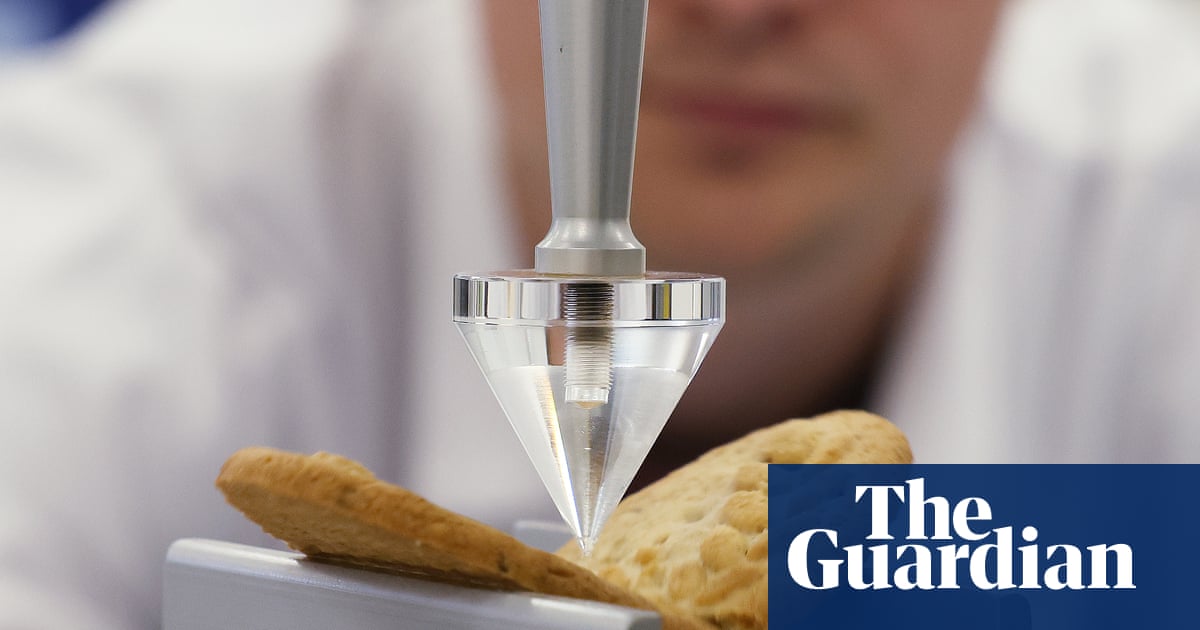
One of the biggest changes was swapping palm oil for sunflower oil, but there was much more to it than that. The reformulation took years to perfect in a laboratory, where scientists tested everything from density to how the cracker responds to heat, moisture and packaging
Everything you need to know about sugar – from how much you should consume, to some of its 50 disguises
Read more
It’s a story playing out across an entire industry. From Doritos to digestives, Britain’s best-loved snacks have been re-engineered, gram by gram, to meet stricter government rules on foods high in fat, sugar and salt. BelVita’s soft bakes range, including its bestselling choc chip and choc hazelnut flavours, has been reformulated to fall outside the “less healthy” category, with sodium cut by 56%
Since January 2026, paid-for advertising of high-fat, salt and sugar (HFSS) products was banned online entirely. Now the industry faces a fresh problem: the government is reviewing the formula that decides which foods count as “less healthy” in the first place. Food companies warn the changes could undo years of work overnight – the Food and Drink Federation estimates 80% of reformulated products could fail under the new model, particularly on sugar
Where the recipes get rewritten
Earlier this month at the Reading Scientific Services Ltd (RSSL) – the lab where, for many of Britain’s snack foods, recipes go to get rebuilt – that tension is being discussed. Mondelēz International, the global food and beverage giant behind Oreo and Ritz, has invested £40m since 2020 in reformulation work
The UK is now the company’s largest research and development hub anywhere in the world, with more than 750 scientists and engineers working across nutrition and product innovation at Bournville consumer research centre and RSSL

The government is proposing a tougher Nutrient Profiling Model (NPM), including stricter thresholds for free sugars and greater weighting for fibre. The changes could mean some products that manufacturers have already changed to reduce sugar are classified as “less healthy”, potentially bringing them within advertising and promotion restrictions
Jacinta George, managing director at RSSL, says the current nutrient profiling model, drawn up in 2018, counts “free sugars” against a product’s score but there’s no settled definition of what that term actually means
“The inclusion of free sugars in the 2018 NPM model is incredibly challenging for manufacturers, as there is no universally agreed definition of what a free sugar is,” George says. “There is also no standardised laboratory method for distinguishing between intrinsic and free sugars.”
Swapping out sugar isn’t as simple as removing it, either. “Sugar does more than sweeten – it provides texture, bulk and preservation,” George says. “Sweeteners provide sweetness but not these other qualities, meaning additional bulking agents or functional ingredients may be needed. This can increase processing, and potentially conflict with consumer demand for simpler formulations.”
The science of taking a cracker apart
Reformulation at RSSL runs through several disciplines in sequence. Kerry Tanner, a group leader on the product development team, works on ingredients first – often starting with sauces and cooking bases, where salt reduction is a frequent target. “If we’re trying to reduce the score, we might be working on a sauce, and we’re trying to reduce the salt,” she says. “We used a natural alternative to salt that has a lower sodium content.” Because sauces already carry complex layers of flavour, she adds, a modest cut often goes unnoticed by the consumer. RSSL also draws on a network of culinary chefs, who work alongside the product developers on new formulations.
Next comes texture – the domain of specialist Emma Nelson, whose job is making sure a reformulated product still behaves the way people expect. Complaints, she notes, can come down to something as small as how quickly a biscuit softens in tea. Every reformulated product goes through stability testing, checking shelf life and structural performance under different conditions once ingredients change. The team frequently turns to 3D printing to build physical models of a product’s internal structure, allowing them to take it apart and reassemble it to study how it holds together.
Downstairs, an industrial CT scanner takes that analysis further. As colleague George Middleton explains, the machine fires X-rays through a sample; denser materials absorb more energy, and thousands of rotating scans are stitched together into a full 3D dataset of the product’s internal structure. BelVita went through the same process during its own reformulation
The problem with chocolate
Not every attempt to reimagine a snack succeeds and chocolate bars have proven the hardest category of all. When Mondelēz launched Cadbury Dairy Milk with 30%less sugar shoppers didn’t buy it. The product, along with Cadbury Dairy Milk Fruitier and Nuttier, was pulled from shelves after poor sales
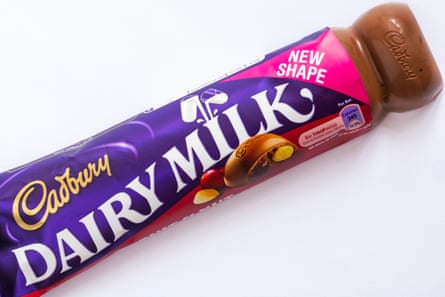
So the company has shifted its strategy, leaning on portion control instead of ingredient substitution. Freddo, Curly Wurly and Chomp – the bars most likely to end up in a child’s hand – are kept under 100 kcal. Multipacks stay under 200 kcal per product, and single bars under 250. Chocolate brings its own added constraint too: to legally carry the name, a product has to contain a minimum amount of cacao, which limits how far any recipe can be pushed
The looming challenge
For all the lab hours and investment, the industry’s biggest worry isn’t scientific – it’s regulatory uncertainty. Kate Halliwell of the Food and Drink Federation says companies need a stable target to aim at, because reformulation is a slow process. “It’s from signing off investment – you’re probably looking at a couple of years to get something actually through and into market,” she says
That’s what makes a shifting NPM formula so alarming to manufacturers, particularly paired with the ban on HFSS advertising. “I think companies can’t really see how they can do it,” Halliwell says. “If you’re going to invest to make a healthier product, but at the end of it you can’t promote or advertise it, then it’s unlikely that it will actually succeed on shelf. People won’t know to choose it or try it. And they’re more likely to fail. That’s a really big concern for companies.”
But others disagree. Sonia Pombo, head of research and impact at Action on Salt & Sugar, says the “goalposts” cannot be fixed “forever”. She added that the current Nutrient Profiling Model is “more than 20 years old, and the updated model better reflects the latest evidence”
She said the industry “has known that changes to the model were being considered for many years, having first been consulted on it in 2018, so this should come as no surprise.”
Pombo said reformulation and a lowering of sugar should be celebrated but “where unnecessary levels remain, further reductions should be encouraged.” She added: “Protecting past reformulation efforts cannot take precedence over continuing to improve the nutritional quality of the food we eat.”
Explore more on these topicsShare
Reuse this content
