


Research and Innovation
Could the Gut Hold Early Clues to Alzheimer’s Disease?
By: Chad Hanson | July 23, 2026 | 9 min. read |
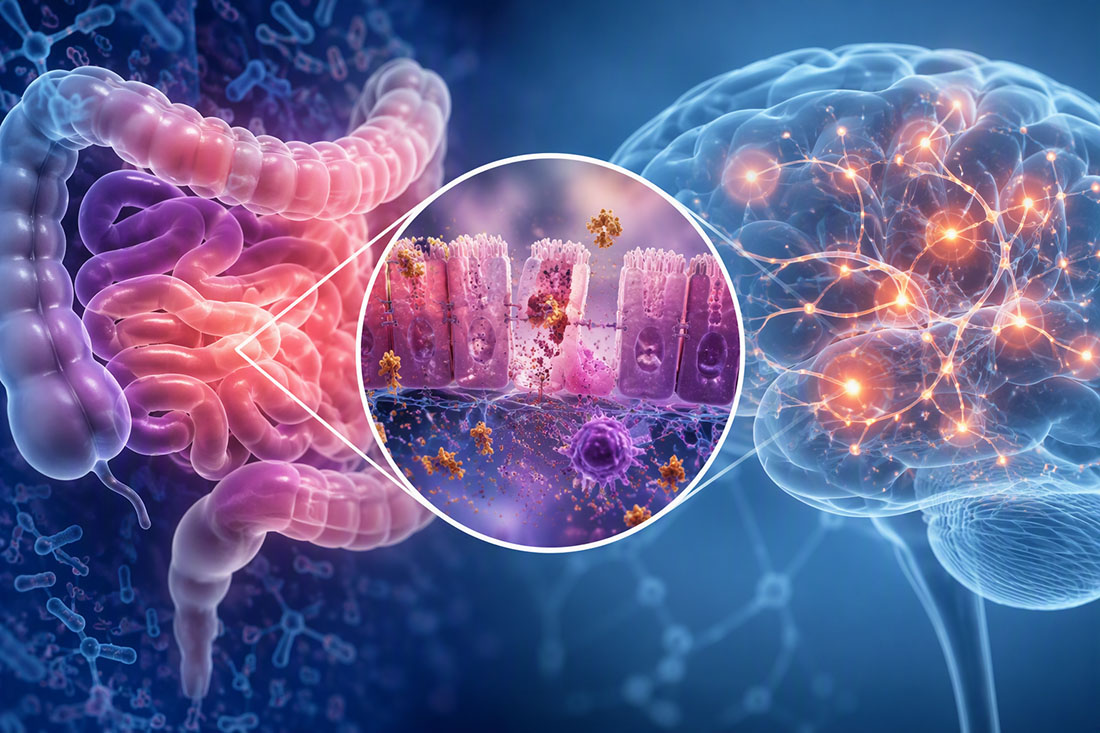
New research from the University of Miami Miller School of Medicine found that intestinal organoids modeled on preclinical Alzheimer’s disease develop barrier damage, inflammation and hallmark disease proteins, suggesting the gut may play a larger role in disease progression than previously understood
Alzheimer’s disease is best known for the <a href="https://healthylife7.com/changes-to-the-management-board-of-porsche-lifestyle-gmbh-co-kg/” title=”Changes to the Management Board of Porsche Lifestyle GmbH & Co. KG”>changes it causes in the brain. But new research from the University of Miami Miller School of Medicine suggests some of the disease’s earliest biological signals may also appear in the gut. The work prompts questions about whether intestinal health could influence how Alzheimer’s develops and progresses
In a study published in Aging and Disease, Miller School researchers found that lab-grown intestinal tissue from preclinical Alzheimer’s disease models developed structural damage, abnormal protein accumulation and inflammatory changes associated with the disease, even when isolated from the brain and immune system. The findings provide new evidence that Alzheimer’s-related pathology may extend beyond the central nervous system and that the gut could represent a potential target for future therapeutic strategies.
“Historically, Alzheimer’s research has centered on what happens in the brain, but scientists now recognize that the gut may also contribute to disease progression. Changes in the gut microbiome can affect brain function through a network of immune, metabolic and neural signals known as the gut-brain axis,” said Helen Bramlett, Ph.D., a professor of neurological surgery at the Miller School and a senior author of the study

What Did Researchers Discover?
The study focused on the complex communication network connecting the digestive system and the brain. Scientists have increasingly linked disruptions in this network to a range of neurological conditions, including Alzheimer’s disease. Previous research has shown that people with Alzheimer’s can experience changes in the gut microbiome, intestinal barrier function and inflammation. However, it has remained unclear whether gut cells themselves develop Alzheimer’s-related abnormalities
The Miller School research team created miniature, three-dimensional models of gut tissue grown in the laboratory. These intestinal organoids can be studied outside the body and allow scientists to isolate tissue-specific changes that occur independently of the brain, circulating immune cells, the microbiome or systemic inflammation
“Organoids are an excellent way to study the gut-brain axis in a controlled environment and really allow us to understand cell-specific changes in this model,” said Nadine Kerr, Ph.D., a research assistant professor of neurological surgery at the Miller School and corresponding author of the study. “They are also valuable in studying therapeutics in vitro for a mechanistic understanding of treatment interventions at the cellular level.”

Using transmission electron microscopy and advanced molecular imaging techniques, the research team examined the physical structure of the organoids and measured proteins associated with gut health, inflammation and Alzheimer’s disease
Signs of Gut Barrier Breakdown
One of the most striking findings involved the intestinal barrier, the cellular lining that helps control what passes from the gut into the bloodstream
Compared with healthy controls, organoids derived from Alzheimer’s models showed disrupted cell-to-cell connections, enlarged spaces between neighboring cells and significant reductions in proteins that help maintain barrier integrity. These abnormalities were especially pronounced in organoids derived from older Alzheimer’s models
Researchers also detected signs of barrier dysfunction before the age at which neurological symptoms typically emerge. That observation suggests gut abnormalities may arise early in the disease process
“The observation that problems with the intestinal barrier develop before noticeable memory or thinking deficits is especially significant because it suggests that Alzheimer’s disease may involve changes throughout the body, including the gut and immune system, long before symptoms appear in the brain,” Dr. Bramlett said
Why This Research Matters
- Alzheimer’s-related damage appeared in lab-grown intestinal tissue, adding to growing evidence that the disease may affect the body beyond the brain.
- Signs of intestinal barrier dysfunction emerged before the age when neurological symptoms typically develop, raising new questions about the earliest stages of Alzheimer’s disease.
- The findings identify gut inflammation and barrier integrity as promising areas for future research aimed at slowing or preventing disease progression.
Evidence of Alzheimer’s Pathology in the Gut
The team also found increased accumulation of proteins closely associated with Alzheimer’s disease
Organoids showed elevated levels of amyloid-beta and phosphorylated tau, two hallmark proteins that play central roles in Alzheimer’s pathology. Researchers also identified amyloid-like fibrils within the intestinal tissue model, further supporting the presence of disease-related changes in the gut. These abnormalities appeared within intestinal tissue itself, demonstrating that Alzheimer’s-associated pathology can emerge in gut cells without direct input from the brain
“This led us to ask whether intestinal epithelial cells themselves could develop Alzheimer’s-associated pathology, even in the absence of signals from the brain, circulating immune cells or systemic inflammation,” said Alfredo Fernandez Higueras, an M.D.-Ph.D. student in the Medical Scientist Training Program and co-first author of the study. “By generating intestinal organoids, we were able to study these epithelial-specific changes in a controlled environment.”
Why Inflammation Matters
Another key discovery involved the inflammasome, a component of the body’s innate immune response that helps regulate inflammation
The researchers observed increased activity of inflammasome-associated proteins along with evidence of pyroptosis, an inflammatory form of cell death. These changes were most pronounced in organoids from older Alzheimer’s models and suggest that inflammation may play an important role in driving gut dysfunction during disease progression
“This is the first study of inflammasomes in an organoid intestinal model,” Dr. Kerr said. “Targeting inflammasome proteins in the gut, perhaps with targeted probiotics or inflammasome inhibitors, may have therapeutic potential for gut-brain axis dysfunction in AD progression.”
Dr. Bramlett said the findings identify several biological pathways that warrant further study
“From a therapeutic standpoint, these pathways are very attractive targets,” she said. “If excessive inflammasome activation contributes to barrier dysfunction, chronic inflammation and downstream neurodegeneration, then interventions that inhibit inflammasome signaling, reduce pyroptosis or restore intestinal barrier integrity could potentially slow or even prevent disease progression.”
What Could This Mean for Patients?
The study does not show that gut abnormalities cause Alzheimer’s disease, nor do they establish a new diagnostic test. However, the study strengthens growing evidence that Alzheimer’s is not strictly a brain disease and that biological changes elsewhere in the body may contribute to its progression
Future research will focus on determining whether improving gut health can influence inflammation, brain pathology and cognitive outcomes. The team also plans to develop human intestinal organoids and combine them with brain organoid models to better understand how the gut and brain interact during neurodegenerative disease
Ultimately, identifying the earliest changes associated with Alzheimer’s disease could open new opportunities for prevention, monitoring and treatment. This study suggests the gut may be one of the places researchers should look first
Why Some Brain Cells May Be More Vulnerable to Parkinson’s Disease
Study shows mitochondrial DNA damage can continue accumulating in vulnerable neurons, offering new insight into Parkinson’s disease
Read more

Blood Biomarkers and Cognitive Testing Improve Prediction of Early Alzheimer’s Decline
Combining blood biomarkers with cognitive testing improves prediction of functional decline in people at risk for Alzheimer’s disease
Read more

Shaping the Future of Neurodegenerative Research at the Miller School of Medicine
Dr. Leonard Petrucelli leads two major grants advancing collaborative Parkinson’s disease research at the Miller School
Read more
Investigational Stem Cell Therapy Aims to Stabilize Alzheimer’s Disease Progression
Miller School researchers at AD/PD 2026 highlighted why APOE is now a leading genetic target for Alzheimer’s treatment
Read more
