


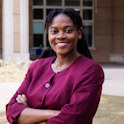
July 8, 2026 | Erin Bluvas, bluvase@sc.edu
Enid Keseko already knew she was passionate about improving health through food and nutrition
when she discovered she could use the public health field to extend her impact even
further. While studying nutrition and dietetics as an undergraduate at Kenyatta University,
she completed a practicum in a hospital setting and one with a community-based health
care program that served individuals with chronic diseases.
“These experiences exposed me to the complex relationship between malnutrition, obesity
and chronic disease,” Keseko says. “They also shaped my early interest in nutrition
as both a clinical and public health tool, particularly as I realized that food was
not just a clinical issue; it is social and systemic.”
There’s a genuine sense of belonging at USC, and it makes the day to day feel more
energizing. The connections I’ve built with my peers and my professors have made the
journey feel collaborative and this kind of environment is something I cannot take
for granted
The Kenyan native’s internship at Masinde Muliro University of Science and Technology’s
to become a registered dietitian sparked an interest in nutrition research, and she
remained at the institution to pursue a master’s degree in public health nutrition.
The program gave her the opportunity to contribute to community efforts focused on
nutrition education. Yet when Keseko attended her first international nutrition research
conference (hosted by the Federation of African Nutrition Societies), she realized
she wanted to grow her knowledge and skills even further with a doctoral degree.
While looking at various programs, Keseko discovered that health promotion, education, and behavior(HPEB) professor Brie Turner-McGrievy’s work in the areas of healthy eating, chronic disease prevention and cultural relevance
aligned with her own. She also liked the multidisciplinary approach offered by the
Ph.D. in HPEB program
As a member of Turner-McGrievy’s Behavior Research in Eating (BRIE) Lab, Keseko has spent the past four years building her research expertise. She has contributed
to two NIH-funded projects focused on improving health outcomes for underserved populations,
particularly African Americans, and has even secured funding for her dissertation
research project with the Olga I. Ogoussan Doctoral Research Award. She led a randomized
control trial that examined the impact of food documentaries on diet quality and self-efficacy
for healthy eating among adults with overweight or obesity.
“Dr. Turner-McGrievy has been one of the most defining parts of my Ph.D. journey,”
Keseko says. “She has challenged me in the way the best mentors do and played a key
role in developing my readiness to continue as an independent and experienced researcher.
She has listened to my ideas and encouraged me to pursue them while exposing me to
opportunities that have expanded my professional world.”
With interests in diet-related chronic disease prevention, <a href="https://healthylife7.com/uvm-health-to-suspend-weight-loss-drug-coverage-for-its-employees/" title="UVM Health To Suspend Weight Loss Drug Coverage For Its Employees”>weight loss maintenance,
and media and technology in nutrition and health education, Keseko plans to develop
her expertise even further with a postdoctoral position after graduating in August.
She feels ready for this step due to the breadth and depth of experience she’s received
at the Arnold School – ranging from working with participants to implement a nutrition
intervention for diabetes prevention to sharpening her research skills, such as data
analysis and manuscript development.
“There’s a genuine sense of belonging at USC, and it makes the day to day feel more
energizing,” Keseko says. “The connections I’ve built with my peers and my professors
have made the journey feel collaborative and this kind of environment is something
I cannot take for granted.”
For those considering a similar path, she reminds prospective students to find purpose
in something greater than themselves
“Everyone tells you to ‘know your why’ before applying to a Ph.D. program, and that
advice is solid,” Keseko says. “From where I sit now, I’ve come to understand that
your ‘why’ can’t stop at you. It’s about understanding whose lives your work can impact
and that can carry you through the program and beyond.”

Find Out More
Health promotion, education, and behavior faculty and students address how interventions,
social context, health care systems, and physical environments influence health behaviors
and health status, with an emphasis on disadvantaged populations
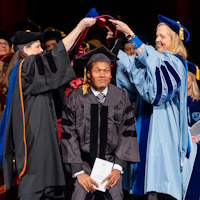
Meet Our Class of 2026
The Arnold School is proud of our 2026 graduates, who will go on to change the world
locally and globally. Learn about some of the other outstanding individuals who completed
one of our 34 programs this year
