


Pity the poor calorie
With influencers pushing “protein maxxing” “fibermaxxing” and even “carb counting,” does the difficult-to-explain unit of energy even belong in our lexicon anymore?
Article continues below this ad
“Absolutely,” said Dr. Rebecca Andrews, an internist at UConn Health. “When I talk to my patients who are trying to lose weight, I tell them we have to figure out what you’re eating now. Calorie counting can be a pain, but there are other ways to guess-timate.”
The problem with a calorie — or with calorie counting — is that it’s a difficult term to explain, said Christopher Barrett, a dietitian nutritionist with Hartford Health Care. “It’s just hard to describe calories in a 30-second video,” he said. Worse, “it’s arduous” to count them precisely, said Dana A White sports dietitian and associate clinical professor of athletic training and sports medicine at Quinnipiac University.
More For YouWhy calories still count even as protein and fiber trends take over
Remember calorie counting? Does it still matter in a world of diet trends like fibermaxxing and protein-maxxing? Connecticut nutritionists say it does, but it’s tricky.
Connecticut authors release memoirs, mysteries and more this summer
A list of books released this year by Connecticut authors or authors with Connecticut connections.
CT doctors explain why gut health matters for longevity
“We used to think about the gastrointestinal tract almost like plumbing, to get rid of waste and processed food…Actually, it is more complicated than that,” Dr. Pikeshkumar Jayantilal Patel…
How a Norwalk men’s group became a lifeline at a senior living community
A group of guys in their 80s started a random friendship group and now go on outings together. A story about the importance of socializing as we age.
Hartford jumps to No. 26 on Orkin’s annual worst bed bug cities list
Chicago remained in the No. 1 spot while Los Angeles, Detroit, Cleveland and Indianapolis rounded out the top five.
A calorie is a unit of energy, according to the National Institues of Health (NIH) “A calorie is the amount of heat needed to raise the temperature of 1-kilogram of 1-degree Celsius” Barrett said. He concedes that the definition can be difficult to wrap one’s head around. To put it more simply, Barrett said, “Calories are a way to give our bodies energy.” We “burn” calories by using them as energy to maintain basic life functions — called the basal metabolic rate, or the number of calories you burn at rest, according to the Cleveland Clinic — and physical activity, Barrett said.
Article continues below this ad
“Ultimately, the only way to lose weight on paper is to be in a calorie deficit,” White said. “But there’s a right way and a wrong way to do that. You could have 1,000 calories in a salad or you could have 1,000 calories worth of Twinkies. That’s a very different equation.” She criticizes “hyperfixating on one nutrient or the other” — protein, fat or carbohydrates. “We demonize one nutrient based on one study or a trend,” she said. “Anytime you try to completely exclude a food group, you’re going to miss out on nutrients. There are going to be physiological consequences.”
Make CT Insider a preferred source on Google to see more of our journalism when you search.
Add Preferred Source
Whenever we burn more calories than we consume, our body goes into a “caloric deficit,” One pound of fat comprises about 3,500 of extra calories, Griffin Health reports. So to lose 1 pound of fat, one needs to create a caloric deficit of 3,500 calories adding that eliminating 500 calories every day would yield a reasonable weight loss of 1 pound a week
Article continues below this ad
“It’s a combination of calories, what those calories look like, and then paralleling that with exercise,” said Dr. Natalie L.Mora, of Northwell Health
Part of the problem in counting calories is getting a precise calculation of calories in any given item, especially if food is home-cooked, said Barrett. “Labels can legally be off by up to 20%,” he said, adding that how an individual absorbs calories also varies based on the food, genetics and gut microbiomes. Moreover, White said, people tend to underestimate how much they consume. For instance, she said, a cup of uncooked rice may be 200 calories. But after it is cooked, the amount of calories triple.
People also tend to overestimate how many calories they burn while exercising by as much as 45 to 300%, according to a study in the Journal of Sports Medicine and Physical Fitness
Article continues below this ad
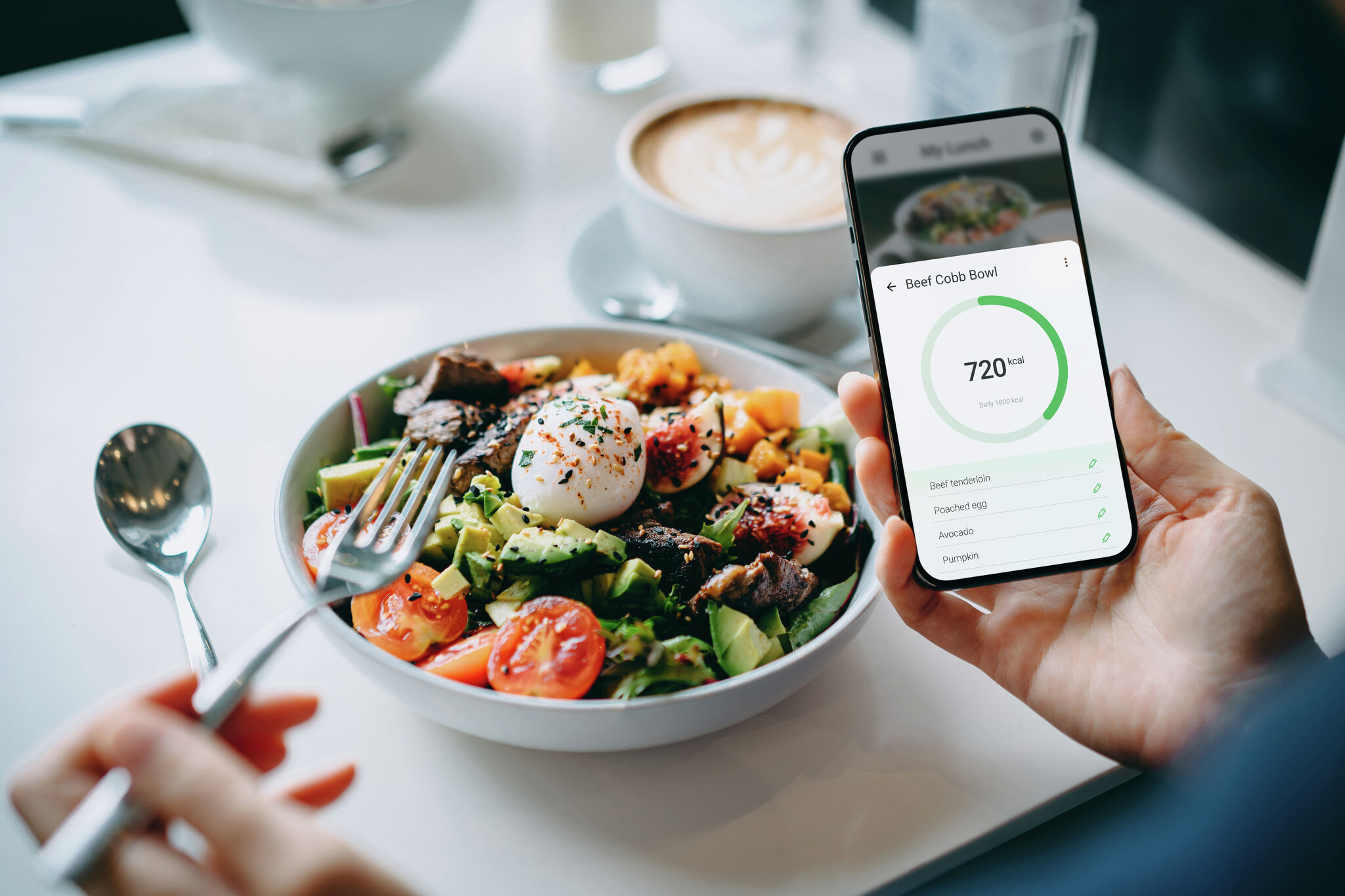
Nevertheless, research shows that those who do count calories, by self-monitoring, the use of an app or by keeping a daily log, do lose weight, according to a systemic review published by Public Health Nutrition. But the difficulty is sticking to it, said Dr. Husnain Kermalli, chief medial officer of Saint Mary’s Hospital in Waterbury. That’s because weight loss kicks off a hormonal process in which the body “says, ‘This is not the right thing for me,’ and will really start to push you to try to recover that deficit,” he said. “If we kept three basic concepts in our minds we probably wouldn’t have to count anything,” he said. “Drink more water, eat less, walk more. We consume too much and we don’t expend enough energy.”
Amidst all of this dietary advice, Barrett said we may be missing the point of food. “There are many aspects of food that are negated here in America,” he said. “If you go to Europe people don’t ask how many calories is in this meal, they ask ‘how does this food taste?’ In America, we’re very weight-centric and, to be honest, that’s never helped us.”
