



Add Us On GoogleAdd as a preferred source on Google
Mo. (KCTV) – As Kansas City University welcomed federal health leaders Wednesday, a key message rose to the top: tomorrow’s doctors need far more nutrition training to confront the surge in diet-related chronic disease
Kansas City University hosted a regional roundtable July 15 as part of a U.S. Department of Health and Human Services nutrition initiative that has enrolled 73 medical schools nationwide
About 60 people attended the session, including students, federal advisors, physicians, nurses and community leaders. The gathering served as a listening session for HHS to hear how schools have integrated nutrition into their curricula, where they plan to expand that work and what challenges remain
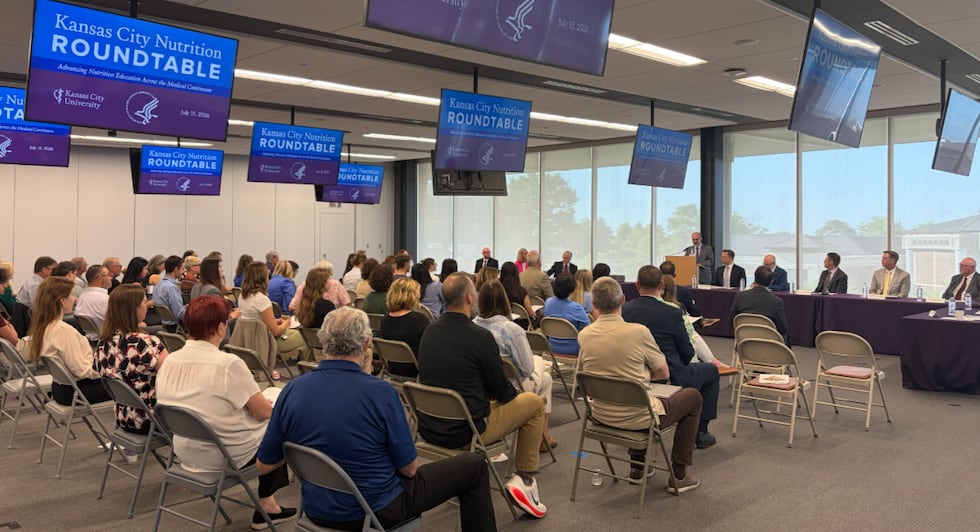
Samuel Watters, a senior advisor at HHS, said the issue of limited nutrition education in medical schools has been discussed for decades, with the American Medical Association first identifying it as a need in the 1960s
“Nutrition really plays a key role in health, and with the rise in diet-related chronic diseases, it’s very important that we’re changing the way that our doctors are taught to adapt to the changing environments in the United States,” Watters said

Schools participating in the initiative are required to provide medical students with at least 40 hours of nutrition education. Watters said the response from medical schools has been “tremendous” and that schools have been “very collaborative.”
Kansas City University, the University of Missouri-Kansas City School of Medicine and the University of Missouri are among the institutions already partnering on the initiative
Alexander Norbash, dean of the UMKC School of Medicine, said the focus must shift toward prevention
“We have to focus on wellness rather than on sickness. And that’s going to improve our society, reduce the cost of healthcare, create a healthier population,” Norbash said

Joshua Cox, executive dean of KCU’s College of Osteopathic Medicine, said the initiative extends beyond the classroom
“Not only working with our students and teaching them more about nutrition in an integrated comprehensive way, but it’s also how they educate and interact with their patients. And so that’s how it impacts that future patient population directly,” Cox said
Watters said the initiative goes beyond medical schools. He said accreditors are changing how they evaluate medical schools, residency programs and continuing medical education requirements. Practicing physicians in many states will also face increased nutrition education requirements, he said
Watters also said new payment models are being introduced to allow for more nutrition screening, nutrition services and access to digital health technologies for patients
HHS said it will continue meeting with schools to track progress and address challenges as the initiative moves forward
Read More: Health News
Copyright 2026 KCTV. All rights reserved
