


By Joe Schwarcz — Aug 21, 2026
What came after fire as humanity’s earliest chemical technology? Fermentation—an ancient bit of biotechnology that gave us beer, bread, yogurt, cheese, and countless other foods long before anyone knew microbes existed. Today, fermentation is enjoying a new health halo, but the science behind fermented foods is far more interesting—and nuanced—than the latest diet hype.
Image by ACSH using AI
What was the first chemical reaction harnessed by humans? That was undoubtedly fire. And the second? That would be fermentation, the process by which yeasts and bacteria convert carbohydrates into alcohol, organic acids, and carbon dioxide
Evidence for the use of fire dates back hundreds of thousands of years. At first, it was likely natural fires started by lightning that were kindled; later, ignition of tinder was achieved with sparks from flint stones or the rubbing together of sticks. Fire had a huge impact on the lives of early hominids. It made possible survival in colder environments and allowed for improved hunting tools such as fire-hardened spears. Cooking allowed a significant increase in calorie intake, made food safer by destroying bacteria, and enabled the drying of meat—the first food-preservation technique ever developed. Pottery would not have been possible without fire. There is even a theory that cooking was at least partly responsible for an increase in brain size over time due to a greater absorption of nutrients from cooked food than from raw food. The impact of fire on the development of civilization cannot be overstated.
Although purposeful fermentation dates back only about 8,000 years, far less than the use of fire, its role in the lives of people has also been highly significant. The ancient Chinese fermented fruit, rice, and honey to make an alcoholic drink around 7000 BC, and by 3000 BC, Babylonians and Egyptians were indulging in fermented beverages. Amazingly, the Sumerians had developed enough expertise to brew sixteen different kinds of beer! The production of carbon dioxide through fermentation using yeast made the baking of bread possible, and lactic acid, another fermentation product, played a major role in fostering food preservation as well as in widening the spectrum of flavors.
Miso, sourdough, vinegar, kimchi, sauerkraut, pickles, cheese, kefir, and yogurt are all produced through fermentation. Throughout most of history, fermented products were produced through empirical evidence. The juice from crushed grapes was found to convert into wine without any knowledge of how this was happening. It was only in 1856 that Louis Pasteur showed that something in living yeast cells that he termed “ferments” was needed to convert sugar into alcohol. Then in 1897, German chemist Eduard Buchner, in work that would earn him a Nobel Prize, found that living yeast cells were not needed for fermentation; an extract of these cells could do the job as well. The essential feature of that extract turned out to be special proteins that acted as catalysts for the reaction. These biological catalysts were named enzymes.
It is not only yeast cells that produce enzymes capable of carrying out fermentation. Some bacteria can perform that task as well. Like fermentation by yeast, bacterial fermentation was discovered long before anyone knew anything about bacteria. Yogurt has been known since about 5000 BC, when the Mesopotamians discovered it, probably as a result of bacteria accidentally contaminating milk. There are several bacteria that can convert milk into yogurt, with Lactobacillus bulgaricus and Streptococcus thermophilus being the most common ones.
These bacteria digest the milk sugar lactose, producing lactic acid that then causes the long protein chains in milk, collectively known as casein, to unwind. When these chains are no longer curled up and are straightened out, they can bind to each other, forming a gel. Lactic acid also contributes the characteristic tart flavor to yogurt, although sometimes other lactobacilli or bifidobacteria are also added for an altered texture and taste
Historically, yogurt was first produced by spontaneous fermentation when ambient bacteria ventured into warm milk and converted it into a solid, tasty gel. Experience then showed that a bit of this gel added to warm milk could reproduce the fermentation. But since different bacteria lead to different textures and flavors, the properties of yogurt varied greatly depending on where it was made. Then, in the early 20th century, Russian biologist Ilya Mechnikov isolated bacterial strains at the Pasteur Institute in Paris, enabling yogurt to be produced in a reliable fashion.
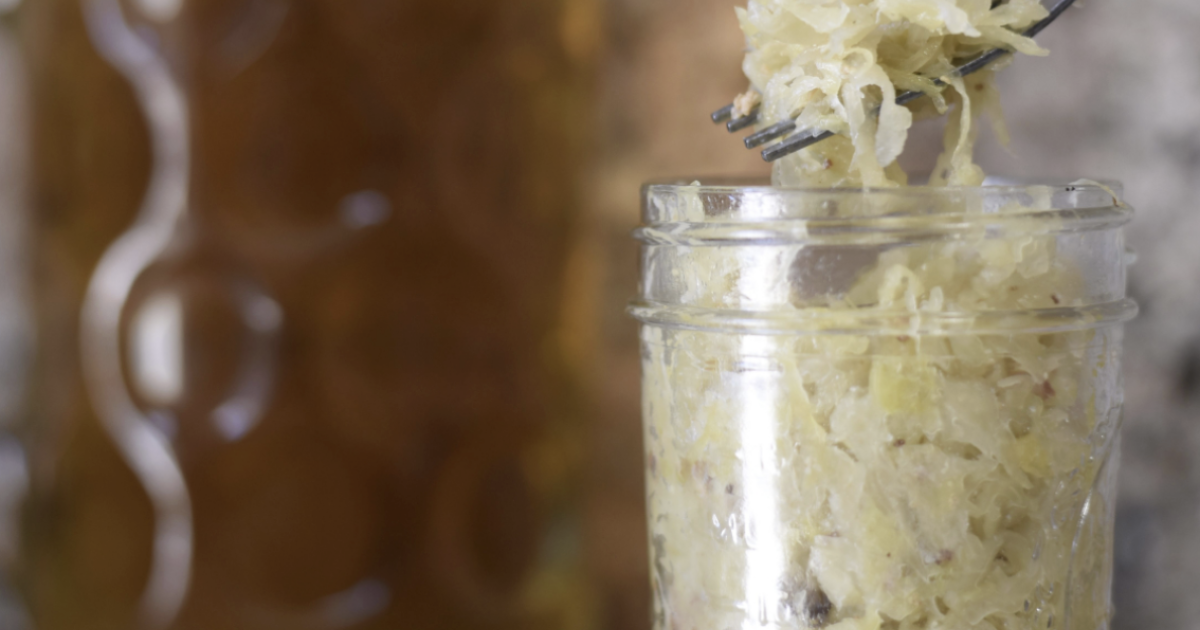
Recently, fermentation, this ancient example of biotechnology, has hit modern headlines because of U.S. Secretary of Health and Human Services Robert Kennedy Jr.’s championing of the “Sauerkraut Diet,” the brainchild of physician Sean O’Mara. The diet emphasizes grass-fed red meat, avoidance of ultra-processed foods, inclusion of fermented foods, regular fasting, and periodically stressing the body with hot and cold temperatures. O’Mara claims the diet reduces the risk of disease, although he provides no evidence to back up the claim. Part of the argument is that fermented foods contain “probiotics,” living bacteria that contribute to improved immune activity and digestive health by supporting a healthy gut microbiome.
Sauerkraut is indeed a good source of probiotics, but it is also laden with salt. If Kennedy consumes a couple of cups of sauerkraut a day, he can be ingesting as much as 2000 mg of sodium, which is above the suggested daily limit of 1300 mg. Maybe he drains and rinses the kraut, which can reduce the sodium level significantly. As far as eating all that red meat goes, well, not a great idea. Numerous studies have linked red meat consumption with colorectal cancer, cardiovascular disease, and type 2 diabetes. What science does support is a mostly plant-based diet that includes fermented foods, although I would argue in favor of yogurt or kefir rather than sauerkraut. Better source of protein and lower in sodium. But who am I to question the wisdom of Kennedy?
# Reprinted with permission. Dr. Schwarcz’s<a href="https://www.mcgill.ca/oss/article/medical-health-and-nutrition-history/ancient-fermentation-current-romance-sauerkraut-diet” rel=”nofollow noopener” target=”_blank”>original articlecan be found on the OSS website
Tags:
Category
Food & Nutrition
Joe Schwarcz
Dr. Joe Schwarcz isDirector of McGill University’s “Office for Science and Society” which has the mission of separating sense from nonsense. He is well known for his informative and entertaining public lectures on topics ranging from the chemistry of food to the connection between the body and the mind
Recent articles by this author:
From Ancient Fermentation to the current romance with the “Sauerkraut Diet”
What is a muckraker, anyway?
Capturing the human wind
Is there really magic in the Magic Eraser?
Fertilizers don’t make the news until there is a shortage
All articles by this author
