


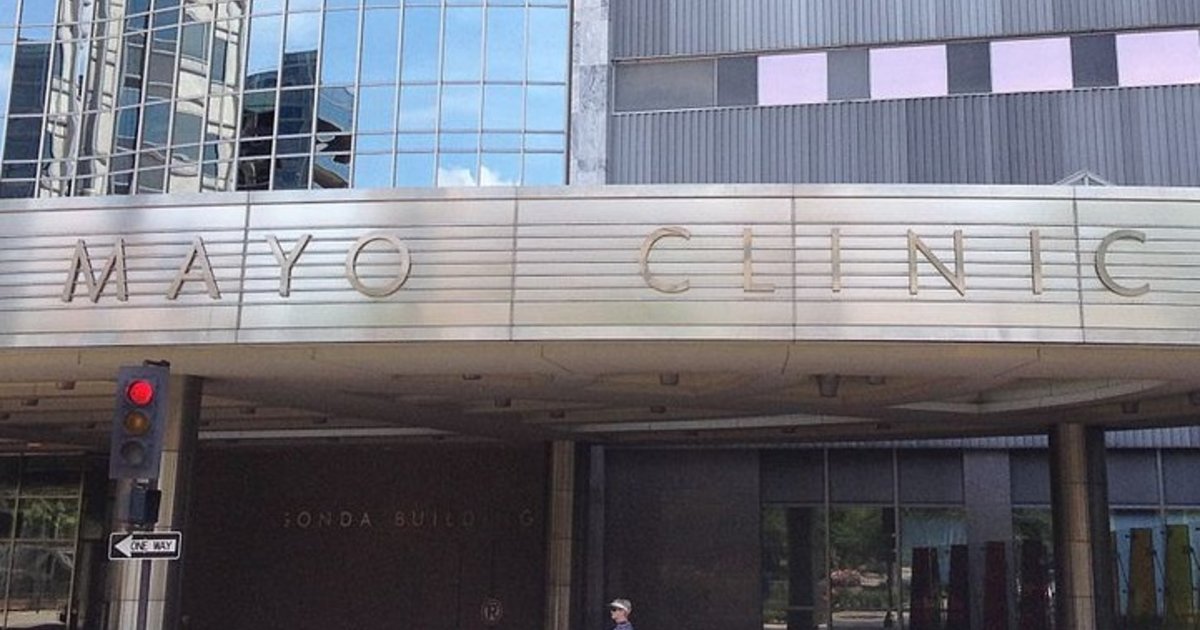
Healthcare AI likened to a sleeping giant waiting to wake up in many hospitals not named Mayo Clinic
Dave Pearson|August 16, 2026|Health Exec|Artificial Intelligence
What would it take to put just about every medical institution on par with Mayo Clinic in sheer quality of care? Not a lot more than better use of AI
So says a keen healthcare watcher and accomplished journalism executive.
“Mayo’s scarcest asset—coordinated diagnostic brilliance based on real data, cases, lab results and patients—is exactly what AI is getting good at,” writes the professional observer, Axios co-founder and CEO Jim VandeHei. “Mayo knows it, running more than 12,000 clinical studies and building its Mayo Clinic Platform to digitize its expertise.”
In a piece published at Axios.com Aug. 16, VandeHei describes an ambient AI agent he built to guide care for his wife, who has been in and out of ERs and hospitals with three chronic conditions.
“To this day, my personal AI agent has proven smarter than every doctor, other than Mayo’s,” he reports.
“Think about what Mayo data changes: A community hospital in Oshkosh, Wisconsin, will never recruit 4,000 Mayo-caliber specialists—[but] it doesn’t need to,” VandeHei writes. “It could tap into Mayo’s expertise and data to instantly help millions of patients.”
How to have what Mayo has
VandeHei points out that Mayo’s practically peerless clinical performance—confirmed again this year—is built on three core principles.
- Doctors are paid flat salaries. “No bonuses for more procedures, scans, tests or visits,” VandeHei notes. “They’re paid to heal.”
- Doctors work as teams, not individual know-it-alls. “Mayo practices multidisciplinary medicine, VandeHei underscores. “So gastroenterologists, liver specialists and surgeons all work together to evaluate complex cases like Autumn’s.” (That’s his wife.)
- Patient-first culture. “As someone who started and has run two companies, I can tell you: Cultures are controllable and scalable,” VandeHei writes. “We should demand this of every medical institution in America.”
No homegrown agent? No seat in the C-suite
The piece includes input from Mayo Clinic President and CEO Gianrico Farrugia, MD, who says he is, in VandeHei’s words, “racing to show the federal government and other hospitals how to replicate the Mayo magic.”
Among the lessons he’s learned about healthcare AI, Farrugia includes one that could and surely should shake things up in the leadership offices of hospitals and healthcare systems around the country:
‘Require each member of the C-suite to have built at least one agent on their own and to use more than one LLM at work several times a week. Only then will they be able to make the right decisions about AI for the institution.’
Read the whole thing
Dave Pearson
Dave P. has worked in journalism, marketing and public relations for more than 30 years, frequently concentrating on hospitals, healthcare technology and Catholic communications. He has also specialized in fundraising communications, ghostwriting for CEOs of local, national and global charities, nonprofits and foundations
