


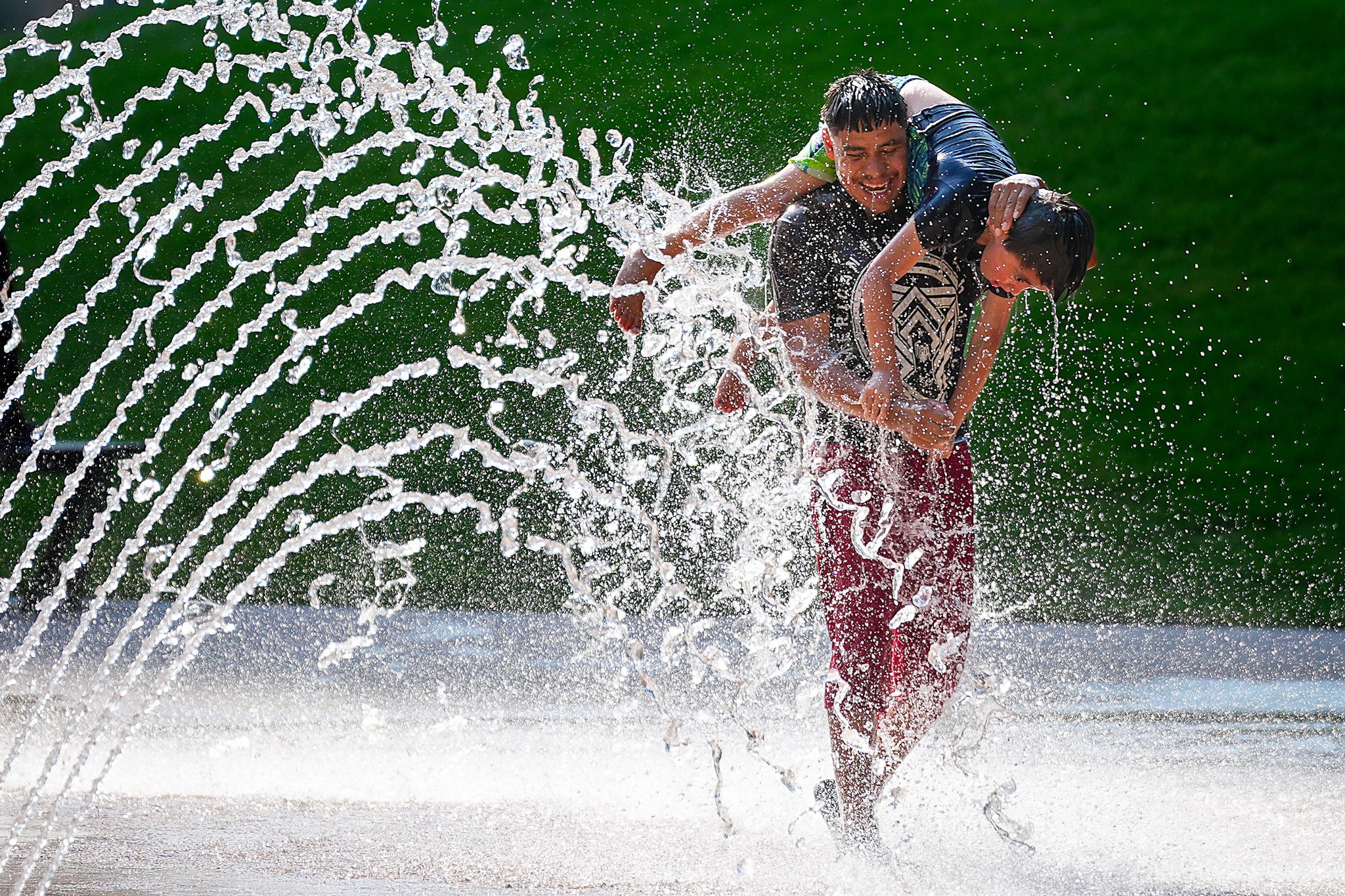
As temperatures climb across North Texas this week and extreme heat takes over, families may search for a cooling day at the pool or a fun time at a backyard barbecue. But spending time outdoors can quickly become dangerous when triple-digit temperatures are at play, especially for children
Parents spending time outside this summer should watch their children for signs of overheating. Here’s why kids are more vulnerable and how to keep them safe
Article continues below this ad
How long can kids safely be outside?
Children are more vulnerable to heat-related illnesses because their bodies warm more quickly than adults’, said Dr. Monica Herrera, a pediatrician at Cook Children’s.
However, there is no exact timeline for how long it takes for a child to get heat-related illnesses. Herrera said parents should pay close attention to how their child is behaving, feeling and should encourage frequent breaks for water and shade.
To prevent heat exhaustion, Herrera recommends caregivers have children drink fluids every 15 to 20 minutes during outdoor activities.
“If you’re going to be spending the day outside, going to a barbecue, a gathering, you want to make sure your child is hydrated,” Herrera said
Article continues below this ad
Related:What’s the difference between an extreme heat warning and advisory? Here’s what to know
Making hydration more appealing to children can also help. Herrera suggests infusing their water with fruit, making popsicles or giving children water-rich foods, such as cantaloupe, oranges or watermelon.
Experts also recommend avoiding going out during the hottest parts of the day, dressing children in loose, light-colored clothing and applying sunscreen. Parents should only use canopies for strollers, as blankets or other coverings can prevent air from circulating and raise the stroller’s temperature
Parents should also avoid leaving children in the car alone, even for a few minutes, as temperatures inside a car can rise several degrees higher in a matter of minutes, Herrera said. In 2025, 33 children across the U.S. died from heatstroke after being left in a car, according to data from noheatstroke.org — a tracker used by the U.S. Department of Health and Human Services.
Related: How to prevent hot car deaths this summer in Texas
Article continues below this ad
What are the signs of heat exhaustion or heat stroke?
Herrera said early signs of heat-related illness can include:
- Fussiness or irritability
- Leg cramps
- Headaches
- Dark-colored urine
If a child’s condition worsens, symptoms could include pale skin, dizziness, sweating or high body temperatures. Caregivers can help children suffering from heat-related illness by moving them indoors or to a shaded area, removing excess clothing and elevating their feet.
Herrera said parents should give children with potential heat illness plain cold water or drinks with electrolytes, such as Pedialyte for younger children or Gatorade for older children
Article continues below this ad
Young infants are especially vulnerable to heat since they cannot regulate their body temperature as well as older children or adults. Infants less than three months old and showing signs of lethargy or potential heat exhaustion should be taken to the emergency room, Herrera said.
“They cannot regulate their body temperature that young compared to an older child,” Herrera said. “The younger the child or the baby, you definitely need to take this more seriously.”
Related: Your ultimate guide to dealing with the heat in Dallas-Fort Worth
