


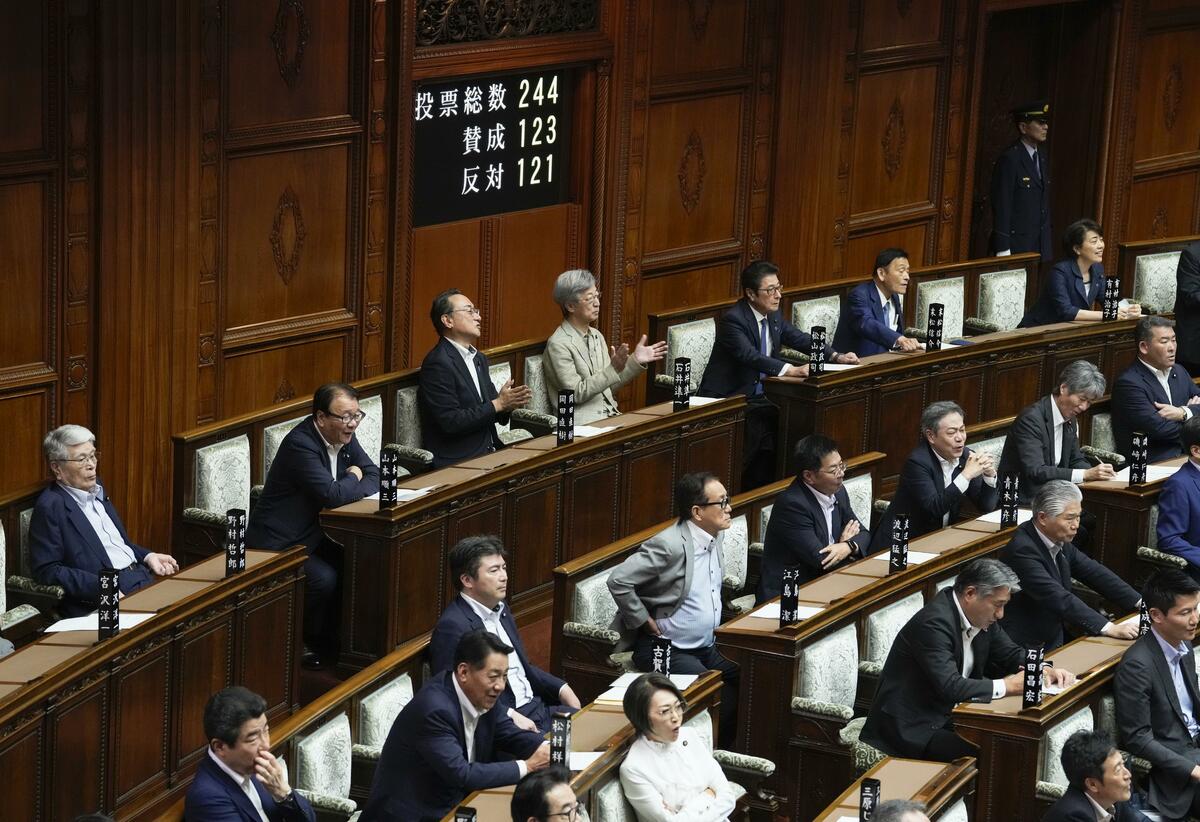
Japan’s parliament on Friday passed ruling bloc-sponsored legislation to create a “second capital” as a backup for Tokyo in emergencies such as disasters, paving the way for this year’s main session to end after an eight-day extension
The legislation had faced harsh backlash from the opposition camp, which argued that it was tailored only to the Osaka-based Japan Innovation Party, the junior coalition partner of the ruling Liberal Democratic Party led by Prime Minister Sanae Takaichi
The second capital initiative stems from a coalition deal signed on Oct. 20 between the LDP and the JIP, whose backing helped elect Takaichi in parliament as Japan’s first female premier the following day
The creation of the backup capital system could add impetus to the JIP’s drive to reorganize the western Japan city of Osaka into a metropolis like Tokyo, a plan also aimed at streamlining administrative functions and decentralizing power from Tokyo
The last business day before the Diet‘s official end Saturday was marked by a last-minute tussle between the ruling camp, which sought to pass the bill in time, and opposition parties, which wanted their demands reflected before a parliamentary vote
The opposition demanded a ban on holding local elections and a referendum on the same day to prevent voters’ support for particular candidates or parties from influencing how they vote in the plebiscite
That is apparently because JIP leader Hirofumi Yoshimura, who doubles as Osaka governor, has said he aims to hold a third referendum and the next gubernatorial race on the same day next spring
The JIP’s past attempts to realize its Osaka metropolis plan fell flat, with two referendums in 2015 and 2020 both rejected by narrow margins amid opposition from the LDP
Following concessions by the ruling bloc, the opposition finally agreed to allow the bill to be put to a vote at a plenary session of the House of Councillors, the upper chamber of parliament, on Friday night
Under the new law, the prime minister can designate a backup capital based on applications from prefectures that meet certain requirements including population and economic size
The enactment came after the 150-day session that began in mid-February was extended through Saturday as some key bills for the ruling camp failed to pass parliament before the initial closing on July 17 due to a stalemate in Diet affairs
The gridlock followed an opposition boycott that lasted about two weeks from late June as the ruling bloc tried to force deliberations on the second capital bill and another on slashing the number of House of Representatives seats
Other bills that passed the upper house on Friday for enactment included one to revise the law governing referendums on amending the Constitution, in preparation for a future national vote that would be Japan’s first on revising the supreme law, a long-held goal of the LDP
The House of Councillors has decided to rename itself the Senate
Related coverage:
