


This is an exclusive BHB+ story
Interventional psychiatry modalities and medications, often used for patients who have treatment-resistant depression, intense suicidality and hard-to-treat mental health conditions, are becoming more common as first-line treatment options
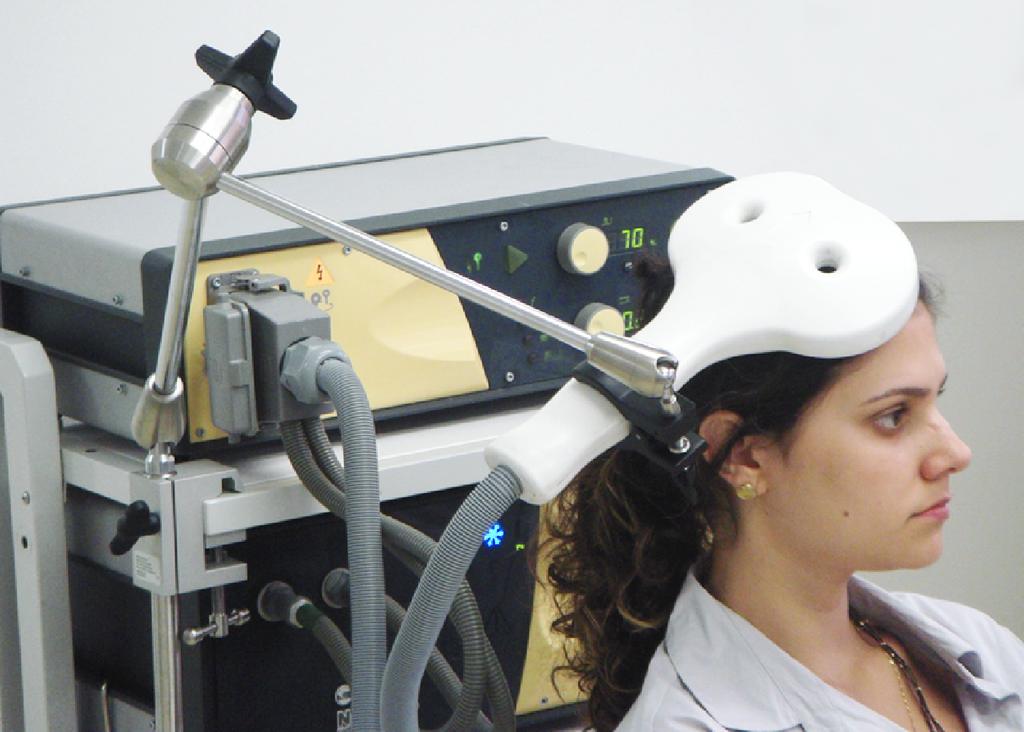
The research behind therapies like esketamine and transcranial magnetic stimulation (TMS) is much stronger than it was a decade ago, and as FDA treatment indications have expanded and technologies have advanced, new options for neuromodulation and psychedelic-assisted therapy are emerging in parallel. Now, psychiatrists and behavioral health clinicians have more tools to treat than before
Dr. Stephanie Eken, Chief Medical Officer at LifeStance Health (Nasdaq: LFST), one of the nation’s largest outpatient behavioral health providers, said the company is watching interventional psychiatry developments closely to see how it may need to pivot financially, clinically or otherwise to be at the forefront of offering these new treatment options
“The reason I’m so excited about this particular conversation is I just think it brings so many more tools into our toolbox and it reduces suffering for our patients,” Eken told Behavioral Health Business. “One thing that I’ve said for a long time is I’ve basically had the same medications available to me most of my career without a lot of significant advancement. ”
Interventional psychiatry is at a crux where some of its “classic” treatment options like esketamine/Spravato and TMS have been around for a while now. Still, new technologies have given way to the development of different neuromodulation devices, smaller equipment and more hyper-personalized ways to provide treatment. On the psychedelics front, even the U.S. government is fully engaged in clinical trials exploring the benefits of MDMA and psilocybin in care for PTSD and other indications. But before the field sees widespread adoption as these new interventional psychiatry methods mature, it must start preparing behind the scenes.
“Those who will be successful long-term will have the ability to have multiple offerings for patients and then also to be able to be ready for when the next ones come up and have a path to access and reimbursement for patients, to have teams that are ready to also add those on there for the future,” Eken said
That includes training clinicians and educating patients and being prepared to battle misconceptions that emerge, too
“A lot of people view these as a last resort,” Eken said. “I think we really need to think about that differently. We don’t have to go years of a patient having substantial symptoms and still gritting their teeth and getting through it. … My hope is that it is a standard part of treatment and the landscape looks really different because we have effective treatments for people that work quickly too. … I hope we’re not just talking about this landscape for those with depression. I hope we’re talking about this landscape for those with generalized anxiety, OCD, post-traumatic stress disorder, all these other patients who are also suffering that we don’t have as many tools for. That is where we should strive to get to.”
In this BHB+ TALKS conversation, Ashleigh Hollowell, reporter at Behavioral Health Business, discusses with Eken what the field needs to be doing today to prepare to offer these treatments, what reimbursement pathways could look like and how to reframe thinking about interventional psychiatry as a “last resort” into a regular part of the care continuum
The following TALKS transcript has been lightly edited for grammar and accuracy
Ashleigh Hollowell:Welcome, BHB+ members, to another episode of our members-only TALKS. Thank you for joining us today for this important and timely conversation about behavioral health’s interventional psychiatry era. I’m Ashleigh Hollowell, a reporter with Behavioral Health Business. I’m going to be your host today. I am thrilled to be joined by Dr. Stephanie Eken, Chief Medical Officer at LifeStance Health
She will be sharing her insights on what’s driving the rapid growth of treatments like TMS, where psychedelic-assisted therapies might be going and what all of this means for providers, patients and the field as a whole. With that, Dr. Eken, would you mind giving us a quick introduction about yourself, career and maybe an initial thought just to lay the groundwork for our conversation today?
Dr. Stephanie Eken:Thank you so much for having me, Ashleigh. I am very excited for this conversation. My background is, just quickly, I am a triple board physician. I’m a pediatrician, I’m a psychiatrist and a child psychiatrist. Honestly, I’ve spent my career practicing in all areas of that. I’ve been in all levels of care. I think it brings an interesting perspective of how we bring those worlds together. I’ve worked in higher levels of care. I’ve worked in outpatient. Just been in a lot of spaces.
The reason I’m so excited about this particular conversation is that I just think it brings so many more tools into our toolbox and it reduces suffering for our patients. One thing that I’ve said for a long time is I’ve basically had the same medications available to me most of my career without a lot of significant advancement. I have so many colleagues in other areas of medicine who they’re always talking about the latest and greatest thing coming up to help patients. This is an exciting time in the world of psychiatry for me.
Hollowell:A lot is really happening in the interventional psychiatry space right now. It’s clearly having a moment. There are a lot of new developments there: new FDA clearance on smaller TMS-related neuromodulation devices; we saw the government order to accelerate psychedelic-assisted therapies that have good outcomes. A lot is happening. From your vantage point, what is really driving the surge right now in interventional psychiatry development?
Eken:I think there has been this background going on with TMS. It’s been around for over a decade. I think the growing body of evidence that we have for neuromodulation is helping us drive with more confidence to not only treat patients with treatment-resistant depression, but looking at other types of diagnoses that it can help, too
Intranasal esketamine was originally for suicidality. It has gotten a broader FDA indication. Frankly, there’s a growing amount of people who need other treatments and we’re just not getting them better. We certainly saw during the COVID pandemic that people were experiencing high levels of loneliness with anxiety and depression. Frankly, the population of those [who are] depressed continues to grow. They don’t always respond to our typical treatments
This is a growing body of evidence around the efficacy of the treatments that have been coming up. Then I think we’re all just saying, “What else can we offer our patients?” These psychedelics that are being put through trials are another way we can think about what other things we can do to impact our patients and reduce their symptoms rather than just the traditional treatments that we’ve had. It’s really been a lot of research to back up in the real world as well that these treatments are efficacious.
Hollowell:Yes. I think maybe it would be important also to perhaps define interventional psychiatry today and maybe share a little bit about how that definition has evolved or is currently evolving
Eken:It’s a definition I definitely want to continue to evolve. I would say most people right now say it’s a procedurally-based type of intervention that we have. I think most people would tell you it’s neuromodulation, most often meaning transcranial magnetic stimulation. Now, there are different versions of that. There’s traditional TMS protocols and there are accelerated ones. I think most people would refer to the standardized and some of the accelerated protocols as being part of interventional psychiatry. Then intranasal esketamine, also FDA-approved for treatment-resistant depression, is certainly what we would consider a procedurally-based treatment. Right now, patients require monitoring after receiving this.
I think that’s where it’s at right now. I’m feeling very confident of what IP tools we have, but I certainly think there’s an evolution that’s happening as well. The accelerated protocols being one of them in the TMS. There are also devices that are happening that can start to provide neuromodulation at home, which is fascinating to provide access to those who might not have the ability to get TMS. What type of population would those be best for? Then psychedelics and psychedelic-assisted therapy, there’s a whole bunch of trials going on. I think people were excited to see the acceleration of the potential to get psychedelics FDA-approved perhaps next year.
There are several that are going into the third phase of trials to get to the FDA approval. Interestingly, a lot of that started out requiring therapy as part of it. There are a lot of people also working to try to prove that the psychedelic alone without therapy can also provide substantial treatment, but will also require monitoring after receiving those medications. I think some people dream about if we will ever get to a point where it wouldn’t require substantial monitoring? Because that becomes a barrier for patients. Whatever we can do to reduce barriers for patients to receive effective treatment, I think is really important mindset to have with these two.
Hollowell:Absolutely. With all of that, obviously, a lot happening, a lot of new developments as well. Where do you currently see the strongest patient demand signals? Is it around TMS and more portable, smaller neuromodulation devices, esketamine, emerging psychedelics? Is there anyone that has stronger demand right now than others?
Eken:I think TMS has growing demand because there’s more access to it now, frankly. More people are becoming trained in it, fortunately, and there are more indications that are getting FDA approval, which I think is a path for coverage and reimbursement for those providing it and for the patients receiving it. I certainly think that there’s a lot happening there. I think esketamine, too, there’s quite a bit of demand because you can see it as a slightly different patient profile that might need intranasal esketamine.
Those who have acute suicidality or intermittent suicidality and who are depressed, certainly can have TMS, too. If you need something that perhaps acts a little bit more quickly, there’s a whole patient population there. I think both of those have had absolutely growing demands through my career, particularly esketamine with the broader FDA approval for depression. That’s where I see it, but there’s a lot of pent-up energy, of course, among those who provide treatment, too, to see where we’re headed next.
Hollowell:Certainly. A lot more conversations to have around that across the field as well. Where is LifeStance headed in this vein? Is the company looking at interventional psychiatry service lines to add, or anything you’ll bolt on? Maybe portable neuromodulation devices coming into the fold of the practice at some point, psychedelic-assisted therapy. What are you guys thinking about?
Eken:I think we’re uniquely positioned to do really interesting things with patients who go through a clinical care pathway. We already provide traditional therapy and medication management. For patients who have treatment-resistant depression, the definition is that they have to fail two medications. We constantly think about what can we do to ensure that patients are getting better. I think our platform, too, of measuring patient outcomes and using measurement-based care, make us uniquely positioned, too, to ensure we’re getting patients the right treatment at the right time.
We are already providing TMS and intranasal esketamine. I think it’s just an ongoing area of growth for us as we look at how our patients can access those treatments in our different markets where we serve patients. Making sure we have that full continuum to make sure that they get to a place where they’re in remission. I think that a really important thing that we talk about is, for so long, it feels like patients have been sometimes stuck like, “I’m feeling a little bit better and I don’t want to go backwards. I’m not sure what the clarity of the path is to actually get to remission.”
That’s something we’re really trying to think about as we have patients move through specialty services to make sure that we’re reducing their suffering and trying everything we can in our toolbox to get them to remission. We have a lot going there. I think we’ll continue to see growth there. Certainly, we will continue to evaluate all the upcoming treatments as well. There are key pieces that we need. One is there is an evidence base that shows that it actually impacts our patients without burdening them with too many side effects? Then, they need to be FDA-cleared for these indications. Is there a pathway that we can get reimbursement, but also operationalize it?
Certainly, some of the treatments that are out there require more infrastructure. It’s great. We have, certainly, in-person services, we have virtual, so I think we have a lot of options of how we can deliver care, but some of them get more complex. We’re constantly evaluating against those pieces to, like, how can we best serve our patients? There has been a lot of work to get some accelerated protocols and a couple of them have FDA approval, but not clear pathways for our patients to be able to access them.
We continue to stay on top of that and think about it. It’s my hope that we will continue to expand the offerings as they become reasonably available out there to our patients. I think you’ll definitely see us expand our current specialty services, but look to see what else we can do in the future
Hollowell:Great segue. You spoke about what the evidence base tells us about outcomes, being a guiding compass for, of course, potentially LifeStance adopting any future service lines in this vein. Share a little bit more about what do evidence-based studies currently tell us about the outcomes around some of these interventional psychiatry methods compared to traditional treatments for depression and other conditions
Eken:About 30% of our patients who have a depression type of diagnosis — typically major depressive disorder, but there are some other depressive categories — about 30% of them end up with significant symptoms that are impacting their functionality. It’s great that the evidence base has grown to show us both for TMS, [that] it’s highly effective for major depressive disorder and it’s durable for a lot of patients, up to a year. It requires that upfront commitment to get through all the treatments and certainly, getting an adequate number of treatments is really important to their outcomes.
I think what we think about at LifeStance is, yes, you get TMS and those can be durable improvements, but also continued medication management and therapy for many of our patients. So many of our patients have comorbidities that they experience. Often in the data that’s out there, that requires the initial FDA clearance, people can’t have as many comorbidities to go through that. We have very real-world populations that we are treating that have a lot of things happening in their lives and other comorbidities. We really see them as getting this intervention, but then perhaps needing other treatments to continue that success.
Then esketamine has had this more recent growing evidence base out there and there are articles showing real-world samples as well that if patients– they can get, typically, improvements a little bit quicker than with TMS in terms of actual symptom reduction with depression. But then, they merge at a certain period where you get as robust of an effect from TMS as you do esketamine
Something we’re thinking about a lot with our clinicians is ensuring, too, that we’re getting the right type of patient to the right treatment and what the evidence shows us
If they’re having a lot of suicidality, we are trying to make sure we’re harnessing our own technology to surface to our clinicians, “Ooh, this patient might really benefit from esketamine right now. Maybe their symptoms are improving. Now they develop suicidality. This is the type of patient and here we have it accessible to them.”
We’re thinking about those things. Then, the evidence base is growing for the accelerated protocols in TMS, particularly for depression. We know the same protocols out there. BrainsWay has gone for their protocol as well
I think we’re seeing interesting improvements that happen in a smaller period of time. The accelerated protocols are typically compacted into perhaps several days of treatment with robust reduction in symptoms and durability as well. We’re interested in watching those
Then psychedelics, I will tell you, it’s so funny how in my career this has totally changed. We used to ask, “Are you using psychedelics?”
They were being used in various ways, but [the field] was never thinking about them as a treatment option when I was very young in my career. Now here we are totally other side, 180 and thinking like, “How can they be beneficial for our patients?” It’s fascinating to see what’s going to happen. I think it’ll take a little bit of time for us to see which ones are the best and the right intervention for the right patient. That’s a growing area that we’re looking at, but several of the molecules out there are heading to phase three trials. We’ll be watching that for sure.
Hollowell:Really interesting time, interesting to see how much the field has changed from your vantage point since you’ve been doing this work
Eken:I’m ready for it
Hollowell:Absolutely. As a chief medical officer evaluating and watching the developments of some of these emerging modalities, do you have any thoughts around what patient populations could benefit most and where limitations are still pretty clear?
Eken:Typically, most of the evidence is for our adult patients. That’s where a lot of research happens. I will just say we want to continue to see how it might help for adolescents, too. There are TMS indications for certain teenagers. We are watching all those pieces closely, but the patients that are the most obvious ones for us and the ones that seek the treatment the most, are those who are depressed and aren’t getting better from our traditional treatments
We offer great evidence-based interventions from therapy and medications that we have, but that is absolutely the patient population that we see. It impacts the most on their functionality, too, their ability to work, their ability to spend time with their family and friends. There’s a loneliness epidemic that’s happening as much and we know that there’s an association with depression. Certainly, our adult patients we see as being prime candidates for these type of treatments
I think what we’re thinking about, though, too, is, what are the things that get in the way of people getting these treatments and how can we deliver them to patients who live in various states where maybe there aren’t as many treatment options for them? How do we help ensure that they can access these if they live in more rural areas? We’re trying to think about how we can use our both physical buildings, our in-person treatment to help identify those, but also through our virtual care, how can we identify and see if we can get folks to treatment as well?
I think we want to reduce the friction of people getting to the right treatment. That’s why it is exciting, too, as we think about the future of some of the at-home neuromodulation devices. Will they be able to help us get these types of treatments to a population that it’s been more difficult for? Transportation and going back and forth and time off from work are all realities that people face as they receive treatment. We just want to think about how we can reduce that friction for them, too.
We’ll continue to evaluate those, but I certainly think adults with depression are our primary targets for interventional psychiatry. We really want that to open up, too, as there are ways to get to FDA approval, reimbursement and the ability. I think we have the ability to operationalize those so the more that we can see growing evidence around how TMS or other treatments might expand to other diagnoses, I think it’s something we also have a close eye on because we treat a lot of anxious patients as well, those who have trauma and other diagnoses.
Hollowell:You brought up barriers a moment ago as well, which I think is important to touch on in any productive discussion like this. I’d love to hear you say a little bit more about the barriers you see to patient access of interventional psychiatry methods, but also what are some barriers or operational hurdles providers may face in adopting some of these interventional psychiatry methods?
Eken: I actually think about our providers a lot because, to be frank, some of these things weren’t around even when I was going through training. Same thing for a lot of psychiatrists out there. One is, do we have enough people doing the work? Are they trained in it? How can we see if advanced practice providers like nurse practitioners can also have this scope in their license? Certainly, there’s been some work around that with even nurse practitioners being able to do TMS, but the reality is we deal with licensure in states that have different scopes of practice.
I think about, one, the population of providers that we actually train and have within their scope to do these interventions because we could use quite a few more psychiatrists in the country
That’s one lens that I think about it through is access in general. How can we get more people doing the work? How can we train people at scale to do the work and ensure they’re doing it in high quality? We think about that a lot with all the providers that we have at LifeStance: How do we ensure that they have the skills and competencies to do that and to provide excellent care? How do we identify patients who actually need those treatments?
Again, it’s more novel to some of our clinicians than others who maybe are closer to my age. Who is the right patient at the right time to get that treatment? Then I certainly think about it from a patient perspective of, what are the barriers that they face? I think, one, is just simply, are they getting really good, clear guidance on their treatment plan? I do think in behavioral health, we’re still catching up to our medsurg colleagues
I always think about, when I’ve hurt myself and perhaps I need physical therapy. I play a lot of sports, so I end up with some sports injuries. I go to the doctor and they’re like, “Okay, you need to do this for X amount of weeks and we expect to see this much improvement. If not, we’re going to do something else.”
I think we need to be better at providing that clarity to our patients. I think we’re getting there in our ability to make those recommendations of, “Hey, your PHQ-9 or whatever outcome measure you’re using to look at depression, it’s not getting better.” You look at your steps all the time. “Let’s look at your outcomes and see what we’re doing.”
Are our patients getting clarity in what they’re needing? Then also, what are the barriers that patients actually face from a social determinants of health? Or, do they have transportation? Do they have the ability to get off work? It’s a hard time for folks economically and so how can our systems help support them getting into treatment? I see it as they have quite a few barriers in front of them. Is it even available in a community near them?
I think we’re hoping to be part of the solution, but there’s still a lot to consider for them and how we can help anticipate how much better they may get, what time they may need away, etc. For things like intranasal esketamine or psychedelics, it requires some monitoring and they can’t drive afterwards, too, so you also have to have another person come in and help you
There are those pieces that I think about that are barriers and how the closer we can get it to them. Then things like when you are thinking, like, “Oh, can at-home neuromodulation devices at least serve some of them?” I don’t think it’s the answer for everyone, but starting to be more strategic about who we’re offering what, based on their symptoms and their life factors
Hollowell:You brought up an interesting point that I want to explore a little bit, too, around the economic factor for patients right now. There’s a lot happening in the world, in the economy. Often, I know that we’ve heard the saying that someone will likely opt to pay rent or go get healthcare for something physical instead of maybe pay for therapy or invest in their behavioral healthcare during times that are tighter with money
A lot of these interventional psychiatry treatments, not so much TMS anymore, but some of the newer ones that are emerging don’t have CPT codes yet. Maybe say a little bit more about that and the reimbursement hurdles as well. I’d love to know your thoughts around the trajectory of reimbursement for this sector and where things might be headed
Eken:I hope there will be more. We’re certainly going to advocate for more access, as you can imagine. Some of the prior-auths have been reduced for TMS. I think with intranasal esketamine, there’s still prior-auths that are an area where we are obviously going to put all of that in. There are these operational pieces that you have to be ready to do in order to provide as smooth a process as you can for patients. We do some collaborative care models as well. I think it is important for our patients to hear from their primary care providers.
I am a primary care provider as well as a pediatrician, too. It’s really important to hear the impact of a mental health diagnosis on your physical health. We know that they’re so tied in terms of it can make your potential medical issue worse. I think that’s important that we continue to do that. One of the things that’s important to me at LifeStance is doing real-world sample data for different options that are out there to show that these can be impactful for our patients. We’re working with some of our research organizations so we can be part of the solution and help [with] bringing the data.
If there’s positive data for our patients [showing] that they can get better with certain treatments and we can help get it to the point that there’s easier reimbursements. We’re interested in that. I think that is something important as a behavioral health industry. We have to continue to say, “Let’s make sure we’re advocating to get these treatments in.” The more time that goes by and the more data that’s out there, then obviously, it makes it easier to get to a reimbursement model.
You asked me, are we going to bolt this on before? I’m like, I don’t see how people can just do that. It has to be a holistic, like, look at the patient. What are all the interventions that we’re providing? Then, what do we have operationally at scale to be able to ensure we can get these treatments that are even approved to our patients? I work closely with our whole operations team that thinks about this constantly: How do we do this at scale to reduce friction for our patients? I think if people are going to get into this space, they have to do that. You can’t put the burden on the patient to do that. We have to be there to get them through that.
There’s several factors as we think about how to really operationalize this and get them quickly to the treatment that they need. I think you’ll see a lot of work. There’s a lot of work happening around accelerated protocols, too, to try to get to payer reimbursement. Sometimes it takes time to have enough of an evidence base to be able to certify that, yes, this is good for a large population of people who have various other things going on in their lives, like other comorbidities
Hollowell:Healthcare is an institution that sometimes developments happen really quickly and sometimes they take place over a really long time. Payers are often catching up along that arc, it seems, as well
Eken:Yes. I think the same is true about measurement-based care. It’s funny because in behavioral health, I’ve been doing measurement-based care pretty much my whole career. I’ve had really the privilege to work with people who are really dedicated to that throughout my career. Honestly, it feels like it’s just gotten traction not all that long ago with payers also asking us, “What are your outcomes? What do they look like?”
I feel like it’s not just this little niche specialty area, which it very much was, honestly, at the beginning of my career. We’re seeing the evolution of a variety of things that now feel every day. My hope is that if we really believe it can impact the patient, we can figure out the pace of that differently, though, so that we can build that evidence base more quickly with more agility, so that we’re ensuring that we have more tools
I feel a lot better about having more tools in my toolbox rather than, as I was saying to one of my friends who’s in radiology, “I’m prescribing the five top same things that I have been for years. While many of them work, I still have patients who they don’t work for and I want other options.” We were just talking about the pace of change in the different industries. This is a really fun time to be a psychiatrist now, I think
Hollowell:It is fascinating to be a journalist in this space as well. Things are always changing and always more to learn. We’re about at the halfway mark and we have an audience question, so I want to also take this moment to just let the audience know, anyone watching, use your Q&A feature. I am watching questions come in and I’ll work them into our discussion throughout as it makes sense, or we’ll have some time at the end to answer them, so send those my way. This question is around a point you were just making, determining which intervention is best. How are LifeStance providers determining which interventional option to choose for a patient like TMS or Spravato?
Eken:That’s something I think about a lot, because we have over 9,000 clinicians, so how are we helping them know and having the latest information available to them? We think about it in a variety of ways. One is just classically from, do they know the most recent data? How are we driving to that? We use things, of course, like continuing education-type of traditional models to help bring in expert speakers, those kind of things
Honestly, to me, the area that we’re working on the most is having– I talk about this all the time, we have all this technology, we have all this patient information, but it’s all over the EHR. How do you have the right information at the right time to make the best choice for your patient? We are working to have that information at their fingertips so that they don’t have to hunt it down. One, as a clinician, we know we want to be in front of patients and not in front of screens, but two, sometimes the information’s all over in a medical record and so how do you surface it all to them to help them know?
I’ve talked a little bit about the differentiation of who might be a better patient for intranasal esketamine versus TMS. We think about suicidality sometimes as a component of that, or rapid improvement in treatments. I think we’ll have to figure out what are the right patients as other types of IP come out. Sometimes it’s also just like, what’s in your community? Sometimes you don’t have the option of all of the choices
I think knowing what’s in your community, making sure you’ve educated your clinicians on the type of patients that are typical for these, but then also bringing in that actual specific patient data that’s very accessible to the clinician is super important. We are thinking a lot around technology and trying to harness that data to the benefit of the patient and the clinician relationship as being a major driver of that
Hollowell:Yes, that makes sense. Something I think about a lot when I’m writing about interventional psychiatry methods, it seems like the impetus or often the motive for prescribing this for a patient or a patient seeking out these methods is like a last resort; treatment-resistant depression being a prime example. We know that these types of interventions work, but I’m curious, is LifeStance thinking at all about integrating some of these interventional psychiatry approaches more into longitudinal care models instead of using them as a last resort option at times? What are your thoughts around that in general?
Eken:We’re thinking a lot about our clinical care pathways in total. One, how a patient enters into treatment, what they need at that time, what they might need longitudinally? Because honestly, two, our interventional psychiatry tools get patients better and they can have durable outcomes, but how do we keep them well and what do they need to remain well? If they have a relapse, how are we there to help them?
I think we are trying to make sure we don’t think about it as a last resort. I think if any of us were suffering and didn’t have resolution of our symptoms, we would not want to have to wait any longer than necessary to access that treatment. I think that’s part of where the technology comes into. The reality is, I see this even as a primary care physician, if someone’s coming into me with a chronic issue, sometimes we get stuck in this chronic disease state and we’re okay because they’re a little bit better. We need to have a different mindset of, is there another path that we can reasonably help them get to symptom reduction?
I certainly think if therapy is not helping us at a certain period of time, we’ve got to be ready to get them to medication, perhaps interventional psychiatry, particularly if they’re having higher suicidality. If we can prevent them from going to higher levels of care, we have done a great service to them in helping them stay right in their community and with their support system. We’re trying to see how we really put it in that total care pathway and what our data will look like. We want to have differentiated care. I think these tools are part of us showing that differentiated care for our patients. We want to be the provider of choice because we get people better quicker.
Hollowell:On that note, differentiating care, we talked a bit about this at the top of the hour, but I want to dive in a little bit deeper here around psychedelics and the Trump administration’s effort to accelerate some FDA approvals for psychedelic-assisted therapy around PTSD or other serious mental illnesses. If a provider doesn’t offer interventional psychiatry methods currently, but might be interested in offering esketamine or a future to-be-approved psychedelic medicine for assisted therapy care, what should these providers consider today to be proactive and prepare for maybe something that is on the horizon to be approved if they want to offer it?
Eken:I think there are a lot of things. To me, getting into providing patients with intranasal esketamine is a great first step because it’s helping you set up the building blocks for what is likely to come because you have to monitor them for a period of time. You have to obtain the medication. You have to go through REM certification. You have to imagine that these are all going to be part of the psychedelics that will be FDA-approved
I think when it starts to get you familiar with processes that you’re going to have to have, who are the staff that you need to provide safe treatment to do the monitoring, you start to identify the patients that you have. For psychedelics, it’s interesting. There’s a couple of different pathways they’re going down to try to explore what are our best options. There were some psychedelics that were available that were going to require a very long period of time of observation and therapy. You can’t necessarily say it’s absolutely due to the psychedelics. Now, the drug companies are looking at it a little bit differently.
Also, understanding that operationalizing, monitoring somebody for extended periods of time is not only difficult for the provider, but it’s really problematic for the patient to be away and to need assistance for that period of time. I think they’re trying to think about it through a few lenses to try to make that easier. I think you have to start preparing for, is there different medical monitoring that you need in your clinic different from what you’re currently doing? Does that require different staff? Do you need to go through a REM certification? Do you have patients in your current practice? I’m sure you do, who could benefit, but starting to identify who these would be.
I think intranasal esketamine is a great way to start prepping for that. We’re watching closely. Every week, I’m pulling up where are people at? What’s the pathway? How long until? We want to start educating our clinicians now, too, on, here are some emerging treatments. One, let’s be ready if there are certain certifications we need, certain types of therapies we want to actually be prepared to do during that time. Let’s be ready to provide those when there is a path forward. We don’t want to just be learning about these things as they’re coming out. I think that preparation is really important. You have to be in front of it that way, I think.
I think this is very doable. I think it gets to be when there’s extended times of observation, or if there’s more medical monitoring, that we don’t necessarily have that in traditional psychiatry type of practices. I think the other thing, too, if you’re practicing by yourself, That makes it hard. I don’t know how we would [do it]. We’re very fortunate at LifeStance to have such a large group of clinicians who work in our clinics. Having that team, that multidisciplinary aspect, too, is very helpful for us to provide the interventional psychiatry pieces that we need.
I also think it’s great for our providers, in terms of giving them variety during their day, it helps from a retention standpoint. Doing something beyond medication management and getting to interact with other staff, it’s a pleasure for those of us and you feel like you’re part of a broader team. I think there are some easier ways to get into it and it’s like, how far do you want to go with it?
TMS, is a bigger deal. There’s equipment, there’s training that goes with that as well. That’s not hard to get, but staff, of course, are needed. Certain space is needed for that. Which chair do you pick and do you have the right space for it? Do you have the right soundproofing? That gets a little bit more complicated, but I think there’s some easy entry into intranasal esketamine, for sure
Hollowell:That’s a good point. There’s a lot to think about operationally in any interventional psychiatry service line or clinic that might want to offer it. Curious from your vantage point, what are a few ingredients, for lack of a better word, that are critical from your point of view to stand up an interventional psychiatry program or service line at scale? What other things, in addition to what you just mentioned, should providers keep in mind before they invest in scaling services?
Eken:There are different ways to even bill for intranasal esketamine. I think having your team working to ensure they have the right knowledge so that you can be reimbursed for the work that you’re doing is part of it. Part of why I think LifeStance, that we have such great positioning, is because we do have clinics, so we have a physical space to do this. There are certainly people who do all virtual, which makes it quite difficult then. Having the physical space to do it, having a full team to look at how do you get reimbursed, how do you prepare patients for it, too?
There’s a whole education for patients, too, that I think is really important that clinicians consider, because you can’t just say, “Oh, I’m recommending intranasal esketamine. You’re going to need this much time and here you go.” You have to walk them through. It’s stuff that they’re not familiar with. I’m used to that from surgeons and other people doing procedures. We in behavioral health have not always had that background and that muscle. I think that’s a very important part is how we’re educating our patients on what’s going to be needed and giving them that anticipatory guidance around, here’s what to expect, here’s functionally what you’re going to need, here’s the time you need off work.
All of those steps are important from an education standpoint that you have to be ready to operationalize. Then, we need to be measuring that their outcomes are getting actually fundamentally better as well. I really think you need patient outcomes, metrics, in order to make sure the patients are getting better so you can show to them that they’re getting better
Those are some of the areas that I think about to do this at scale to know you’re providing the access. I’m sure our operations team has all the details and they’re like, “Dr. Eken, we do even more than that,” which is no doubt. Those are the big ones that I’m thinking about. There’s even different scheduling. There are all these different components about how you bring the patients in, where they’re at, how you’re monitoring them, who you have monitoring them to ensure a safe and good experience as well, those are things that some people who provide traditional services right now might not have as much background in.
Hollowell:Tying into that a little bit, what do you think is going to continue to separate organizations that are doing this well, offering interventional psychiatry methods successfully, versus those that may struggle now or going forward?
Eken:I think it’s having both great clinicians and operators together that are really important, working collaboratively towards a mission of ensuring that you have access to your patients is the foundational ingredient, I feel like. Then, if I think about what else it takes to be successful, it’s being able to identify clearly the patients that need it, but also are your patients getting better from it so that you can actually prove that the work that you’re doing is providing real value to your patients? The reality is not everyone gets better from these either. Do you have other services that you can wrap around to make sure that they have every opportunity to have reduction in their symptoms?
It’s part of why I love being at LifeStance, is I know we have different paths that people can go down even if these things don’t work. I don’t want to sell it like every single patient gets better. Sometimes you have to layer on things. You need interventional psychiatry and you certainly often need ongoing medication management. You might need different types of therapy services. I do think that those who will be successful long-term will have the ability to have multiple offerings for patients and then also to be able to be ready for when the next ones come up and have a path to access and reimbursement for patients, to have teams that are ready to also add those on there for the future.
Hollowell:With any new development in medicine, I think that we sometimes can see one that’s working, one that shows promise, etc. We see a lot of companies emerge either as vendors or providers. New companies pop up. With the way things are going, we even saw some new interventional psychiatry practices pop up earlier this year with substantial funding. As things stand right now, with still some things hanging in limbo with the FDA approvals around some interventional psychiatry methods, do you expect maybe we’ll see consolidation among more of these providers or a proliferation of niche players? Any thoughts around how it might evolve?
Eken:I’ve seen, certainly, a lot of niche providers pop up around different things throughout my career. Even when TMS came, everyone was like, “How do we do this? Who are the patients? How do we operationalize that?” You saw a lot of people doing TMS only. I think a lot of times it ends up in consolidation because it’s like they’re early adopters and provide this roadmap initially on how to start to bring things to scale. I do think when it’s not latched onto a group of patients that have a variety of needs and you have a variety of offerings, it can make it hard to stay in that one space.
It’s not an uncommon story to see that happen. I think, in the medical field in general, not just unique to behavioral health, is people are at the forefront showing us how to get some of this done operationally and then it moves to consolidation. To me, you’re always going to hear me speak from a patient-centered perspective. If we can have the ability to have the right tool at the right time and there are providers that have multiple tools to have that right tool at the right time, I feel like it serves patients really well.
Hollowell:Is there any specific policy change or new policy entirely or perhaps field guidance that you think would have a big impact on accelerating safe, equitable adoption of some of these interventional psychiatry methods across the field?
Eken:Oh, that could probably be a whole other talk
Hollowell:Part two, coming soon
Eken:One, I do think it’s exciting that we can try to move drugs to quicker approval through the FDA. It feels like sometimes that takes a lifetime to get something there. I’m not even the one doing the heavy lifting. I’m just over here cheerleading, hoping it’s going to get there so we can have it for our patients. I think that is exciting. I do think any policy that helps us find a way that we can support patients to get to treatment would be exciting because there are such barriers in front of them. How we can have reimbursement equitably for these services, I think is really important when the evidence base is there.
Having it widely available and honestly, training widely available to providers, too. I’ll say it’s hard as a provider, too, particularly if I’m in a smaller practice, to get away and do a bunch of training. How do I continue also earning dollars for my own family? There’s a lot of different ways, I think, we can think about it, but I think any partnerships that we can have in behavioral health through our associations or whatnot to help ensure that we’re reducing the barriers through social determinants of health, I think are incredibly important.
Hollowell:Is there any misconception that comes to mind either from a provider or a patient or both perspectives about interventional psychiatry methods just generally that you would like to clear up?
Eken:I think misconceptions are part of my life and behavioral health in general. One, I do think something that you said earlier, which is a lot of people view these as a last resort. I think we really need to think about that differently, that we don’t have to go years of a patient having substantial symptoms and still gritting their teeth and getting through it. I don’t want people to experience it. That’s a misconception to me that it’s this very last resort. It should be part of a continuum that matches their symptoms and that they’ve failed some of the other treatments, but it should not go on and on.
Then I think, in general, people hear things like intranasal esketamine. I will tell you, I use ketamine as an anesthetic in my world as a pediatrician, but I think people don’t even [understand it.] They hear “ketamine.” I will tell you, my family members are like, “You use ketamine for your patients?” I’m say, “Yes, but not the way you’re probably thinking of it,” because it has these psychedelic effects. I think there are a lot of misconceptions around what that means for people and their perhaps history and knowledge of a drug like that.
I think the same thing will happen when these psychedelics come out also. We will have to reorient folks to, this drug is therapeutic in nature and how we’re using it is differently, the doses is different, etc. I think there’s a lot about that. I hope one of the things that people feel like in their careers is that they can get trained to provide these. I think that people aren’t sure what it takes to become trained in this or that it might take up, it might be difficult to know how to use these interventions.
The training is fairly accessible and I think very rewarding to provide. We get in this habit of doing what we do sometimes as clinicians. I think it’s like, “Oh, you can grow in your career.” Even for me at this point, I can learn new skills. Interventional psychiatry ones are not so complex. It’s very doable. I hope that people think about, later in their career, they can take on these new skills and offer more services
Hollowell:You brought up something that sparked a question in my mind that I don’t think we’ve covered as maybe a potential barrier in the space either from a clinician perspective or a potentially patient perspective. I write a lot about addiction treatment medicine. One of the things that field experiences pretty acutely sometimes is really a stigma even around the medication to treat some of these addictions. With the history of psychedelics for recreational use, I’m curious if interventional psychiatry may have a similar stigma around it once more of these medications start to be approved. How do you perceive that unfolding?
Eken:Oh, I think it already exists, for sure, even as people are thinking about them coming as treatment options. That’s some learning that we have to continue to have in our field is like, “If they had substance use disorder earlier in their lives and they’ve been very stable, are these appropriate treatments for them? Which one is the best one?” I think getting that clarity is going to be incredibly important. Certainly, you could even take the stance that something like neuromodulation is potentially a better intervention for some of those patients.
When I go back and think about technology, too, having the full picture of the patient as much as we can lay it out in front of you or hear the risks to this intervention for you based on your history will be really important to lay out very clearly for patients. Using the research that we have available to us will be really important. You may end up choosing one modality over another, but I still think there’s likely space
I’m opening a Pandora’s box a little bit here, but like GLP-1s and those who have a history of an eating disorder, right? There’s a whole like, who is the right patient? Should I ever use this in this patient who had this history? That’s where medical decision-making gets really important and consent gets really important for our patients in the context of what’s happening for them
Hollowell:Could you see even the social stigma associated with the ’60s, ’70s use of psychedelics being a barrier for clinicians who want to maybe offer some of this as well?
Eken:Yes. I think that partly probably depends even, honestly, in the community that you live in that are going to have different thoughts about this. There are some people offering versions of this out there and I think they’re doing it in communities where it’s deemed “more acceptable”
Honestly, this should not be new to us in the behavioral health field. We’ve been fighting misconceptions and thoughts about what we do for a very long time. It’s just like articulating the message well. I’ve had as many people tell me early in my career, “Why would you go into psychiatry? People, they don’t really need medications to feel happier.” You hear it all. There will absolutely be people who would say, “I can’t believe you do X to help patients.” We just have to know the evidence and feel that we are providing the right tool for folks.
Hollowell:A more positive way to end. There’s obviously a lot of buildable blue sky in the interventional psychiatry space to innovate, to start up, to adopt. What do you think this landscape will look like three to five years from now broadly? Will this be maybe a standard part of behavioral healthcare delivery eventually?
Eken:I’m going to do everything I can to make sure it is
Hollowell:Well, at LifeStance
Eken:I will be doing that with the support of all my multidisciplinary teams at LifeStance to make sure that we are part of that. People talk a lot about AI and its impact on medicine, too, in general. What’s that going to look like in three to five years? I think the same thing about interventional psychiatry tools as well. My hope is that it is a standard part of treatment and the landscape looks really differently because we have effective treatments for people that work quickly too. That’s the one thing I haven’t really talked about as clearly.
So many of the drugs that we use currently, it takes a really long time for people to feel a lot better. Even to have the ability to feel better more quickly feels like such hope to me for people who are suffering from a variety of diagnoses. Here’s the other thing. I hope we’re not just talking about this landscape for those with depression. I hope we’re talking about this landscape for those with generalized anxiety, OCD, post-traumatic stress disorder, all these other patients who are also suffering that we don’t have as many tools for. That is where we should strive to get to for sure.
Hollowell:Right. A lot more to develop here and many more conversations to be had and to watch across the field. Dr. Eken, thank you so much for joining me today to chat through all of this. We really appreciate you being here. I want to also thank our BHB+ member audience. Thank you all for joining, watching today or watching on demand. We always appreciate your support of our journalism. Thanks so much for being with us, everyone
Eken:Thanks for having me
Companies featured in this article:
LifeStance Health
