


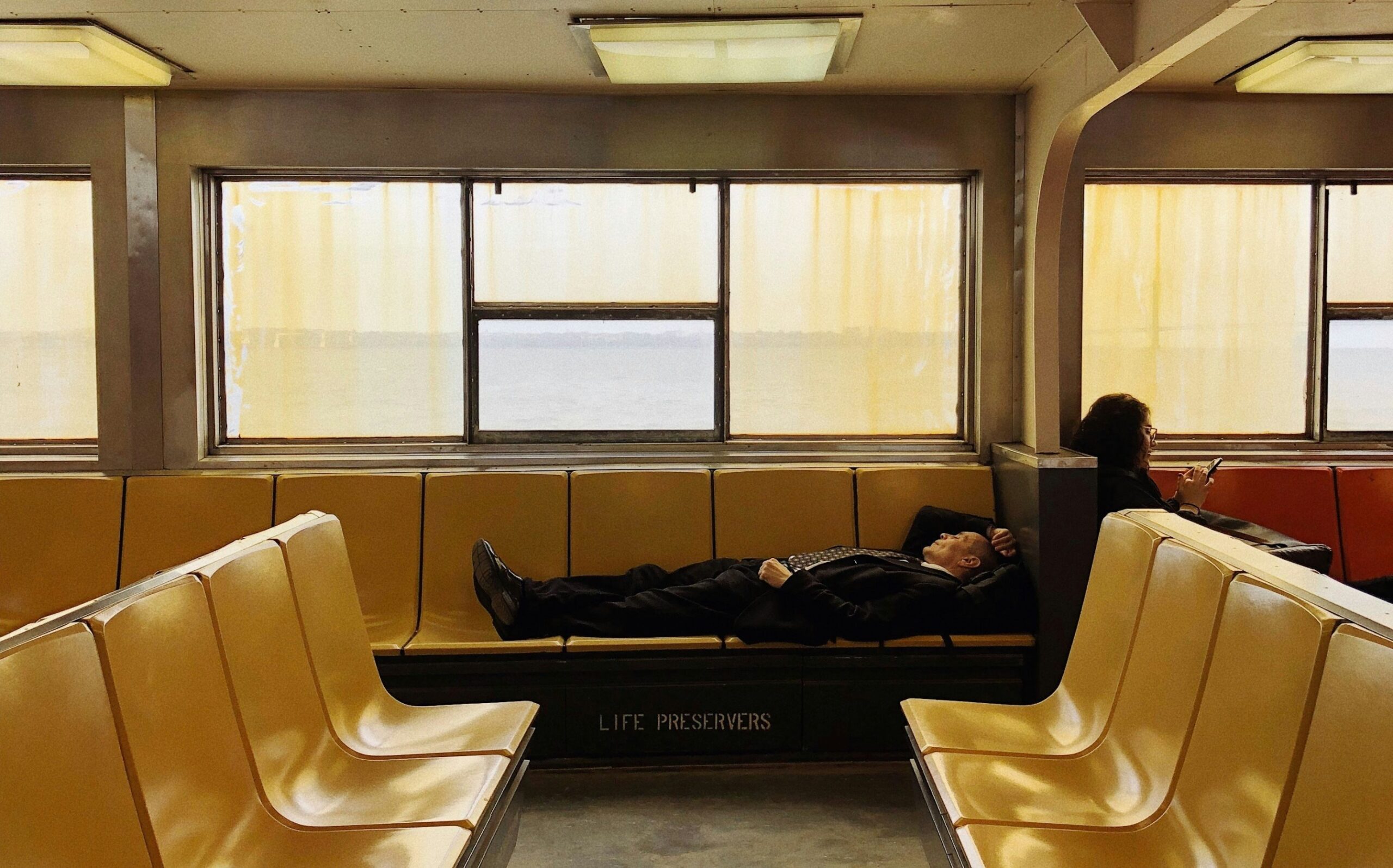
Most people who stay up later than they should don’t think of themselves as sleep-deprived. They’re getting six hours — maybe six and a half — and they feel functional. That gap, roughly 80 minutes fewer than the seven-plus hours physiology requires, is precisely what a new controlled trial from Columbia University studied. Over six weeks, adults who lived with that exact deficit gained an average of one pound and spent significantly more of their waking hours sitting still, according to research published in the Annals of Internal Medicine. The weight gain did not come from eating more. It came from moving less.
That distinction matters because it changes the math of weight management in a way diet discipline alone cannot correct. The study is the first long-duration randomized controlled trial to test realistic, mild sleep curtailment — the kind that looks like normal life, not a laboratory emergency — and to probe the mechanism behind the resulting weight change. The answer it found challenges the conventional assumption that tiredness drives weight gain by making people hungrier. The data say it works the other way: losing an hour and twenty minutes of sleep makes you more sedentary, and the extra sedentary time accumulates into extra pounds.
For the roughly 30.5% of American adults who chronically sleep less than seven hours per night, the finding is not abstract, according to the CDC’s 2024 National Health Interview Survey. It is a description of what is already happening to them — and evidence that encouraging them to eat better or exercise more, without addressing the sleep deficit, may be treating the symptom instead of the cause
Columbia’s Randomized Crossover Design Sets This Trial Apart from Prior Sleep Research
The research team, led by Marie-Pierre St-Onge, professor of nutritional medicine and director of the Center of Excellence for Sleep and Circadian Research at Columbia University Irving Medical Center, pooled data from two related randomized trials involving 95 adults aged 20 and older, as detailed in the Columbia University Irving Medical Center press release. All participants were at elevated risk for cardiovascular and metabolic disease but had not been diagnosed, and all were sleeping at least seven hours per night before the study began.
The design was a randomized crossover: each participant completed both conditions — six weeks of mild sleep restriction and six weeks of adequate sleep — separated by a washout period of four to six weeks. The order of conditions was randomly assigned. This structure means each person served as their own control, eliminating the confounders that plague observational studies of sleep and body weight, a standard advantage of the crossover trial design
In the restricted sleep phase, participants were instructed to delay their normal bedtime by 90 minutes while keeping their usual wake time, reducing total nightly sleep by approximately 78 to 80 minutes on average. Compliance was tracked continuously with wrist-worn actigraph devices and sleep diaries, and researchers adjusted individual schedules when monitoring indicated participants were drifting off protocol, as confirmed by Medscape’s clinical summary of the study
Before and after each six-week phase, the team measured body weight, waist circumference, and body composition using MRI scans. Blood was drawn to measure fasting leptin, ghrelin, and glucagon-like peptide-1 (GLP-1). A subset of participants also underwent total energy expenditure measurement using the doubly-labeled water method — the international gold standard for tracking how many calories a free-living person burns each day without interfering with their normal behavior
What the Numbers Showed After Six Weeks
The results were consistent across the trial. In the restricted-sleep phase, participants gained an average of 0.45 kilograms — roughly one pound — compared with their adequately-rested phase, according to the published Annals of Internal Medicine study. Waist circumference increased by approximately 0.52 centimeters. Whole-body volume on MRI scans rose by 0.56 liters, though the ratio of fat mass to lean mass did not change dramatically, suggesting that the early-stage gain may partly reflect fluid and tissue redistribution before fat accumulation fully registers.
Fasting leptin levels rose by an average of 2.03 nanograms per milliliter during the restricted phase, according to Medscape’s clinical summary. This is consistent with the body gaining fat mass — leptin is produced by fat cells and signals energy sufficiency — but it is not consistent with the appetite-dysregulation hypothesis that dominated earlier sleep research. If the mechanism were hunger-driven overeating, leptin would be expected to fall (signaling energy shortage) and ghrelin to rise (signaling hunger). Instead, ghrelin did not rise significantly, and GLP-1 — another appetite-regulating hormone — showed no significant change. Participants were gaining weight without the hormonal fingerprint of a hunger surge, the study data confirm.
The sedentary behavior data filled in the picture. During the restricted sleep phase, participants spent approximately 17 more minutes per day in low-activity states compared with when they slept adequately — even after adjusting for the fact that they were awake longer, per the Columbia University Irving Medical Center press release. The effect was not uniform: men and postmenopausal women showed the largest increases in sedentary time, approximately 30 additional minutes per day during sleep restriction.
“Even when we accounted for the fact that they were awake longer when sleep was shortened, participants spent more time being inactive than when they got adequate sleep,” said Faris Zuraikat, assistant professor of nutritional medicine at Columbia and first author of the study. “This is notable, as people who are more sedentary have elevated risk for chronic diseases.”
Doubly-Labeled Water Rules Out the ‘Slower Metabolism’ Hypothesis
A common alternative explanation for sleep-related weight gain is that tired people burn fewer calories — that the body runs in a kind of low-power mode when rested less. The Columbia study addressed this directly using the doubly-labeled water method on a subset of participants
The doubly-labeled water technique tracks how the body eliminates water enriched with stable isotopes of hydrogen and oxygen. Because the oxygen isotope is eliminated both through water and through carbon dioxide produced by metabolism, measuring the difference between isotope elimination rates gives a precise picture of total caloric burn over one to three weeks — without placing any restrictions on what participants eat or how they move, according to the Westerterp review in the European Journal of Applied Physiology. The technique has been the gold standard for free-living energy expenditure measurement since it was validated in humans in 1982.
The doubly-labeled water results showed no significant difference in total energy expenditure between the restricted and adequate sleep phases, as the Epocrates clinical summary confirms. People were burning roughly the same number of calories regardless of how much they slept. If metabolism had slowed, this measure would have caught it. It did not. Combined with the absence of a hunger-hormone signal, the data pointed to one remaining explanation: tired adults gained weight because they voluntarily, or semi-voluntarily, moved less during the extra hours they were awake.
Why Counting Calories Won’t Fully Compensate for Lost Sleep
This mechanistic finding has a practical implication that the study’s authors acknowledged and that the literature on sedentary behavior reinforces. Sedentary behavior is an independent cardiometabolic risk factor — distinct from whether or not someone meets exercise guidelines. A person can complete a daily workout and still accumulate enough sitting time over the rest of the day to elevate their metabolic risk. The Columbia data suggest that mild sleep restriction quietly shifts daily behavior toward exactly that: more sitting, less incidental movement, even while awake for longer.
“Our study shows that getting adequate sleep may help reduce the risk of weight gain and obesity-related conditions like heart disease and diabetes,” said St-Onge, according to the Columbia University Irving Medical Center press release. “People tend to gain weight over the course of their adulthood, and obesity is a major risk factor for heart disease. But focusing on eating a healthier diet and getting more physical activity to offset weight gain is simplistic and can be difficult to maintain.”
What the data imply — though St-Onge was careful to say more research is needed — is that sleep should not be treated as a secondary wellness recommendation to be addressed after diet and exercise are optimized. If the inactivity driving weight gain is downstream of the sleep deficit, addressing diet and exercise without addressing sleep may be managing consequences while leaving the cause in place
Dr. Sirimon Reutrakul, an endocrinologist and professor of medicine at the University of Illinois College of Medicine who was not involved in the study, told Time that the results aligned with the existing body of evidence and pointed to the bidirectionality of the relationship. Reutrakul cited a 2022 study in which chronically sleep-deprived people asked to sleep longer over two weeks consumed about 270 fewer calories per day — suggesting that extending sleep reverses some of the behavioral and metabolic drift that restriction causes.
Prior Research Targeted the Wrong Deprivation Level
Much of what researchers knew about sleep and weight gain before this trial came from studies designed very differently. The dominant paradigm restricted participants to four or five hours of sleep — sometimes for fewer than two weeks — and consistently produced sharp rises in ghrelin and increased caloric intake. Those results generated the appetite-focused model that has dominated clinical thinking for decades
But as St-Onge and her team noted, few people sustain truly severe sleep restriction for more than a few days. The people who are chronically underslept in the real world — shift workers, caregivers, parents, heavy smartphone users — are losing one to two hours per night for months or years. No controlled study had previously examined that zone of restriction for long enough to capture its weight effects under realistic conditions
“These studies only show us what happens under the most extreme conditions and don’t tell us if mildly sleep-deprived people, like a lot of Americans who get 5 or 6 hours of sleep a night, will gain weight,” St-Onge said in the Columbia University Irving Medical Center press release. The six-week duration and the 90-minute bedtime delay were chosen specifically to mirror what people actually do
The finding that the mechanism differs between extreme and mild restriction is scientifically important: severe deprivation produces a hunger-hormone response; mild deprivation may not. Instead, mild deprivation appears to produce behavioral drift — the kind of low-grade fatigue that doesn’t feel dramatic but makes a person a little more likely to sit on the couch after dinner instead of washing the dishes, a little less likely to take the stairs
What the Numbers Mean If Extended to a Year
A one-pound gain over six weeks sounds manageable. The Columbia team was direct about why that framing is misleading
“While the one-pound weight gain observed with modest sleep curtailment is not overwhelming, it is important to remember this is occurring over just six weeks,” said Zuraikat, as quoted in the Epocrates clinical summary. “Our study was designed to mimic sleep patterns that most adults experience chronically. When extrapolated to a full year, we would expect that losing less than an hour and a half of sleep per night could result in clinically meaningful weight gain.”
The study tracked a population already at elevated risk for cardiovascular and metabolic disease. For that group — people managing prediabetes, borderline hypertension, or early-stage obesity — a pound per six weeks is not noise. Accumulated over a year, at roughly eight pounds, it crosses into the territory that elevates cardiovascular risk scores and can push someone from prediabetic to diabetic thresholds. Waist circumference gains in the half-centimeter range, over repeated six-week cycles, translate into the kind of abdominal adiposity that carries independent cardiovascular risk beyond what body weight alone captures.
The study’s observation window was six weeks. What happens if sleep restriction continues for months or years remains to be studied. The 95-participant sample, while appropriately sized for a crossover design where each person serves as their own control, is too small to reliably detect differences by age, sex, or metabolic subgroup. The study also enrolled from the New York City metro area between 2016 and 2023, which limits its demographic generalizability. And because participants were at elevated baseline risk, the findings may not apply equally to younger, healthier adults — or to those who are already significantly obese, where the physiological response to sleep restriction may differ, as acknowledged in the published study.
How the Body’s Other Systems Were Affected
The weight and waist findings were accompanied by changes in the cardiovascular system that the Columbia team documented in related parallel research on the same participant cohort. A prior publication found that women in this group who shortened their sleep by approximately 80 minutes per night developed increased insulin resistance — a precursor to type 2 diabetes. A separate paper found that mild sleep restriction was associated with an influx of inflammatory cells in the heart in participants with elevated heart risk.
None of these findings stood alone. Together, they paint a picture of how a common, unremarkable behavior — sleeping until 1 a.m. instead of 11:30 p.m. — activates a cascade of physiological and behavioral changes across multiple organ systems over weeks and months. The weight gain is one of the more easily measured and immediately relatable consequences, but it is not the only one
“Though more research is needed to further understand how sleep restriction leads to weight gain, all of our findings suggest that insufficient sleep increases the risk of obesity-related conditions like type 2 diabetes and heart disease,” St-Onge said, according to the Columbia University Irving Medical Center press release
The study was supported by the American Heart Association and the National Institutes of Health, and the authors reported no conflicts of interest. It was published in the Annals of Internal Medicine on July 7, 2026, with the DOI 10.7326/ANNALS-25-01660
Frequently Asked Questions
Does losing less than two hours of sleep per night actually cause weight gain?
Yes, according to this controlled trial. Participants who reduced their sleep by approximately 80 minutes per night for six weeks gained an average of one pound and showed a measurable increase in waist circumference. The researchers used a randomized crossover design in which each participant completed both the restricted and adequate sleep conditions, meaning individual differences in metabolism or diet were controlled for. The finding is causal, not just a correlation
If I’m not eating more when I’m sleep-deprived, how does weight gain happen?
The Columbia study found that the primary driver of weight gain under mild sleep restriction was increased sedentary behavior — approximately 17 more minutes per day of sitting or low-activity states, and up to 30 additional minutes per day for men and postmenopausal women. The doubly-labeled water method confirmed that total energy expenditure did not significantly change, which ruled out a slower metabolism as the cause. Hunger hormones (ghrelin, GLP-1) also did not show significant changes. The weight gain appears to come from quiet behavioral drift: tired people move less during their waking hours, without necessarily noticing or intending to.
How much sleep do you actually need to avoid this kind of weight gain?
The American Academy of Sleep Medicine recommends at least seven hours of sleep per night for adults, a threshold supported by this trial’s design: participants who maintained their normal sleep of approximately 7.5 hours per night showed no such weight gain. The study did not test whether less restriction — say, losing 30 or 40 minutes per night — also causes measurable weight gain, so the exact minimum cannot be pinpointed from this data alone. What the trial shows is that the amount of sleep many Americans consider normal (around six hours) is not metabolically neutral over a six-week window.
Should sleep be treated as a weight-management strategy alongside diet and exercise?
The study’s findings suggest it should be. If weight gain under mild sleep restriction is driven by behavioral inactivity rather than appetite, then calorie-focused interventions that don’t address the sleep deficit may be correcting the symptom rather than the cause. The prior finding from the same research group — that sleeping longer reduced caloric intake by about 270 calories per day — points in the same direction: improving sleep appears to produce downstream improvements in both appetite regulation and activity levels. Whether sleep extension can be used as a primary weight-management tool in clinical practice is a direction the Columbia team has identified as a priority for future research.
ⓒ 2026 TECHTIMES.com All rights reserved. Do not reproduce without permission
Tags:SleepWeight gainSleep deprivationObesityNIH
