


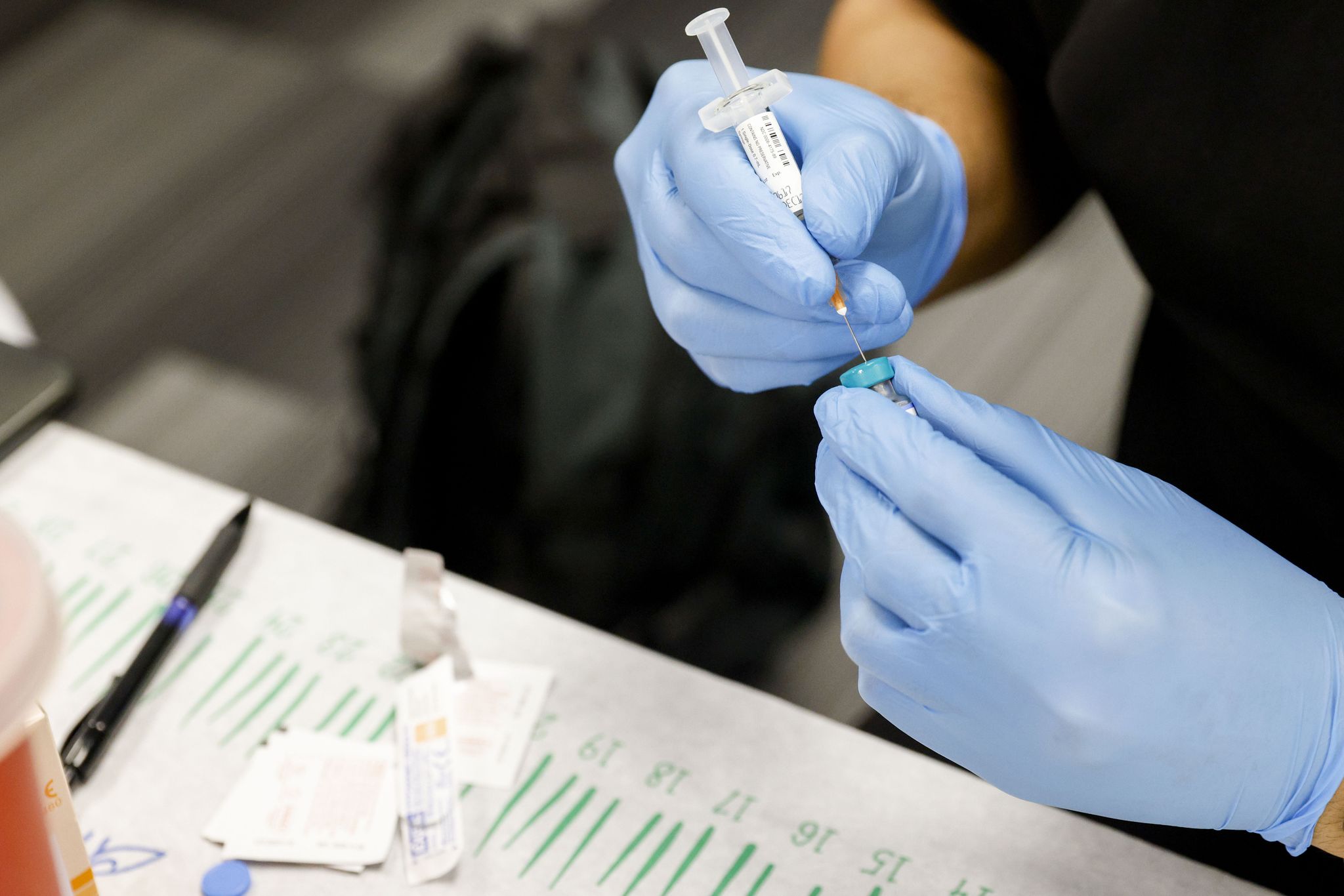
A national measles surge that will almost certainly make 2026 the worst year in decades for the disease is threatening even well-protected regions, where vaccination rates are high, because of the strain on limited resday.
The United States has reported 2,260 measles cases this year as of last Friday, according to the Centers for Disease Control and Prevention. That’s just 25 cases shy of last year’s total count, which was the worst since the 1990s
West Coast states have not seen the same massive outbreaks, in part because communities tend to be well vaccinated. But they are still seeing cases. And with school scheduled to resume in about a month in many places, public health officials are urging families to make sure that their children are up to date on immunizations
Article continues below this ad
They’re also making a plea for more, and more, consistent funding
“Today, right now, we are OK, with zero measles cases,” said Farrell Tobolowsky, deputy director of the communicable disease branch in the San Francisco Department of Public Health. But the city reported its first two measles cases in seven years this year, she said, and just those cases put an enormous strain on the department, because the highly infectious disease requires intensive contact tracing and other re
Make us a Preferred Source to get more of our news when you search.
Add Preferred Source
“I don’t think our department could handle more than one case without more staff,” Tobolowsky said. “We have to think about how to work smart, and that’s why we focus on prevention and making sure our health systems are prepared.”
The U.S. was among the first countries in the world to eliminate measles in 2000, and until recently the infectious disease was rarely seen here. When cases did show up, they were almost always imported from other countries
Article continues below this ad
Now, the country has seen more cases in the past 18 months than in the previous two decades combined, and experts in infectious diseases believe the U.S. will lose its elimination status later this year
Public health experts across the country have blamed the return of measles on falling vaccination rates and fragile government systems that can’t keep up with the disease and prevent cases from becoming outbreaks.
“The key to preventing all kinds of disease is to have a strong, well-funded, well-rerissie Juliano, executive director of the Big Cities Health Coalition, a nonprofit network of public health officials
“Cuts at the federal level lead to less staffing at health departments across the country,” she said. “There aren’t necessarily immediate, direct effects on any one thing, but as they all cumulatively hit different parts of the system, it makes the day-to-day work harder and more complicated and more cost- and time-intensive.”
During Tuesday’s briefing, public health officials in California and Oregon said they have lost funding for community vaccination programs and other prevention efforts, though the effects on public health aren’t yet clear.
Article continues below this ad
“Our infrastructure has been degraded over the last few years,” said Dr. Richard Bruno, the Multnomah County and Tri-County health officer in Oregon. “We have a lot of work to re-buttress ourselves should there be another global pandemic or outbreak of any other infectious diseases.”
Measles can be deadly, and it can cause severe complications such as brain swelling and hearing loss. It is also one of the most infectious diseases in the world, which means it spreads fast and is very hard to contain
That means even a single case can put a large strain on public health. So while communities that are highly vaccinated may not be at risk of major outbreaks, a case or two could disrupt fragile public health systems and have downstream effects, said Tobolowsky
“It is something that we are concerned about all the time and is on our minds all day, every day,” said Tobolowsky. “Not only if there’s another measles case, but if anything comes that’s a high consequence at the same time, it will be difficult to manage two things at once.”
When San Francisco responded to two cases this year, “we set out to interview all exposed persons and determine if they were immune to measles, and this turned out to be hundreds of individuals,” said Tobolowsky. “And this is not unusual for measles.”
Article continues below this ad
Dr. Monika Roy, deputy health officer for Santa Clara County, echoed that managing measles on top of other concerns can put a huge burden on public health. She noted that Santa Clara County managed a measles case during the World Cup, which meant public health officials had to work fast to prevent spread at multiple large gatherings
The fact that they prevented it from turning into an outbreak speaks to the region’s high vaccination rates, she said. “When there are introductions of measles, we tend to see smaller outbreaks or less spread than we’re seeing in other areas of the United States. That’s proved to be a very big advantage.”
Still, Roy said, “we’re not just dealing with measles.”
“In the past four months we’ve had a large Legionnaires’ disease outbreak, we had World Cup preparedness, the Andes hantavirus, and of course the cyclosporiasis that’s on everyone’s minds,” she said. “We provide an invisible shield to the public.”
Article continues below this ad
