


More protein or less? The foods to get you through a heatwave
15 hours ago

Getty
As temperatures exceed 30C (86F) in some parts of the UK this week, the last thing people want to do is turn on the oven
Not only can cooking in hot weather feel like a chore, but many of us find ourselves feeling less hungry altogether
So when the heat gets too much, should we consider changing our diet?
Here are three things to think about next time you’re hot and hungry
1. Don’t sweat over protein intake

Arx0nt
“There’s no need for more protein in a heatwave,” says Aisling Daly, senior lecturer in nutrition at Oxford Brookes University
But if you fancy it, some of the most common proteins will need cooking (like meat, chicken and fish) and that can be off-putting in the heat. Even an outdoor BBQ can be too hot to handle
Enter the air fryer. Cooking a chicken leg in the worktop device uses less than half the energy of a conventional oven, according to Radio 4’s Sliced Bread. And because they are smaller and speedier, they also pump less heat into your kitchen
But experts say don’t forget about your slightly less fashionable slow cooker – likely buried in the back of your cupboard. Even though they run for longer, they’re typically more energy efficient and release even less heat than the air fryer
The reality, though, is that simply by eating and digesting protein, our bodies produce more heat than other food groups
That’s due to the energy needed by the stomach, intestines and liver to break down and absorb these complex molecules
So that steak you crave will only bring you out in a sweat
But you can also get your protein from lentils, nuts, milk, tofu and cheese too
To reduce body heat while still getting your protein fix, Dr Daly recommends focusing on things like bean salads, eggs, pre-cooked meats and plenty of Greek yoghurt (frozen too)
Making a smoothie by blending up fruit, veg and yogurt (while adding in peanut butter for protein) can provide a balanced, nutritious meal in an easy way
And it might also be time to turn to some lighter fish, such as tuna, salmon or prawns
2. Eat your water
When it’s hot, we lose water when we sweat, so we need to replace it or we become dehydrated
Six to eight glasses of fluid a day is normally recommended by the NHS, and in a heatwave you could need a lot more
“There is no single amount that suits everyone, because how much fluid your body needs depends on lots of factors like your age, body size, activity levels and health status,” says Dr Charlotte Mills, food and nutrition scientist at the University of Reading
World Cup footballers aren’t the only ones who benefit from hydration breaks: other athletes and pregnant and breastfeeding women are among those who need to drink more
But rehydrating doesn’t just mean refilling your water bottle every couple of hours
“We need to eat our water as well as drink it,” says Dr Daly, “80-90% of fruit and vegetables are full of water.”
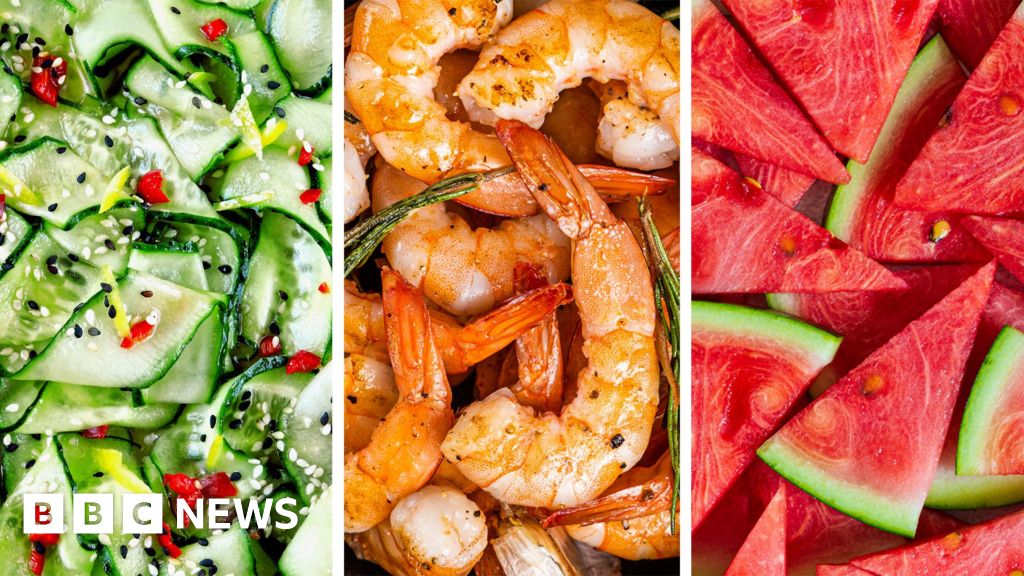
Cucumber, tomatoes, lettuce, celery, watermelon and strawberries all have very high water content, above 90%
Apples, carrots, cooked broccoli and pears contain 80% to 89% water, as do oranges, grapes and pineapple
In comparison, boiled eggs are 75% water,with digestive biscuits only 2.8% water. Even a cheese and tomato pizza is 38% water, with takeaway chips containing as much as 51%
If your mouth has dried up just reading this, try some of these water-rich recipes
A useful way to check if you’re hydrated is to check the colour of your urine
Pale yellow is what you’re after
If it’s orangey or dark brown, that’s a sign that your kidneys – which filter waste products and produce urine – are holding onto water because there isn’t enough in the body
That means you’re dehydrated and need to drink more
3. Yes, hot drinks can cool you down

Gary Yeowell
We know some people love a cuppa, even when it’s sweltering, and that actually makes scientific sense
Warm or room-temperature drinks are just as good as cold ones for cooling you down, says Dr Daly
Research suggests your body sweats more quickly to get rid of the excess heat after a hot drink. After a cold drink, your body sweats more slowly. Your body is trying to keep your core temperature steady at about 37 degrees celsius
So hot tea won’t necessarily help you cool down more quickly – the key thing is to stay hydrated no matter the temperature of the liquid
You don’t need to shun your favourite coffee either just because it’s hot – although too much caffeine can make the body produce more urine, and leave you dehydrated
For matcha fans, the drink contains more caffeine than a cup of tea but less than a regular coffee
Dr Daly says one or two coffees a day should make little difference to your hydration levels – but five or six will start to have an effect. Bear in mind that drinking alcohol also dehydrates
You could structure your day differently too, and take a southern European approach to eating. Have an early breakfast, an afternoon siesta while it’s very hot and then a late dinner. Bon appetit

Get our flagship newsletter with all the headlines you need to start the day. Sign up here
How to cope in a heatwave – according to you
What does hot weather do to the body?
Amber heat-health alerts issued as UK could see 10 consecutive days of temperatures over 30C
Health
Diet & nutrition
