


For families of children with rare diseases, the search for answers can be lonely, desperate and frustrating. Such is the case with pulmonary hypertension
Defined as high blood pressure in the lungs, PH forces the heart to work too hard. It has many causes, is incurable and can develop at any age. While it’s difficult to calculate the number of cases of pediatric PH, particularly for those with genetic causes, its rarity does not diminish its devastating impact

Now families are one step closer to answers, thanks to a genetic study designed by Ripla Arora, associate professor in the MSU College of Human Medicine’s Department of Obstetrics, Gynecology and Reproductive Biology
The findings were published June 6 in the peer-reviewed biomedical research journal JCI Insight
Arora and her team of MSU researchers partnered with a team from the Stanford University School of Medicine to examine the role of the second most-common genetic cause of pediatric PH — loss of function of the TBX4 gene
“TBX4 normally plays an important role in early lung development,” Arora said. “When TBX4 doesn’t function properly, cells in the lung do not mature correctly and lung development is severely affected. This results in lung disease which is fatal at birth or pulmonary arterial hypertension in neonates and children. We don’t fully understand how the absence of TBX4 causes lung disease or PH, which is why we developed a model that we can use to better understand these diseases.”
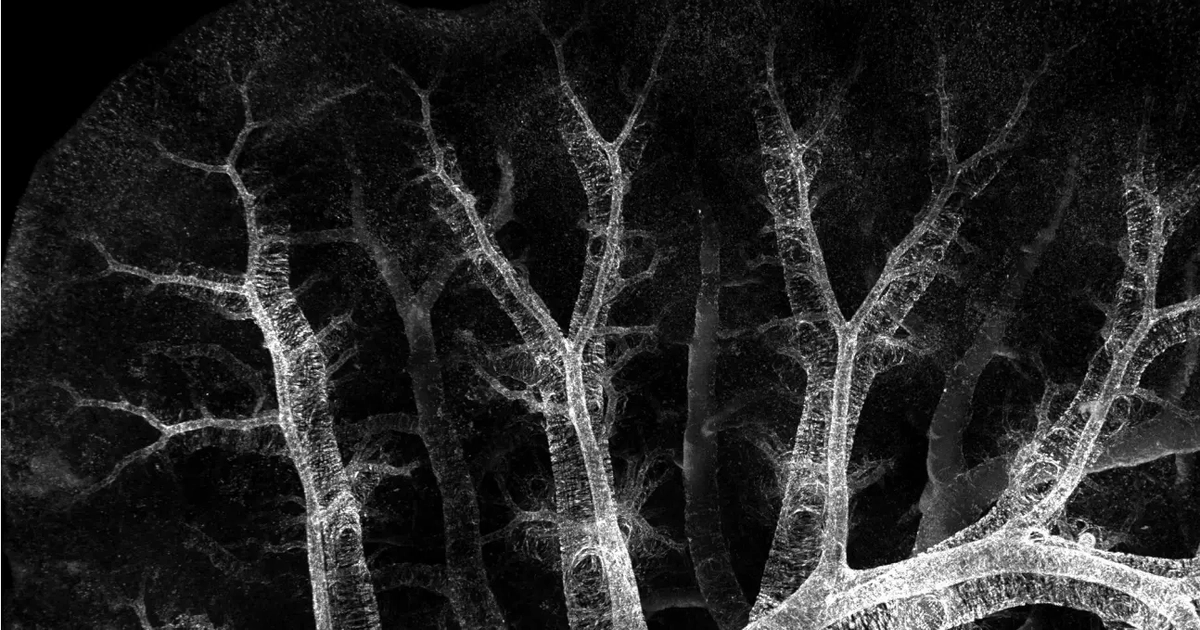
This model used mice and, for the first time, 3D imaging to evaluate lung development when the TBX4 gene was removed, along with a closely related gene, TBX5. The researchers found that, without the genetic instruction for proteins, excess smooth muscle developed around large and small vessels, contributing to high blood pressure in the lungs
But the 3D views also showed something else: extra smooth muscle in and around the lung space
“That tells us that these proteins are very, very instrumental in setting up the lung plan. One of their main roles is to stop smooth muscle from forming,” Arora said. “You need enough smooth muscle to cover the bronchi and the airways and the larger blood vessels. You cannot have excess and extra smooth muscle.”
“Which is actually good to know, because then you can intervene,” Arora said. “If you can find out how TBX4 prevents muscle formation, then you can try to provide that information to the lungs in children so that at minimum — I always say conservatively — we can slow down the muscle formation. And in an ideal world, we completely stop the process of extra muscle formation.”
That real-world possibility was part of the motivation for this study. A connection with families dealing with TBX4 inspired Arora to revisit research she conducted years ago as a Ph.D. student
At that time, TBX4 was known primarily for its influence on the hips and lower-limb development. TBX5 had been identified for its role in heart and forelimb development. Arora’s research, published in a 2012 manuscript, detailed the role of both in lung development
Over the next decade, Arora moved on to other research topics, including reproductive and uterine biology. Then she connected with TBX4Life, founded by Anton Morkin, a father determined to find answers for why children like his son suffer from PH caused by TBX4 mutations
“This is a very common challenge, the frustration for rare-disease kids, because it takes a while to figure out what’s wrong,” Arora said. “And once you figure it out, the purpose of forming such an organization is to get people together, because there are only a handful of cases known. As scientists, we need data.”
In addition to providing a community for parents, TBX4Life brings together scientists and shares information with pediatricians, such as promoting awareness that subtle malformations in the feet can be a telltale sign of PH caused by TBX4 mutation
“Everybody is driven by a common cause for the children,” she said. “I think awareness, that’s how rare diseases get solved, by people coming together and spreading awareness amongst the clinicians, the scientists and the families. I believe that it is impossible to solve anything alone.”
The next steps will be the hardest piece of the TBX4 puzzle, Arora said. In addition to exploring ways to help improve the lives of children surviving with PH, “I want to know what is happening with those who don’t make it, the ones with fatal lung disease” she said
“That’s the fetal biology I want to study. Can we understand that better? Can we either slow it down or come up with methods of diagnostics before the child is born? That is truly my focus right now.”
The progress in understanding one of the causes of PH illustrates the essential role of basic science, including the conservative use of animal models, in developing treatments and cures, Arora said. AI tools and cellular models can only build on information that has been proven in the lab
“The type of research we do helps to lay a foundation of scientific knowledge years before treatments for these diseases exist,” she said. “Our research is critical for discovering how and why genetic mutations can cause illnesses so we can eventually learn how to prevent or treat them.”
Authors of the study include Kaylie Chiles from Michigan State University, Csaba Galambos from University of Colorado, Lea Steffes and Maya Kumar from Stanford University
This story originally appeared on theCollege of Human Medicine website
