


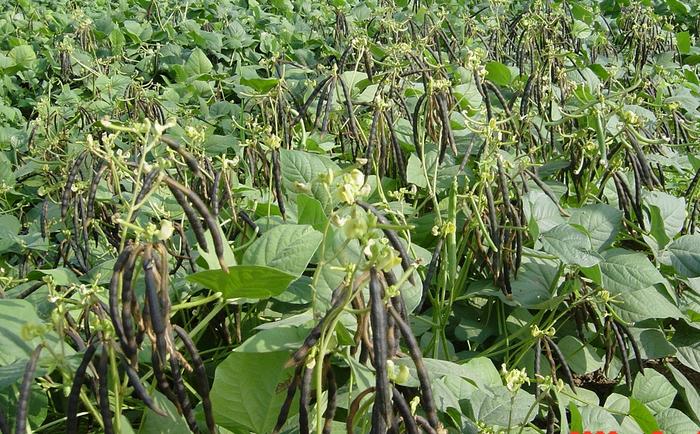
Because Mung beans (Vigna radiata) are nutritious, inexpensive, have nitrogen-fixing capacity, and are relatively easy to grow with a short growing cycle, they are an important crop for food security in many parts of Asia, Africa, and other regions. Now, researchers have made a significant contribution to a landmark international study that has uncovered tens of thousands of previously hidden structural variations influencing yield, nutritional quality, insect resistance, and other relevant mung bean traits.
The study entitled, “Graph-based pan-genome reveals structural variations associated with agronomic traits in mung bean,” published in Nature Genetics, presents the world’s first graph-based pan-genome for the pulse crop (a legume grown specifically for its dry edible seeds) offering a comprehensive reand accelerating crop improvement
The international research team, co-led by researchers at the Chinese Academy of Agricultural Sciences and Murdoch University’s Centre for Crop and Food Innovation (CCFI), assembled chromosome-scale genomes from genetically diverse mung bean accessions and analyzed genomic variation across 580 global accessions. The resulting graph-based pan-genome captures more than 75,000 gene families and identifies over 66,000 structural variants, offering important insights that will help breeders target key agronomic traits and accelerate crop improvement.
More specifically, the authors note that, “integrating these structural variants and single nucleotide polymorphisms, genome-wide association studies across five environments identified candidate genes for 20 agronomic traits, underscoring the pivotal roles of these variants in driving mung bean domestication and improvement.”
Mechanistically, they add, the work demonstrates that “a 68-bp promoter insertion in VrTIFY6B and a 136-bp promoter deletion in VrPGIP1 regulate flavonoid content and confer bruchid resistance, respectively.”
In Australia, mung bean generates over $100 million annually in export revenue. At roughly three times the price of wheat, it represents a highly profitable break crop opportunity for Australian growers; however, seasonal rainfall variability continues to drive significant year-to-year swings in the size and value of the crop
Globally, where mung bean underpins the diets and incomes of millions of smallholder farmers across Asia and Africa, the study’s findings on genes governing seed nutritional compounds and resistance to bruchids, a major storage pest, have direct implications for global food security
Rajeev Varshney FRS FAA, CCFI director, said the research represents a major advance in crop genomics and demonstrates how next-generation genomic technologies are transforming plant breeding. “Traditional reference genomes capture only part of the genetic diversity within a crop species. By constructing a graph-based pan-genome, we can now identify structural variations that were previously invisible but often have profound effects on important agricultural traits
“These discoveries provide breeders with powerful new genomic tools to accelerate the development of higher-yielding, more nutritious and climate-resilient mung bean varieties,” Varshney continues. “The genomic rereeding, genomic selection and genome editing, enabling breeders to deliver improved varieties to farmers much faster.”
News
Previous articleImmune Evasion Uncovered by Virome-Wide Ubiquitin Ligase Discovery
