


Briefs|Global
New Canadian Study Links Judicial Well-Being to Workload, Safety, and Court Resources
Judicature International (2026) | An online-only publication
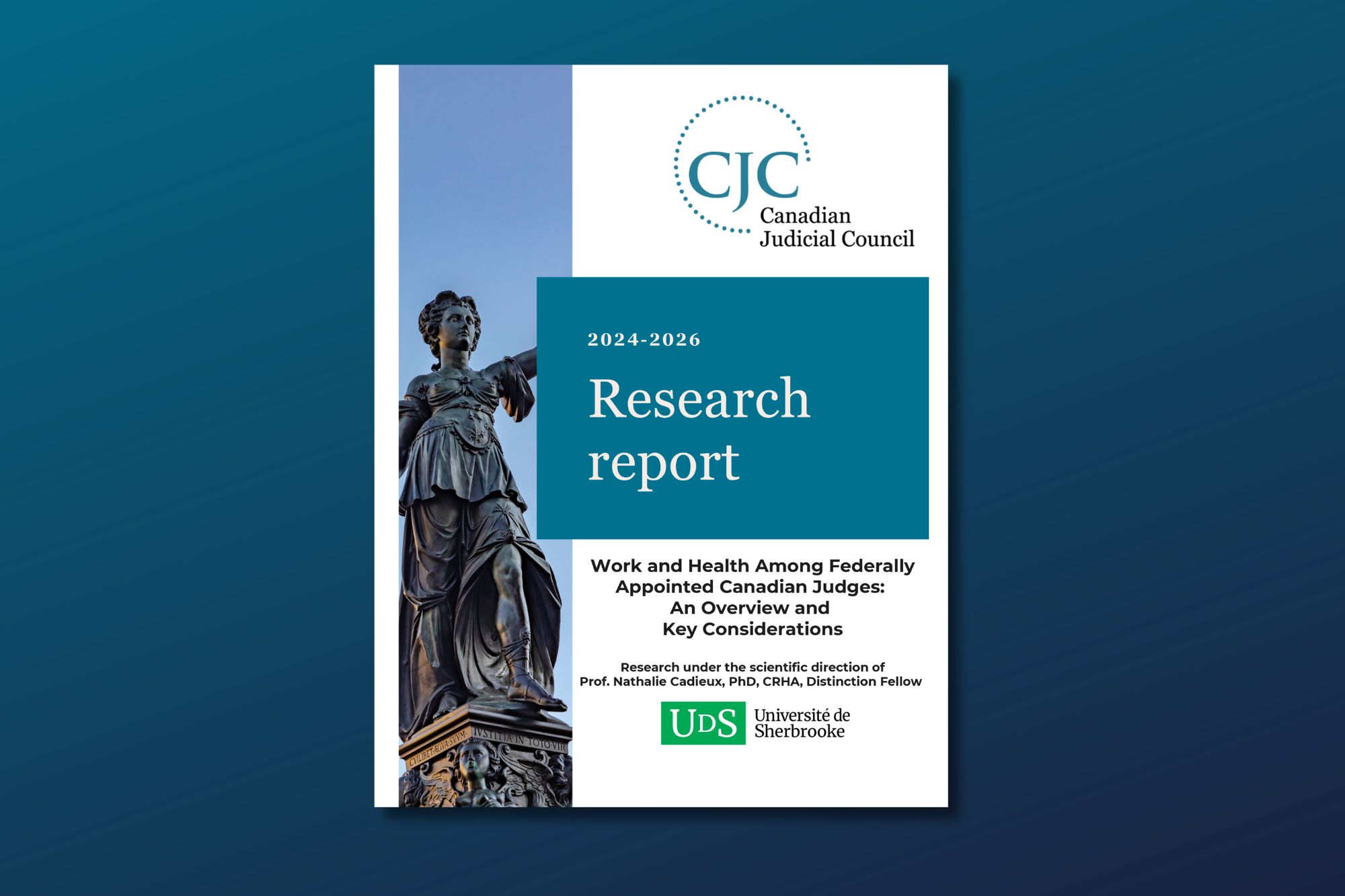
A national study of Canada’s federally appointed judges offers a detailed look at the pressures of judicial work — and the institutional changes that may help address them
While judges often describe their work as deeply meaningful and grounded in a strong sense of mission, they also face serious stressors, including heavy caseloads, disgruntled litigants, and even threats to their physical safety. A new report commissioned by the Canadian Judicial Council uses extensive survey and interview data to examine how those dueling realities shape the health and well-being of Canada’s federally appointed judges
Prepared by researchers at the Université de Sherbrooke, Work and Health Among Federally Appointed Canadian Judges draws on interviews and survey responses from more than 65% of Canada’s federally appointed judiciary. The study considers judges’ physical and psychological health as well as workplace conditions in relation to job satisfaction, burnout, and thoughts of leaving the judiciary or retiring early
Several of the report’s findings may be of particular interest to Judicature International readers. The study identifies pressures familiar across many demanding professions — including long hours, work-life conflict, limited administrative support, information overload, and difficulty disconnecting from work. But it also includes challenges more closely tied to the judicial role — particularly the demands associated with self-represented litigants and concerns about personal safety, both of which are highlighted in this article.
Just as importantly, the report shows how these pressures overlap and reinforce one another. By tracing those relationships through statistical analysis, the authors identify reforms that could have compounding benefits. For example, providing better legal information rece and outcomes while also easing demands on judges and supporting a healthier work-life balance
The pressures of self-represented litigation
The report examines the downstream effects of cases involving self-represented litigants, which judges described as especially demanding. Common challenges included incomplete or improperly prepared documents, filings with extraneous material, and proceedings that required judges to balance impartiality with the need to offer procedural guidance
Those demands were associated with heavier workloads, information overload, longer hours, greater emotional strain, and increased decision-making pressure — and with notably higher rates of burnout. Among judges experiencing high pressure related to self-represented litigants, 50.9% reported burnout, compared with 21.4% of judges experiencing lower pressure
According to the authors, these findings illustrate how a challenge that may first appear procedural can affect many dimensions of judicial work. Difficulties associated with self-represented litigation can increase the time and information required to resolve cases, intensify the emotional demands of proceedings, and contribute to broader concerns about workload and well-being
Safety as a component of judicial well-being
Discussions of judicial well-being often focus on stress management, mental health reon of judicial safety especially noteworthy. The findings suggest that judicial security is not simply a matter of physical protection but a fundamental workplace condition that influences judges’ psychological well-being and ability to perform their work
Nearly half of participating judges reported a weak sense of safety at work, while 44% reported a weak sense of safety outside work. Concerns outside the courthouse included the possibility of retaliation or threats against judges or their families stemming from judicial decisions
The findings also reflect differences in judicial responsibilities and experience. Trial-level judges, who generally interact more directly with litigants, witnesses, and members of the public, reported feeling less safe at work than appellate judges. Female judges also reported lower levels of perceived safety than their male colleagues
A weak sense of safety was also associated with poorer psychological outcomes. Among judges reporting a weak sense of safety at work, 54.3% experienced symptoms of burnout, compared with 36.6% of judges who reported a strong sense of safety
These correlations support a broader understanding of judicial security: Safety measures do more than protect courthouses and the people inside them. They may also affect judges’ ability to perform their work without persistent anxiety about confrontation, retaliation, or harm to themselves and their families
Building on research to support reform
The Canadian report places its findings within a substantial and increasingly international body of research on judicial stress and well-being, drawing on studies from Australia, Europe, and the United States. Among the works cited are two articles published in Judicature: “An Examination of Outcomes Predicted by the Model of Judicial Stress,” which considers how stress, resilience, and personal and professional resources interact, and “The State of Judges’ Well-Being: A Report on the 2019 National Judicial Stress and Resiliency Survey,” which reports findings from a national survey of U.S. judges about workplace stressors that impair judicial performance.
As a major study in that growing international body of research, the Canadian report shows how workplace conditions affect not only judges’ health but also their willingness to remain on the bench. Its recommendations — including reducing workload, strengthening administrative support, expanding mental health resources, improving assistance for self-represented litigants, and enhancing judicial security — offer practical avenues for supporting judges and the effective administration of justice.
Links to the Study:
