


Loading article
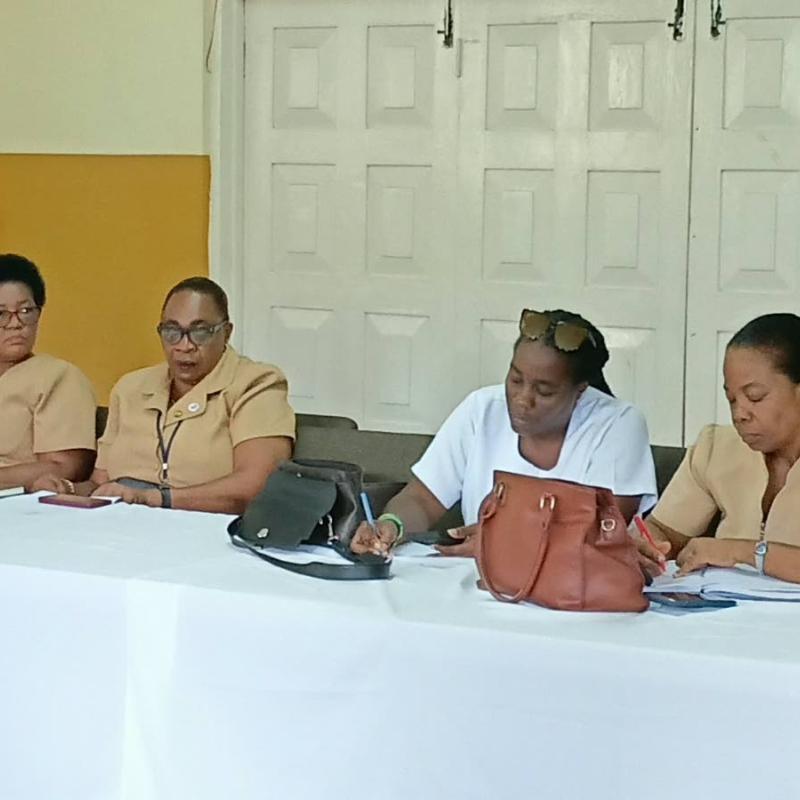
- Healthcare providers take notes during the Western Regional Health Authority’s Family Health Review at the Burchell Baptist Church Hall in Montego Bay on August 20.
- Medical practitioners and public health nurses of the Western Regional Health Authority listen attentively during one of the sessions.
- Nadine Simmonds-Lewis, regional nutritionist at the WRHA.
Nadine Simmonds-Lewis, the regional nutritionist at the Western Regional Health Authority (WRHA), said a review by the entity has found that pregnant women who received nutrition counselling were more than twice as likely to show positive changes in their haemoglobin levels, and as a result, she is calling for more nutrition intervention
“Our nutrition diagnosis in most of the cases points to the fact that these patients are not taking in sufficient foods that are high in iron,” Simmonds Lewis, told medical practitioners and public health nurses at the WRHA’s Family Health Review held at the Burchell Memorial Baptist Church Hall in Montego Bay on Thursday
“Hence, we realise that this is usually related to food and nutrition knowledge deficit, meaning they just do not understand. They just do not know what to eat, how to eat, how to do the mixes, that was the most frequent thing that we found
“So, the key findings from this review was that of the persons who received nutrition counselling, 69.4 per cent of those clients (pregnant women) actually had changes in their repeat HB, when compared with 31.6 per cent of those who did not receive nutritional counselling,” she added
Simmonds-Lewis further noted that the findings demonstrate the potential impact of structured nutrition counselling in helping pregnant women address anaemia, particularly where poor iron intake is linked to limited knowledge about nutrition rather than simply inadequate access to food
She said nutritionists assess patients’ dietary histories and provide guidance on the six food groups, iron-rich foods and combinations that can enhance the absorption of nutrients, while also explaining which foods can inhibit absorption
The counselling also includes reinforcing the importance of taking prescribed iron and folic acid supplements, an area in which some pregnant women struggle with adherence
Simmonds-Lewis also noted that the intervention is particularly important because pregnancy increases nutritional demands, making adequate iron intake critical to maintaining healthy haemoglobin levels
However, she said limited staffing is restricting the WRHA’s ability to provide regular nutrition services at all antenatal clinics across the region but that the authority has submitted a proposal for additional nutrition staff, which she hopes will allow for greater coverage and more consistent monitoring of pregnant women
Despite the staffing challenges, she said the audit provides evidence that nutrition intervention can make a meaningful difference
“Nutrition counseling appears to matter. We see that there was an impact, or there can be an impact from nutrition intervention for our clients with anemia … nutrition counseling is a practical, non-pharmacologic strategy to support healthier pregnancies,” she added
albert.ferguson@gleanerjm.com
