


Raising “fur babies” has spawned a brand new industry track.
As more and more young people are obsessed with moxibustion, tuina massage and herbal foot soaks, the trend of “traditional Chinese wellness” has also spread to the pet-keeping community
Industry data released during the 2026 Asia Pet Show shows that about 20 million dogs and cats in China have entered their senior years, with a prevalence rate of 60%. Beyond aging, chronic diseases, post-surgery recovery, and recurring gastrointestinal and joint problems have led many pet owners to realize that one medical check-up or one course of medication does not necessarily mean the end of health issues
As a result, demand for services that fall between curative treatment and daily care has been on the rise. Consequently, previously niche traditional Chinese pet wellness programs such as acupuncture, moxibustion, and herbal conditioning have entered the view of more pet owners, providing an alternative long-term management approach for pets with chronic diseases, senior pets, and even pets in the recovery stage beyond conventional treatment
Pet Health Spawns a “Long Tail Market”
On the surface, the popularity of traditional Chinese pet wellness can easily be interpreted as a consumer trend “migrating” from pet owners to their pets. But many people who pay for traditional Chinese pet wellness are not driven by curiosity; instead, they start looking for new solutions after their pets develop recurring, complex, or long-term health problems that require ongoing management
In 2023, Zhou Miao’s dog “Iron Man” developed severe gastrointestinal problems. “At first, we highly suspected IBD (Inflammatory Bowel Disease), and later it progressed to the stage of protein loss. I visited several pet hospitals in Beijing, including the China Agricultural University Veterinary Teaching Hospital, and the treatment ideas were similar, but the pet’s condition never improved significantly. During the Spring Festival, I accidentally learned that some doctors use traditional Chinese conditioning methods for long-term care, so I made an appointment with the thought of ‘giving it one more try’.”
*Xiaohongshu note shared by Zhou Miao
The first time he walked into the consultation room, Zhou Miao experienced the traditional diagnostic method of “observing, listening, inquiring, and pulse-taking”. According to his recollection, the doctor did not immediately prescribe medicine. Instead, he first took the pulse on “Iron Man”‘s leg, then observed its tongue, eyes and mental state, and asked about the onset time of the illness, previous examinations, as well as daily defecation and diet. The examination reports accumulated over the past few months were also reviewed item by item. For Zhou Miao, this process of combining examination results with the pet’s daily status gave him a very different experience from previous visits, as he was exposed to traditional Chinese care for the first time.
According to Zhou Miao, the care plan given by the doctor was mainly based on Chinese patent medicine and dietary therapy. On the second day of taking the medicine, “Iron Man”, which had been suffering from persistent watery diarrhea, gradually began to form normal stools, and its mental state and appetite also recovered. This was the first time such a change had occurred since it got sick, and it was an important reason why Zhou Miao was willing to continue trying. After nearly a year of follow-up visits, observation and medication adjustment, the diarrhea problem of the dog “Iron Man” was finally stably controlled.
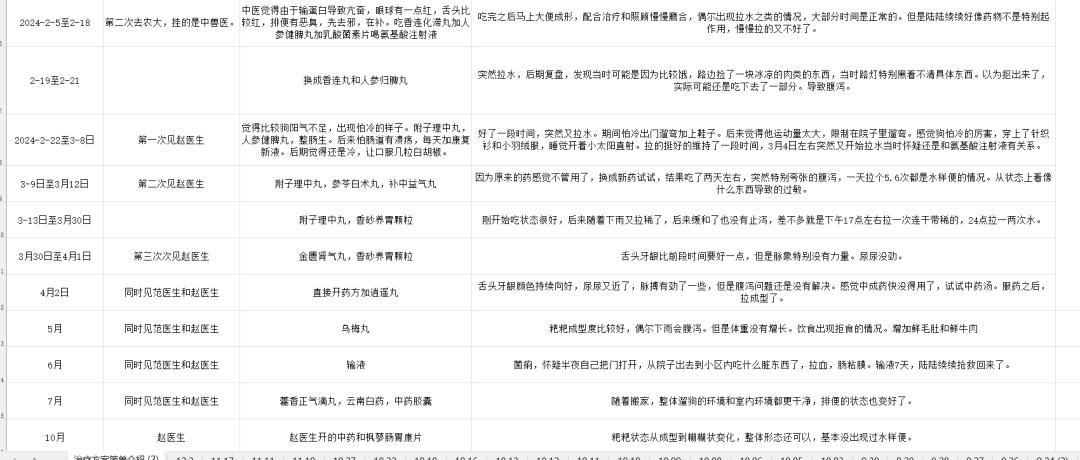
*Consultation record of “Iron Man” (provided by Zhou Miao)
Xiao Yan, who also works in Beijing, first learned about traditional Chinese pet wellness from the sharing of other pet owners around her. “My pet is not very old. At first, it just had a poor appetite and was prone to loose stools. When I was visiting the China Agricultural University Veterinary Teaching Hospital, I kept hearing other pet owners talk about their experiences with acupuncture, herbal conditioning, and rehabilitation for senior dogs, and then I took the initiative to learn more about it. I don’t think all problems are suitable for traditional Chinese care, and emergencies should still be prioritized, but if it is not a problem that needs immediate treatment, I am willing to take it as a long-term conditioning option.”
Zhou Miao and Xiao Yan have different pet situations and different opportunities to get in touch with traditional Chinese pet wellness, but their choices have one thing in common: what they are looking for is not necessarily a way to replace traditional diagnosis and treatment, but a way to continue to participate in daily recovery and long-term care after their pets have received medical treatment and examinations
This also explains why traditional Chinese pet wellness has gradually entered the view of more pet owners in recent years. Traditional pet hospitals are best at dealing with problems with clear diagnosis and treatment nodes – examination, diagnosis, medication, surgery, and their business models are also built on successive diagnosis and treatment behaviors
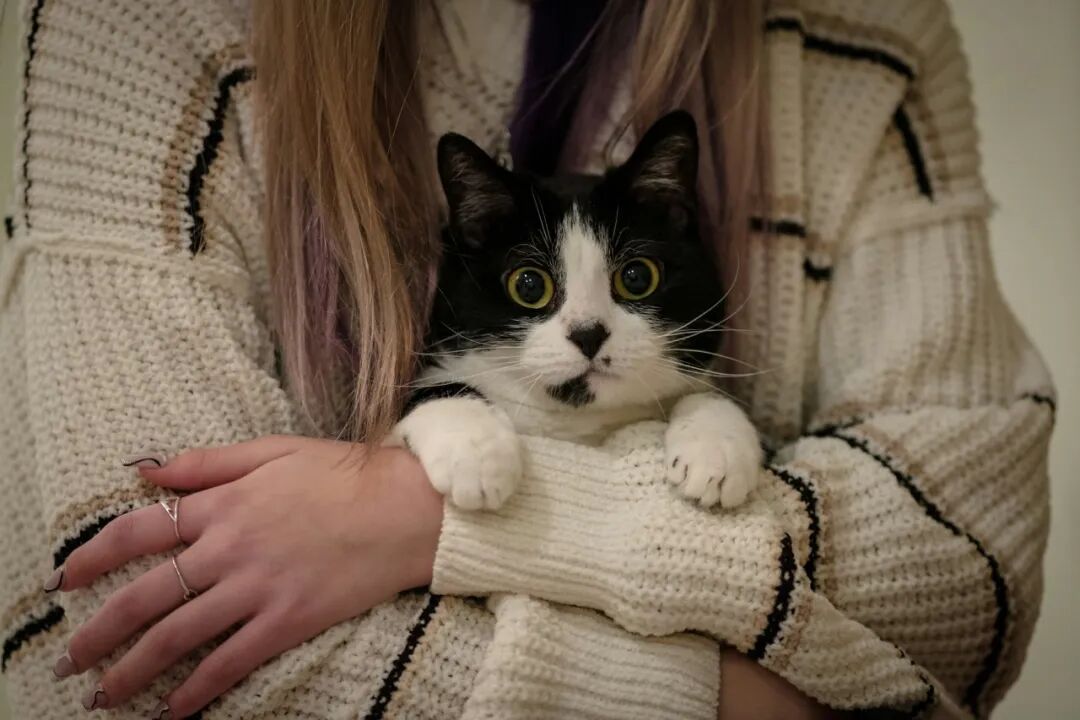
However, as the companion period of pets extends, more and more demands arise outside the hospital: chronic problems may last for several years, post-surgery rehabilitation takes weeks or even months, and the joint, digestion, weight and mental state of senior pets require repeated observation. These demands are difficult to be solved at one time and require continuous investment of time and money. It is this highly vertical and segmented market demand that gives traditional Chinese pet wellness room to survive.
There is certainly emotional value in this as well. Pets cannot describe pain, nor can they tell their owners “whether they are feeling any better”. Especially as the course of the disease lengthens, the uncertainty faced by the owner also increases. At this time, the fact that “there is still another way to try” is attractive in itself. What traditional Chinese pet wellness provides is not only services, but also a kind of hard-to-quantify psychological comfort: in the face of an animal that cannot express itself, the owner at least feels that they are still continuously doing something.
What Is More Expensive Than Price Is “Trust”
For many pet owners, when they take their pets to the hospital, the first thing they often feel is not the complex diagnosis and treatment logic, but the bill
In the report *Harvested by Pet Insurance, Pet Owners Learn Another Lesson*, Jingzhe Research Institute mentioned that due to the high procurement cost of some medical equipment and pet drugs, plus the limited degree of chain operation and large-scale development of the industry, individual hospitals cannot further dilute operating costs, so the price of pet medical care has remained at a relatively high level for a long time
Zhou Miao has deep feelings about this. “When ‘Iron Man’ first developed health problems, the examinations and treatment for more than a week cost nearly ten thousand yuan. Because I had to constantly confirm the condition through examinations, plus the veterinary drug approval system leads to fewer available drugs at high prices, and many western medicines have side effects that require repeated examinations and observations. In contrast, traditional Chinese care mostly adopts a phased adjustment approach.”
Zhou Miao told Jingzhe Research Institute that at the beginning, a dose of medicine cost about 50 yuan, and after taking two or three doses, the prescription would be adjusted according to the situation. Later, in order to improve palatability, the medicine was made into capsules, which only cost a few hundred yuan a month. When the condition stabilized, combined with Chinese patent medicine and dietary therapy, the monthly expenditure could even be reduced to dozens of yuan
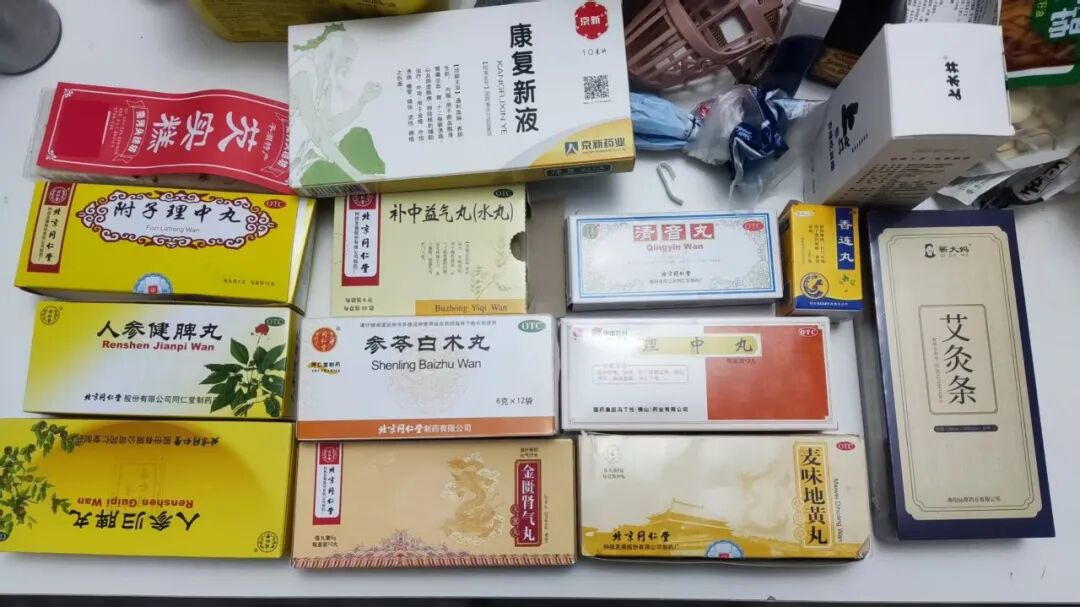
*Part of the Chinese patent medicines recommended by the doctor (provided by Zhou Miao)
Xiao Yan has a similar experience. She previously spent nearly 20,000 yuan on a series of examinations for her pet at the China Agricultural University Veterinary Teaching Hospital, but did not find a satisfactory solution. Later, on the doctor’s advice, she tried traditional Chinese conditioning, and part of the cost of the medicine was only dozens of yuan. The obvious gap in prices before and after made her intuitively feel the long-term cost advantage of traditional Chinese pet wellness
However, Xiao Yan also emphasized that price is not the only criterion for her choice. “The most important thing is whether the doctor is reliable.” In her opinion, if the same conditioning idea is given to different practitioners, the effect and final cost may vary greatly
From the experiences of the two, what attracts some consumers to traditional Chinese pet wellness is not only the “effect”, but also that it provides a relatively affordable consumption method that is easy to bear in the long run. But low cost is not the core of the long-termnt is still the issue of trust
On the one hand, the effect of traditional Chinese care is not as easy to quantify as blood tests and imaging examinations. Most of the time, it is judged by changes in the pet’s mental state, appetite, defecation and activity ability. Pets cannot directly express their physical feelings, so doctors also need to make judgments based on the owner’s long-term observation during consultations. As a result, the effect evaluation naturally has a certain degree of subjectivity. Zhou Miao described it as a bit like “medicine for the mute”, which not only tests the doctor, but also tests whether the pet owner is careful and cooperative enough.
On the other hand, the supply of professional talents is still limited. Traditional Chinese pet wellness is not simply to transplant human acupuncture and herbal conditioning to animals, but requires practitioners to understand animal anatomy, physiology, disease diagnosis and related care methods at the same time. The Chinese Veterinary Medical Association has previously pointed out that there is still a shortage of talents in China’s pet diagnosis and treatment industry. Further segmented into the direction of traditional Chinese veterinary medicine, there are still a small number of colleges and universities offering relevant undergraduate majors. Talents who are proficient in both small animal clinical diagnosis and treatment and have relevant care experience have a longer training cycle and are more difficult to make up in a short time.
The demand is growing faster than the professional supply, which also leaves a gray area in the market. For institutions that are good at marketing and packaging, it is difficult for consumers to judge the professional level of service personnel, as well as whether the project is necessary and whether it is really effective. Because of this, Zhou Miao and Xiao Yan repeatedly emphasized the same thing – the final experience largely depends on “the doctor”
This also means that the key to the future development of traditional Chinese pet wellness is not to continue to amplify the concept of “traditional Chinese”, but to solve the problems of professionalism and trust
The “Slow Business” Also Has Great Potential
When the effect is difficult to standardize and professional ability is highly dependent on individuals, the business model of traditional Chinese pet wellness is destined not to be too “fast”. The longer the service cycle, the deeper the dependence on the doctor’s experience and the trust of pet owners, and the more difficult it is to replicate quickly like standardized medical projects
The pet exchange group that Zhou Miao is in, to some extent, shows the customer acquisition method of this kind of business. When he joined in 2023, there were only more than 100 people in the group, and by August 2026, there were nearly 500 people. Many of the pet owners who joined the group were connected through case sharing, doctor recommendation and long-term care experience. For a service whose effect is difficult to judge through short-term experience, the importance of long-term word of mouth is often higher than that of a single advertisement, and the personal ability of doctors is easier to be transformed into personal IP. Although the expansion speed is limited, once trust is established, user stickiness is even stronger.
But “slow” does not mean there is no commercial space. Compared with independently developing into another complete pet medical system, a more realistic position for traditional Chinese pet wellness may be to become an extended service after conventional diagnosis and treatment. The Pet Industry Branch of China Animal Agriculture Association has pointed out that pet diagnosis and treatment is being upgraded to a full-cycle service of “prevention – diagnosis and treatment – rehabilitation”, which means that the service boundary of pet hospitals is extending to rehabilitation, chronic disease follow-up and long-term health management.
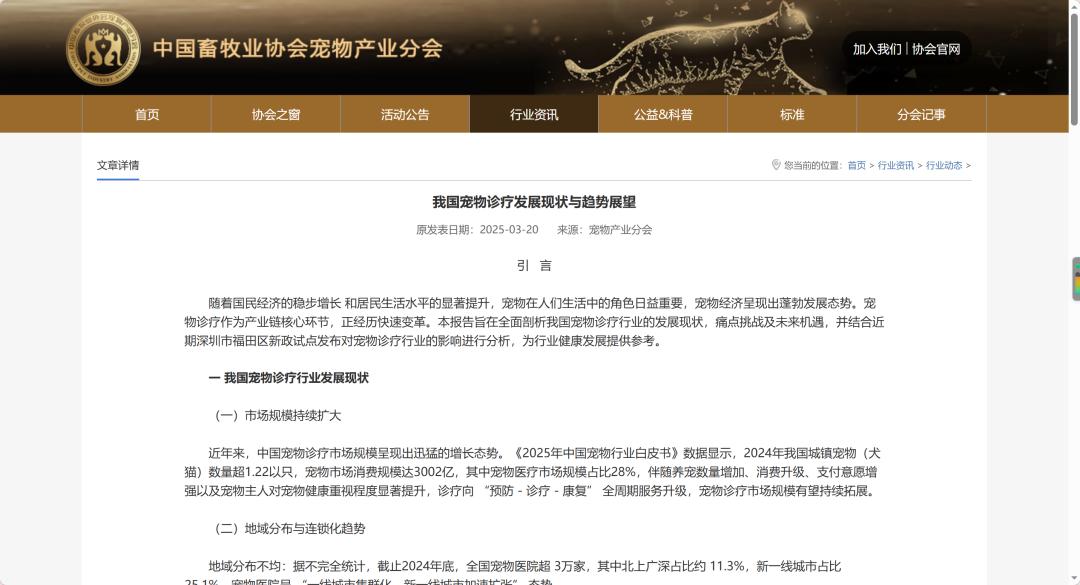
*Agriculture Association
For pet hospitals, this change also means the adjustment of business logic. If hospitals can undertake the follow-up demands of chronic disease management, post-surgery rehabilitation and senior pet care, they can not only increase service items, but also extend the low-frequency consumption that originally concentrated on the occurrence of diseases into a longer-term health management relationship. Compared with simply increasing the per order transaction value, how to increase the service frequency of the same pet family throughout the life cycle may be more worthy of attention.
In other words, traditional Chinese care does not necessarily have to become the core business of a hospital alone. It can also be embedded into the existing orthopedics, neurology, rehabilitation and health management systems, and become a part of the diagnosis and treatment process
This is also the attitude that Zhou Miao has gradually formed in the process of long-term care. “In my opinion, different diagnosis and treatment and care methods have their own areas of expertise. Instead of struggling with ‘which one must be chosen’, it is more important to let different solutions play their respective roles according to the specific situation of the pet. For me, traditional Chinese pet wellness is not a substitute for conventional diagnosis and treatment, but a long-term care option that can be used in conjunction with it.”
This care concept is also extending from the service end to the product end. In recent years, the concepts of “medicine and food homology” such as goji berries, Chinese yam, and poria cocos have appeared in pet food and nutritional products one after another. According to the data from *2025 Pet Food Trends* released by Magic Mirror Insight, among the selling points of mainstream e-commerce dog and cat staple food, the selling points related to “herbal ingredients of traditional Chinese medicine” have maintained rapid growth, becoming one of the directions for brands to carry out functional and differentiated expression.
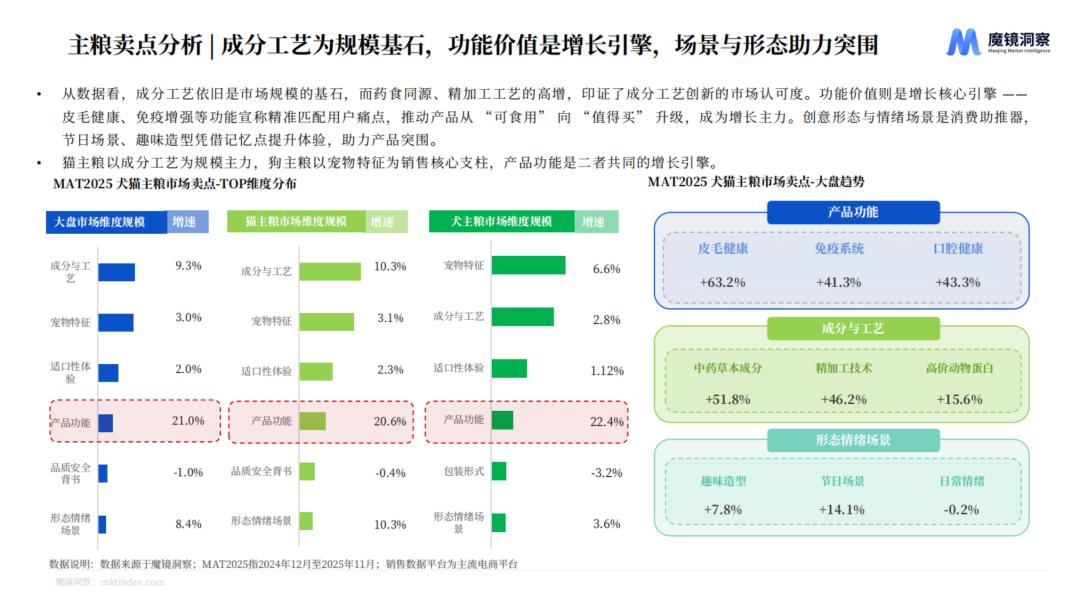
*Source: *2025 Pet Food Trends*
However, rapid growth does not mean that it has become the mainstream. Compared with mature selling points such as protein content, palatability, gastrointestinal and fur health, consumers still lack clear judgment on how much herbal ingredients are added, what corresponding needs they meet, and how the effect is verified
In this regard, it is not difficult to see that the current traditional Chinese pet wellness has begun to extend outward along two paths: pet hospitals, and pet food or nutritional products. The former relies on doctors and long-term services
